Keep Your Patio Solid While Adding Irrigation
Running irrigation under a stone or paver patio sounds simple until you see a corner sink, a border shift, or white streaks show up on the surface. Those problems don't happen overnight; they show up a year or two later when the soil has had time to move and water has had time to find every weak spot in the build.
In Central Alabama, our clay-heavy soils, strong summer storms, and temperature swings are hard on anything buried under a patio. If the irrigation lines aren't planned and protected as part of the structure, the patio will tell on that work. Joints open, stones rock underfoot, and efflorescence shows up along the wettest edges.
At Wood-Palmer Outdoor Creations, we treat irrigation, hardscape, drainage, and landscape lighting as one coordinated system under the same design-build team. Our team brings 75 years of combined leadership experience to projects across the Birmingham area, and that experience shows up in the way we think about what sits under the stone, not just what you see on top. When we're walking a property in person, we're looking at all five core pillars together: hardscape, structures (including outdoor kitchens), landscape, landscape lighting, and drainage, so the patio, the lines under it, and the rest of the yard work as one system.
Here's how a professional approach to irrigation installation in Birmingham keeps your patio tight and clean for the long term.
Why Irrigation Under Patios Fails in Central Alabama
Most failures trace back to how the trenches and base were handled before the first paver or stone was set. Common issues we see on Central Alabama jobsites include:
- Settling in the patio field along old pipe trenches
- Heaving where disturbed soil swells in wet weather
- Efflorescence streaks where water is moving up through the base
Our red clay holds water when it's wet and shrinks when it's dry. On slopey lots around Mountain Brook, Vestavia Hills, and Homewood, that movement is even stronger. Heavy storms drive water into any soft spot, and that water follows the easiest path out, often right through the jointing material.
Shortcuts that cause trouble include:
- Running pipes after the patio is built and cutting through compacted base
- Setting lines too shallow so they sit in the active zone of clay movement
- Backfilling trenches with loose native soil instead of structural material
- Ignoring drainage so irrigation water has nowhere clean to go
There's a big difference between a stand-alone irrigation contractor trying to work around a finished hardscape and an integrated design-build team. When one group designs the patio structure, subgrade, drainage, irrigation, structures, landscape, and landscape lighting together from day one, no one is guessing where things are buried or cutting into finished work later. That integrated approach across all five pillars is what keeps the whole outdoor space tying together structurally and visually.
Planning Irrigation with the Patio Design From Day One
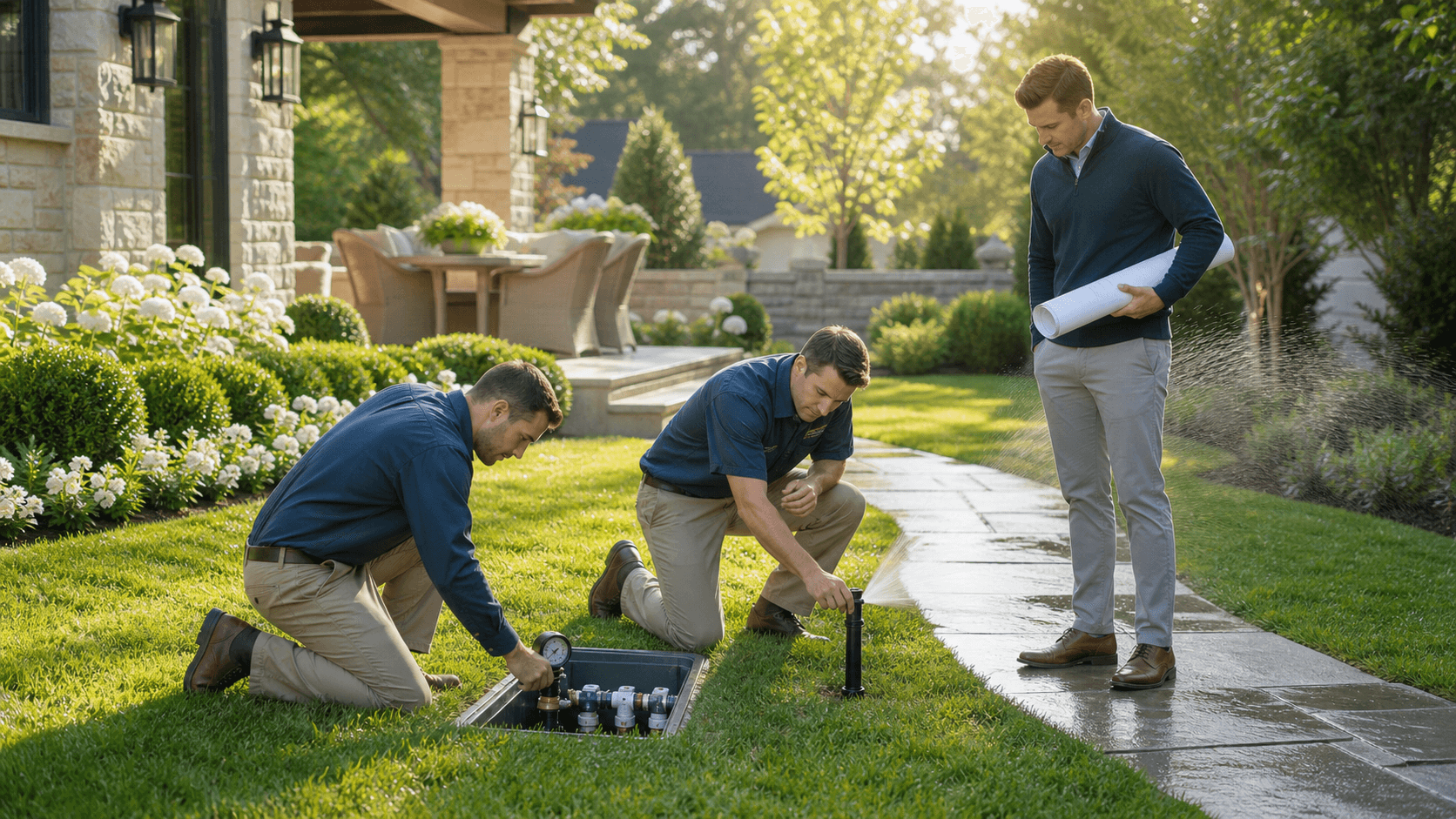
Good irrigation installation in Birmingham starts before any dirt is moved. On paper, the grading, water flow, valve locations, and future planting zones are all tied to the patio layout and structures like steps, seat walls, and outdoor kitchens.
When we're laying that out with a homeowner on-site, we're looking at:
- How the subgrade will be shaped so water flows away from the patio
- Where drainage lines will run so they aren't fighting irrigation lines
- Where sleeves need to cross under walkways and main patio areas
- How planting beds and turf zones will be watered without soaking stone
Work is sequenced so the structure stays intact:
- Shape and compact the subgrade.
- Install drainage lines and any needed drain boxes.
- Place sleeves and main irrigation runs where they need to be.
- Build the patio base, then set the stone or pavers.
We avoid running main lines right under soldier courses, steps, or retaining walls. Instead, we keep pipe routes straight and predictable, set back from load-bearing edges so any future work is in a "service corridor," not under key structural elements. Owners at Wood-Palmer Outdoor Creations are involved on-site to review layouts so everyone knows where lines, valves, and access points will live for the long haul.
Building Stable Trenches and Sleeves Under Stone Patios
A stable patio needs stable trenches. For our climate, frost depth isn't the main concern. The focus is on consistent depth, slope, and compaction so there's no weak strip through the patio.
Key trench details include:
- Depth set to keep lines below active surface movement but still serviceable
- A slight, consistent slope to avoid low spots that hold water in the trench
- Width wide enough that we can compact backfill on both sides of the pipe
We don't rely on sticky red clay as backfill around the pipe. Instead, we use clean, compactable material that locks together, like angular aggregate or blended screenings, depending on the overall base design. This creates a structural "beam" under the patio instead of a soft, sponge-like strip.
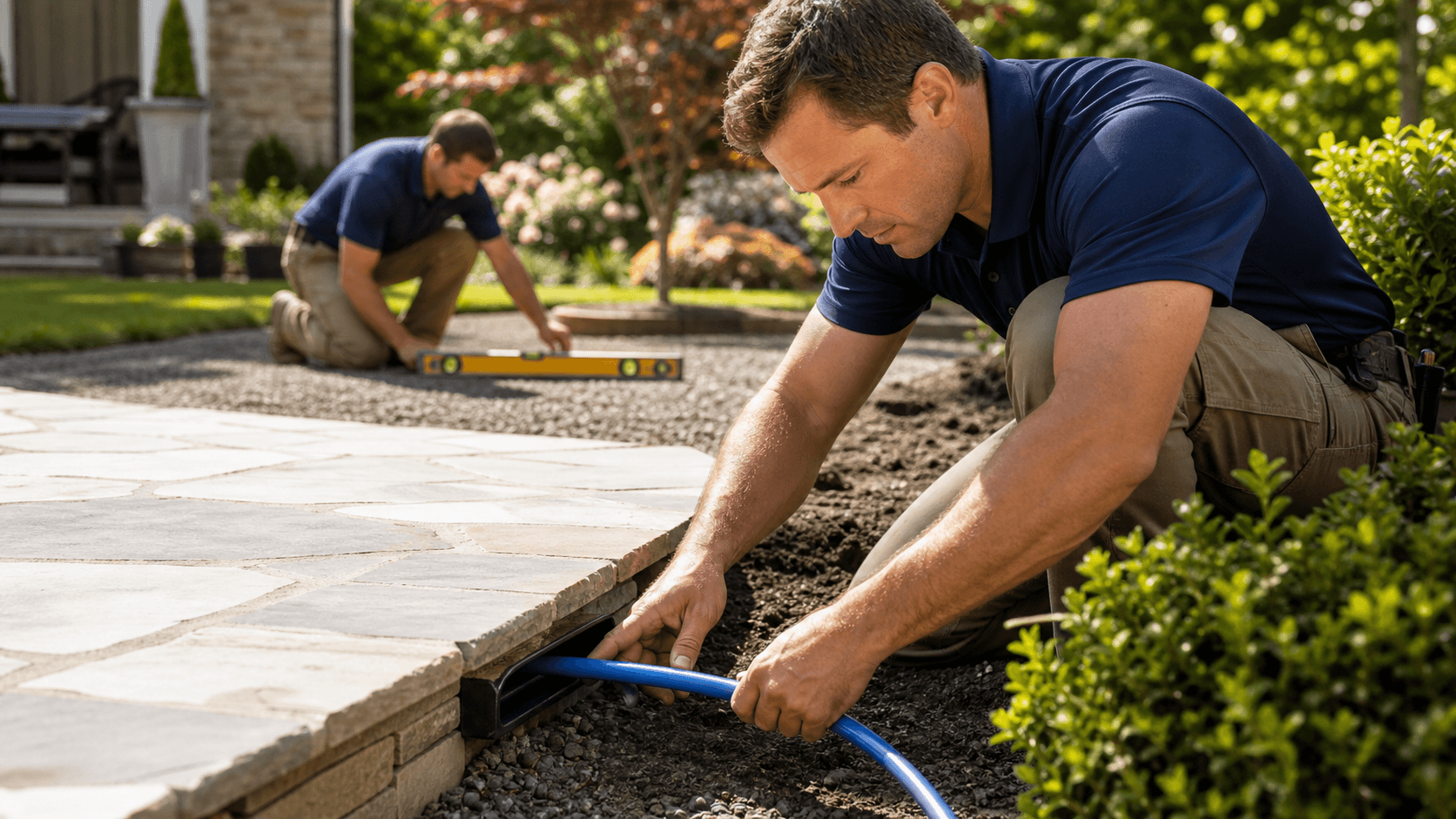
Rigid conduit and sleeves are placed under:
- Walkways that connect main outdoor areas
- Steps and landings
- Drive edges or parking strips next to patios
Those sleeves allow future irrigation or landscape lighting wires to pass through without touching the hardscape. Backfill is compacted in thin lifts with mechanical equipment, tying the trench zone into the wider base so the patio doesn't telegraph a long, straight settlement line where the pipe sits.
Controlling Water Movement to Prevent Efflorescence
Efflorescence is the white, hazy film or streaks you see on stone or pavers when mineral salts move up with water as it dries at the surface. The minerals often come from the stone, base materials, or jointing sand, but the driver is water moving where it shouldn't.
Irrigation can add to this problem when:
- Fittings leak below the patio and keep the base saturated
- Heads are aimed at the patio border instead of the planting beds
- Lines trap water with no path to drain away
To reduce that risk, the whole build is set up to keep water moving out and away:
- A graded subbase that sheds water in a controlled direction
- Well-draining aggregates that let water move horizontally to drains
- Separation fabric in select conditions to keep fines out of the base
- Clean tie-ins to daylight drains, swales, or downslope outlets
On the irrigation side, pressure regulation and proper head placement keep water on turf and beds, not on the patio edge, retaining wall face, or footing of an outdoor structure. Zones are designed so you're not soaking the same border several times a day from overlapping heads.
Fall Timing, Testing, and Long-Term Access
Early fall often gives Central Alabama a sweet spot of cooler temperatures and fewer extreme storms. Those conditions are friendly to compaction, concrete work around structures, and stone setting, which helps the whole system lock in place.
Before any jointing sand or polymeric material goes into the patio, a professional crew will:
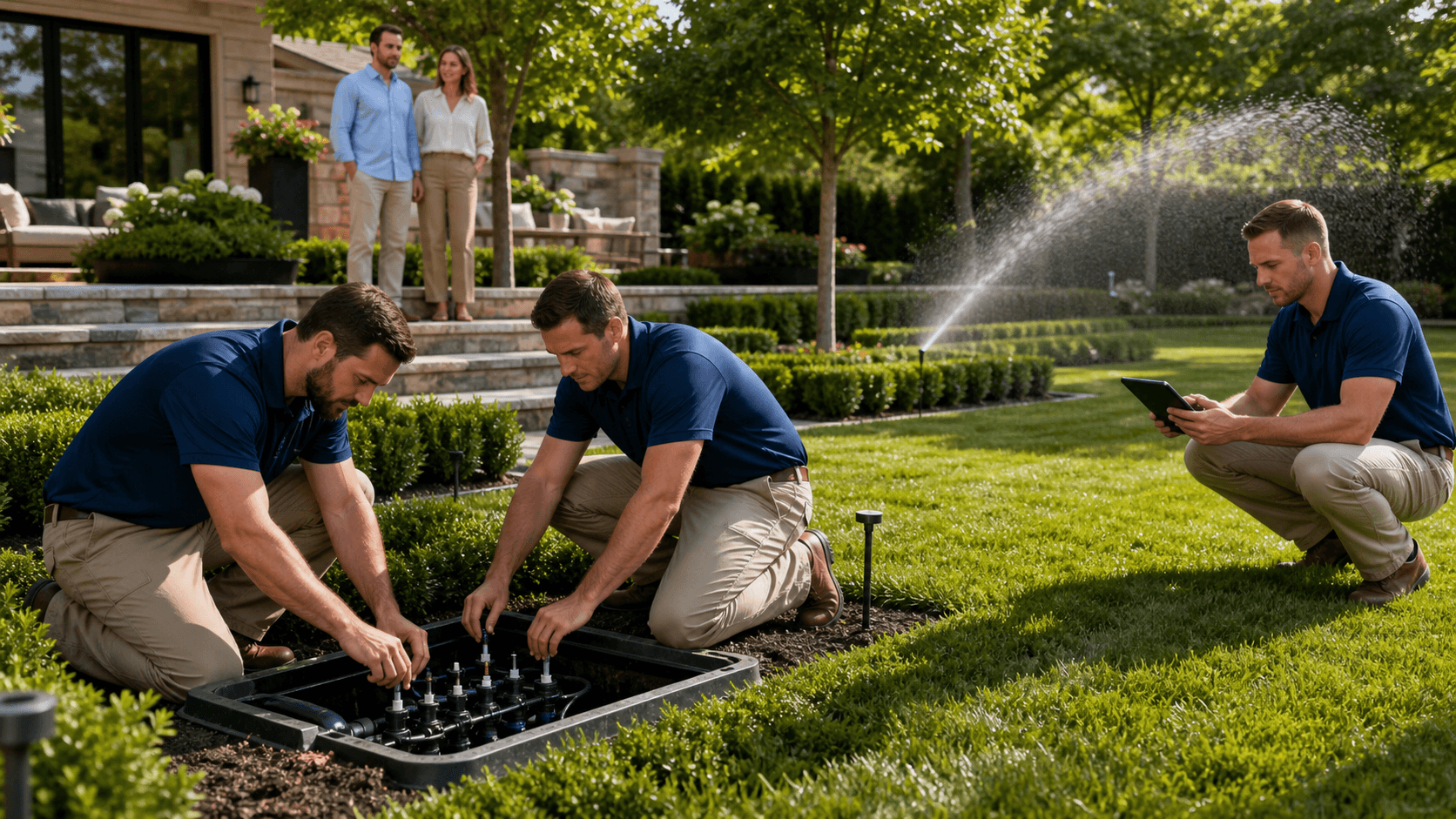
- Pressure test irrigation lines and watch for pressure drops
- Inspect each fitting area for any sign of weeping or seeping
- Flush lines to remove debris that could damage valves or heads
- Run water through drainage lines and confirm clean flow to outlets
Long-term access is planned, not left to chance. Valve boxes sit in logical, discreet locations, not buried under corners of the patio. Clean-outs are placed where they can be reached. Spare sleeves are often installed along key paths so future landscape lighting or added zones don't require breaking stone. When patio, irrigation, drainage, landscape lighting, landscape, and structures are all thought through as one design-build, you reduce surprises, protect your investment, and keep your outdoor space working the way it should for years.
If you're looking at a new patio or you're concerned about running irrigation under an existing hardscape in the Birmingham area, let's talk about your property at (205) 305-7780, email us at info@woodpalmer.com, or reach out through the contact form at woodpalmer.com/contact so we can walk the site with you and talk through the right structural approach for your yard.
Get Started With Your Project Today
If you are ready to keep your lawn healthy and consistent season after season, we are here to help design a system that fits your property and budget. Explore how our irrigation installation in Birmingham can simplify yard care while protecting your landscape investment. The team at Wood-Palmer Outdoor Creations will walk you through every step, from planning to final walkthrough. Have questions or want a quote right away? Just contact us and we will follow up promptly.