Balancing Privacy Landscaping and Views in Birmingham Estate Yards
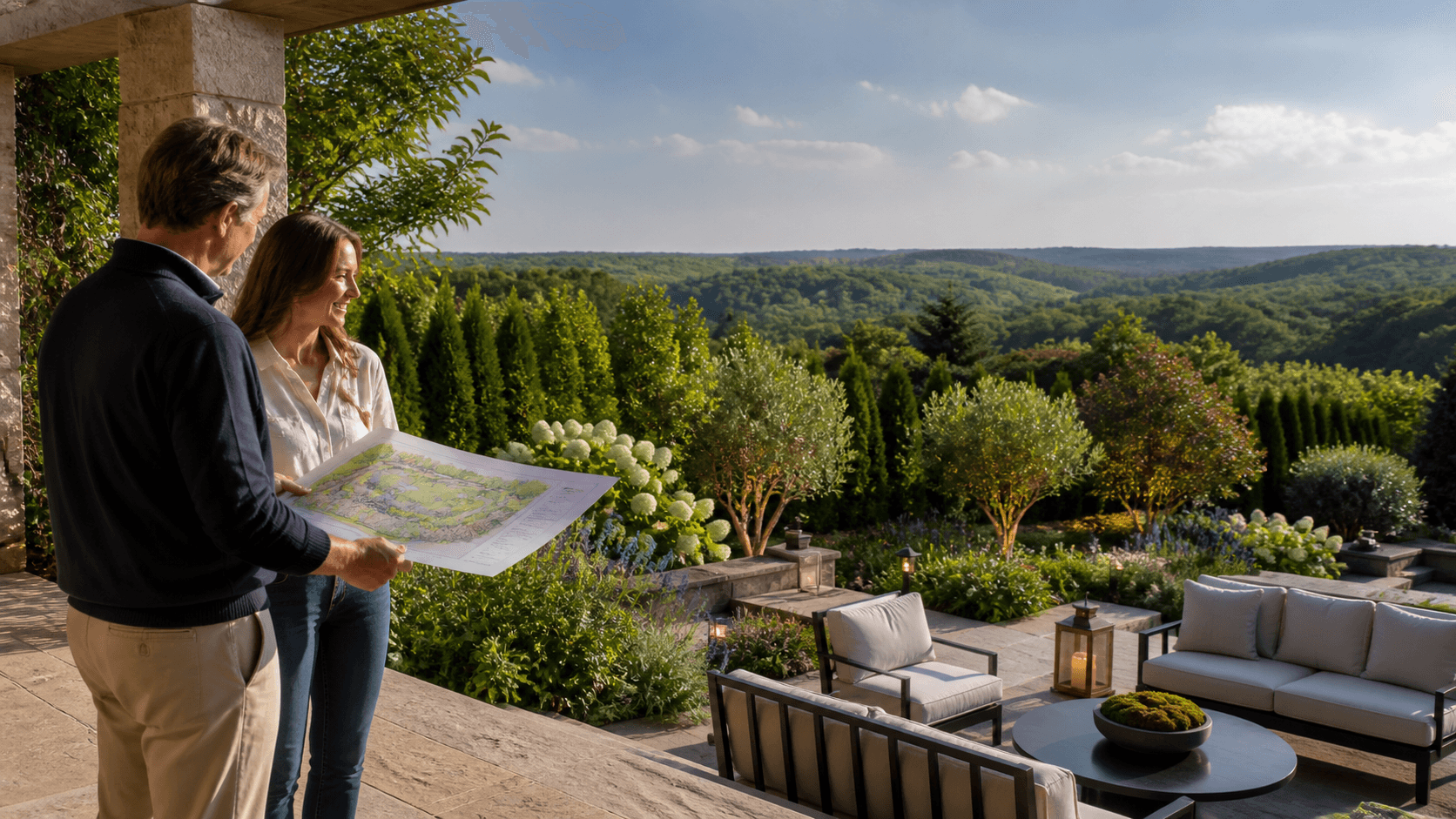
Privacy landscaping in Birmingham estate yards is all about tradeoffs. Most large properties around Mountain Brook, Vestavia Hills, and the Greater Birmingham area want two things at the same time: a feeling of seclusion and a long view over valleys, ridges, or water. If screening is done wrong, you either feel like you are living in a fishbowl or you lose the very view that made you buy the property.
Our goal is to show how we, as a builder-led outdoor firm, think through that balance. We look at sightlines, grades, and how you actually use your yard from day to night. Late summer into early fall is usually a strong planning window in Central Alabama, when heat starts to ease, soil is still warm, and you have time to get plant material, structures, and lighting installed before cooler-weather entertaining.
Reading Your Site Like a Builder, Not a Nursery
Good privacy does not start with picking plants; it starts with reading the site. With 75 years of combined leadership experience, our team at Wood-Palmer Outdoor Creations approaches privacy like a structural project, not decoration.
We begin by walking the property and looking at:
- Slopes and breaks in grade
- Existing drainage paths through the red clay
- Soil conditions like rocky shoulders or lakefront fill
On a steep Birmingham hillside, water wants to move quickly. On lakefront fill, it may sit longer than you think. If we block that water with a new bed or wall, you can end up with standing water against a patio or foundation. So we study how the ground actually works before we place the first screen.
Next comes sightline mapping. We stand where you live:
- Your main patio or pool deck
- The covered porch or pavilion
- Key windows and upper balconies
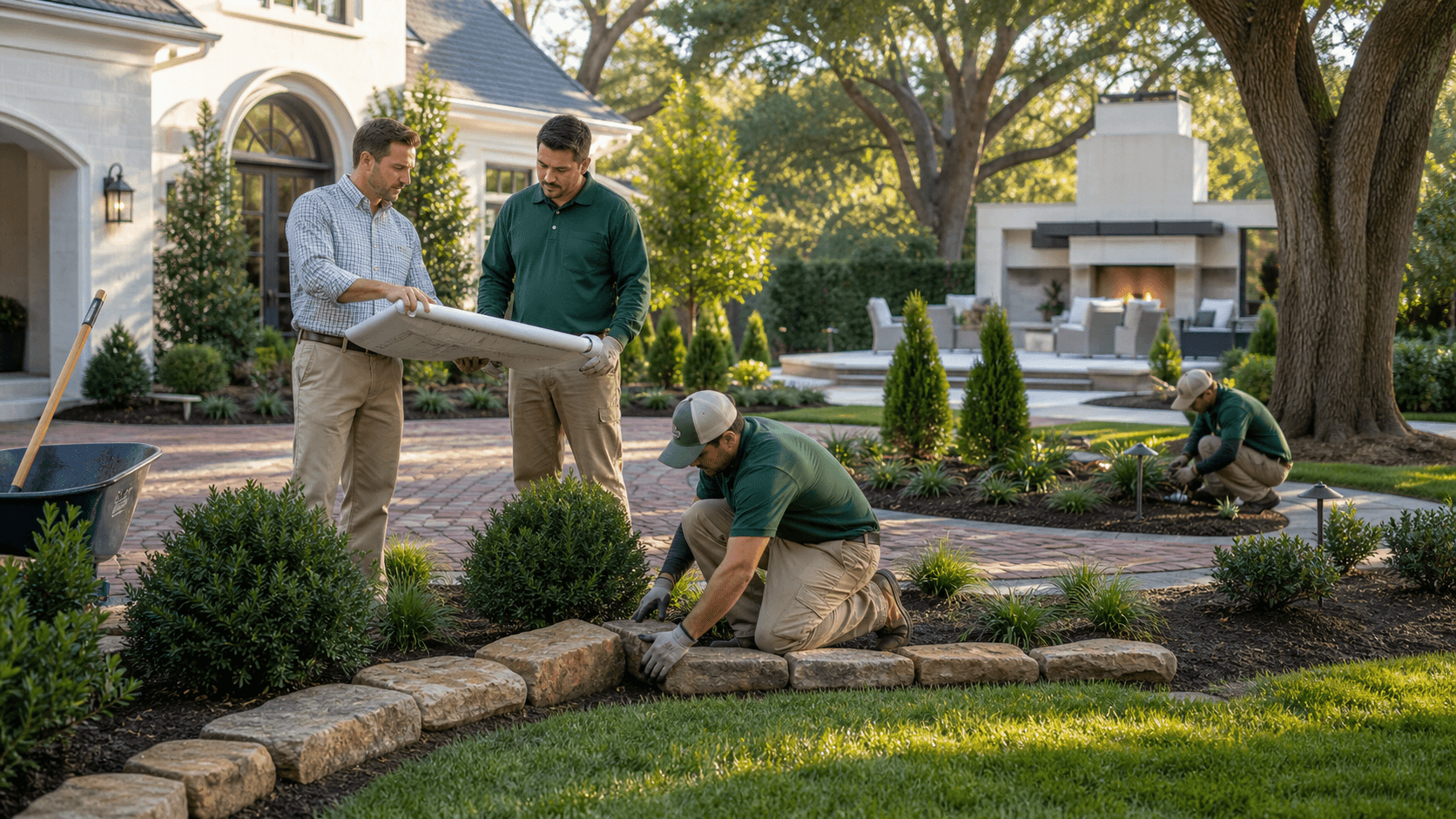
From each spot, we mark what is non‑negotiable to keep, like a distant ridge or cove, and what truly needs to disappear, like a neighbor's second‑story windows, a driveway, or shared dock. We also look at existing hardscape, structures, and rooflines so new trees or walls do not fight with foundations, utilities, or future irrigation.
Smart Privacy Landscaping in Birmingham's Rolling Terrain
Birmingham's hills can work for you or against you. Instead of planting a solid wall of green, we focus on layered screening that follows the terrain. On a slope, that often means taller material low on the hill, mid-size material in the middle, and smaller understory plantings closer to the living space. The eye reads this as depth, not a barricade, which keeps long views open while softening the edges.
We like to think in terms of "backbone" and "framing" plants:
- Evergreen backbone trees and shrubs for year‑round coverage
- Deciduous trees that drop leaves but frame the view with trunks and branching
- Lower shrubs and groundcovers to tie the whole bank together
Central Alabama humidity and heat are demanding, so plant selection has to match our climate, not just a catalog picture. At the same time, root systems and mature canopy spread have to stay out of conflict with septic fields, French drains, and retaining wall footings. A pretty evergreen planted on top of a wall footing today is a structural problem tomorrow.
We also protect drainage. New beds on a slope can catch water and send it straight to the house if they are not graded correctly. We shape beds, use proper base preparation, and keep planting lines clear of swales and drain inlets so your privacy planting works with the stormwater plan instead of against it.
Using Structures and Grade Changes to Shape Privacy
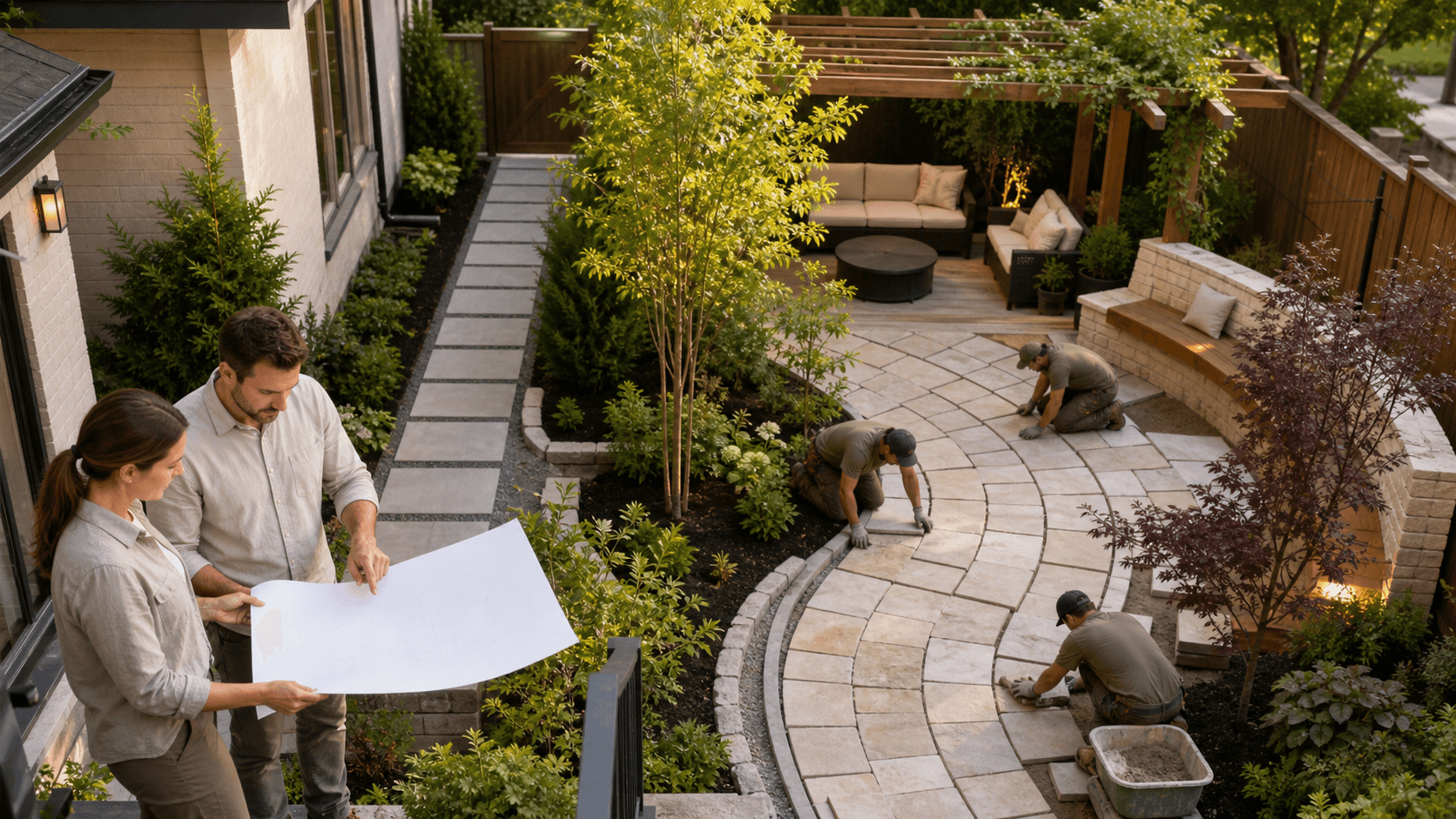
Plants are only one set of tools. On many estate and lakefront properties, built elements carry most of the privacy load. A stone wall, seat wall, or pavilion in the right spot can block a neighbor's deck or a street view without stacking plants ten deep.
We often use:
- Low stone or brick walls to cut direct sightlines at sitting height
- Pergolas to break up views from above while still feeling open
- Pavilions or outdoor kitchen roofs to screen from the sides or rear
Grade changes are another powerful tool. A raised patio, terraced yard, or stepped retaining wall can lift your main living space above "eyeball level." You still look out over treetops and rooftops, but people at street grade no longer see straight across into your gathering area.
Any time we add privacy structures, we look hard at structural integrity:
- Are footings deep enough for our clay soils and any slope movement?
- Will added loads from planters, fencing, or screen panels exceed what the deck or wall was built to carry?
- Are railing heights and openings code‑compliant where there is a fall hazard?
This is where an engineering‑first approach matters. We treat privacy elements as part of the structural system, not as afterthoughts.
Lighting, Irrigation, and Seasonal Use of Your Privacy
Privacy is different at night. A bright spotlight in the backyard can feel like a stage light from the neighbor's point of view. For estate and lakefront properties, we lean on downlighting, shielded fixtures, and warm color temperature so the space is usable after dark without lighting up the whole neighborhood or water.
Good landscape lighting for privacy often includes:
- Soft downlighting from trees or structures instead of harsh floodlights
- Shielded path and step lighting that guides your feet, not your neighbors' eyes
- Accent lighting that grazes walls or plant material instead of aiming out into open space
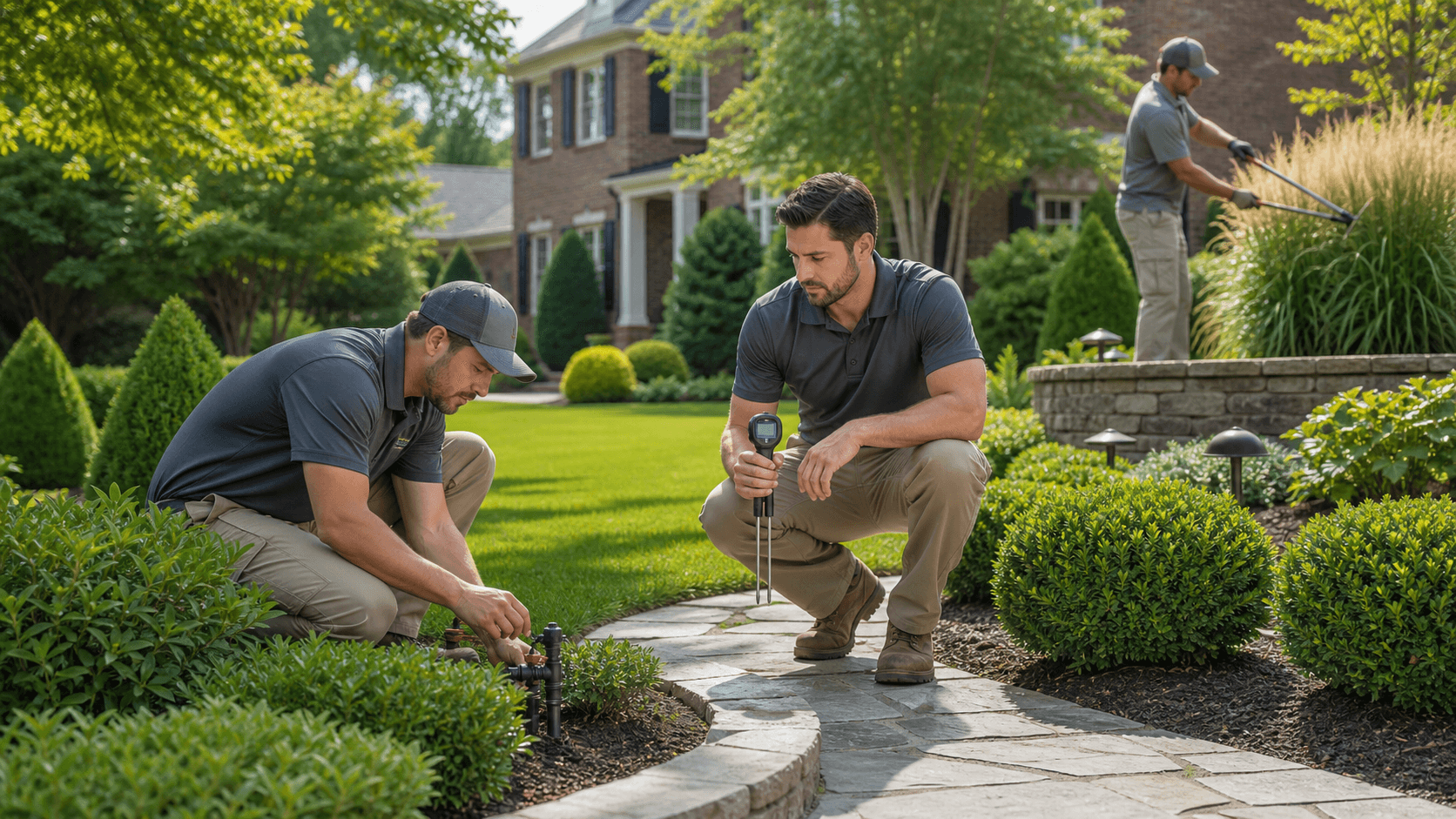
Irrigation planning has to match the privacy plan. Screening plants along property lines or steep banks need water, but overwatering can cause erosion on slopes or create wet zones near foundations. We design zones and head placement so those critical plants get coverage without washing out beds or sending runoff over walls.
Seasonally, privacy in Birmingham changes as leaves drop and the sun angle lowers. Evergreen backbone plantings carry much of the visual enclosure in winter. Deciduous trees become more about branch structure and how they frame the sky and distant views. We look at how the yard will feel when foliage is off so you do not go from cozy in summer to exposed in winter.
A Builder's Checklist Before You Plant the First Screen
Before any shovel hits the ground, it helps to slow down and confirm a few things. We often walk clients through a simple checklist.
First, walk the line:
- Stand on the patio, pool deck, porch, kitchen window, and upstairs bedrooms
- At each spot, decide what you want to see and what you never want to see again
- Mark those targets so design decisions tie back to real viewpoints
Second, confirm grades and water movement. Watch or recall what happens in a heavy Birmingham thunderstorm. Where does water rush, where does it pool, and where does it exit the property? Privacy beds and walls should never trap runoff against the house or hardscape.
Finally, treat privacy as part of a full outdoor plan, not as a bolt‑on. When a design/build team coordinates hardscape, landscape, structures, irrigation, and landscape lighting under one integrated plan, privacy can be engineered in from the start instead of patched in later. On large estate and lakefront properties, that integrated approach usually leads to better views, better seclusion, and fewer surprises over time.
Create the Seclusion and Comfort Your Backyard Deserves
If you are ready to transform your yard into a peaceful, private retreat, our team at Wood-Palmer Outdoor Creations is here to help. Explore how our customized solutions for privacy landscaping in Birmingham can block unwanted views while enhancing your outdoor style. Tell us about your space and goals, and we will design a plan that fits your property and budget. Ready to talk about your property? You can reach us at (205) 305-7780, email us at info@woodpalmer.com, or send us a message here.