Build the Fire Feature You Want Without Flooding Your Yard
A new fire pit should make your yard feel warm, comfortable, and solid under your feet, not leave you standing in a puddle the first time it rains hard. Many Vestavia Hills homeowners add a fire feature, then notice standing water, soft spots, or cracked and flaking pavers after that first big storm. That's not a drainage problem you want to discover once the stone is already set.
In Central Alabama, especially in hilly areas like Liberty Park, Cahaba Heights, and Rocky Ridge, fire pit installation and drainage planning belong in the same conversation. A well-built feature should stay dry underfoot, shed water in a controlled way, and connect cleanly to the rest of the hardscape and surrounding yard. At Wood-Palmer Outdoor Creations, our approach is to think like builders and engineers from the start, using our 75 years of combined leadership experience to prevent failures instead of patching over them later. The owners stay involved in layout and grading decisions so what's on paper matches what your yard can actually support.
How Vestavia Hills slopes and soils affect your fire pit
Vestavia Hills isn't flat, and that alone affects where a fire pit can safely and successfully sit. Many homes have:
- Steep driveways that dump water fast
- Split-level or walkout basements with sharp grade changes
- Existing retaining walls that already hold back a lot of soil
- Narrow side yards that act like channels in a storm
Those grades steer where water wants to run. If you drop a fire pit right in one of those paths, you can end up with erosion at the edge of the patio, soggy seating, or water flowing straight through your gathering space.
Soils matter just as much. Around Central Alabama, we see a lot of red clay and compacted fill left from earlier construction. These conditions:
- Drain slowly, so water tends to sit unless you give it a clear way out
- Can move over time if they were never properly compacted
- Need more careful base prep to keep hardscape from shifting
On top of that, roof water and driveway runoff can shoot toward the backyard. Neighbor grading can push water your direction too. All of that can land right where you thought a fire pit would be perfect.
Fire pit installation in Vestavia Hills also has to respect code requirements like keeping safe distances from structures and combustible materials. Then there are practical issues, such as smoke drifting toward windows because of prevailing winds, or a pit sitting low on a slope where cold air and dampness collect. A good plan weighs all of these before you ever see the first paver.
Getting the foundation and drainage details right
A long-lasting fire feature starts with dirt work, not decorative stone. A contractor should begin by stripping out all organics in the footprint, including:
- Grass and roots
- Topsoil
- Old mulch and soft fill
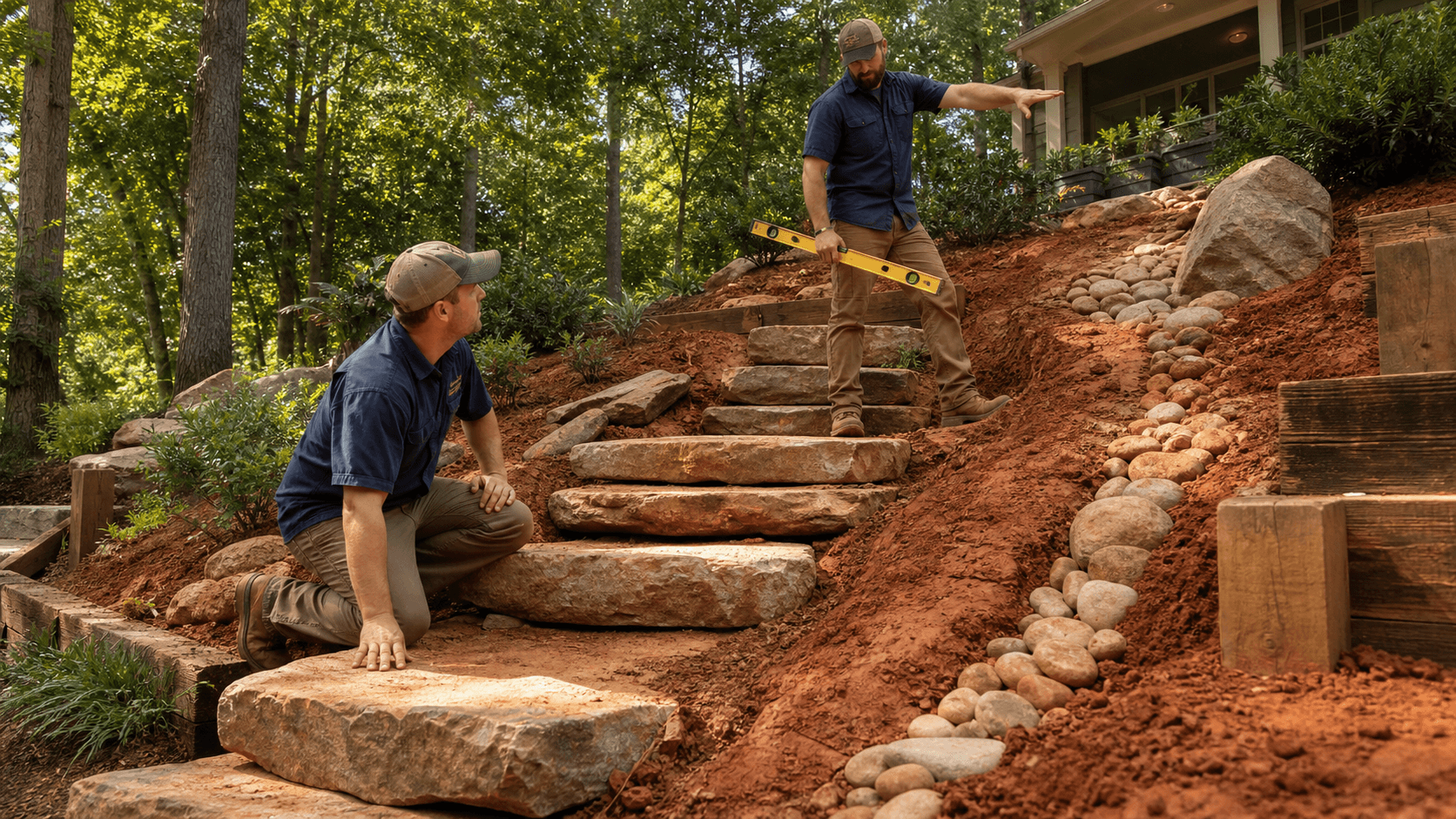
What's left gets compacted into a firm subgrade, then we set design elevations so surface water moves away from the fire pit and seating area, not toward it. That usually means a slight pitch in the patio, gentle but intentional, so it feels flat to walk on but drains during a storm.
From there, the base build-up matters. In our region, that often includes:
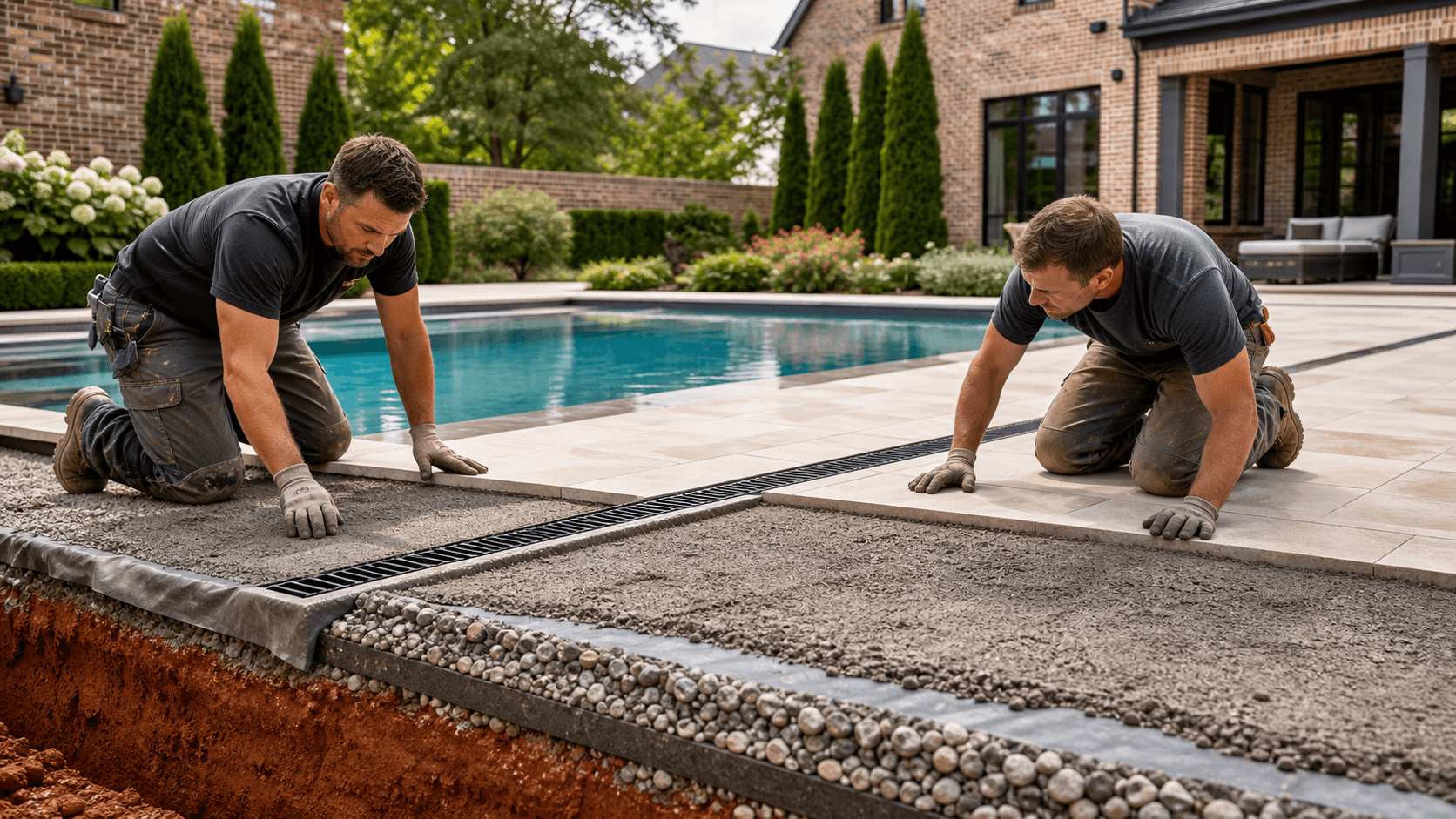
- A layer of compacted aggregate stone
- Compaction in lifts, not all at once
- Geotextile fabric when soils are soft, disturbed, or mixed with old fill
This structure supports the hardscape and keeps it from settling into clay pockets over time.
Drainage planning is wrapped into that work, not added later. Solid strategies include:
- A subtle slope across the paved seating area to avoid "birdbaths"
- Perimeter or French drains at the uphill side if water wants to collect there
- Thoughtful exits for water so it doesn't just create a new problem downhill
We also look around the immediate work zone: nearby downspouts, existing drain lines, and known low spots. The goal is to tie the new fire pit into a broader drainage pattern across the whole property instead of creating an island that ignores what's already happening with the water.
Smart fire pit layouts for sloped and lakefront lots
Once the ground and drainage are handled, layout decisions have a big impact on how the fire feature feels and works day to day. On a slope, you might be choosing between:
- A sunken fire pit, set into a terrace
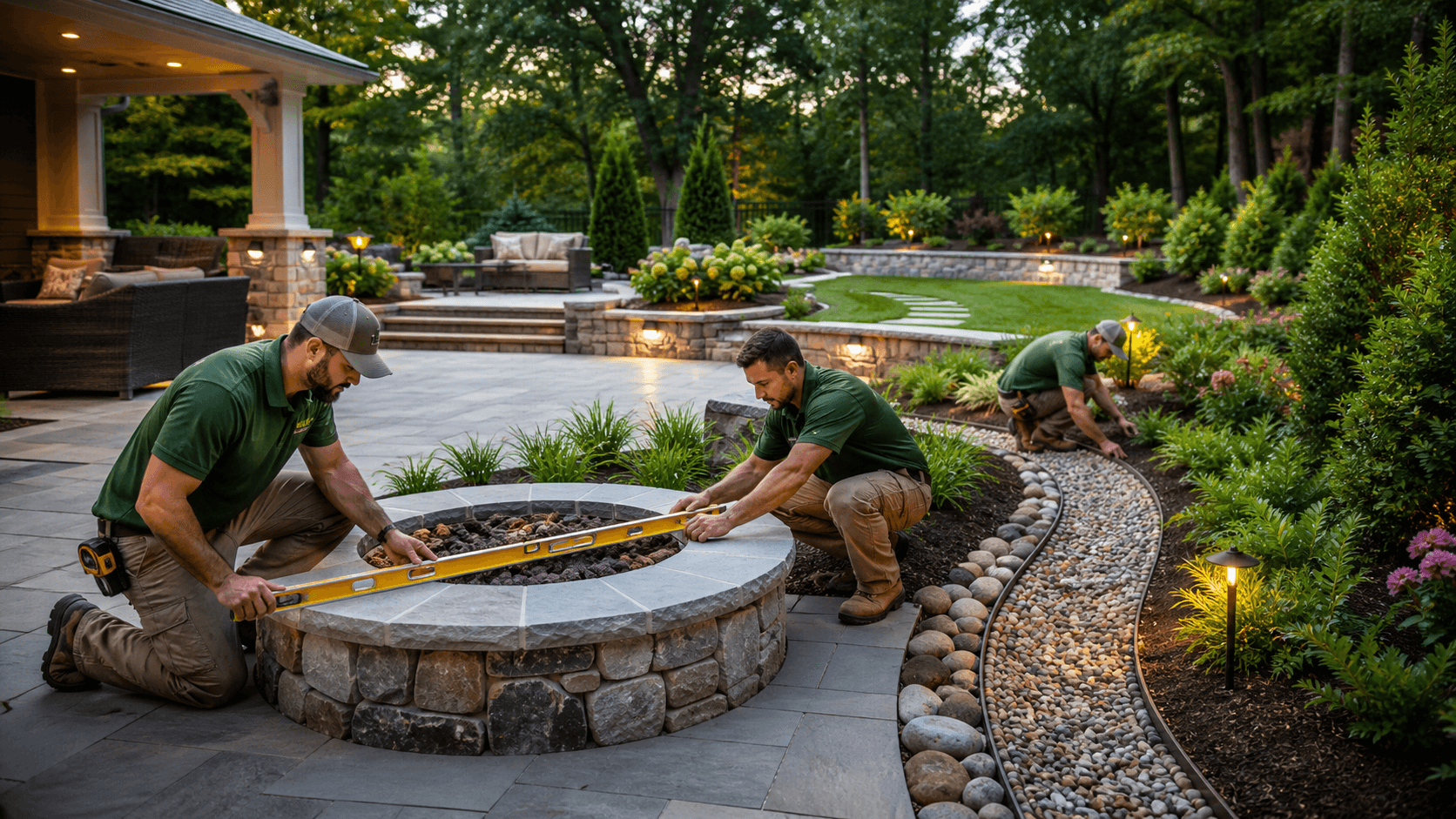
- A raised fire pit, built up with block and stone
- A linear feature along a retaining wall
- A circular pit with seat walls hugging the grade
Sunken fire pits can feel cozy, but in a heavy rain they can behave like bowls if drains and overflows aren't designed correctly. Raised fire pits shed water more easily and can help you work with grade instead of fighting it.
Where you have drop-offs behind the fire pit area, we often use:
- Retaining elements to hold back soil and flatten a usable pad
- Seat walls that double as both seating and small retaining structures
- Short terrace steps that slow water and make movement safer
For lake properties and yards near creeks, water comes from both above and below. Groundwater, periodic high-water events, and wet soils near the shore all affect how your base performs. In those settings, positive drainage back toward stable outfalls is key, so the fire pit and adjoining patio aren't sitting in a constantly damp pocket.
In Vestavia Hills lake and estate settings, the fire pit rarely stands alone. It often needs to work with existing patios, pool decks, and walkways. That means tying all those surfaces into a single drainage story so water moves in a controlled way from the house, across the hardscape, and out toward safe discharge points.
Tying in irrigation, planting, and landscape lighting
A fire pit doesn't live in a vacuum. Irrigation, planting, and landscape lighting all have to be coordinated if you want the space dry and structurally sound.
Irrigation lines and heads usually need to be rerouted away from the fire pit zone. If spray heads are left near the seating area, they can:
- Soak the hardscape and make it slick
- Cause heaving or settlement if leaks go unnoticed
- Keep soils around the base saturated, which weakens support
Planting design can actually support drainage when it's thought through. We often like to:
- Use deeper-rooted plants downhill to help hold soil and slow runoff
- Avoid thirsty plants that demand constant irrigation near the fire pit
- Choose plant heights that keep clean sightlines to the flames and views
Landscape lighting needs its own planning so it doesn't fight the drainage system. Running conduit where we know water will move is asking for long-term trouble. We plan:
- Conduit routes that avoid drain lines and low, wet pockets
- Junction boxes that are set above known wet areas
- Fixtures that can handle the real conditions around patios and steps
With an engineering-first mindset and 75 years of combined leadership experience behind our team, we treat a fire pit as one piece of a larger, structurally disciplined outdoor living environment.
Planning your Vestavia Hills fire pit the right way
The right fire pit installation in Vestavia Hills starts before anyone picks up a shovel. One of the most helpful things a homeowner can do is walk the yard after a strong storm and simply watch what the water does. Notice:
- Where it stands and for how long
- Where it runs fast and cuts small channels
- How roof and driveway water leave the house and enter the yard
Before you bring in a contractor, it helps to gather a few basics. Take photos of the yard when it's wet, jot down any known drainage problems, and note any past grading or retaining work that's already been done. All of that guides smarter layout and elevation decisions.
Project scope and budget often depend on:
- How much grading and soil correction are needed to create a stable pad
- Whether retaining walls, seat walls, or other grade controls are required
- How complex the hardscape layout is around the fire pit and seating zone
- How much integration is needed with existing irrigation and landscape lighting
When fire pit planning in Vestavia Hills respects slope, soil, water, and structure from the beginning, you end up with a space that stays solid and dry season after season, instead of one that turns into a repair project after the first big storm.
Get Started With Your Project Today
Transform your backyard into a comfortable, inviting space with our custom design and professional fire pit installation in Vestavia Hills. At Wood-Palmer Outdoor Creations, we listen to your ideas and tailor every detail to fit your home and lifestyle. Let's talk about your property—contact us or email us at info@woodpalmer.com or call us at (205) 305-7780 to get started.