Build an Outdoor Fireplace That Actually Works Here
Outdoor fireplace installation in Homewood has to do more than look good in a photo. It has to light easily, draft cleanly, and stay solid through Central Alabama weather. If the wind pushes smoke back in your face every time you sit down, that fireplace stops getting used.
Our terrain in Over the Mountain, our Alabama clay, and the way homes sit on the ridges all change how fire, wind, and smoke behave. A design that works on flat ground in a catalog often fails the first cool October evening in Homewood. At Wood-Palmer Outdoor Creations, we plan around that from day one, so the fire is something you enjoy, not fight.
When Wood-Palmer Outdoor Creations designs and builds an outdoor fireplace, the team looks at wind patterns, chimney design, gas versus wood, and how the whole space is laid out. The goal is simple: clean draft, safe structure, and comfortable seating. The way we get there is through engineering and careful planning, not guesswork, backed by 75 years of combined leadership experience.
How Homewood Sites Shape Wind and Smoke Patterns
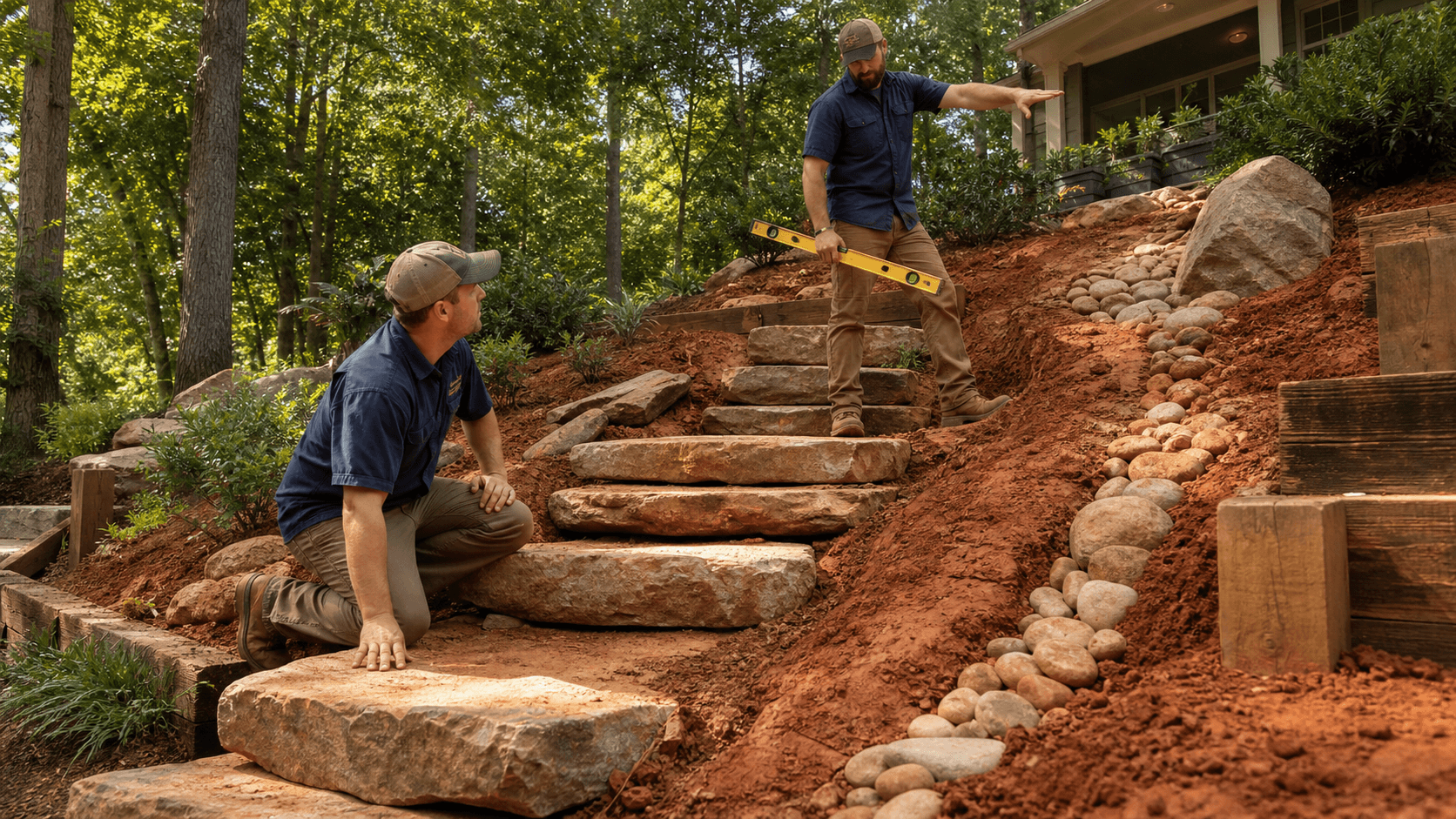
Most Homewood lots are not flat rectangles. You have slopes, tight side yards, and mature trees that have been there for decades. All of that shapes how air moves, and that changes where smoke goes when you light a fire.
Common factors we pay attention to include:
- Sloped backyards that drop away from the house
- Tall neighboring homes that block or funnel wind
- Privacy walls, fences, and hedges that create dead-air pockets
- Old oaks and pines that break and spin the airflow
Over the Mountain, wind can shift direction several times through the day. It will roll over a roofline, drop into a low backyard, then spin in place behind a garage. If you tuck a fireplace into one of those low spots or under a heavy porch roof, smoke often rolls right back into the seating area.
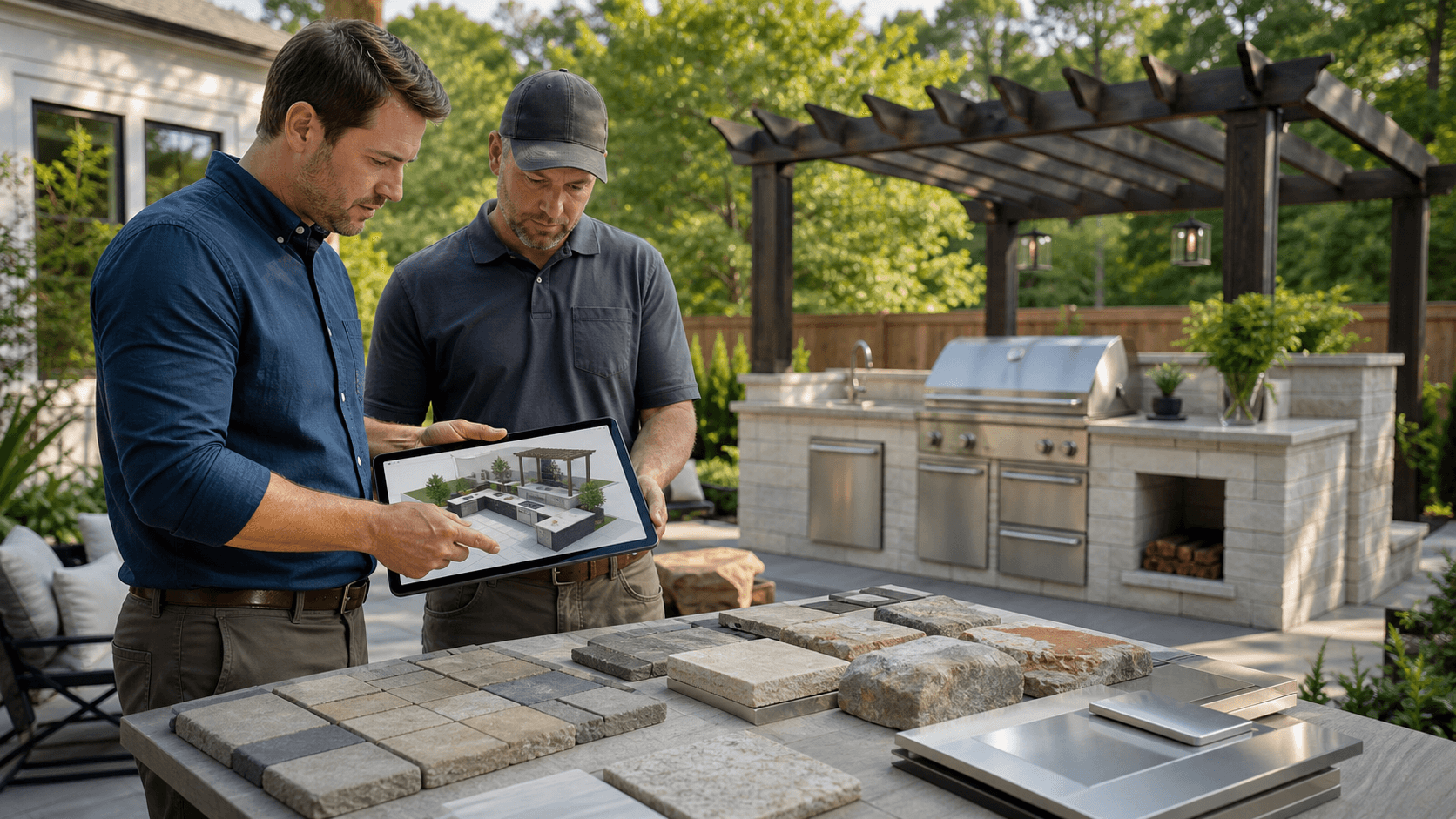
A proper site walk matters. We like to stand where you already gather, watch how the trees move, feel where the breeze comes through, and even look at how your grill smoke behaves. That gives us a sense of your microclimate. Outdoor fireplace installation in Homewood is not one-size-fits-all. Two homes on the same street can demand very different solutions.
Designing the Firebox and Chimney to Draft in Alabama Air
Once we understand the site, we get into how the fireplace itself is built. The way the firebox and chimney are proportioned has a direct impact on smoke control. Get the ratios wrong and you get smoke in your face every time the temperature drops or the wind gusts.
Key pieces we engineer around are:
- Firebox width, height, and depth
- Throat opening size and shape
- Flue size and liner choice
- Chimney overall height
In simple terms, the firebox has to be shaped so flames roll up and out, not forward. The throat opening then needs to be sized so it pulls smoke into the chimney without starving the fire. For our typical fall and winter swings, we like a firebox-to-chimney ratio that keeps a steady draft even on cool, damp evenings.
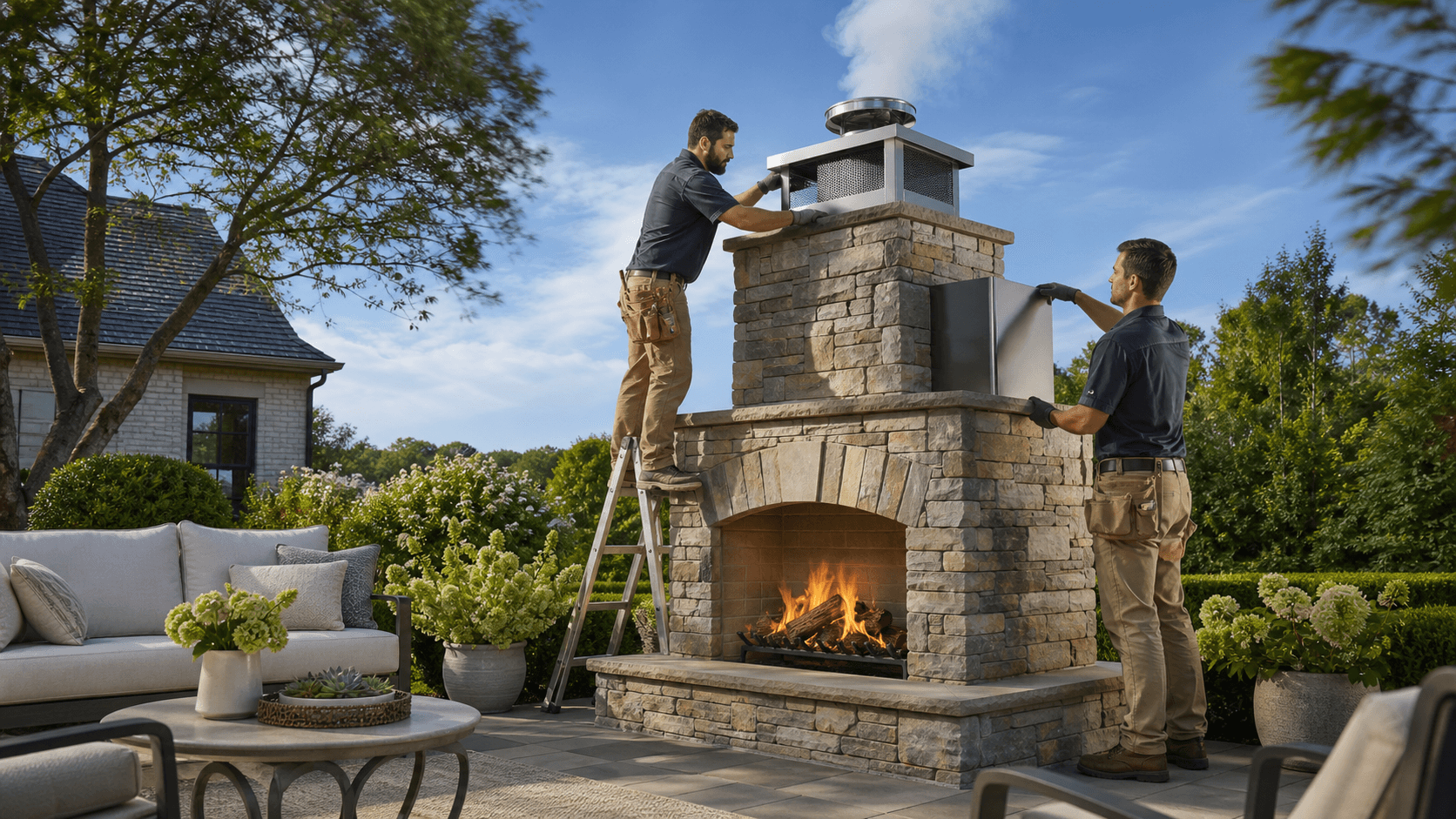
Chimney height is a big factor. In many Homewood backyards, the chimney has to clear nearby rooflines, retaining walls, and porch beams to keep smoke moving up and away. If the top of the flue sits too low in relation to those elements, you can get backdraft and swirling smoke.
Wood-Palmer Outdoor Creations also builds for Central Alabama soil and weather. That means:
- Reinforced bases on Alabama clay that account for expansion and contraction
- Proper footings tied into the rest of the hardscape, not just a thin slab
- Flue liners sized to match the firebox and chimney height, not undersized "off the shelf" parts
- Chimney caps, spark arresters, and wind guards anchored to handle gusty ridge-top conditions
Our engineering-first, integrated design-build approach helps the fireplace behave the same way on a still fall night as it does on a breezy one, so you are not surprised each time you light it.
Layout, Seating, and Shelter That Do Not Trap Smoke
A lot of outdoor fireplaces get placed where they frame a nice view or center a patio. That is important, but if we ignore wind direction and nearby structures, the space will not be comfortable. We always balance looks with function.
We look closely at:
- The dominant wind direction across your patio
- Where your garage, screened porch, and house walls sit
- Existing seat walls, steps, and retaining walls
- How you and your family actually use the space
Sometimes the right move is to set the fireplace on the windward edge of the patio so smoke moves away from the seating. Other times, especially on tighter Homewood lots, it makes more sense on the leeward side with careful attention to chimney height and opening size. Gas and wood-burning units behave differently in those setups, so fuel choice is part of that decision.
Covered and semi-covered areas need special care. A pavilion, pergola, or low roof extension can help guide smoke up if the fireplace, opening, and chimney are designed for it. Get that wrong, and you trap smoke right at head height. We plan beam height, ceiling shape, and opening orientation together with the fireplace structure.
Seating layout finishes the picture. We think through:
- How far primary seating should be from the firebox opening
- How to angle built-in benches to stay out of smoke lines
- Where not to place chairs so you avoid dead-air pockets
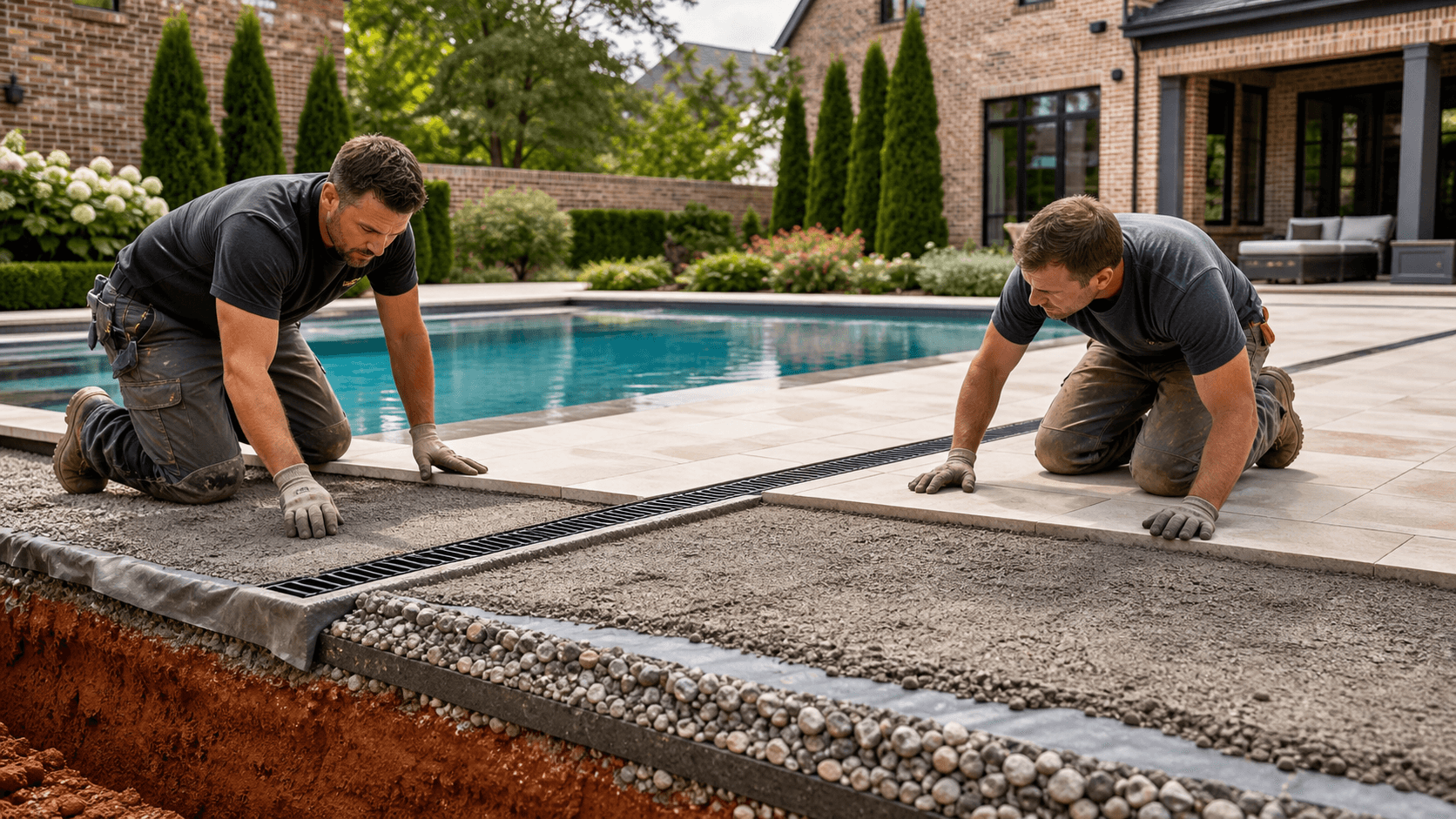
Grading and drainage around the fireplace pad still matter. Poor drainage can undermine the base over time, which shifts the structure and affects draft. Outdoor fireplace installation in Homewood often ties into existing patios and walkways, and our team likes to rethink airflow when we connect new work to old so we do not create new wind or smoke problems.
Gas vs. Wood-Burning for Smoke Control and Comfort
Fuel choice changes how sensitive your fireplace is to wind. Wood fires carry real smoke and sparks, while gas flames are cleaner but still affected by air movement.
In general:
- Wood-burning units feel more traditional, but they demand better draft and chimney design
- Gas units produce far less smoke but still need proper venting and safe clearances
- Tight lots, enclosed porches, and tricky wind patterns often lean toward gas for comfort
On some properties, a gas fireplace or gas log set inside a masonry structure makes more sense, especially when homes sit close together or tree cover blocks airflow. Even then, we plan for venting, structural support, and the proximity of doors, windows, and soffits.
We also see homeowners who want flexibility. A hybrid plan means we design the masonry, clearances, and flue capacity so you can safely convert from wood to gas later without tearing everything apart. That kind of foresight matters when you think about weeknight fires, football weekends, and holiday gatherings where you may want quick, clean flame control instead of hauling wood.
Because Wood-Palmer Outdoor Creations works as one integrated design-build team, we can route gas lines, plan electrical for controls, and coordinate landscape lighting with the hardscape and structure from the start. One team, one plan, one standard keeps the whole system cleaner, safer, and easier to live with.
Why Integrated Design-Build Matters More Than Accessories
Good wind and smoke control does not come from a last-minute gadget, a fan, or a fancy cap. It comes from how the site, structure, and systems are planned and built together. That is where an integrated design-build approach really pays off.
With one team and one plan, we can:
- Align fireplace placement with grading and drainage
- Engineer the base, footings, and masonry for Alabama clay and storm systems that roll through Central Alabama
- Coordinate gas, electrical, and landscape lighting with seating and circulation
- Adjust retaining walls, steps, and seat walls so they help wind flow instead of blocking it in the wrong place
Outdoor fireplace installation in Homewood should be treated like adding a permanent structure to your property, not like setting out seasonal decor. When the engineering, construction, and layout are all working off the same standard, you get a fireplace that looks right with your home, stands up to our weather, and works the way it should on those cool evenings when you want to be outside.
The owners stay closely involved in that process so design decisions, field adjustments, and structural details line up with the standard Wood-Palmer Outdoor Creations is known for.
Let's talk about your property and what kind of outdoor fireplace actually makes sense for your lot in Homewood and the Greater Birmingham area. Call (205) 305-7780, email info@woodpalmer.com, or reach out through woodpalmer.com/contact to get the conversation started.
Get Started With Your Project Today
If you are ready to bring cozy, usable outdoor space to your home, our team is here to help plan and build it with care. At Wood-Palmer Outdoor Creations, we handle every step of your outdoor fireplace installation in Homewood so the process is straightforward and stress-free. Tell us about your ideas, and we will recommend design options, materials, and a schedule that fit your home and budget. You can also contact us to schedule a consultation and get started.