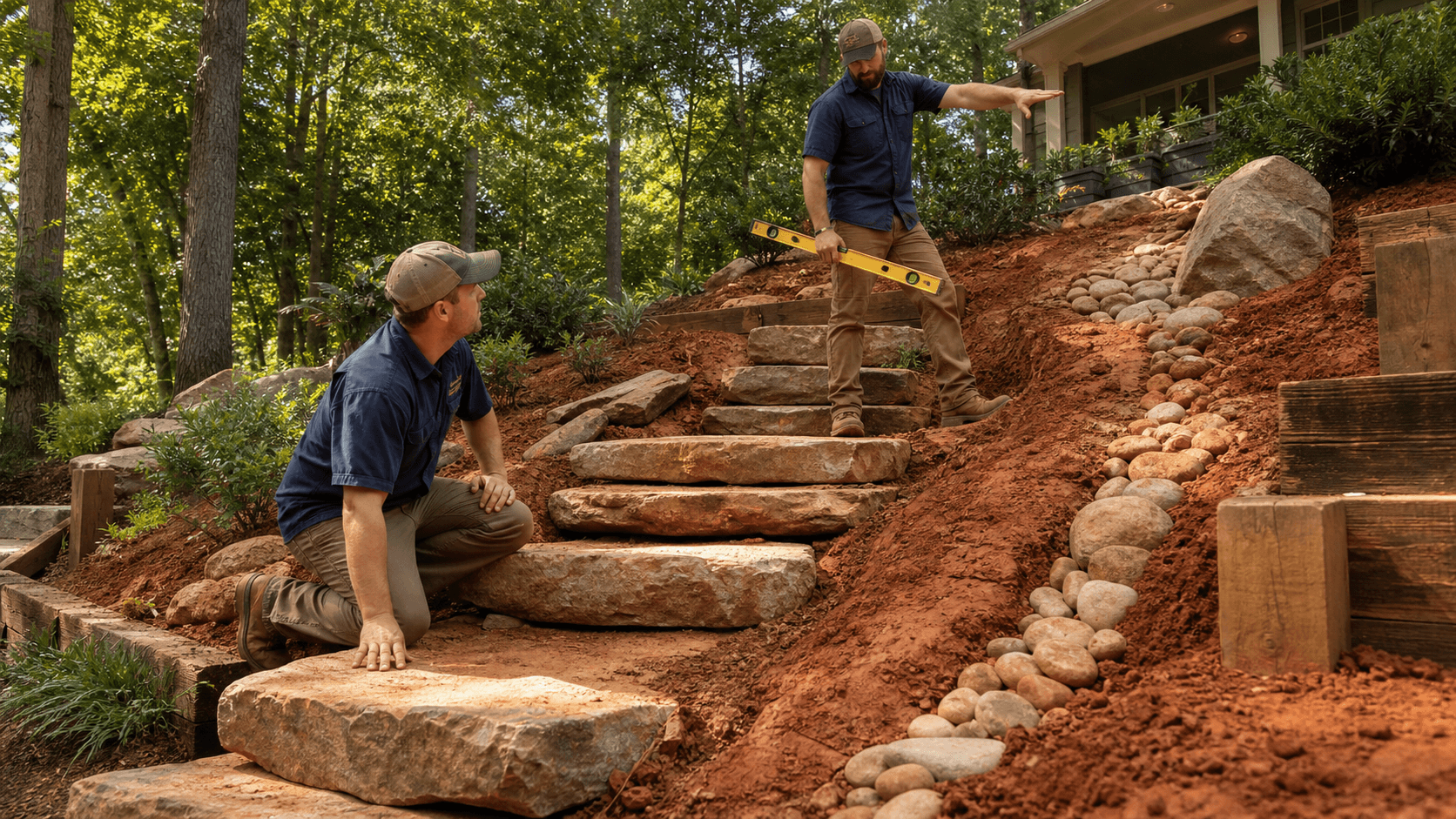
Stone steps on an Alabama clay hillside either stay where you put them or they slowly walk down the slope. Steep grades, heavy rains, and slick red clay don't forgive guesswork. If the steps aren't engineered for the site, they heave, settle, tilt, and collect water right where you need safe footing. Done right, those same steps can turn a risky slope into a solid, everyday path between the house, driveway, and outdoor living spaces.
Stone steps installation in Alabama isn't just about choosing a pretty rock. It's a structural decision about how people move up and down wet clay, in real storms, over many years. With an engineering-first mindset and 75 years of combined leadership experience at Wood-Palmer Outdoor Creations, we look at drainage, grading, and structure first, appearance second. What follows is how we think through whether stone steps on your hillside are realistic, durable, and worth tying into a broader outdoor living plan.
How Alabama Clay and Slopes Change the Rules
Central Alabama hillsides aren't soft forest loam. In places like Hoover, Vestavia Hills, Mountain Brook, and Lake Martin, we see:
- Red clay with high shrink and swell
- Mixed fill from past grading work
- Shale pockets and buried rock shelves
- Slopes that go from gentle to steep in a few yards
Clay behaves differently than sandier soils. It swells when wet, shrinks when dry, and sheds water instead of soaking it in. That movement will push on anything sitting on top of it. Steps set on raw clay or thin bases tend to:
- Tilt forward as clay erodes out from under the tread
- Drop in spots where water softens the subgrade
- Crack or separate if there's any concrete without proper base and relief
We usually think of slopes in three zones:
- Gentle: you can walk it without feeling off balance. Often, we can reshape the grade and use a low retaining edge or two.
- Moderate: you start to lean forward when walking down. These areas need built-in steps and landings so you're not fighting gravity.
- Steep: you feel like you might slide in wet boots. These slopes often need retaining elements, terraces, or walls along with steps.
Every hillside has a natural way water wants to move. Stone steps that work long-term are designed around those paths, not across them. If the steps ignore the flow, the water will attack the sides, scour the base, and eventually win.
Engineering the Foundation Before the First Stone Goes Down
Before we ever talk about tread stone, we study the hillside. On a typical Central Alabama slope, a builder-led team will look at:
- Soil type and depth with simple probing and test digs
- Existing drainage paths and low spots
- Tree roots that may shift soil or search for water under steps
- Any signs of past washouts, rills, or failed walls
Once we understand what the ground's doing, we plan the base preparation. That often includes:
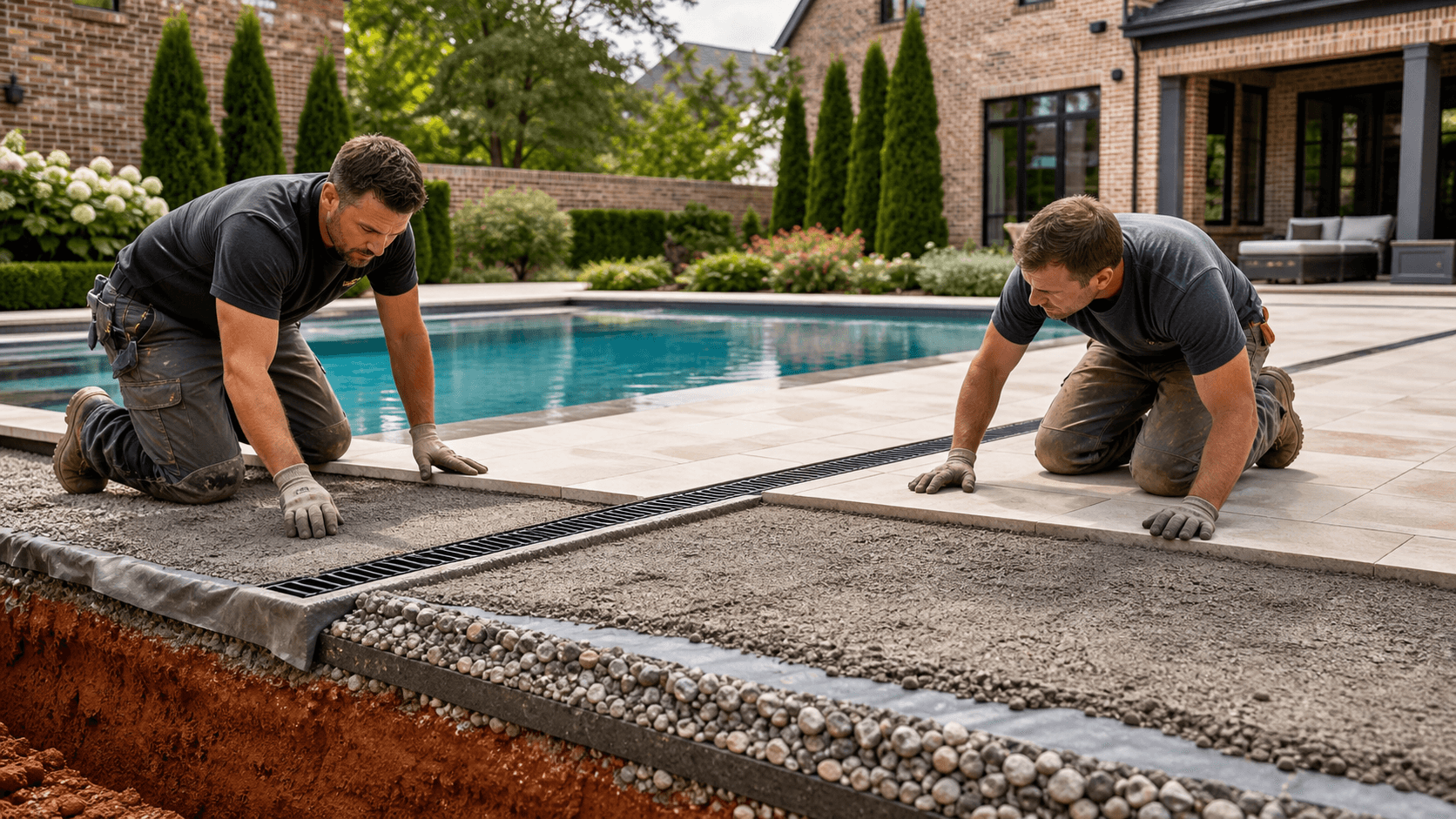
- Excavating down to stable subgrade, not just scraping off the grass
- Compacting clay in thin layers so it's as firm as it can be
- Using stepped footings or concrete pads where the load is high or the soil is suspect
- Choosing open-graded base stone in wet clay zones so water has a place to go
Drainage is built in from the start, not added later. We may use:
- Drain tile behind risers tied to solid daylight outlets
- Weep gaps or joints that let water escape, not build pressure
- Grading above and below the steps so surface runoff goes around, not over, the path
This is where 75 years of combined leadership experience really matters. An experienced eye knows when a spot needs reinforcement instead of just bigger stones. Adjusting the layout before a shovel hits the ground is far cheaper than fixing a failed run of steps.
Choosing Step Types That Work with Alabama Hillsides
Several step styles can work on our clay slopes, but each has tradeoffs.
Common options include:
- Large stone slab treads set on engineered bases
- Block-and-cap systems built like small retaining walls
- Natural boulder steps keyed into the hillside
- Poured concrete cores with stone facing for weight and stability
Tread depth, riser height, and landing spacing are just as important as the material. On a wet, leafy slope you want:
- Comfortable tread depth so your whole foot fits
- Consistent riser heights, usually on the lower side for safety
- Landings every so often to break up long runs and handle grade changes
Heavier materials like thick slab stone and concrete cores resist movement, but they ask more from the base and access. Lighter systems can be easier to work with on tight sites, yet they may need more anchoring or integration with small walls.
Our climate adds a few more rules. Freeze-thaw isn't extreme, but it still affects any trapped water. Fall leaves build up slick layers on shallow treads. Summer storms can turn a mis-graded run of steps into a channel. All of that goes into how we pick materials and lay out the run.
Tying Steps Into the Whole Outdoor Living System
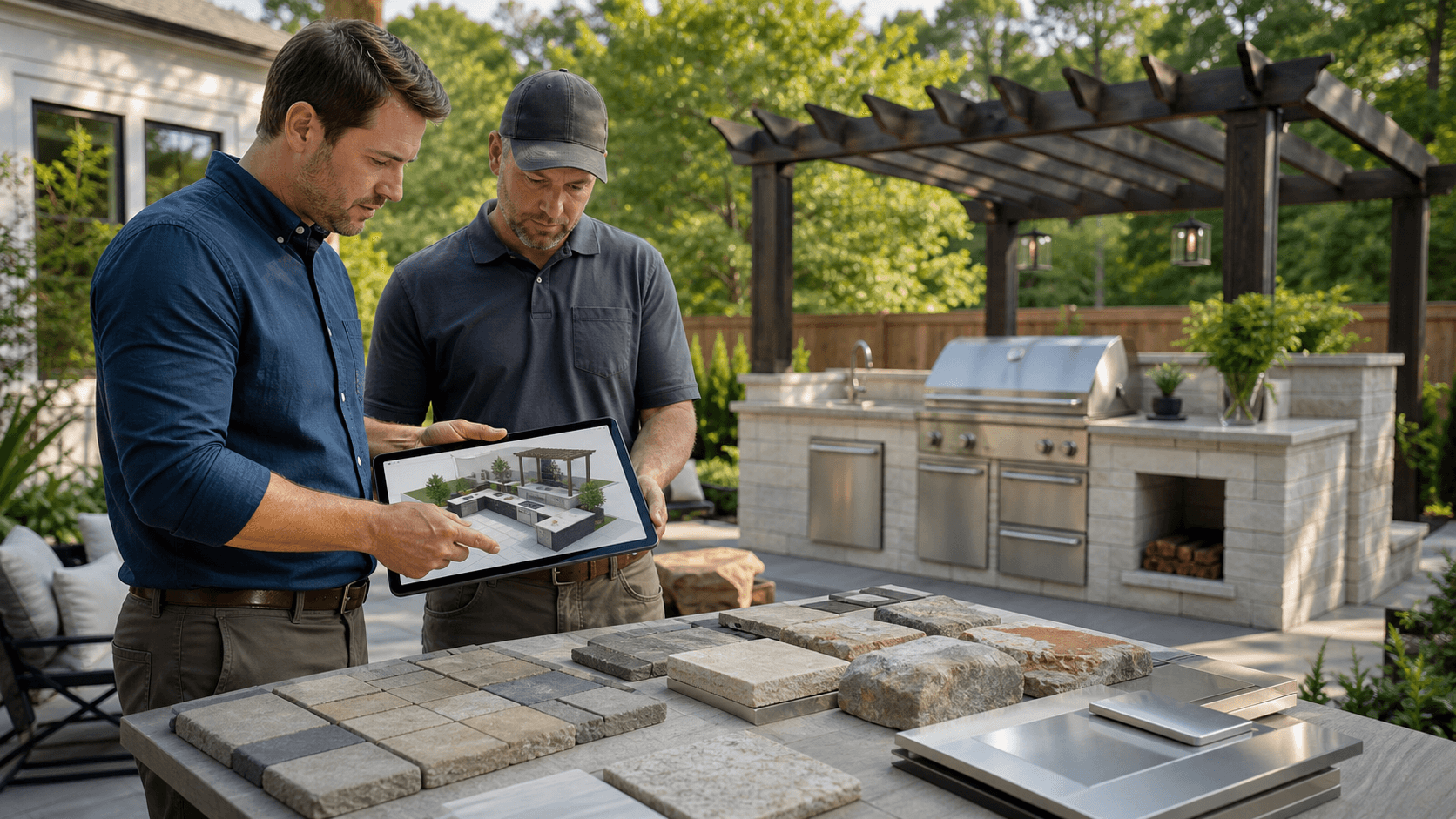
Stone steps on a hillside don't live by themselves. They touch hardscape, landscape, structures, irrigation, and landscape lighting decisions.
A thoughtful plan will consider how the steps connect:
- From the driveway down to patios or outdoor kitchen areas
- From upper lawns to lower fire features or sitting spaces
- To doors, gates, and walkways so there's a clear, safe path in all weather
An integrated design-build approach, with one team and one standard, lets us handle:
- Grade transitions between patios, walks, and steps without awkward gaps
- Edges where steps meet retaining elements so water doesn't get trapped
- Planting beds that help hold soil and soften structure rather than block drainage
Irrigation and drainage need to be in the same discussion. A spray head that hits stone treads all day or a slow leak behind a riser will slowly undermine good work. Properly placed lines, heads, and drains protect both the hillside and the steps.
Owner input is important here too. We want to know:
- Which routes you'll actually use every day
- What views matter from key spots on the property
- Any future plans for patios, fire features, or structures down the slope
Planning for those early helps avoid tearing out a solid set of steps just to reach a new space later.
What Drives Cost and Long-Term Value on Clay Hillsides
Several factors drive how involved a stone steps installation in Alabama will be:
- Slope steepness and length
- Soil conditions, fill, and buried rock
- Access for machines and material delivery
- Choice of stone or step system
- Needed drainage, footings, and any retaining or wall work
There's a big difference between stacking stone directly on clay and building a fully engineered system. The first may look fine for a short time, then start to lean and settle. The second takes more planning and structure but pays you back in lifespan, lower maintenance, and reduced risk of washouts.
Seasonal timing can help too. Many Alabama homeowners like to build in the fall, when soil moisture is balanced and temperatures are friendly for compaction, concrete, and plant establishment around the steps. Working inside the right weather windows helps the base cure and settle the way it should.
In the end, the real value of well-built stone steps isn't just how they look on day one. It's how they protect the hillside, control erosion, and make the rest of your outdoor living space safer and more usable for the long haul.
When you're ready to talk through what makes sense on your slope, you can reach Wood-Palmer Outdoor Creations at:
Phone: (205) 305-7780
Email: info@woodpalmer.com
Contact form: woodpalmer.com/contact
Get Started With Your Project Today
Transform your sloped yard or entryway into a beautiful, functional feature with our expert stone steps installation in Alabama. At Wood-Palmer Outdoor Creations, we listen carefully to your goals and design durable stone steps that match your property and lifestyle. If you are ready to discuss ideas, timelines, and budget, contact us and we will help you plan your next outdoor upgrade.