Building Patios That Can Handle Birmingham Summers
Natural stone patios in Birmingham have to work a lot harder than patios in cooler, flatter places. Our summers bring intense sun, heavy humidity, and fast afternoon storms that can dump water in a hurry. Under that, we have red clay that holds water, swells, shrinks, and loves to move anything sitting on top of it.
If you live in Mountain Brook, Vestavia Hills, Homewood, Hoover, or anywhere across Jefferson and Shelby County, your patio is not just a pretty surface. It's a structure that has to handle heat, water, and clay movement day after day. That's why we see natural stone as a long-term structural solution, not just decoration.
As a design-build firm with an engineering-first mindset, we don't start with a stone catalog. We start in the yard. We look at soils, grading, and how water already runs through the property. Then we match stone type, layout, and details to that specific site so the patio works with the ground, not against it. Because the same team is designing and building, the plan, the drainage, and the structural details stay aligned from the first sketch through the last stone.
How Birmingham Clay Affects Patio Performance
Birmingham's red clay looks solid when it's dry, but it acts very differently once the weather changes. It's dense, slow to drain, and has a high shrink-swell potential. When it gets wet, it expands. When it dries out, it contracts. That movement can push, tilt, or crack a patio that's not built for it.
A stone patio set on bare clay or a thin, loose base will usually show problems over time, like:
- Standing water on the surface
- Stones rocking or tipping underfoot
- Joints opening up and catching chair legs
- Water running back toward the house
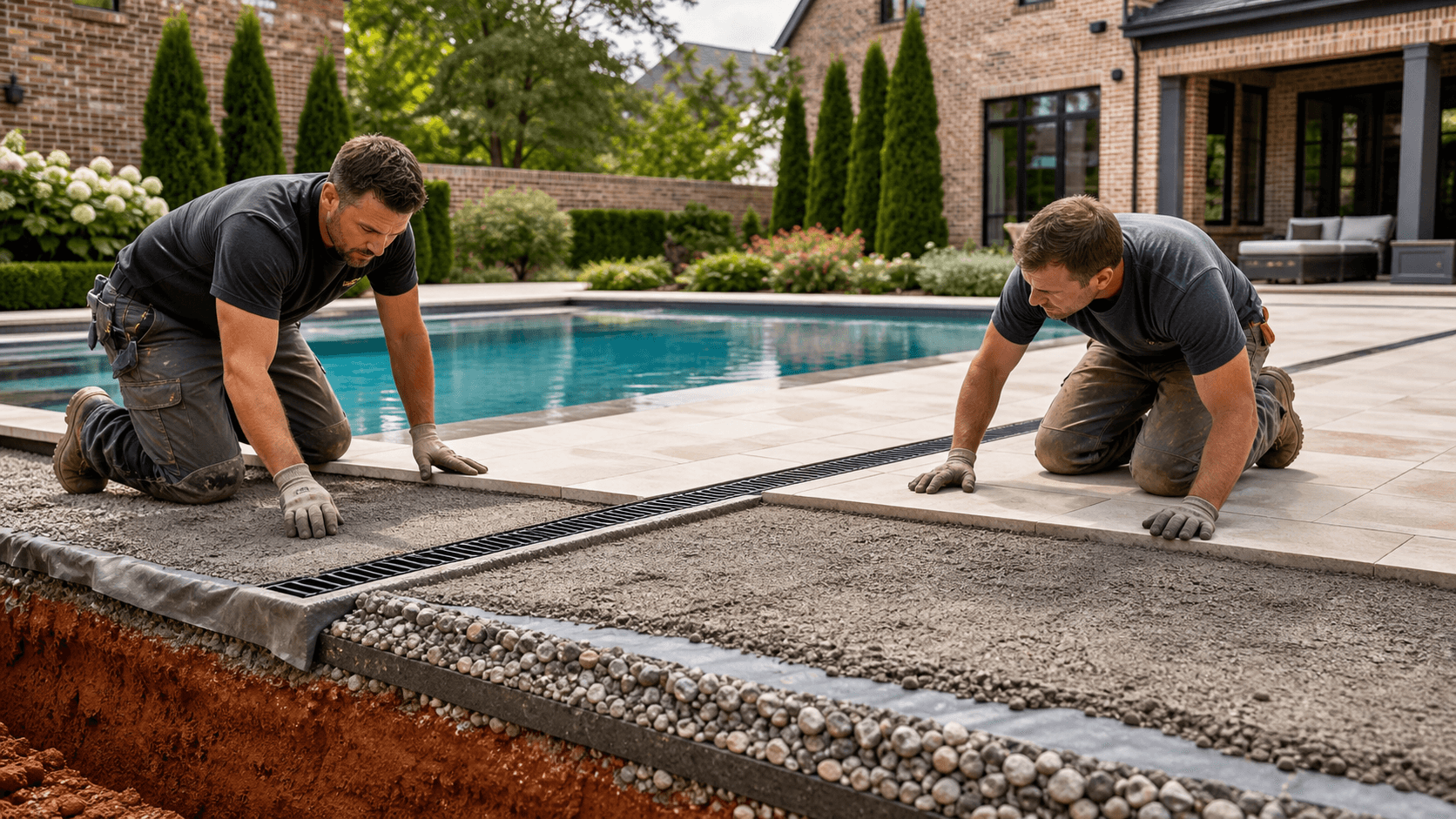
Proper base preparation is the first line of defense. For our clay-heavy soils, that typically means:
- Excavating deeper than many homeowners expect, to get weak material out
- Installing a thick, compacted aggregate base in layers
- Using the right stone mix for the base so it drains and locks together
- Compacting to a clear standard so the base acts like a single, solid layer
Just as important is how the patio is pitched. We design a subtle slope that sends water away from the house and keeps it from pooling under furniture. On most properties, we also:
- Tie the patio into existing slopes rather than fighting them
- Direct surface water toward open lawn areas or designed drainage points
- Keep water away from foundations, door thresholds, and garage entries
That combination of base, grading, and drainage is what lets natural stone do its job over the long term in our clay.
Choosing the Right Natural Stone for Heat and Glare
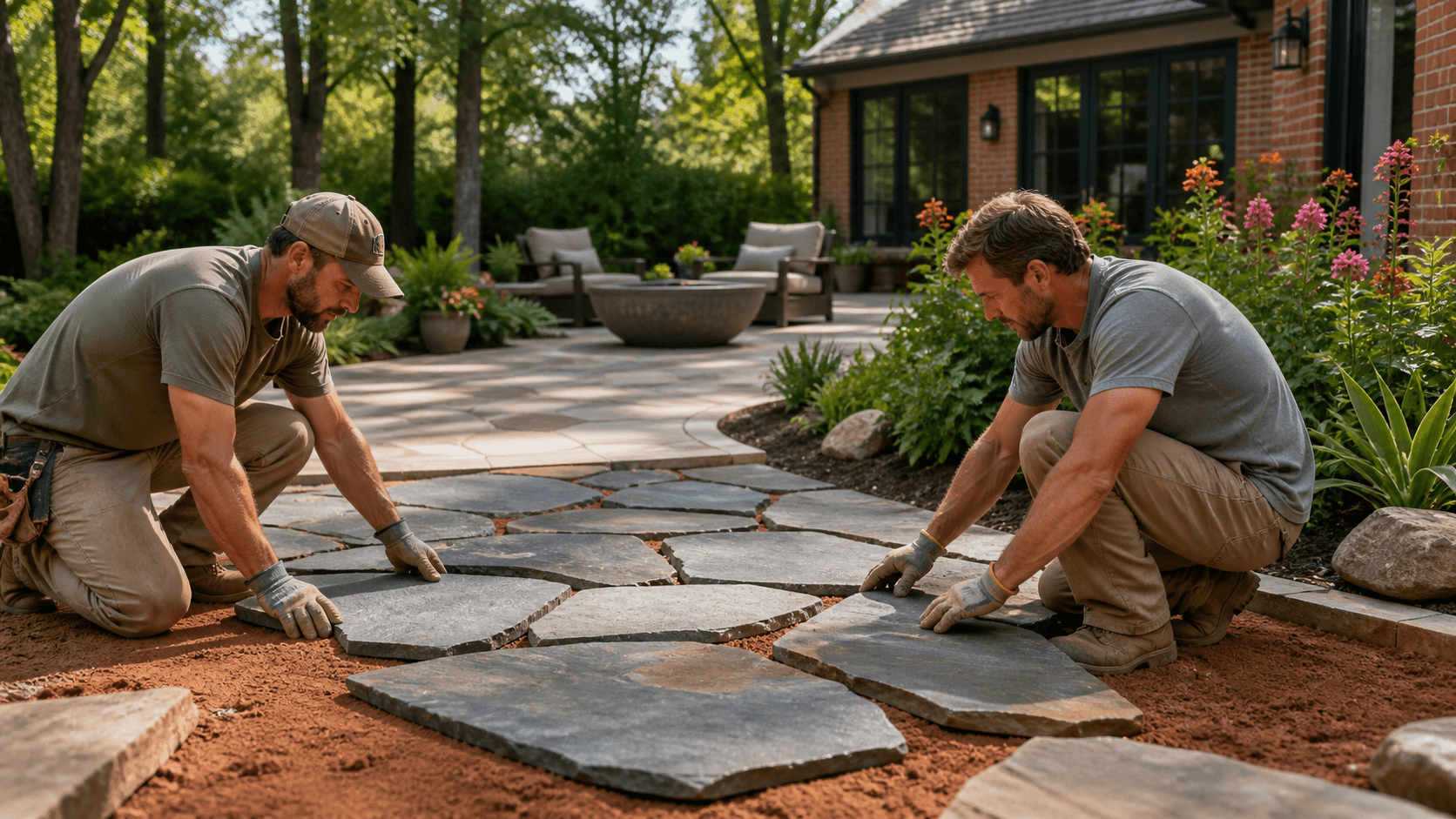
Not all stone acts the same in Birmingham heat. Some colors and textures stay comfortable; others can feel like a parking lot in August. We look at both appearance and performance when we suggest options like flagstone, sandstone, bluestone, and limestone.
Here's how we think through it:
- Heat absorption: Dark, dense stones soak up more sun and can get very hot on bare feet.
- Surface temperature: Lighter stones usually stay cooler and reflect more light.
- Traction: A slightly textured finish gives better grip when afternoon storms blow through.
For south- and west-facing patios that take direct afternoon sun, we typically lean toward:
- Lighter, earth-tone stones that reduce heat buildup
- Textured or cleft finishes instead of polished surfaces
- Joint layouts that break up large, uninterrupted slabs
Structure matters just as much as color. Stone thickness and strength have to match how the space will be used.
We look at:
- Stone thickness and flexural strength
- Whether the stone is supported on a rigid base or flexible base
- How loads from furniture, vehicles, or planters will transfer into the base
Because design and construction are handled by one integrated team, those structural decisions don't get lost between drawings and the crew on-site. That way, the patio doesn't just look solid on day one, it stays solid.
Integrating Patios with Walls, Steps, and Drainage Systems
In Central Alabama, a patio is rarely a flat rectangle out the back door. Our properties in places like Mountain Brook, Vestavia Hills, and Hoover often have slopes, elevation changes, and existing features that all have to work together.
A natural stone patio will often tie into:
- Seat walls that provide structure and extra seating
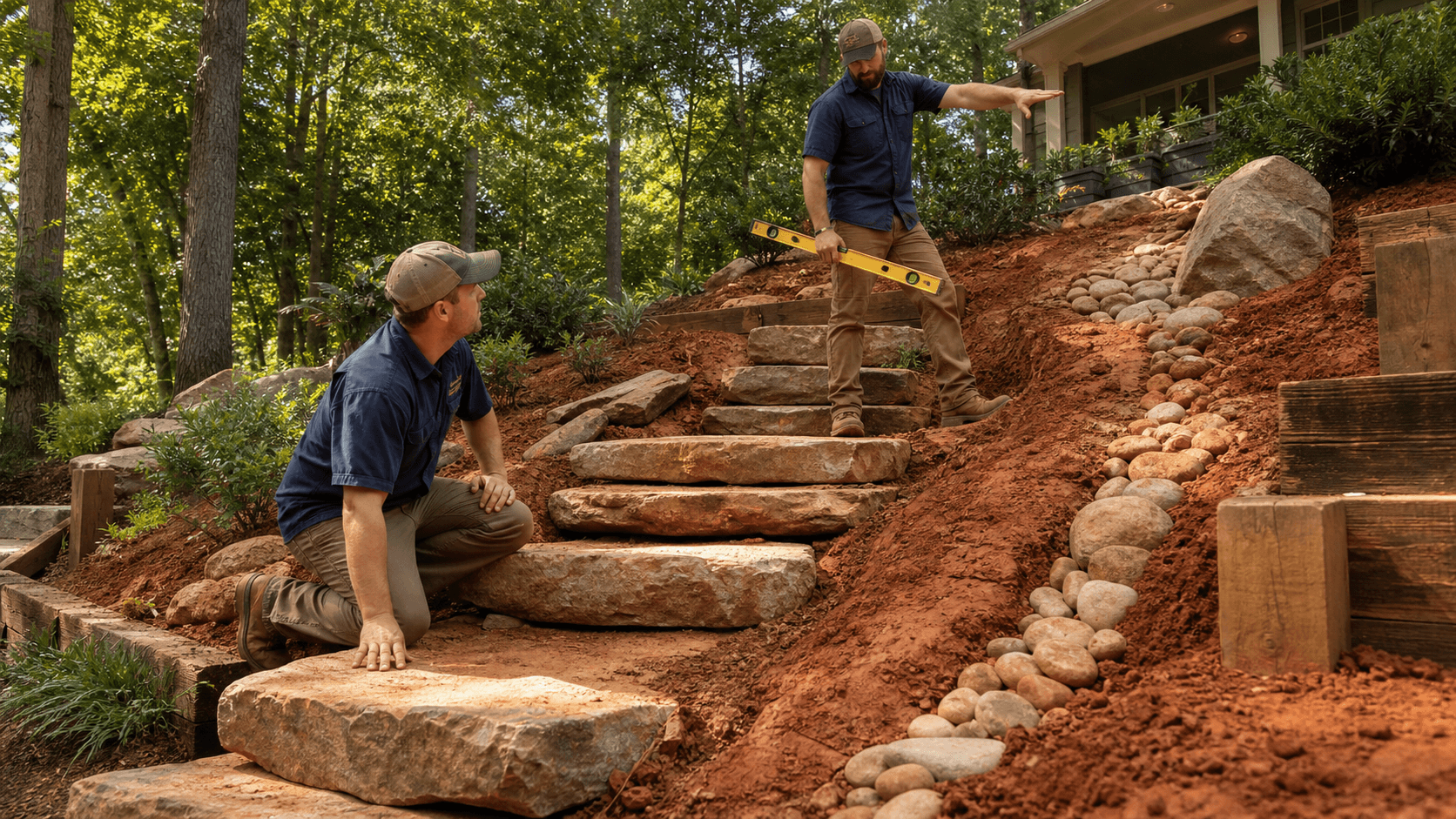
- Steps that handle grade changes down into the yard
- Retaining walls that hold back higher areas of clay
When these pieces are designed as one system, they support each other instead of fighting each other. The same is true for drainage. If we trap water behind a wall or let it sit under stone on clay, problems are guaranteed.
Integrated drainage details might include:
- Trench drains at doors where patios meet the house
- French drains behind retaining walls to relieve pressure
- Subsurface piping that collects and carries water out to lower areas
Because we work as an integrated design-build team across hardscape, landscape, structures, irrigation, and landscape lighting, we can plan for how everything interacts. Plant beds, downspouts, and step lighting all get laid out so they help move water where it should go and keep the patio safe and usable. That single-team approach keeps one standard of quality across the whole project.
Designing Natural Stone Patios in Birmingham for Year-Round Use
In our climate, a patio is not just for spring. With the right plan, you can use it through football season, mild winters, and the early warm days of the year. Timing the build during drier windows helps the base work go smoothly and gets the space ready when you actually want to be outside.
We think about comfort in both July and January:
- Shade: Roof overhangs, pergolas, and well-placed trees all help cut direct sun.
- Airflow: Open sides and smart furniture placement let breezes move through.
- Orientation: Shifting the patio even a little can reduce late-afternoon glare.
Lighting and irrigation also need special attention around stone. With lighting, we look at:
- Recessed step and wall lights that don't create trip hazards
- Low-glare fixtures so stone doesn't reflect harsh light at eye level
- Wiring paths that are protected within the hardscape structure
For irrigation, the goal is to water plants, not soak stone. That means:
- Keeping spray heads aimed away from primary walking areas
- Setting zones so stone has time to dry and doesn't stay slick
- Protecting the base from constant overspray that can soften clay beneath
When the structure, stone choice, shade, water, and light all line up, a natural stone patio in Birmingham stops being just a project on a list and becomes a space your property can support for years in our clay and heat.
Get Started With Your Project Today
If you are ready to bring your outdoor vision to life, our team is here to help you design and build standout natural stone patios in Birmingham that truly fit your home and lifestyle. At Wood-Palmer Outdoor Creations, we take the time to understand how you want to use your space so every detail feels intentional and long-lasting. Tell us about your project goals and budget, and we will guide you through the next steps with a clear, straightforward plan. Ready to get started? You can email us, call (205) 305-7780, or contact us online to begin.