Stop Letting Water Wreck Your Stone Patio
Water is usually the last thing people think about when they plan a stone patio, but it's one of the main things that decides how long that patio will last. In Homewood, with older neighborhoods, tight side yards, and sloped lots, water likes to run right toward patios, foundations, and basement walls. If the drainage under your stone patio is wrong, you'll see the results on top.
Poor drainage isn't just a few puddles after a storm. It leads to settling, heaving, loose stones, slick algae, and long-term structural problems along the back of your house. The finished stone may look great on day one, but if the base and drainage are wrong, the whole system starts to move.
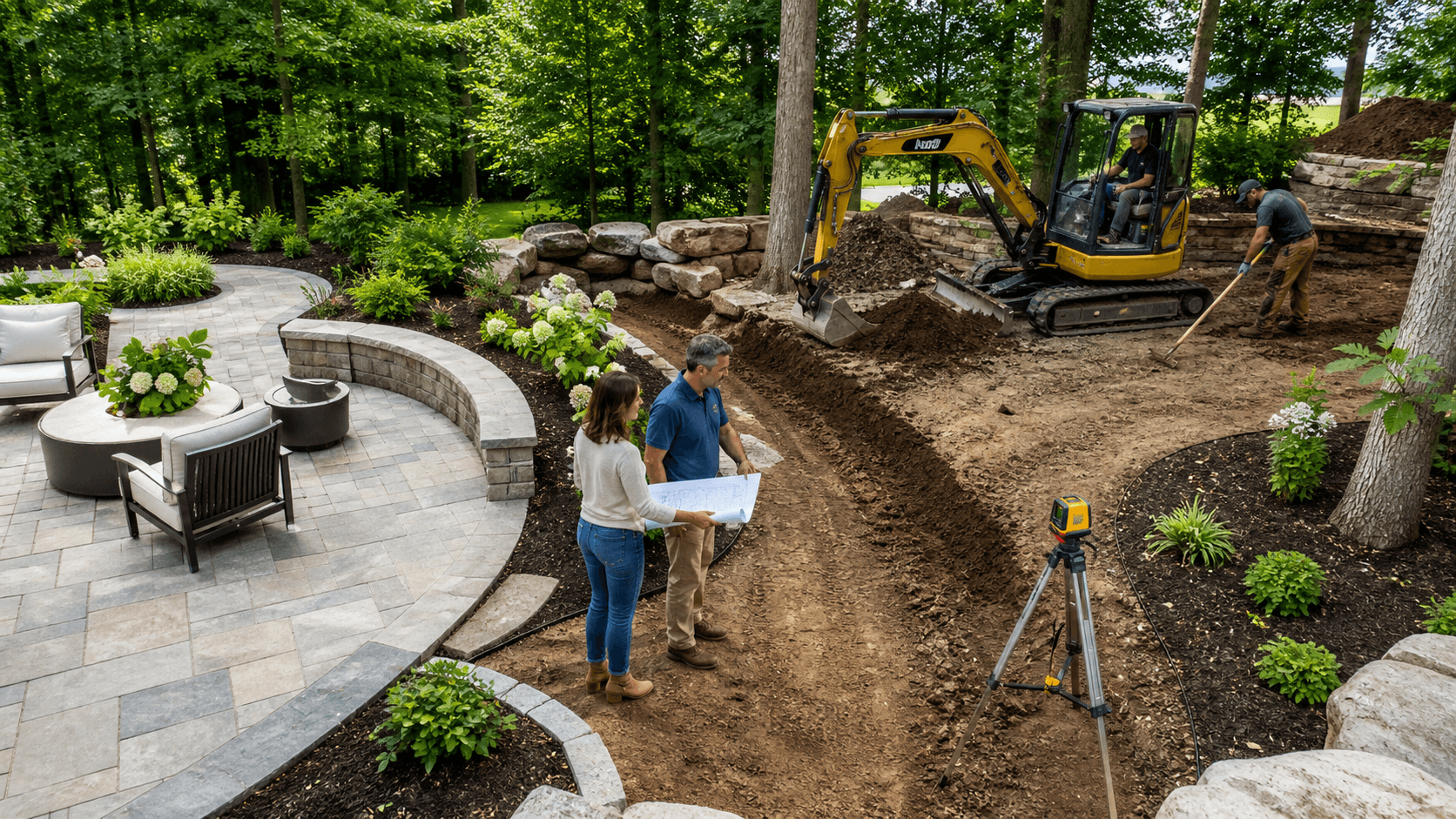
Here, we'll walk through the most common drainage mistakes under stone patios in Homewood yards and what a proper design and build process should cover before the first shovel of dirt is turned. At Wood-Palmer Outdoor Creations, with 75 years of combined leadership experience, we treat drainage as structural in Central Alabama's clay-heavy soils, not as a last-minute add-on.
How Birmingham Hillsides Push Water Through Your Patio
Homewood sits on rolling ground. Many lots are cut into hillsides, with homes facing the street and yards dropping off toward the back. That means rear patios and walk-out basements often sit directly in the line of water coming off the upper yard.
Alabama red clay and compacted subsoils don't absorb water very fast. When rain hits that tight soil, it tends to:
- Run along the surface instead of soaking in
- Build up pressure against basement walls and patio bases
- Seek the lowest point, often right where your patio meets the house
The climate doesn't help. Gulf-fed storms can dump a lot of rain in a short time. When that happens, undersized drains and "eyeballed" grading quickly get overwhelmed. Water looks for gaps in joints, low spots, and unprotected edges.
Relying on what the yard seems to do now, or just pitching the patio "a little away from the house," is a common mistake. Once you add hardscape and structures, you change how water moves. A professional design process has to re-think drainage, not assume the existing yard will handle it.
Common Drainage Mistakes Under Stone Patios
Several problems show up again and again in Homewood when a patio is built without real drainage planning.
Relying on flat or back-sloped patios
If the surface slope isn't at least about 1 to 2 percent away from the house, water can sit between stones or even run back toward the foundation. "It looks level" isn't a measurement. Grade has to be checked with proper instruments so it protects both the patio and the home.
Skipping a true drainage layer
Another big mistake is laying stone on:
- Topsoil or organic material
- Straight on clay subgrade
- A thin layer of sand with no compacted aggregate base
Without a free-draining base, water gets trapped on top of Alabama clay. That trapped water softens the subgrade, creates pockets, and can speed up freeze-thaw movement even in our relatively mild winters. Over time, that leads to rocking stones and uneven surfaces.
Ignoring where roof and surface water discharge
Downspouts that dump water right at the patio edge or steps slowly wash out joints and base material. New grades that don't tie into the yard drainage can create a "new lake" along the lower edge of the patio. Good drainage solutions in Homewood start with correcting these design oversights before any stone is set in place.
What Proper Base Preparation Really Looks Like
A long-lasting patio in our soil and climate starts below the stone, at the subgrade.
Building on stable, engineered subgrade
First, all organic material and soft soils need to be removed. The remaining subgrade is then compacted in lifts so it has the bearing capacity to support not just the stone, but also furniture, grills, or in some cases vehicles. Base thickness is adjusted to match soil conditions and use, not guessed on the fly.
Creating a drainage-friendly base
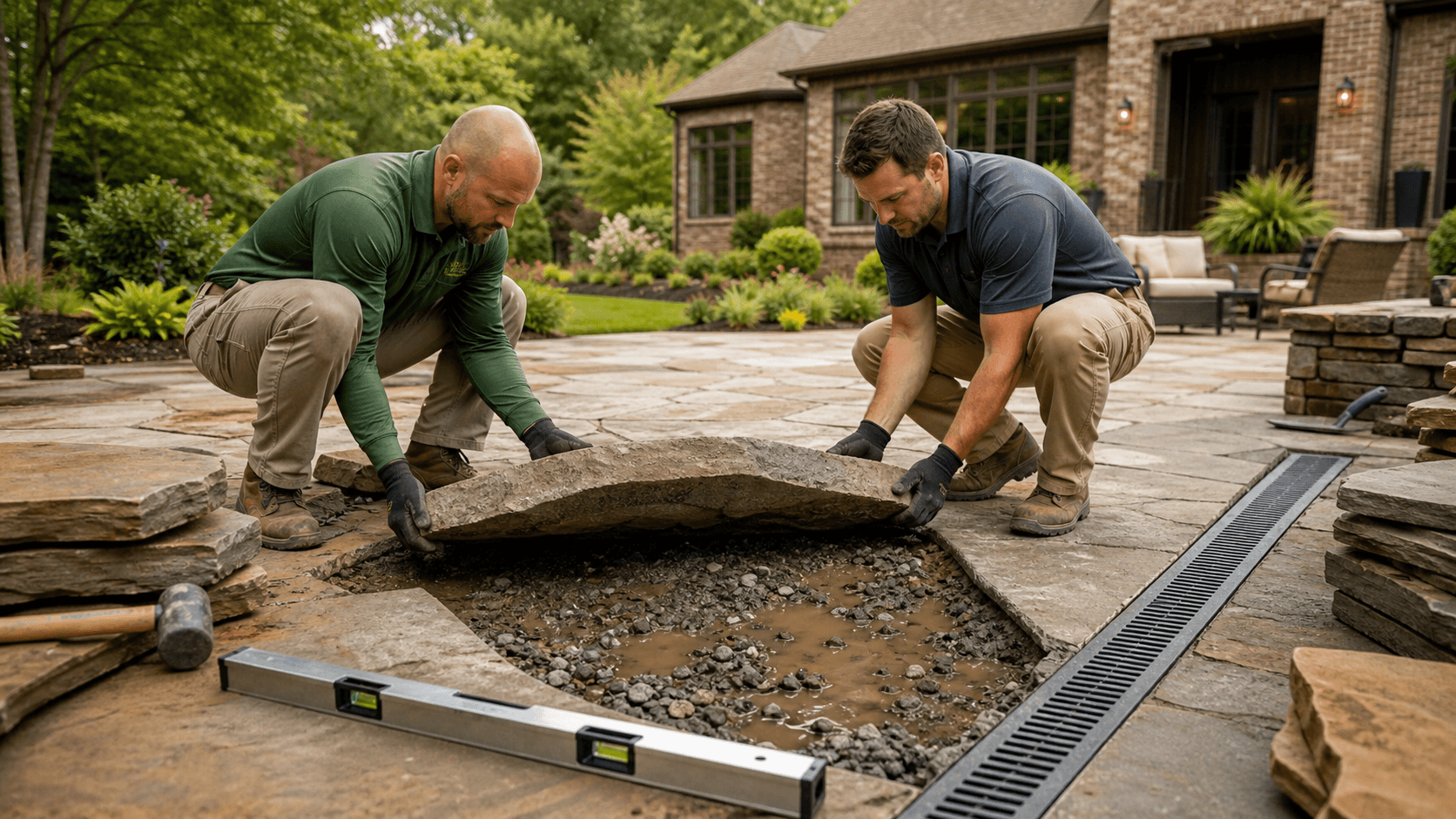
A proper patio base uses graded aggregate, not just sand. That aggregate, when compacted correctly, creates a structural layer that also lets water move sideways. Instead of sitting trapped in small pockets, water can travel laterally to drains or daylight out of the system.
Managing transitions to structures and edges
Key details include:
- Keeping a controlled joint between the patio and house foundation
- Setting patio elevations so they respect the finished floor height inside
- Using edge restraints or bordering materials that lock the base in place while still allowing water to exit
If the edges are built like a bathtub, water and fines stay trapped inside the patio system, which leads to saturation and movement. This level of base preparation is standard procedure when we integrate hardscape, structures, irrigation, and landscape lighting into one coordinated plan.
Smart Drainage Solutions in Homewood Yards
Once the subgrade and base are handled correctly, the next step is moving water where it should go.
Directing water before it reaches the patio
It's always better to keep water away from the patio than to try to fight it after it gets there. That might mean:
- Extending or re-routing downspouts
- Tying roof outlets into underground lines that daylight away from hardscape and the foundation
- Adjusting grades uphill from the patio, using subtle swales or grade breaks that blend into the landscape
Draining water through and under the patio
Where water will cross or collect, we often see the need for:
- French drains under or beside patio edges
- Catch basins at low corners or step bottoms
- Trench drains in tight pinch points
Open-graded base materials and properly placed geotextile fabric can let water move through the base in a controlled way while still holding structural integrity.
Coordinating drainage with landscape and structures
Planting beds, retaining walls, steps, and structures, including outdoor kitchens as part of that structures category, can either help or hurt drainage. For example, a retaining wall without a drain behind it pushes water toward the patio. Irrigation zones that overspray onto the stone surface keep joints and base saturated.
When drainage is integrated into the overall plan, plantings, irrigation, and landscape lighting work with the grading instead of fighting it. Details like where a downspout pops out near a planting bed or how a step meets a patio can make a real difference in how long the system stays stable.
Signs Your Existing Patio Has Drainage Problems
Many Homewood patios are already showing drainage issues. Some of the common red flags around the patio include:
- Standing water after normal rain
- Slick or slimy spots that grow algae or mildew
- Washed-out joint material between stones
- Rocking stones, trip edges, or gaps at the house or steps
The impacts can reach beyond the patio itself. Recurring dampness along the foundation wall, musty basement smells, or erosion channels in nearby beds often tie back to how the patio handles water. Irrigation that sprays directly on the stone or against the foundation can make these symptoms worse.
If the underlying grading and base are wrong, surface patch fixes like sweeping in more sand or re-setting a few stones won't solve the problem for long. A proper assessment looks at how water moves across the entire yard, how the soil responds, and how the patio ties into the house and surrounding features. That big-picture view is what leads to lasting drainage solutions in Homewood, not just quick surface repairs.
If you're seeing some of these signs around your own patio, let's talk about your property and what's happening under the stone. Call (205) 305-7780, email info@woodpalmer.com, or reach out through the contact form at woodpalmer.com/contact to discuss the right way to handle drainage on your site.
Get Started With Your Project Today
If water is pooling in your yard or near your foundation, we are ready to help you solve it with dependable drainage solutions in Homewood. At Wood-Palmer Outdoor Creations, we evaluate your property, identify the root causes of drainage issues, and design fixes that protect your landscape for the long term. Reach out today through our contact page so we can schedule a consultation and create a plan tailored to your home.