Keeping Water Out of the Garage and Off the Front Walk
Driveway-to-walkway transitions around Vestavia Hills are small areas that handle a lot of water. The garage apron, the sidewalk where it meets the drive, and the front entry landing all catch roof runoff and sheet flow coming down the hill. When those spots are not graded or drained correctly, water goes to the wrong place, usually right to the garage slab or front steps.
Here in Central Alabama, we deal with sloped lots, tight clay, and quick, heavy storms. Water does not soak in fast, so it runs across hard surfaces and stacks up at low points. At driveway-to-walkway connections, that can mean slick steps, sinking concrete or pavers, and long-term stress on your outdoor living areas. The practical goal is simple: keep water out of the garage, keep the walk safer to use, and protect the structure you have already invested in.
How Grade and Clay Soils Affect Driveway Drainage
Vestavia Hills has plenty of hillside driveways, basement garages, and cross-slope lots. On many homes, the natural grade pushes water toward the house instead of away from it. Older driveways were often poured when rooflines were smaller and there were fewer hard surfaces, so current runoff volumes can overwhelm the original grading.
Central Alabama clay makes this worse. It drains slowly and holds water against concrete, masonry, and compacted bases. That can lead to:
- Water "perching" under slabs and pavements
- Heaving and cracking along driveway-to-walkway joints
- Separation at the line where the driveway meets the garage slab
When we stand on a site and talk through drainage solutions in Vestavia Hills, a few grading terms usually come up:
- Positive drainage: surfaces and soil sloping away from the foundation, not back toward it
- Correct slope: enough pitch to move water, but not so much that it causes erosion or trip hazards
- Controlled flow paths: clear paths where water is meant to run, instead of random channels
- Tie-in points: where new work connects into existing swales, ditches, or yard grades
The goal is to work with the existing topography instead of fighting it.
Managing Runoff at the Garage Apron
The garage apron is a common trouble spot. We often see:
- Water standing right at the doors
- Water rolling under the weatherstrip and onto the garage slab
- Tire ruts where the drive meets the apron
- Cracking or settlement where the driveway and garage slab meet
There is no one "standard" fix. An experienced contractor looks at how much water is coming down the driveway, how steep it is, and where the water can be safely discharged. Based on that, we may recommend:
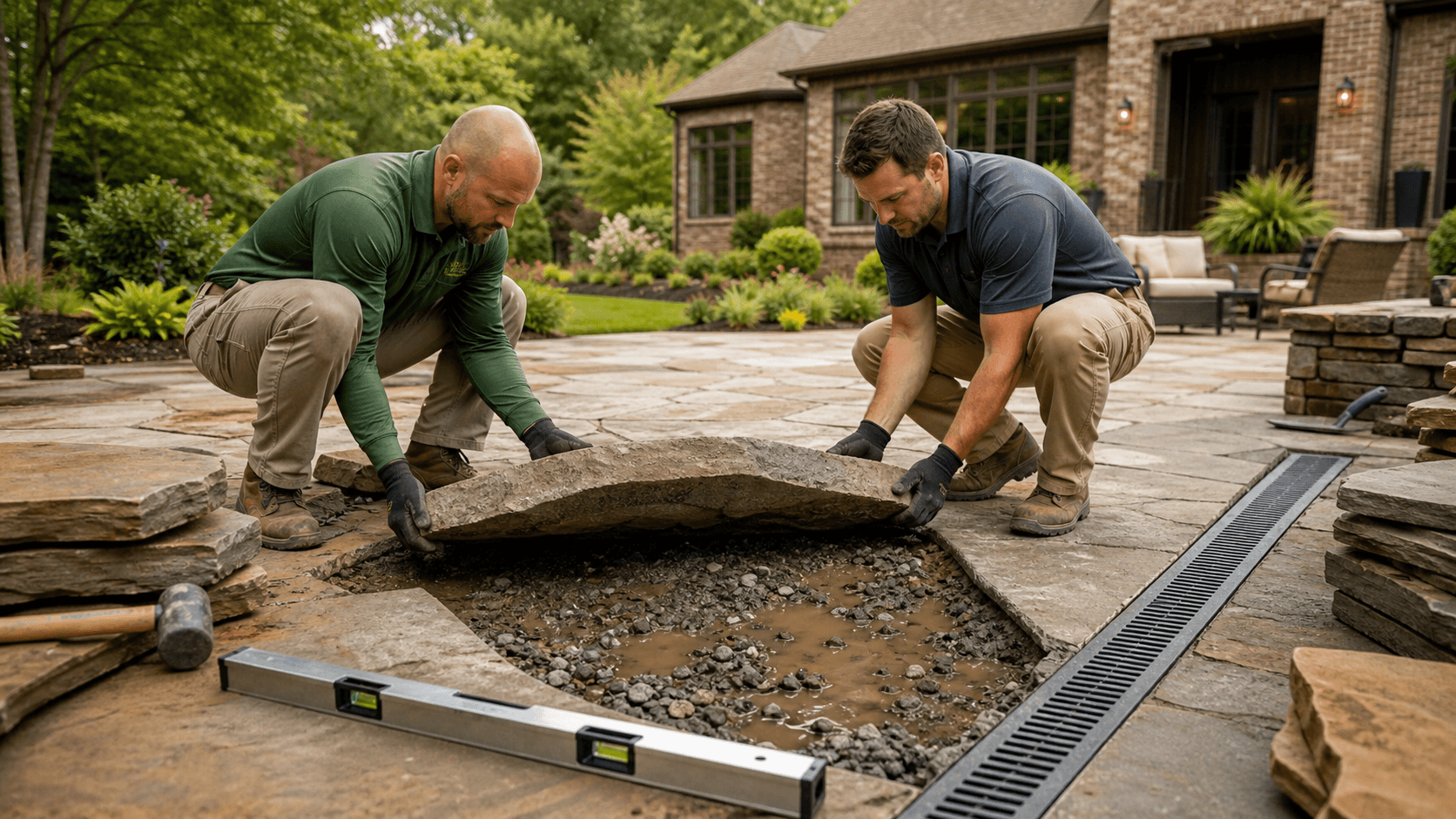
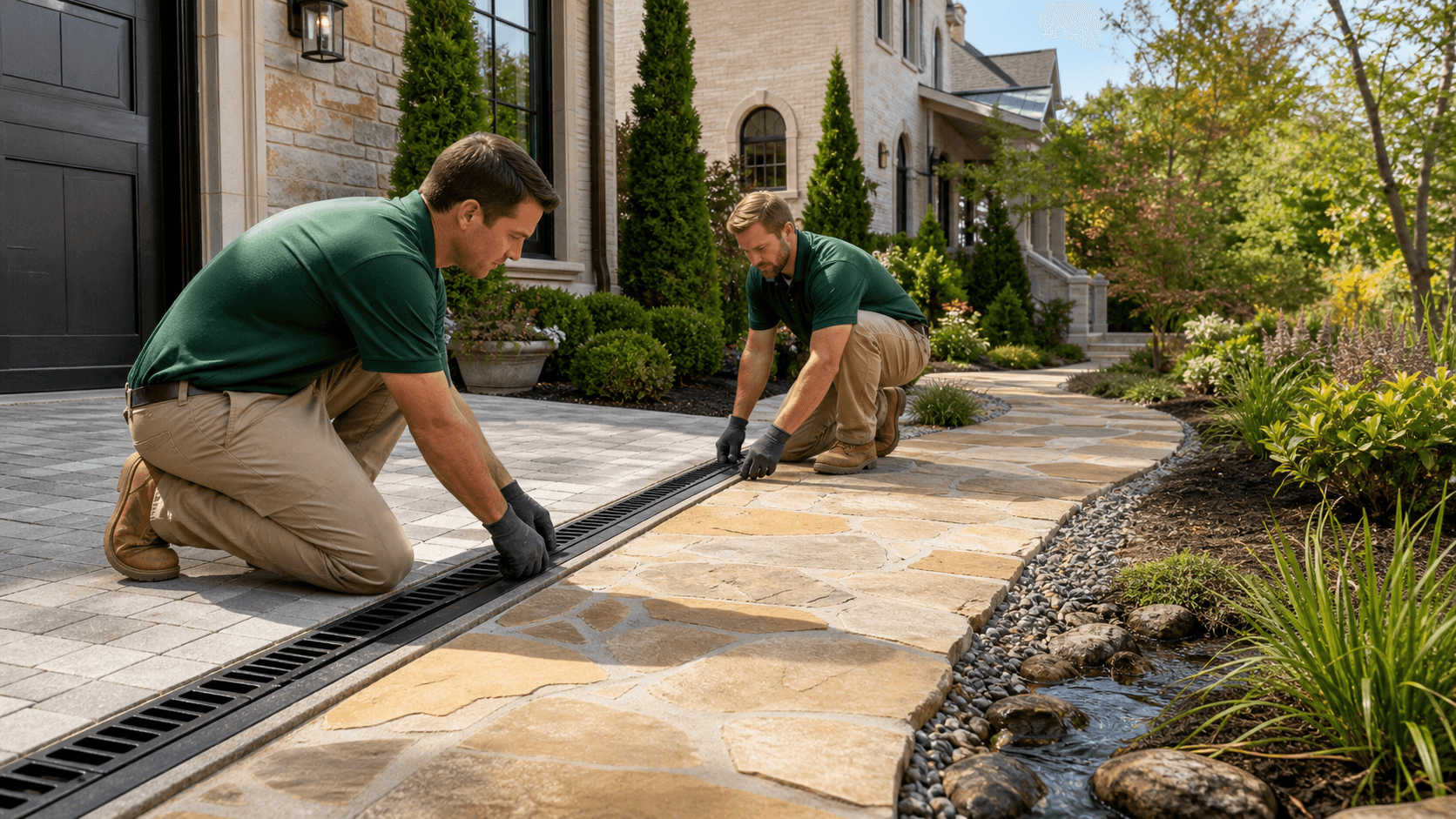
- A trench or channel drain at the apron to intercept flow before it reaches the doors
- Re-grading the driveway section that approaches the garage and tightening the concrete apron
- A combination of surface drains and underground pipe to move water to a better outlet
At Wood-Palmer Outdoor Creations, we treat this as a structural detail, not just a cosmetic repair. That means:
- Proper subgrade compaction under any new concrete or hardscape at the apron
- Control joints placed at slab transitions to handle movement cleanly
- Drains and pipes tied into a planned system, not just allowed to sheet across the surface
Our 75 years of combined leadership experience help us "read" existing slabs, cracks, and stains so we can see how the garage area has been handling water over time.
Better Transitions at Sidewalks, Front Walks, and Entry Landings
Many Vestavia Hills homes have a short walk from the driveway to the front steps, a few risers up to the porch, and maybe a narrow side-yard walk. In a storm, those narrow runs can quickly turn into channels. Low spots at the tie-in between driveway and sidewalk often hold water or stay slick.
There are several practical drainage solutions in Vestavia Hills that work well in these areas:
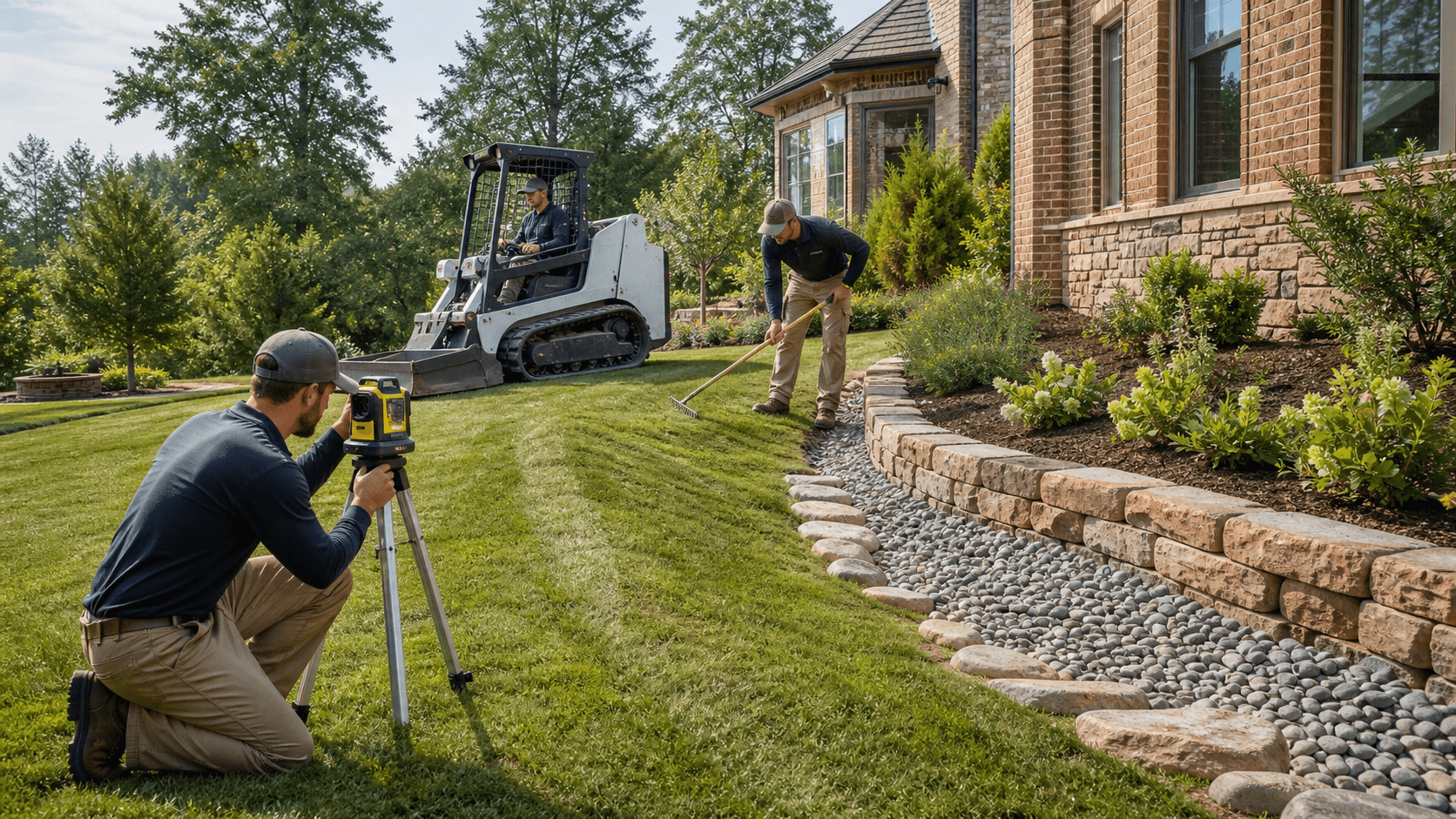
- Subtle regrading along walk edges so water has a defined escape path
- Cross-slope on the walk surface so water sheds to one side instead of sitting in the middle
- Catch basins at natural low points, tied into underground pipe
- Hardscape layouts that respect drainage lines, avoiding dead-flat stretches in the wrong spot
Hardscape and planting beds have to work together. We set walk elevations in relation to turf and beds so water:
- Flows toward drains or swales, not back toward the house or porch
- Has a clean, open path that is not blocked by edging or stacked mulch
- Does not get trapped in pockets where leaves, pine straw, and acorns collect each fall
Entry landings are another collection point. Roof runoff from upper stories, water off the driveway, and irrigation overspray all meet right in front of the door if the grading is off. To keep that area dry and stable, we look at:
- The height of the porch and landing relative to the driveway and yard
- Step riser heights that allow each tread to have correct slope without feeling awkward to walk
- Discreet area drains or slot drains at the base of stair runs, especially where a walk meets a landing
When moisture stays trapped at landings, you can see white efflorescence on masonry, surface flaking, failed joints, and slippery algae growth. Fixing the slope and giving water a clean way out is more reliable over time than trying to patch the surface with non-slip coatings.
Tying Driveway Drainage Into the Whole Property
Solving driveway-to-walkway problems by themselves usually does not hold up. Water always goes somewhere. If we catch it at the garage apron and dump it right beside the front walk, we have just moved the issue, not solved it.
That is why we look at the full property when we design drainage solutions in Vestavia Hills. On a typical site, that includes:
- Roof downspout locations and how they discharge
- Any existing French drains or yard drains
- Swales along property lines or between houses
- Possible outlets toward a lake, a common area, or the street
Hardscape, plantings, irrigation, and landscape lighting all play a part. When we adjust grades:
- Irrigation heads may need to be reset so they are not overspraying onto new slopes
- Low-voltage lighting wire needs to stay above permanent water lines, not buried in soggy trench bottoms
- Planting beds can be used to slow, cool, and filter runoff, but we avoid creating berms that block critical flow paths
Planning Drainage Upgrades Before Winter Rains
Fall is a smart time for Vestavia Hills homeowners to address driveway and walkway drainage. Cooler, drier weather is often better for concrete and hardscape work, and it is helpful to have systems in place before winter fronts bring steady rain and freeze-thaw cycles that stress joints and surfaces.
Several factors influence how involved a project becomes:
- Overall lot slope and how hard the property is pushing water toward the house
- Access for equipment on tighter hillside streets or long drives
- Existing concrete or paver condition and whether sections can be preserved or need full rebuild
- How much underground pipe and drainage structure is required to get water to a proper outlet
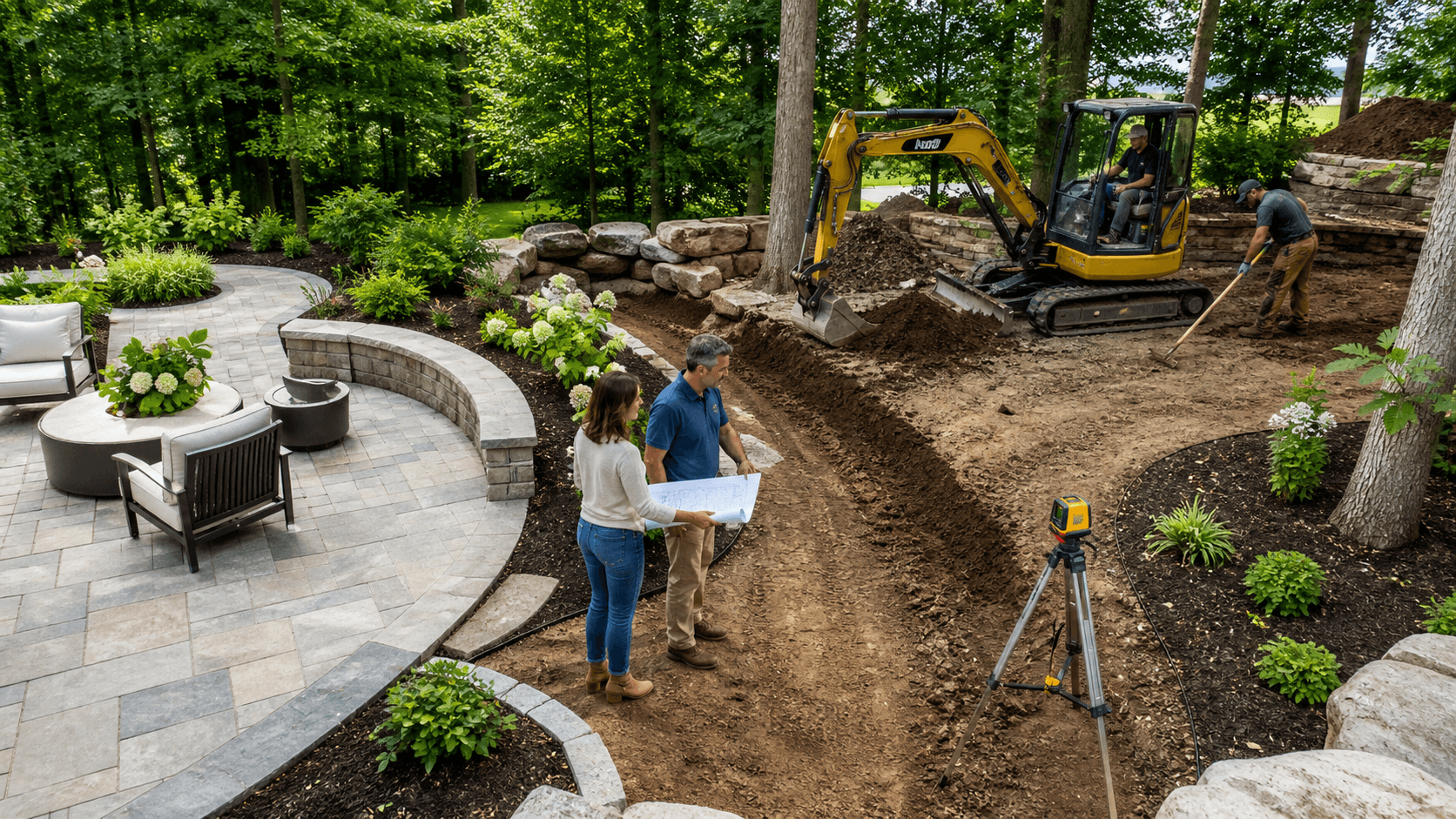
Every property is different, so each drainage plan is custom. One of the best ways for a homeowner to start is to walk the driveway, garage apron, sidewalk connections, and front steps during or right after a rain. Note where water stands, where it runs hard, and where it seems to disappear. Those observations, paired with a thorough site review, lead to solutions that protect the garage slab, keep the front walk safer, and support the long-term structural integrity of your outdoor living spaces.
Get Started With Your Project Today
If you are ready to protect your yard from standing water and erosion, we are here to help design a solution that fits your property. Explore our customized drainage solutions in Vestavia Hills to see how Wood-Palmer Outdoor Creations can improve both function and curb appeal. Have questions or want to schedule a consultation? Simply contact us so we can discuss your goals and next steps.