When Slope and Structure Collide in Your Backyard
Backyard work in Homewood only performs long-term if the ground under it is shaped and built the right way. Grade, soil, and drainage decide where water goes, how structures sit, and how long your hardscape will last. On older or sloped lots, that base is usually the problem, not the plants or pavers on top.
Around Homewood, you see it all the time: steep driveways, tight side yards, backyards that fall toward the house or straight into a neighbor's fence. If the ground plane is wrong, no amount of plants, pavers, or landscape lighting will perform the way it should. Our approach at Wood-Palmer Outdoor Creations comes from an engineering-first mindset, backed by 75 years of combined leadership experience. We treat outdoor spaces as structural builds, not decoration laid on soft ground.
How Homewood Terrain Creates Grading Problems
Central Alabama terrain gives you some real challenges. We work in:
- Clay-heavy soils that hold water and move when they are wet and dry
- Pockets of rock that block drains or force water to the surface
- Older foundations that were never planned for today's hard rains
- Short rear setbacks where there is almost no room to spread water out
On top of that, many Homewood yards have mature trees crowding the buildable area. Roots push up patios and walks, and homeowners try to work around them instead of planning grade and structure together.
Those conditions can lead to:
- Water running toward the house instead of away from it
- Soggy low spots that never really dry out
- Exposed roots and washed-out mulch beds after every storm
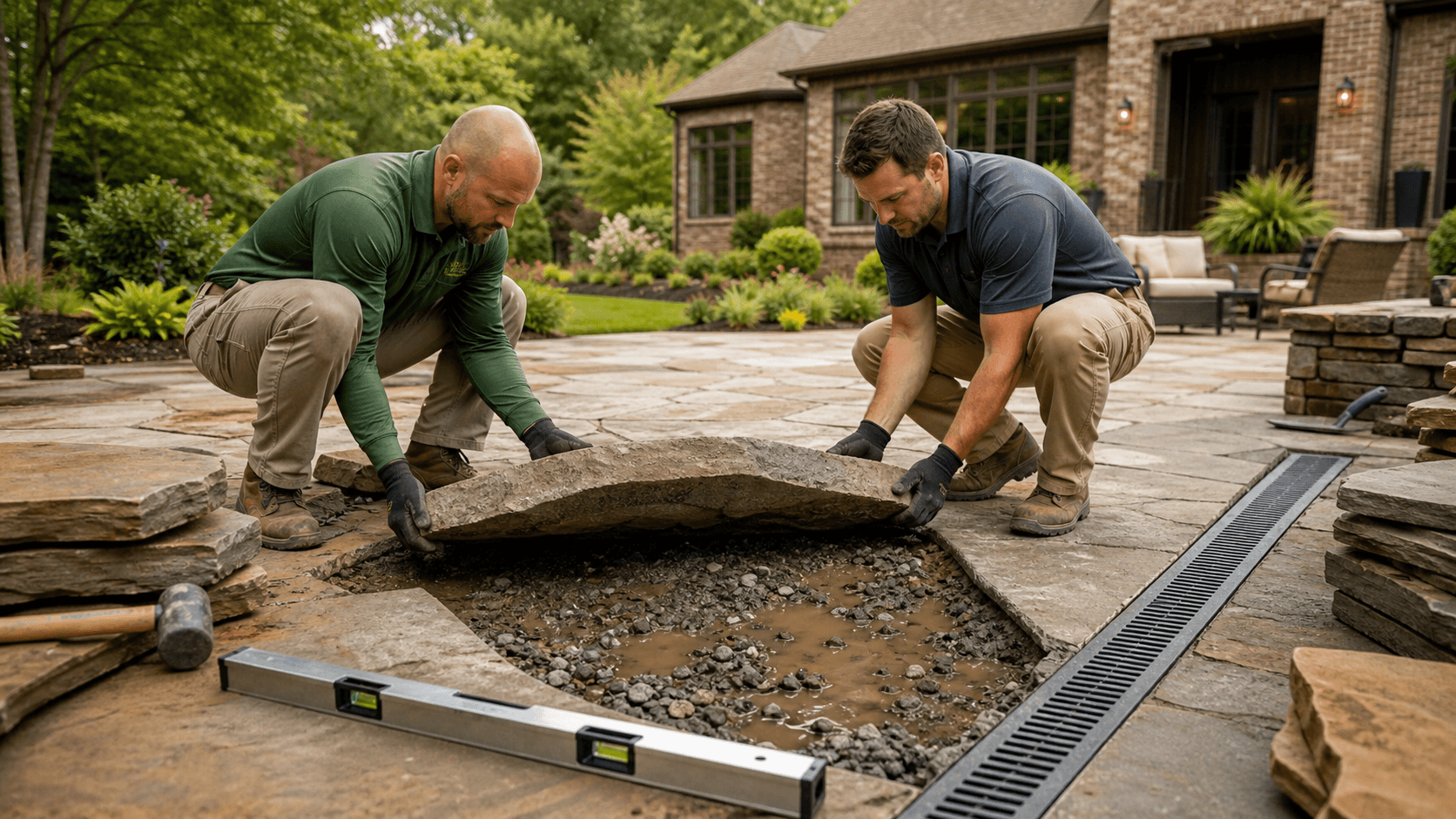
- Patios, steps, or walks that settle, tilt, or crack
There is a big difference between minor touch-up grading and structural regrading. Touch-up grading is when someone skims off a high spot or fills a little dip with loose dirt. Structural regrading is when we change how water and loads move through the entire backyard, tying the grade into the house, the hardscape, and any structures.
On a tight Homewood lot, you don't have extra space for trial and error. Every grading choice affects your house, your neighbor, and any new build. Those choices need to be deliberate and structurally sound from the start.
Clear Signs Your Yard Needs Structural Regrading
Some warning signs are easy to see if you know what to look for. Common red flags include:
- Standing water after a normal rain, not just a rare storm
- Water lines or staining on foundation walls or steps
- Washed-out sand or polymeric joints in existing hardscape
- Pavers that heave, tilt, or feel "spongy" when you walk on them
- Eroding slopes next to patios, structures, or fences
There are also performance clues that the grade is wrong underneath. Maybe you have:
- French drains that never really solved the problem
- Steps or small walls that have been "fixed" more than once
- A backyard that's unusable after every storm because the base was never engineered
Misaligned grades can push water toward basement walls, load a retaining wall from the wrong side, or slowly undermine deck footings and columns. Over time, that's more than a nuisance. It's a direct hit on structural integrity.
Backyard projects in Homewood that ignore these warning signs usually turn into repeated repair work. The pavers get reset, the mulch gets replaced, the drain gets extended, but the underlying grade is still wrong. A single, engineered solution is almost always more effective than a string of patch jobs.
What Structural Regrading Really Involves
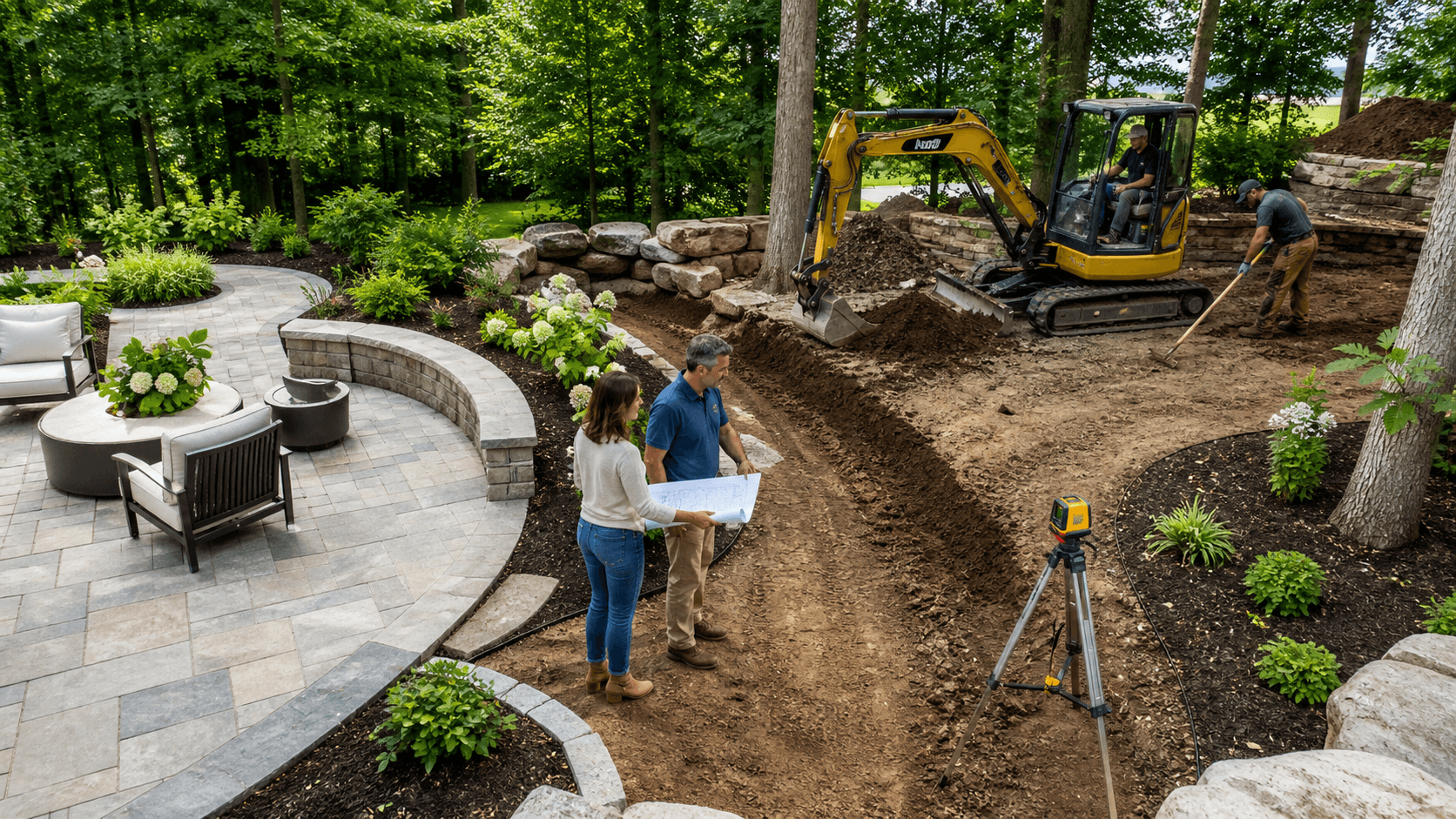
When we talk about structural regrading, we're talking about a full engineering mindset, not just moving dirt with a skid steer. It starts with understanding the site:
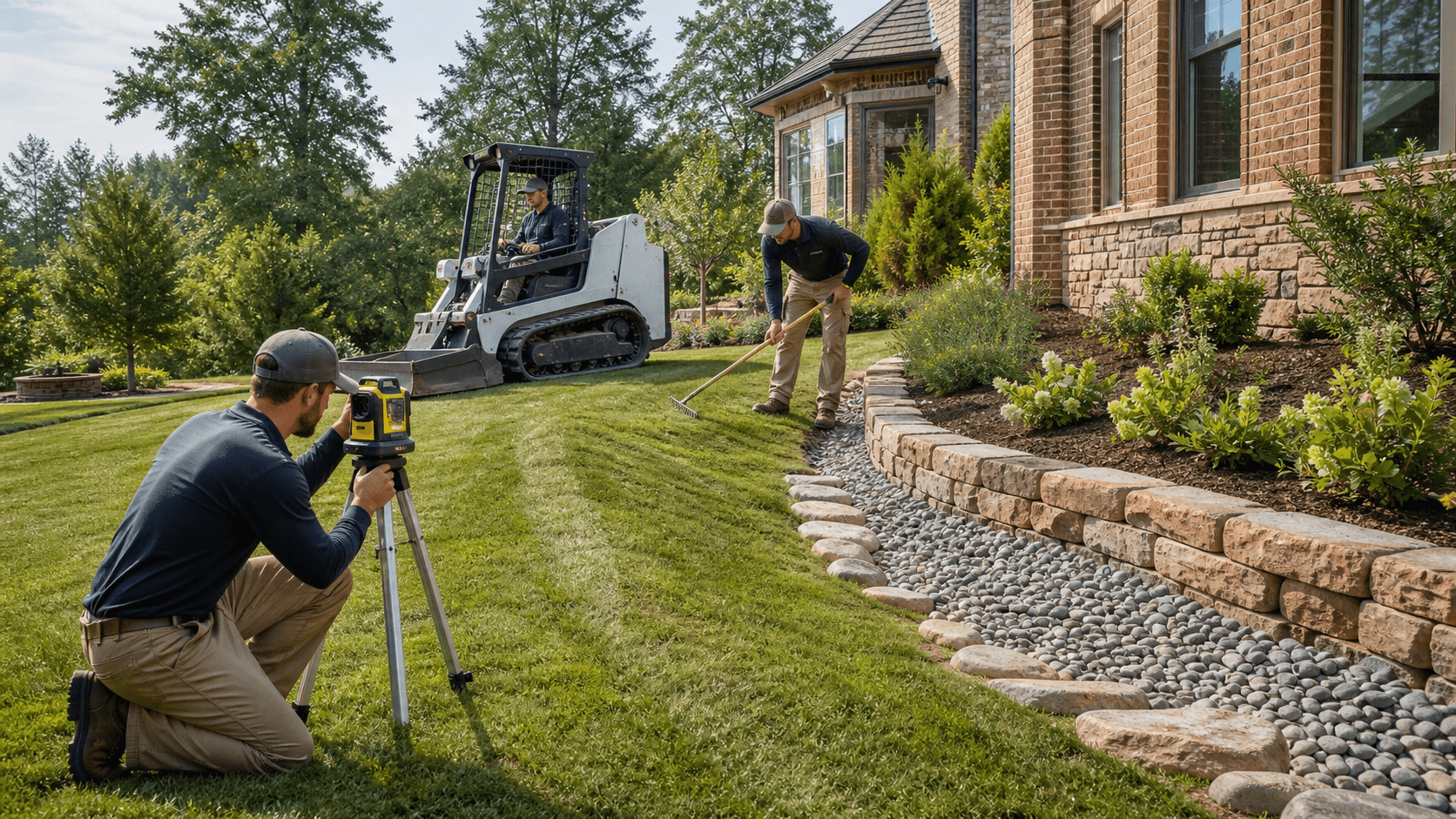
- Survey and elevation checks
- Finding true high and low points, not just what looks low
- Mapping current water paths and where they should go
- Tying all grades back to the house foundation, door thresholds, and existing hardscape
The work itself often includes:
- Cutting soil where the yard is too high against the house
- Filling low areas with compacted material, not loose fill
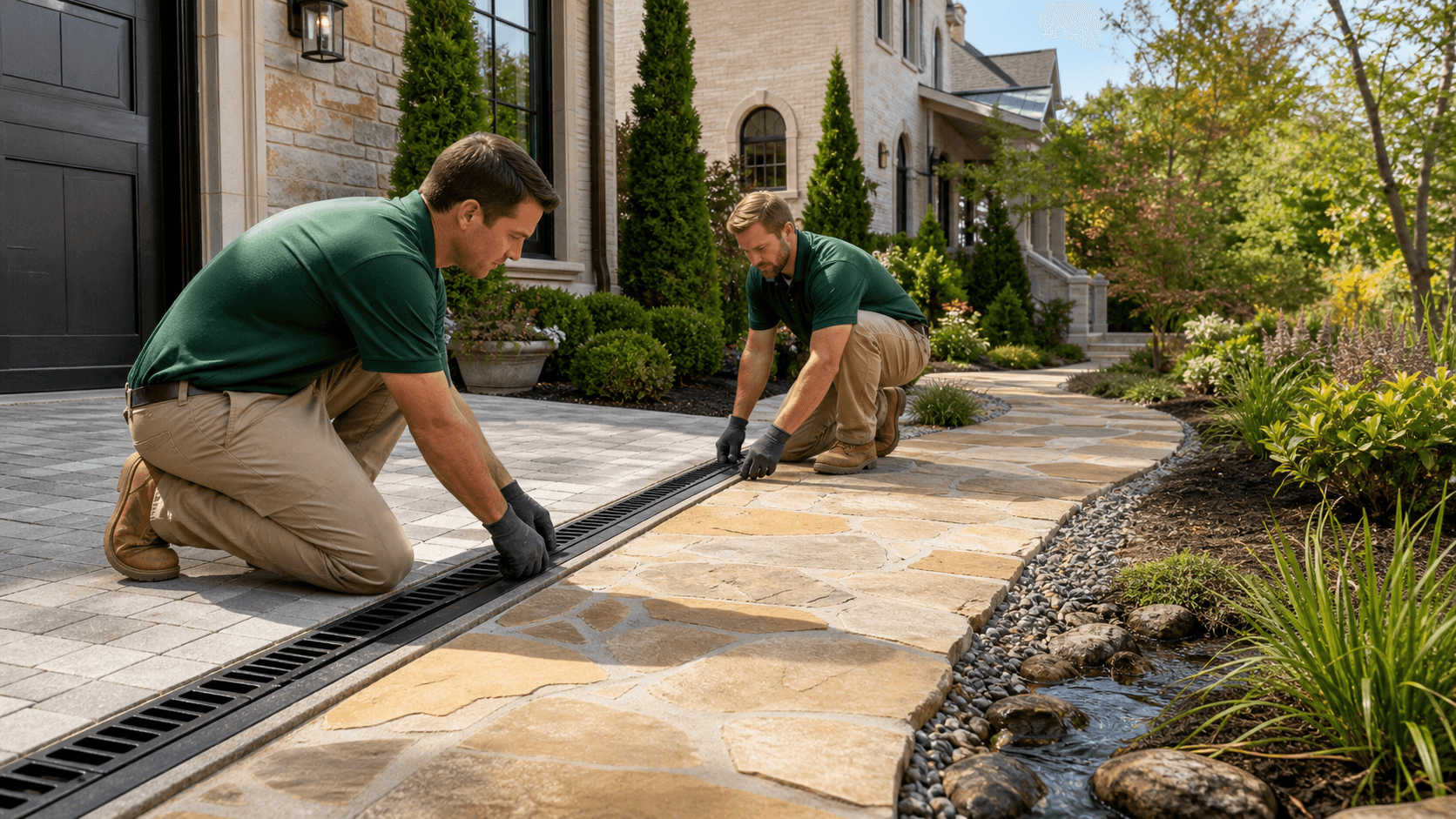
- Creating clear paths for water that bypass structures and patios
- Compacting in lifts so the ground supports hardscape and structures for the long run
Sometimes reinforcing elements are needed. That might mean a retaining wall, a step-down terrace, or a shaped drainage swale. These aren't just there to look nice. They're sized, placed, and built to handle water, soil pressure, and use over time, which is the core of structural integrity.
Safety and protection of what's already there matters too. On close lot lines, we have to protect:
- Trees that the owner wants to preserve
- Utility lines and access areas
- Neighbor yards and fences that sit just a few feet away
Backyard construction in Homewood happens in tight spaces, so every cut, wall, and drain has to respect those limits.
Integrating Hardscape, Structures, and Drainage as One Plan
A strong backyard plan ties everything into one grade and drainage strategy. Patios, walks, outdoor kitchens, pavilions, and landscape lighting should never be designed as separate pieces sitting on separate grades.
An integrated plan looks at how each element lines up:
- House threshold and any step down from the door
- Patio surface height and slope
- Transition from patio to yard grade
- Drain locations, wall heights, and swale depths
When these elevations line up, you avoid trip hazards, surprise puddles, and awkward step-ups and step-downs. You can walk from your back door onto a patio, across to a structure, and out into the yard with smooth, predictable transitions.
At Wood-Palmer Outdoor Creations, our design-build model keeps grading, drainage, hardscape, landscape, structures, irrigation, and landscape lighting under one plan. One team, one plan, one standard. Owner involvement is built into that. Decisions about how high a patio sits, where a wall stops, or how a drain exits are made on-site, with the homeowner understanding how each detail supports the whole outdoor living environment.
Seasonal Timing for Regrading in Central Alabama
Timing structural work matters in our climate. Fall is often a smart season to tackle structural regrading and backyard work in Homewood. You're heading into wetter winter months, and you want the grade and drainage ready before those long, soaking rains and the heavy storms that follow.
Cooler temperatures and typical fall soil conditions can help with:
- Better compaction, since the soil isn't baked rock-hard or fully saturated
- Cleaner base preparation for patios, steps, and structures
- More predictable drainage testing as you watch how the yard handles routine rain
Sequencing the work is just as important as timing. A sound build order usually looks like this:
- Structural regrading and drainage first
- Walls, steps, and structures, including outdoor kitchens, on the new base
- Plantings and irrigation tied into the new grade pattern
- Landscape lighting after the main work, so fixtures and wiring sit where they're protected
Because these projects are structural, they're custom to each property. Grade, soil, and existing features are never identical from yard to yard. Careful planning and proper lead time create a backyard that's not only attractive, but also built to perform over the long term.
Let's talk about your property and how structural regrading, drainage, and hardscape can work together on your Homewood lot. Call (205) 305-7780, email info@woodpalmer.com, or reach out through the contact form at woodpalmer.com/contact.
Get Started With Your Project Today
If you are ready to transform your yard into a space you truly enjoy, our team at Wood-Palmer Outdoor Creations is here to help. Explore how our backyard landscaping in Homewood can bring your vision to life with thoughtful design and quality craftsmanship. Tell us about your ideas and goals, and we will recommend a custom plan that fits your property and budget. When you are ready to move forward or have questions, simply contact us to schedule a consultation.