When the Ground Around Your Home Starts Working Against You
Water always looks for the easy path. In Birmingham, that path is usually down a hill, across a driveway, and straight toward the lowest point next to your house. With our rolling lots and heavy clay soil, the ground around your home can quietly start working against you if the grade is off by even a little bit.
Nice shrubs and fresh mulch will not fix a bad slope. When the grade is wrong, surface water on top of the soil and subsurface water moving through the soil both drift toward your foundation. Over time, that affects structural integrity, not just how your yard looks after a storm. Good landscape grading in Birmingham is really about protecting foundations, hardscape, and structures so they hold up for the long haul.
How Birmingham's Terrain and Clay Soil Move Water
A typical Central Alabama lot has red clay just under a thin layer of topsoil. In Mountain Brook, Vestavia Hills, Homewood, and the rest of the greater Birmingham area, many homes sit on sloped lots with long driveways and side yards that pinch down into tight low spots.
Here is what that means for water:
- Clay drains slowly, so water sits longer where it lands
- Steep driveways and walks speed water up and focus it in one direction
- Older neighborhoods often rely more on natural swales than on built storm systems
- Newer developments may have storm drains, but yard grading does not always line up with them
Clay also swells when it is wet and shrinks when it dries out. That constant movement can increase lateral pressure on basement walls. It can cause patios, walks, and steps to heave, tilt, or settle in odd ways. Even a small change in soil moisture can show up as:
- Hairline cracks in patios or brick walks
- Doors that start sticking after a stretch of heavy rain
- Damp smells in crawl spaces or on lower levels
- Soft spots or standing water along the foundation line
Those are all signs that the terrain and soil are moving water where it should not go.
When Grading Becomes Structural Work
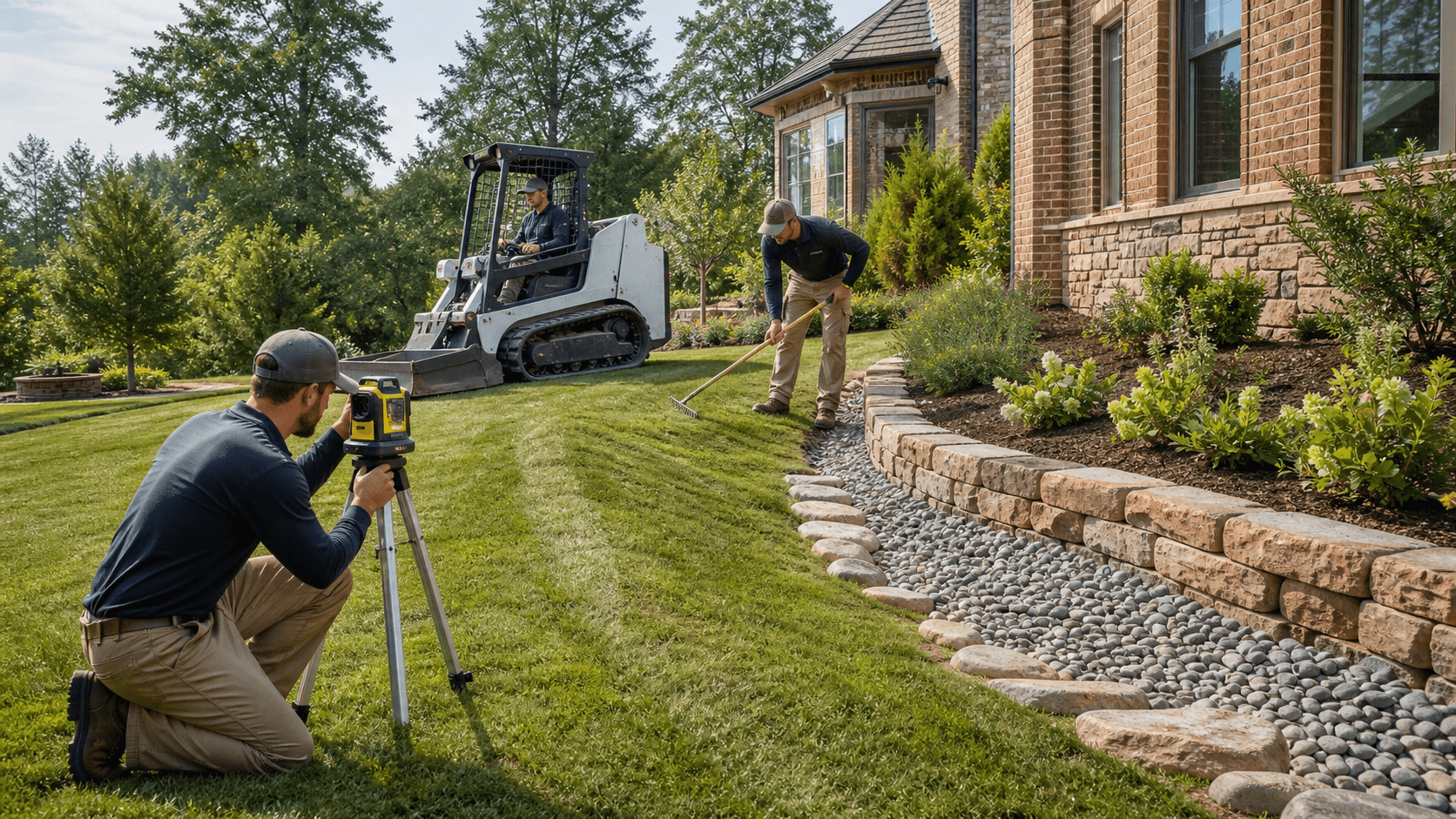
Grading is more than dragging a skid steer across the yard until it looks smooth. We look at positive drainage, which simply means water has a clear path away from the house. That often means a consistent slope, measured in percentage, pulling water at least several feet away from the brick line or siding before it can drop into any low area.
When grading is wrong, it shows up in the field as:
- Water standing along the back wall after a storm
- Soggy side yards that never seem to dry out
- Washed-out mulch beds under roof valleys or downspouts
- Hardscape edges that sink, settle, or separate from the lawn
Once you see those clues, grading work starts to overlap with structural decisions. We think through:
- How the finished grade sits relative to slab or crawl space elevation
- Where to cut shallow swales to move water without creating trip hazards
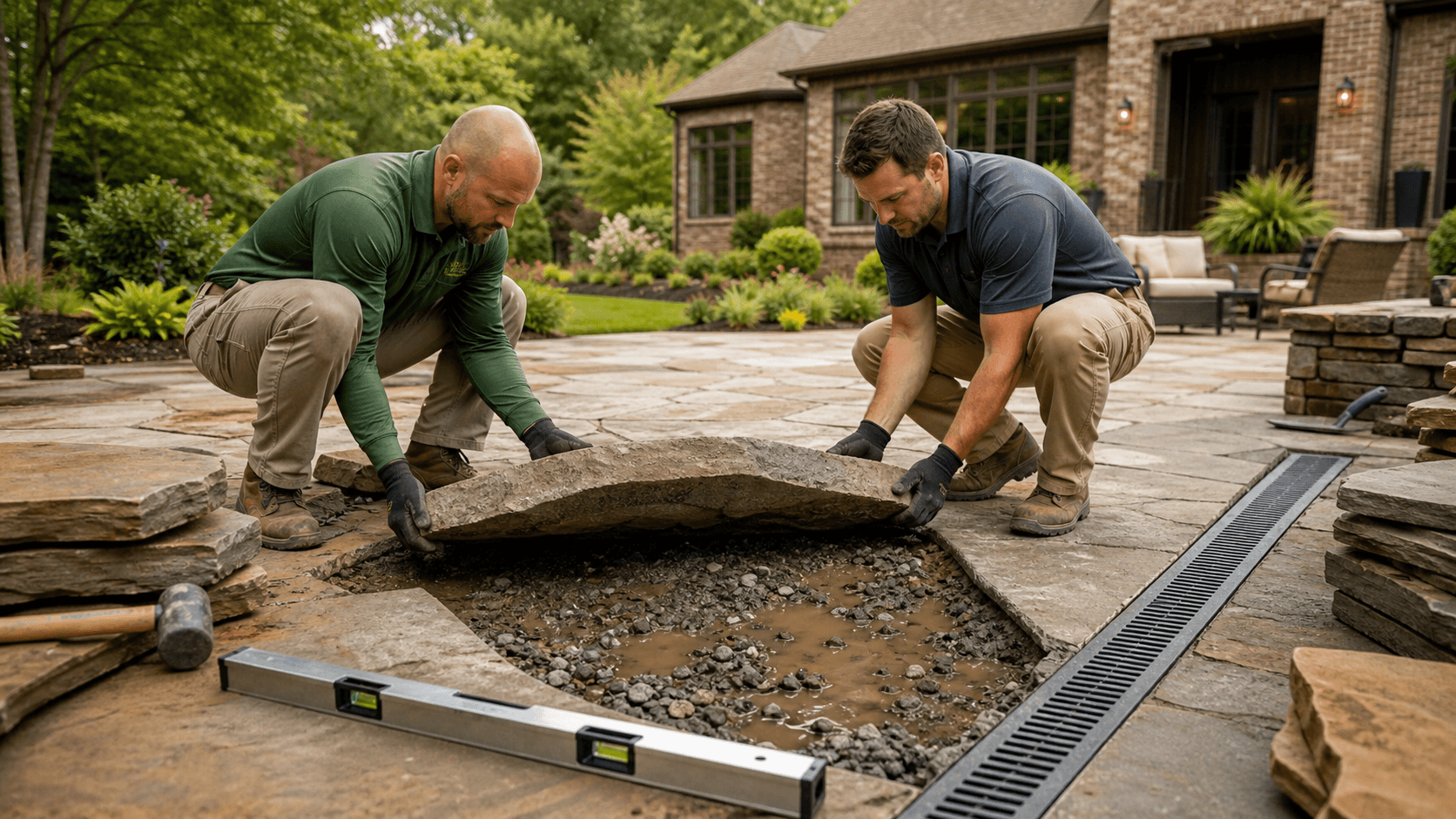
- How to prepare and compact base material so patios and walks stay stable
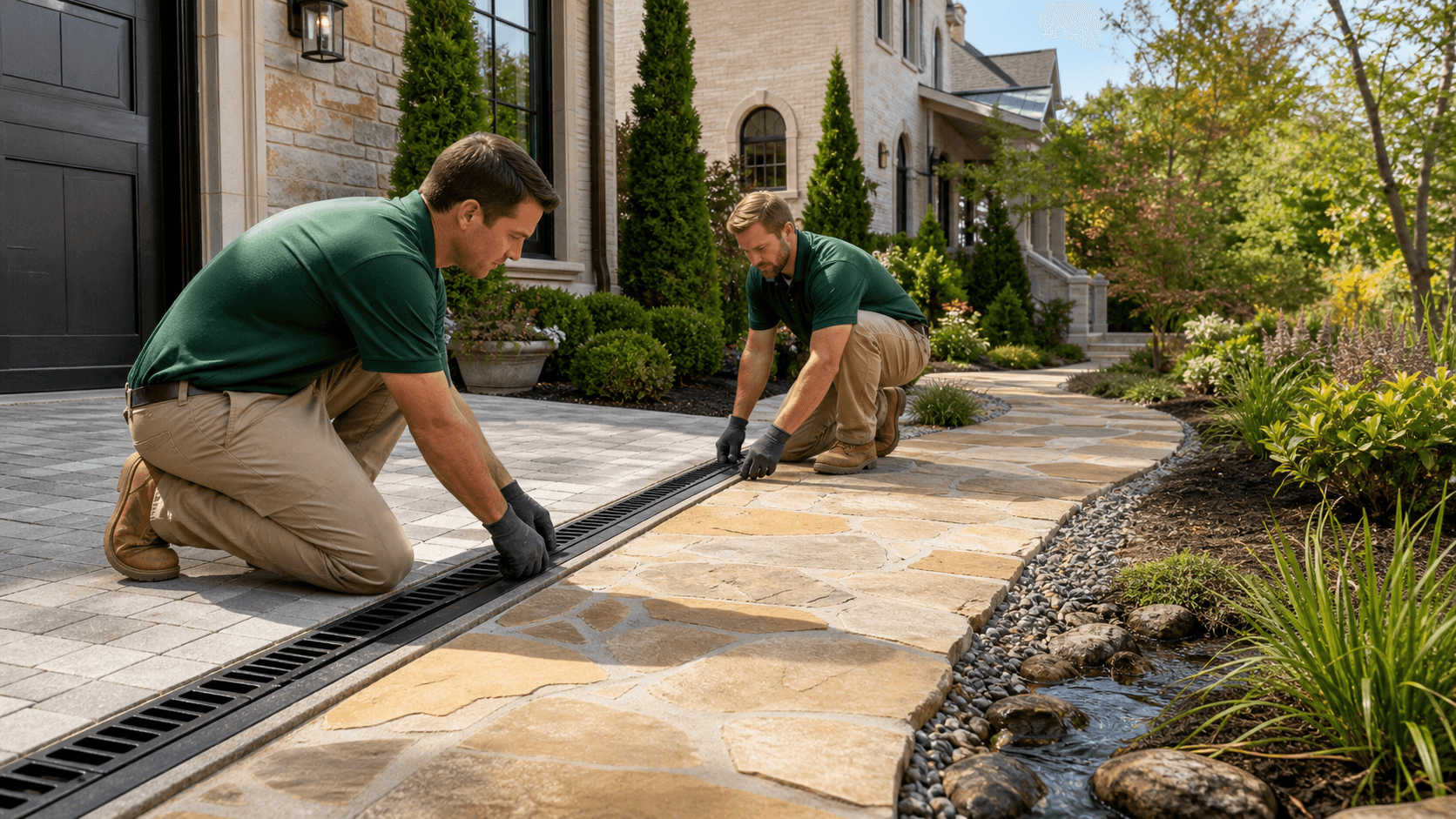
- When to tie surface drainage into existing storm systems, instead of letting it run across the yard
Done right, the grading plan, the subgrade compaction, and the drainage layout all work as one system to protect your home.
Protecting Patios, Walls, and Structures From Water Damage
Hardscape and structures look solid, but water can undermine them from day one if the grade is wrong. We often see:
- Separating joints in patios where the base has washed out
- Leaning seat walls because water built up behind them
- Heaving steps where expanding clay pushed from below
- Rotting posts at the base of pavilions and outdoor kitchens where water pools
The key is what happens below the surface. Subgrade preparation and drainage layers matter just as much as the pavers or stone you see on top. We want water to move around and away from:
- Footings and column bases
- Retaining wall systems and their backfill
- Concrete pads under outdoor kitchens or grills
- Landscape lighting conduits and junctions
When grading and drainage are planned together, patios shed water the right way, retaining walls relieve pressure correctly, and buried systems stay dry. That adds years of life to the work and keeps surfaces safer and more comfortable to use.
Planning Grading Work Around Birmingham's Weather
Our weather in Central Alabama swings from dry spells to heavy, soaking storms. Fall often brings strong rain, followed by winter periods when soils stay wet for a long time. That pattern matters when we plan grading and structural work.
We think through practical construction realities like:
- Equipment access before the yard turns too soft
- Soil moisture levels that allow proper compaction
- Phasing grading before planting beds, hardscape, and structures go in
If we correct grades before the wetter months, the soil has time to settle and lock in. That helps:
- Plant beds drain better and root systems establish
- Hardscape stays stable without surprise settling in the spring
- Crawl spaces and lower levels stay drier as the ground stays wet longer
Good timing supports long-term performance, not just short-term appearance right after the project wraps up.
How We Approach Grading and Site Protection
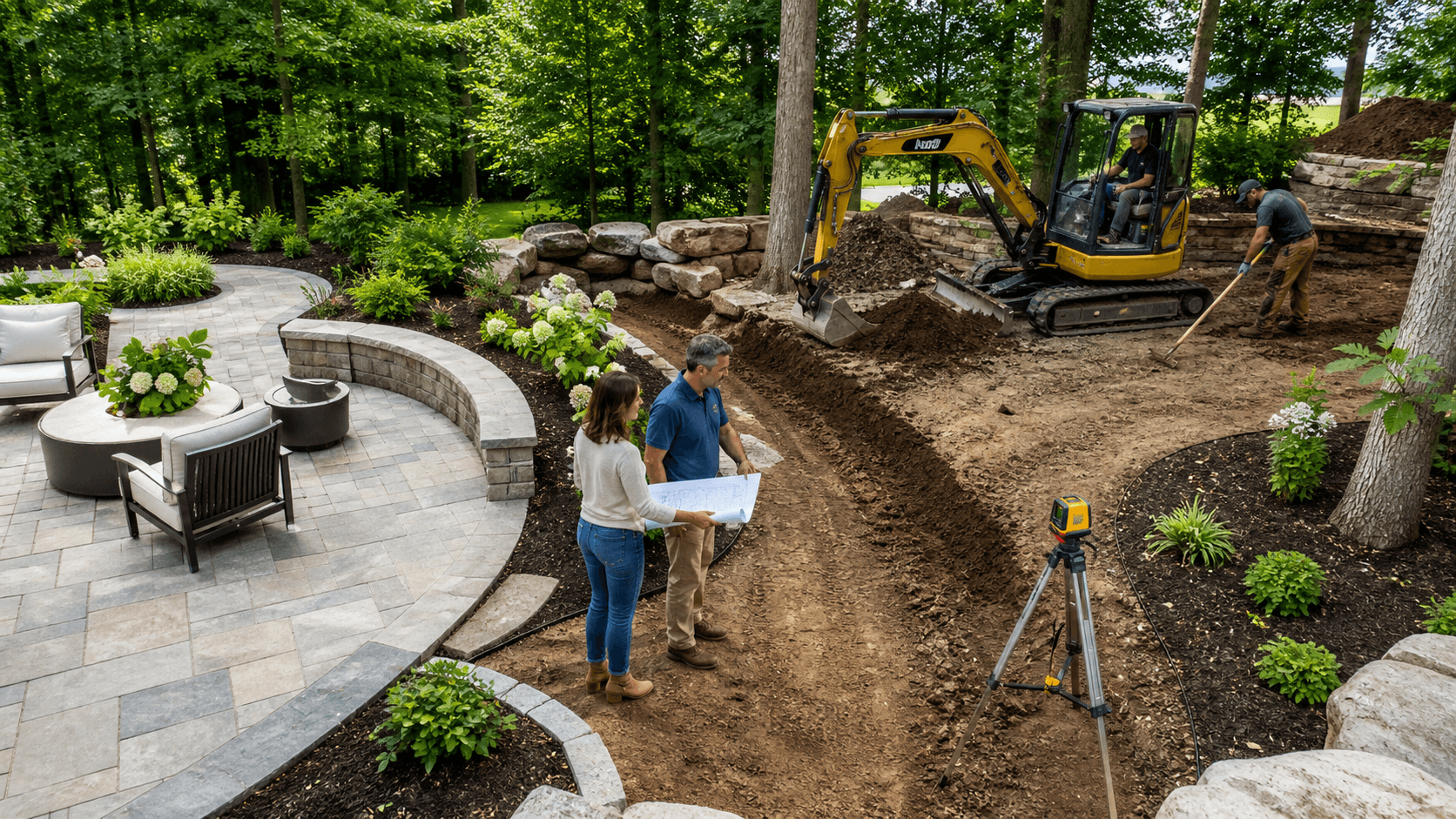
At Wood-Palmer Outdoor Creations, our 75 years of combined leadership experience shapes how we look at your property. We treat grading as structural work, not just dirt work. Owner-level involvement means we walk the lot personally, read how the land falls, and watch how existing hardscape and structures are handling water.
On a typical site review, we are checking:
- Downspout locations and discharge points
- Existing slopes around the house and along the driveway
- Low spots in side yards, corners, and along the rear foundation
- How patios, walks, and retaining walls are currently moving water
From there, grading decisions get tied into the overall design. Future patios, structures, outdoor kitchens, landscape lighting runs, and irrigation all depend on the same ground. When we shape the site with the full plan in mind, the property functions as one complete system instead of a set of separate projects. The result is a yard that looks good, but more importantly, one that protects your home's structure and holds up to Birmingham's clay and weather for years to come.
Let's talk about your property. If you'd like to walk your site and look at how grading, drainage, and structural work fit together, call us at (205) 305-7780, email us at info@woodpalmer.com, or reach out through the contact form at woodpalmer.com/contact.
Get Started With Your Project Today
If you are ready to solve drainage issues and create a stable, attractive yard, our team at Wood-Palmer Outdoor Creations is here to help. Learn how our expert landscape grading in Birmingham can protect your property and improve your outdoor space. Tell us about your project and we will provide clear recommendations and a plan that fits your goals. Have questions or want to schedule an estimate today? Just contact us.