Clay yards in Mountain Brook do not forget water. In a big storm, that red and gray clay soaks up a little, then holds the rest right near the surface. If the yard and hardscape are not planned for that, you see standing water, soft spots, and pressure where you do not want it, like against foundations and retaining walls.
In this article we'll walk through how clay behaves, how we read a yard before we start work, and the most common drainage solutions in Mountain Brook that we use on high-end outdoor living spaces. The goal is simple: move water away from your house, patios, and pool decks in a controlled, predictable way, and keep your yard usable after a storm. This is the same approach we fold into our Hardscape and Landscape Lighting projects across steep and flat lots in this part of central Alabama.
How Mountain Brook Clay Handles Water
Mountain Brook's red and gray clay is dense and sticky. Compared to sandy or loamy soil, it has:
- Slow percolation, water doesn't soak down very fast
- A tendency to hold water near the surface
- A higher chance of staying wet for days after a storm
For a finished outdoor space, that can show up as:
- Standing water at the edge of patios and pool decks
- Soggy turf that squishes underfoot
- Hydrostatic pressure pushing against foundations and retaining walls
When we walk a property, we're looking at:
- Existing slopes and how they break
- Gutter discharge points and splash areas
- Low spots and ruts in turf or beds
- Where water likely runs in a typical Alabama fall storm
We're thinking like builders and like water at the same time. Where will it go in a heavy rain, and what damage could it cause if we do nothing? On many Mountain Brook jobs, one of our senior team members or the owner will be on-site during this phase to make sure those structural decisions are made with the long-term in mind.
Reading Your Yard's Drainage
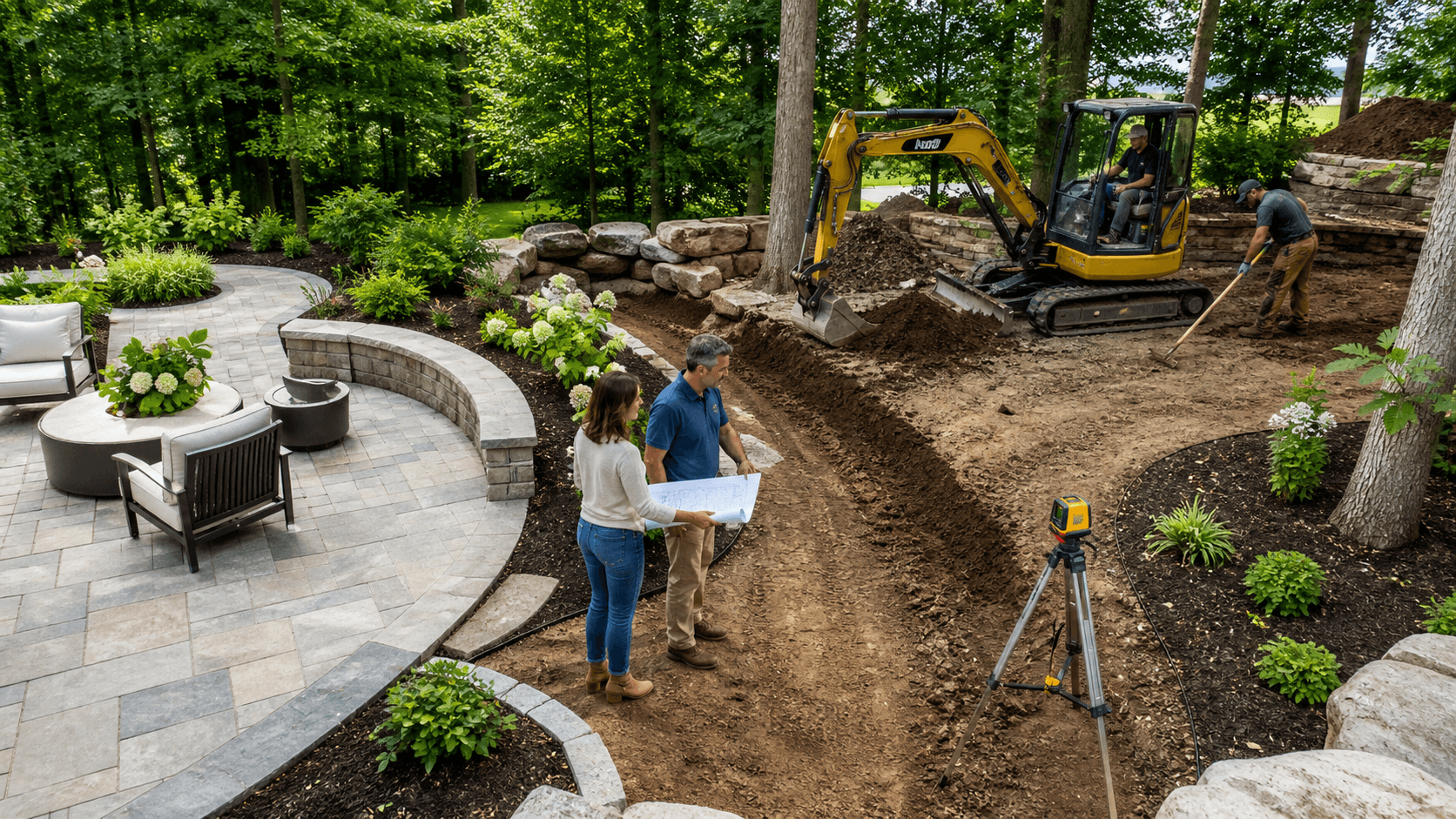
Before we touch a shovel, we read the yard. In Mountain Brook clay, guessing isn't an option. We usually:
- Shoot elevations with a laser level to read high and low points
- Look for tell-tale clay problems like ruts, algae, exposed roots, and mulch washouts
- Note where turf stays soft long after everything else has dried out
Those details drive grading and base preparation under patios, walks, and pool decks. In heavy clay, we often need:
- Thicker, more stable base stone
- More deliberate slope away from structures
- Subsurface drainage built in from day one
Seasonal timing matters too. Early fall is a smart window to tackle drainage, before winter rains and dormant turf make every low spot obvious. Clay yards often show their worst in the cold, wet months, so we want the system in place ahead of that.
Grading and Swales That Actually Move Water
The first drainage solution isn't a pipe, it's proper grading. In clay, we're very intentional about establishing consistent fall away from the house, hardscape, and pool decks. Even a small, steady slope can move a lot of water if it's set correctly and tied into a plan.
A swale is a shallow, shaped channel that carries water. In most Mountain Brook yards, that ends up being:
- Broad and shallow, not a deep ditch
- Finished with turf or plantings so it blends in
- Aimed at a safe discharge point like a lower lawn or tie-in pipe
Common challenges in Mountain Brook include tight lots and mature trees. We work to balance:
- Protecting critical tree roots
- Getting enough grade to move water
- Matching neighboring grades so you're not pushing runoff into the next yard
Done right, the first time, good grading and well-placed swales are often the simplest, most reliable drainage solutions in Mountain Brook clay yards. They work quietly every time it rains and they support the structural integrity of any Hardscape or Landscape Lighting work that ties into them.
French Drains, Trench Drains, and Clay
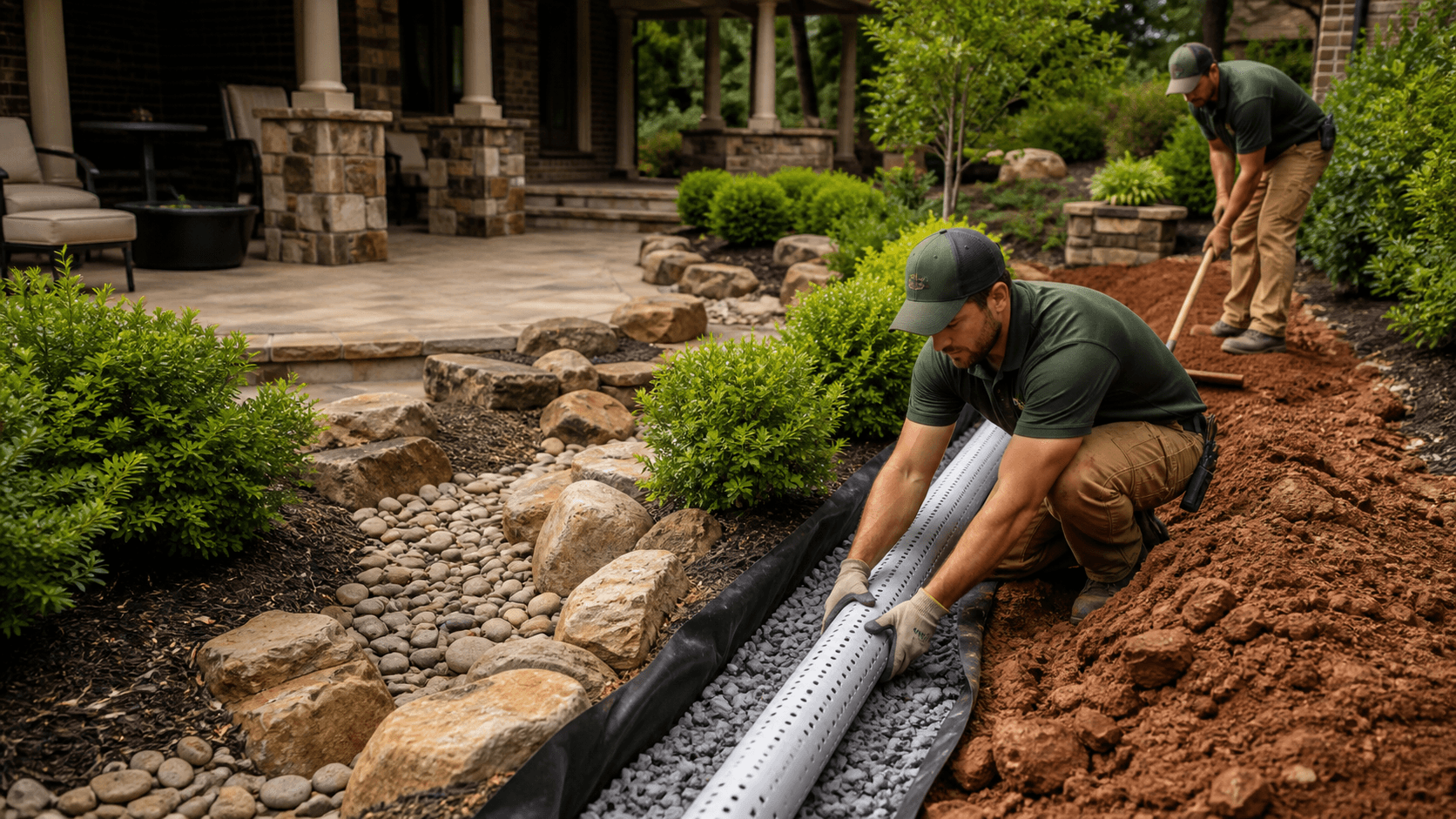
When surface grading isn't enough, we add structure. A French drain is a perforated pipe set in a trench, wrapped in clean gravel and fabric, then backfilled. In clay, that fabric and clean stone are important to keep fine particles from clogging the system.
We typically use French drains:
- Along the base of a slope or hillside
- Behind retaining walls to relieve pressure
- At the toe of a steep driveway
- In turf areas that stay wet long after a storm
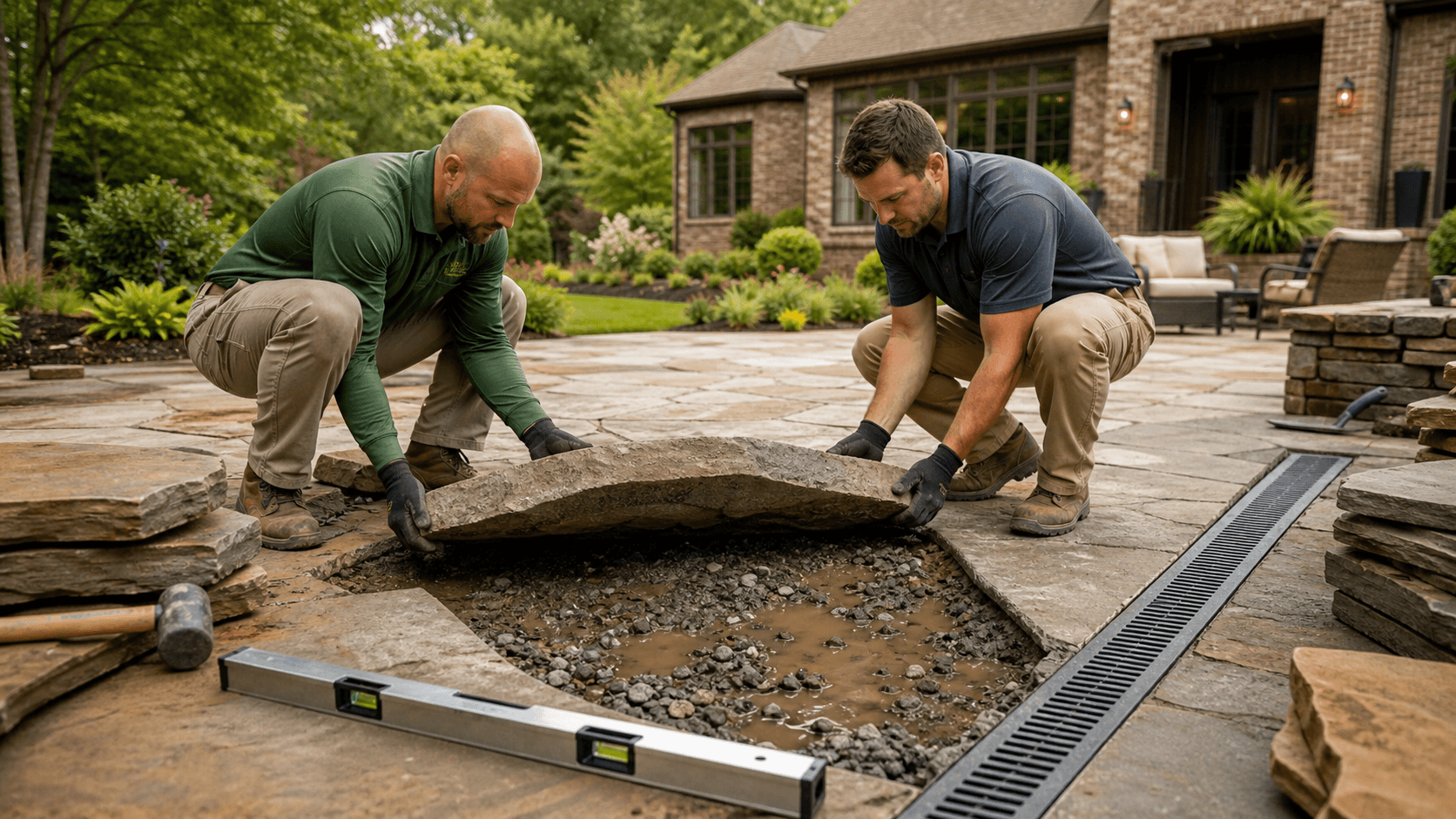
Trench drains, also called channel drains, are a surface solution. You see them as a linear grate across:
- The bottom of a clay driveway near a garage
- The edge of a pool deck or courtyard that funnels water
- Transitions between hardscape and doors or thresholds
French drains work below the surface, collecting seepage. Trench drains catch sheet flow off hard surfaces. On many Mountain Brook properties, we use both, tying them together and running them to daylight or a storm structure, coordinated with hardscape and any Landscape Lighting conduits so there are no conflicts under the surface.
Catch Basins, Downspout Tie-Ins, and Discharge
Catch basins are small boxes with grates that collect surface water and send it into pipe. In turf or beds, we often set them:
- At known low spots
- At the bottom of swales
- Next to patios where water tends to collect
They usually work alongside grading and French drains as part of one system.
Downspout tie-ins are another big piece in heavy clay. Instead of roof runoff blasting out on splash blocks and cutting ruts, we:
- Capture downspouts into solid pipe
- Size those lines for strong Alabama downpours
- Route them away from foundations and hardscape edges
Discharge strategy is just as important as collection. We think about:
- Daylighting pipes at the right elevation so they actually flow
- Using stone or riprap at outlets to control erosion
- Steep backyards, nearby creeks, and neighbors downhill
Well-planned basin and downspout systems sit at the center of long-lasting drainage solutions in Mountain Brook, especially when an older home is getting new outdoor living spaces added around it.
Protecting Patios, Walls, and Plantings
Drainage isn't just about puddles; it's about structural integrity. In clay soil, paver patios, stone terraces, pool decks, and retaining walls all need the right surface slope and subsurface drainage. Without that, you can see:
- Cracked or open joints
- Sunken steps or uneven pavers
- Leaning walls or bulging faces
- Washed-out joints in stonework
- Plant material that never thrives because roots stay waterlogged
With 75 years of combined leadership experience, the team at Wood-Palmer Outdoor Creations plans drainage from the first sketch. That usually means:
- Pipe under Hardscape tied into a larger system
- Back-drains and gravel behind retaining walls
- Irrigation design that supports, not fights, the drainage pattern
It's far more efficient to include drainage while you're already building new outdoor living areas than to retrofit later. Access, length of runs, elevation changes, and tying into any existing systems all affect how involved that work becomes and how we phase it on a Mountain Brook clay yard.
If you're looking at standing water, soft spots, or planning a new Hardscape or Landscape Lighting project in Mountain Brook's clay, let's talk about your property. You can reach Wood-Palmer Outdoor Creations at (205) 305-7780, email info@woodpalmer.com, or start the conversation at woodpalmer.com/contact.
Get Started With Your Project Today
If you are ready to protect your yard and home from water issues, we are here to help with tailored drainage solutions in Mountain Brook that fit your property and budget. At Wood-Palmer Outdoor Creations, we take the time to understand your landscape so we can recommend what will work best for the long term. Tell us about your project and goals through our contact page, and we will follow up to schedule a convenient time to talk. Together, we can create a landscape that looks great and handles heavy rain with confidence.