Keep Your Covered Patio Dry and Durable In Birmingham
Covered patios in Central Alabama live in a tough environment. We get heavy summer thunderstorms, long winter rains, and slow-drying red clay under almost every slab. If water is not managed from the roof all the way to the edge of your property, that covered patio can stay damp, move, crack, and start to affect the house itself.
Any covered patio contractor in Birmingham that's worth hiring should spend as much time talking about gutters, grading, and under-slab drainage as they do about stone, tile, and lighting. Finishes are the last step. The water plan is the first step.
At Wood-Palmer Outdoor Creations, our team brings 75 years of combined leadership experience to outdoor living projects. We take an engineering-first, integrated design-build approach, so the structure, hardscape, irrigation, and landscape lighting all work together with one water management plan.
In this article, we'll walk through gutter design, downspout routing, under-slab details, and how everything ties into your yard so your covered patio stays dry, stable, and enjoyable in every season.
How Birmingham Terrain Shapes Covered Patio Drainage
Central Alabama sites are rarely flat, clean sand. Around Birmingham, we typically see:
- Heavy red clay soils that hold water
- Steep lakefront and hillside lots
- Older neighborhoods with poor or "flat" grading
- Tight side yards where water has nowhere to go
Clay doesn't drain like sand or loam. It swells when it's wet and shrinks when it's dry. Under a slab, that movement can show up as cracks, trip lippage, and doors or screens that don't line up like they did at first. Even in our mild winters, any trapped water under or beside a patio can go through small freeze-thaw cycles and stress the concrete.
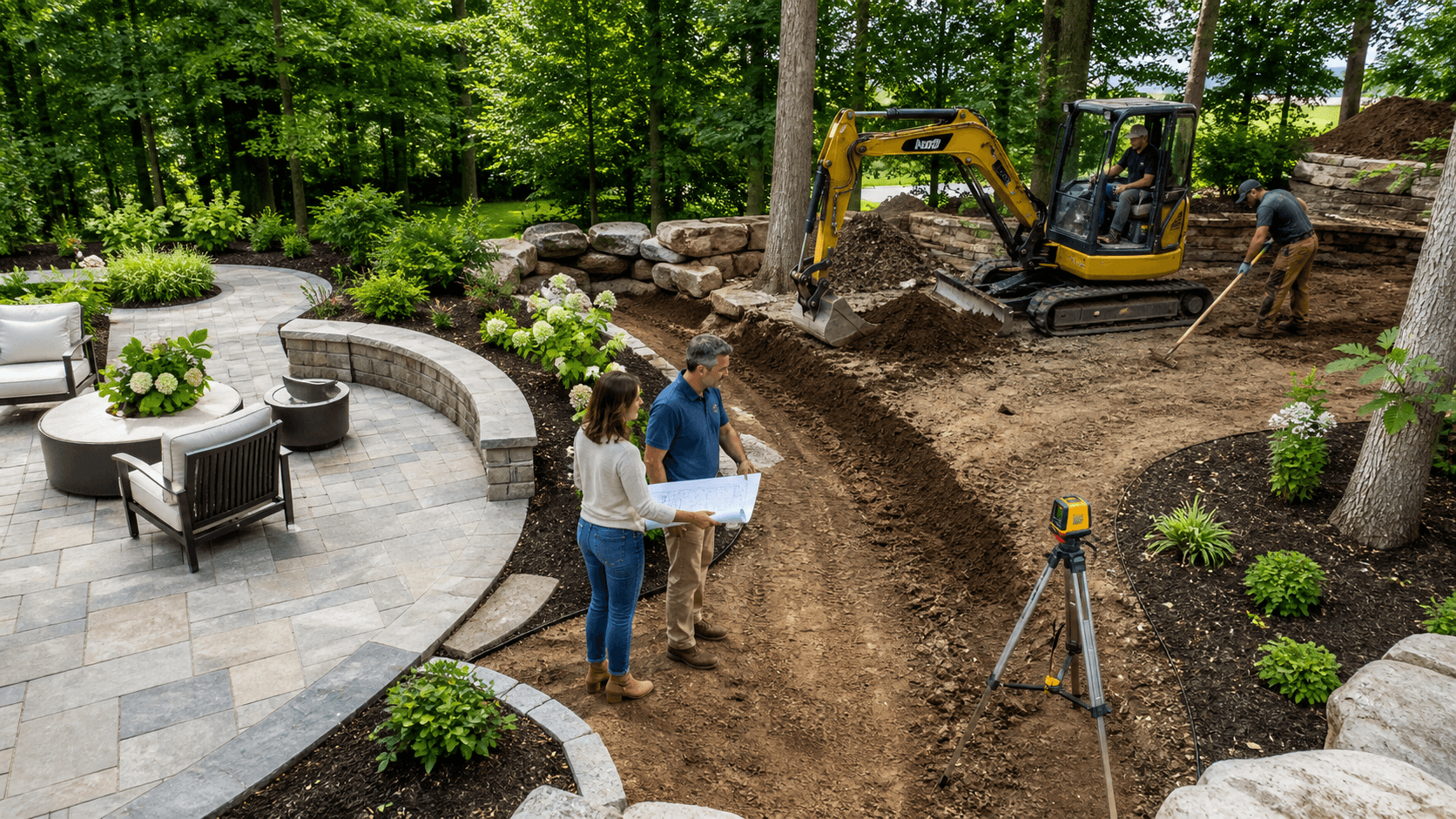
An engineering-first covered patio contractor in Birmingham should start with a real site review, such as:
- Taking topo readings to understand slope and low points
- Studying existing gutters and downspout discharge locations
- Finding where water already leaves, or where it ponds at property lines
- Checking how neighbor drainage ties into or crosses your yard
Because we work as one integrated design-build team, grading, hardscape, irrigation, and landscape lighting are set to one standard. That lets us give water a defined path away from the house, the new structure, and main living areas.
Gutter Design That Works with the Structure, Not Against It
On a covered patio, the roof can collect a lot of water in a short time. Roof pitch, roof area, and local rainfall rates tell us how big the gutters and downspouts need to be. Undersized or poorly placed gutters let water shoot off the roof, soak the slab edge, and rot trim over time.
We prefer to design gutter locations with the structure, not as an afterthought. Good gutter planning helps protect:
- Fascia and soffits
- Wood or steel beams and their connections
- Columns and bases, especially on stone or brick piers
- Slab edges, joints, and adjacent hardscape
Key details we pay attention to include:
- Whether to tie new gutters into the house system or keep them separate
- Hanger spacing so gutters don't droop or back up
- Positive slope toward outlets, not back toward corners
- Leaf control in treed neighborhoods around Mountain Brook, Vestavia Hills, and Homewood
Owner involvement comes in when we select gutter materials, profiles, and colors. They need to perform in our climate, but they also need to match the architecture of estate and lakefront properties so the system looks like it belongs there.
Smart Downspout Routing That Protects Slabs and Foundations
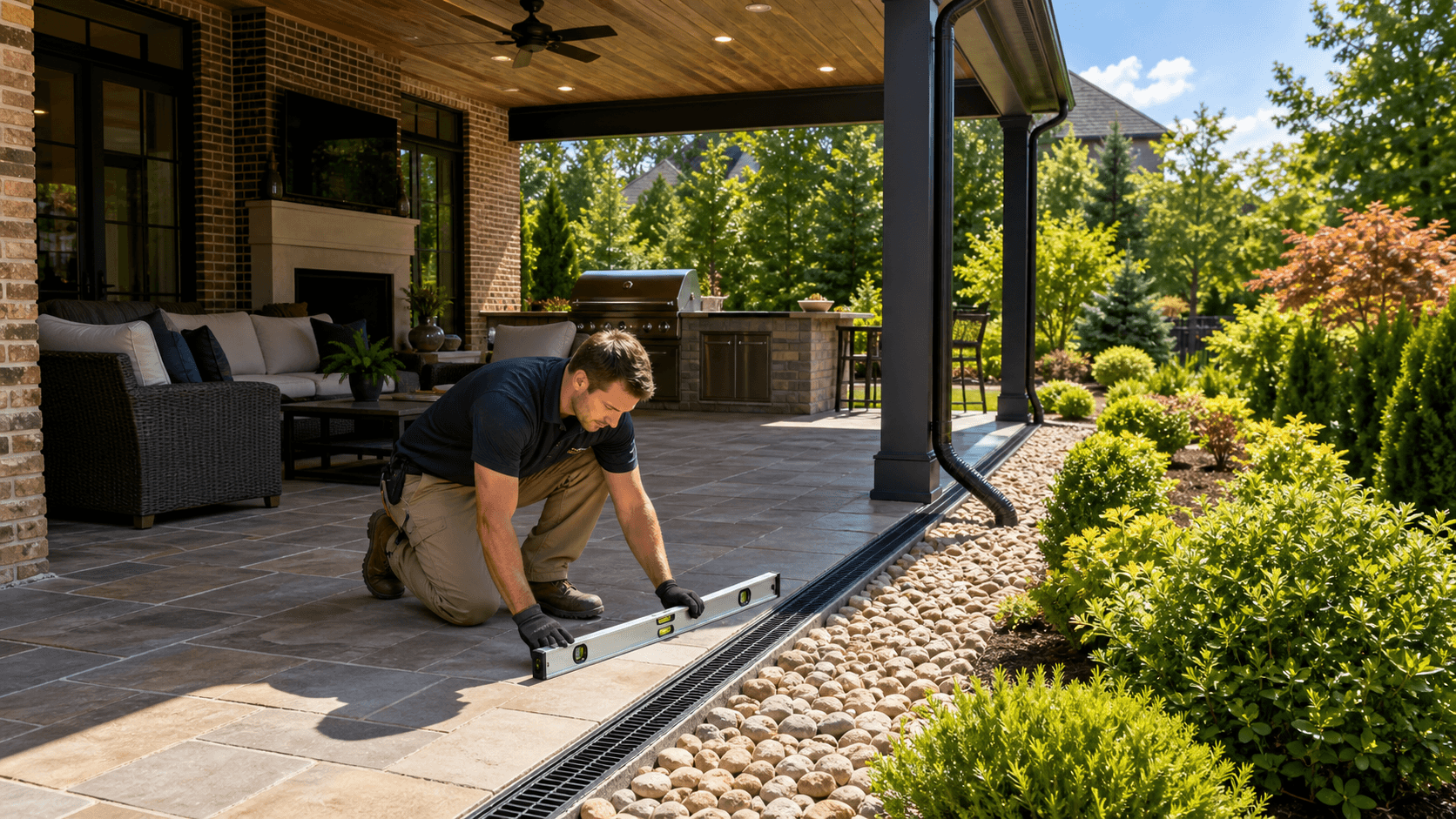
Gutters only help if the water they collect is moved away from the house and patio. Around Birmingham, we often see downspouts dumping right at the footing line, which leads to:
- Washed-out mulch beds
- Water running back across the patio surface
- Soft joints between pavers or stone
- Extra pressure against basement or crawlspace walls
Best practices for downspout routing on a covered patio project usually include:
- Solid PVC pipe below grade instead of thin corrugated flex that can crush or clog
- Cleanouts at key turns or junctions so lines can be flushed later
- Daylight outlets, pop-up emitters, or connection to an existing drainage network
On lakefront or hillside lots, we often tie downspout piping into:
- French drains along the uphill side of the house or patio
- Surface drains and catch basins in paved areas
- Swales that move water to a safe discharge point lower on the property
Because we work as a single team, the downspout layout is coordinated with hardscape, planting beds, and irrigation. That lowers the chance that someone cuts through a drain pipe later to run a wire or add a zone, and it keeps the water plan intact for the life of the project.
Under-Slab Waterproofing, Base Prep, and Integration Details
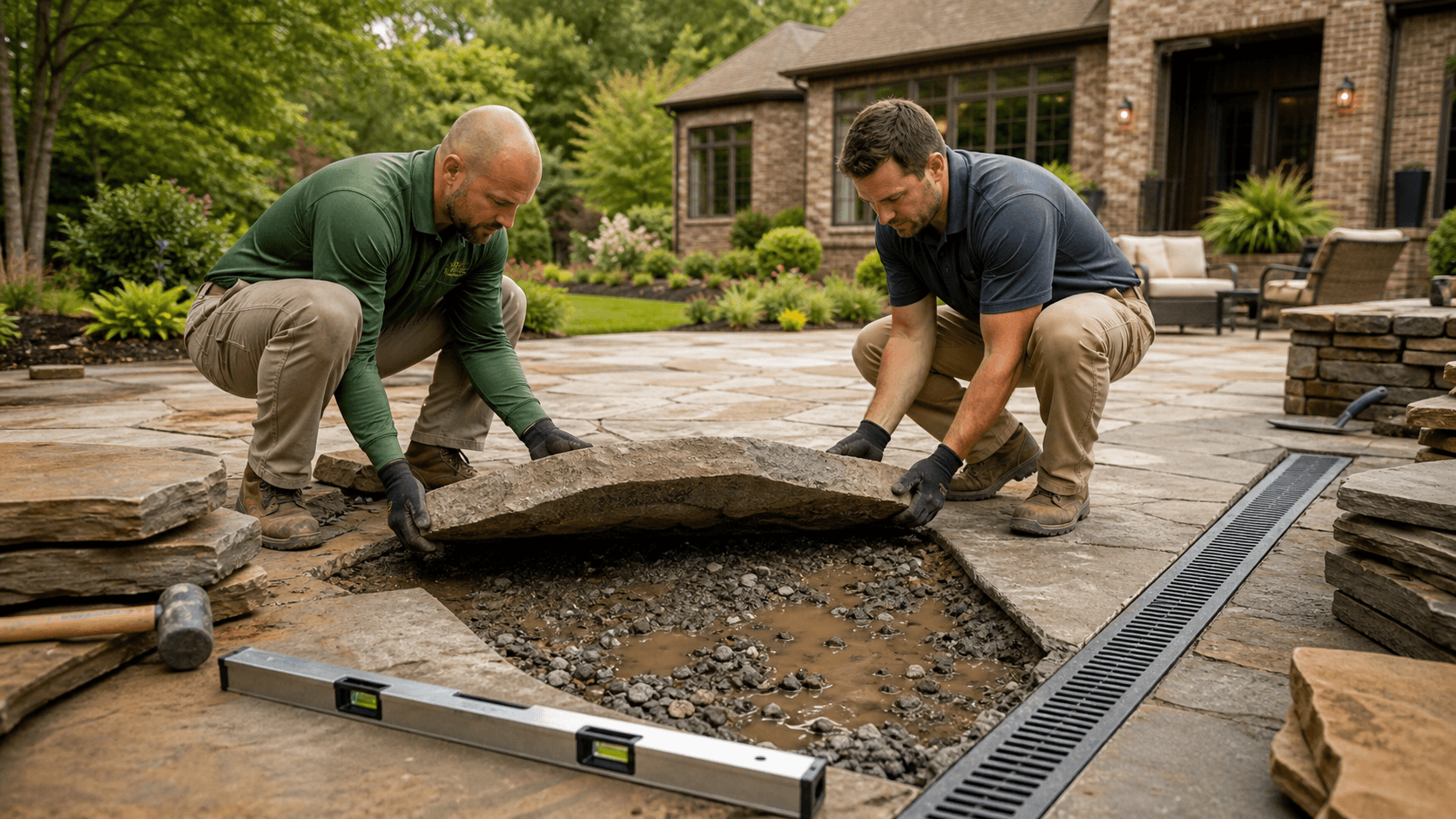
What happens under a covered patio slab matters as much as what you see on top. A high-performance slab in our clay soils usually includes:
- Proper subgrade conditioning and compaction
- A well-graded stone base of the correct thickness
- A vapor barrier where needed
- Steel reinforcement sized for the span and load
- A concrete mix designed for exterior use
Under-slab drainage is just as important. On the uphill side of a patio, we may add:
- Perimeter drains to intercept subsurface water
- Gravel zones or drain mats where water tends to collect
- A clear path for that water to reach daylight instead of being trapped under concrete
Slab joints and slope also need planning. Light slope away from the house keeps water from sitting against the foundation without making chair legs feel uneven. Control joints help manage where cracks will form. Small decisions in slope and joint layout affect:
- Where water sits after a storm
- How furniture feels underfoot
- How freeze-thaw cycles affect thin areas or edges
We also think ahead about conduit runs for landscape lighting and any future wiring. Running those lines in planned sleeves, away from main drains, lets you add or service lighting later without tearing up concrete or breaking waterproofing details.
Seasonal Stress, Maintenance, and Watching Your Own Site
Central Alabama patios see different types of water stress through the year. In mid-to-late summer, intense pop-up storms can drop a lot of water in minutes. If gutters are half clogged with pollen strings and leaves, water will spill over in the weak spots and test every joint and drain on that covered patio.
In winter and early spring, long soaking rains saturate our clay. That's when:
- Under-slab drainage gets pushed hardest
- Retaining and seat walls show if they were built with proper behind-the-wall drainage and weeps
- Low spots near slabs or steps stay soft and muddy
Homeowners should expect some routine maintenance to keep a good system working:
- Cleaning gutters and checking downspout strainers
- Flushing pop-up emitters and outlet points
- Watching for settlement or erosion at discharge locations
- Touch-up caulking or sealing as materials move slightly over time
One of the best things you can do is walk your property during a steady rain. Notice where water collects now, where it leaves the site, and how close it comes to existing patios, porches, and door thresholds. That real-world picture is the starting point for a solid drainage discussion with any covered patio contractor in Birmingham.
Get Started With Your Project Today
If you are ready to add shade, comfort, and long-lasting value to your backyard, our team at Wood-Palmer Outdoor Creations is here to help. As a trusted covered patio contractor in Birmingham, we listen carefully to your goals and design a space that fits your home and lifestyle. Tell us about your ideas and we will guide you through materials, layout, and budget so you can move forward with confidence. Ready to discuss your project? Give us a call at (205) 305-7780, email us at info@woodpalmer.com, or contact us online to get started.