Adding a patio in Homewood should not mean giving up the shade and character of your mature trees. The goal is to create a space that feels solid underfoot, drains correctly, and still lets those trees keep doing what they do best. When we design custom patios in Homewood around existing trees, we're always balancing structural integrity with long-term tree health.
In established neighborhoods, big oaks, maples, and pines often sit right where a new patio wants to go. Roots are close to the surface, and Alabama clay soil does not forgive poor planning. We approach every project as a structural build, with grading, drainage, and engineering decisions tailored to your yard, not just a pattern of pavers on a plan.
Building Patios That Respect Mature Trees in Homewood
Homewood is full of older homes, tight setbacks, and yards shaded by trees that have been there for decades. Most homeowners want more livable outdoor space, but they're not willing to lose that canopy just to pour a slab.
The main challenge is this:
- Protect the root system that feeds the tree
- Build a patio that won't settle, tilt, or crack
- Work within tight property lines and existing architecture
At Wood-Palmer Outdoor Creations, every patio starts with an engineering-first mindset. Alabama clay soil, steep rear yards, and close neighbors all factor into the grading plan and structural details. Our 75 years of combined leadership experience guide choices like:
- How deep we can safely excavate near a trunk
- Where to set final elevations so water moves away from the home
- When to involve licensed engineers for walls, steps, and structures tied into the house
Our owners stay involved in the planning and field decisions, making sure what's drawn on paper actually fits the way you use your property.
Reading Your Site: Trees, Roots, Slope, and Soil
Before a design ever hits paper, we walk the site with you. We look at what the yard is already telling us.
We pay attention to:
- Tree species: oaks with wide root flares, maples with shallow roots, pines with smaller flares but tall wind loads
- Canopy spread and drip line, which often shows where most feeder roots live
- Trunk flare, surface roots, and any signs of stress or decay
Homewood yards, like much of Central Alabama around Birmingham, often sit on red or tan clay that holds water, then shrinks when it dries. That movement matters when we:
- Choose base depth under pavers
- Decide where stormwater should go
- Avoid trapping water around the root zone
Many backyards in this area are sloped from the house down to a rear fence or alley. Narrow side yards make access tight. Those conditions affect:
- Equipment size and staging area
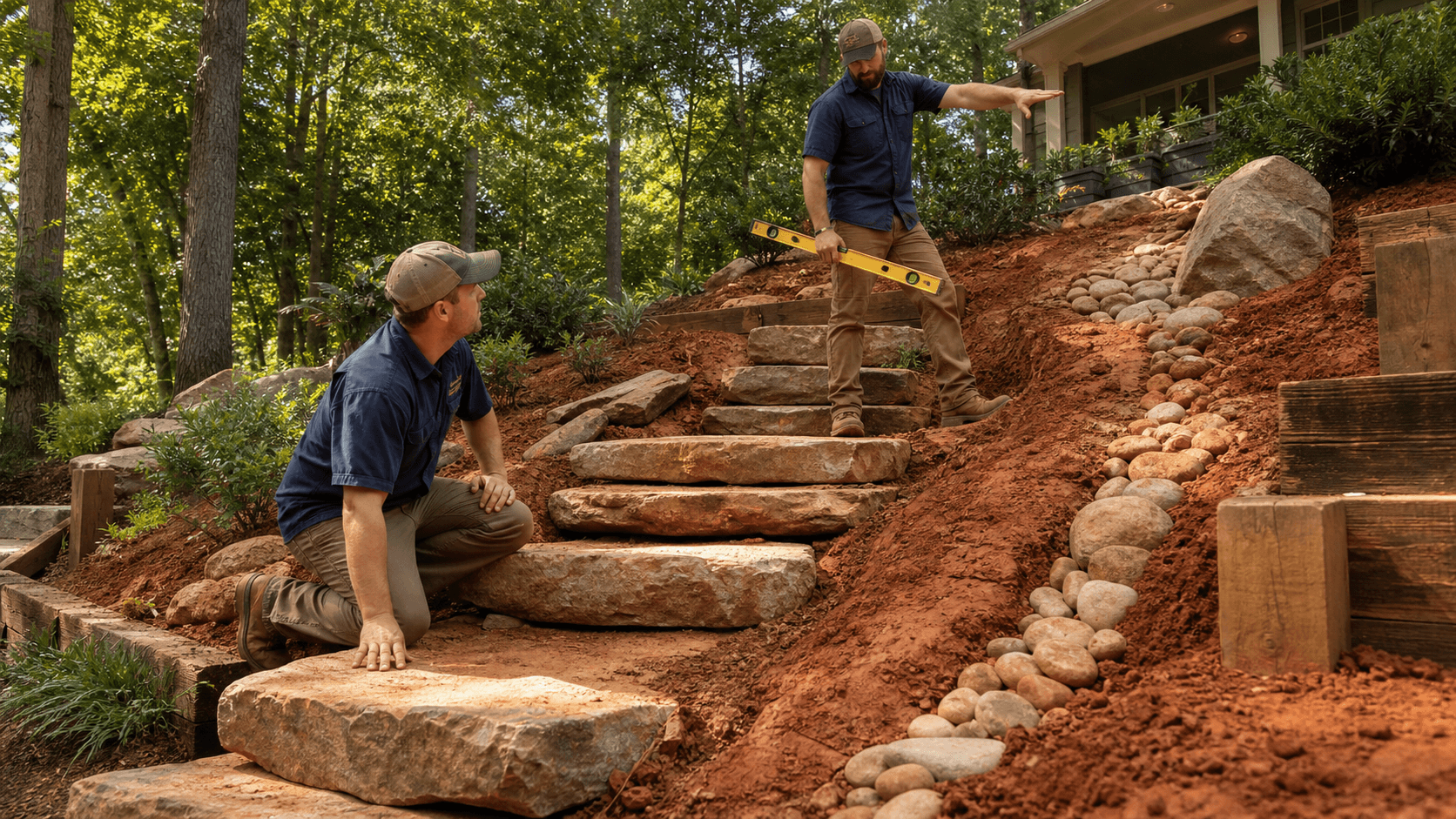
- Whether we cut into the slope or build up with retaining walls
- Where we can safely place a patio without overloading roots or foundations
On steeper lots, or when we add retaining or seat walls near the tree, we often partner with licensed engineers. They help confirm footing size, wall thickness, and how new work ties into existing structures.
Designing Custom Patios in Homewood Around Live Roots
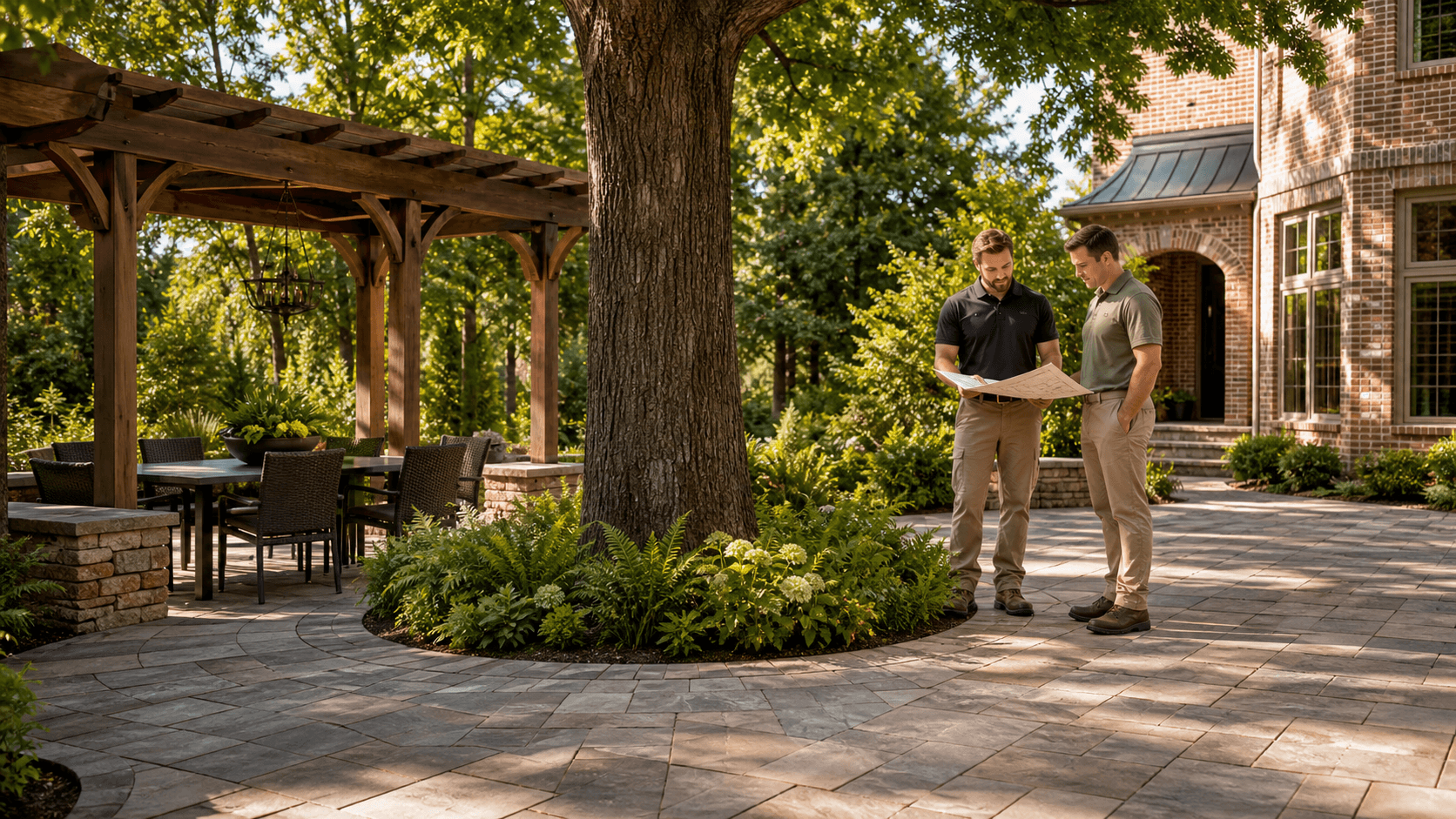
With the site read, we start shaping the patio around the tree, not against it. Straight lines and sharp corners rarely fit well when roots are close to the surface.
We often:
- Curve patio edges to follow the root zone instead of cutting through it
- Pull heavy areas like grills, outdoor kitchens, and fireplaces farther from the trunk
- Keep main traffic paths outside the most sensitive roots when possible
Elevation matters just as much as layout. To protect surface roots, we may:
- Raise the patio slightly with built-up base instead of cutting down into grade
- Use short step transitions instead of one deep cut near the tree
- Coordinate heights with existing decks, porches, and thresholds so everything ties together cleanly
Material choice is also part of the strategy. In Alabama clay, pavers often handle movement better than large monolithic concrete slabs. We look at:
- Paver systems that allow for minor adjustment over time
- Joint spacing and bedding material that lets water pass instead of ponding
- Permeable or semi-permeable options in the right sections to reduce water stress on tree roots
Because we work as an integrated design-build team, one team, one plan, one standard, the design, grading, structural details, and installation are all handled together. That keeps tree protection and structural needs aligned from start to finish, without you having to juggle multiple vendors.
Building a Stable Patio Without Choking the Tree
Once construction starts, the way we handle excavation around roots makes a big difference over the life of the tree.
Near a trunk, we often:
- Hand-dig or use small tools to gently expose roots
- Preserve larger structural roots that provide stability
- Plan any unavoidable root cuts in advance and keep them clean, not torn or crushed
Base preparation has to support the patio while still respecting those roots. That can mean:
- Adjusting base thickness over or around major roots
- Bridging shallow roots instead of cutting them out
- Reducing heavy compaction right at the trunk and shifting structural load slightly away
Drainage is a key part of not choking the tree or flooding the house. We think through:
- Surface slopes that move water off the patio but not straight into the root flare
- French drains or channel drains in tight corridors or at the base of retaining walls
- Outlets that carry water to a stable discharge point instead of creating soggy clay pockets
When retaining walls, seat walls, or structures bear near the root zone, a licensed engineer may help refine footings and reinforcing so the system performs for the long term.
Bringing It Together: Hardscape, Landscape, Lighting, Structures
When the patio is laid out correctly, the tree becomes a feature, not a problem spot. Shade, scale, and movement all work in your favor.
We often use existing trees as anchors for:
- Seat walls that frame views but stay off the trunk
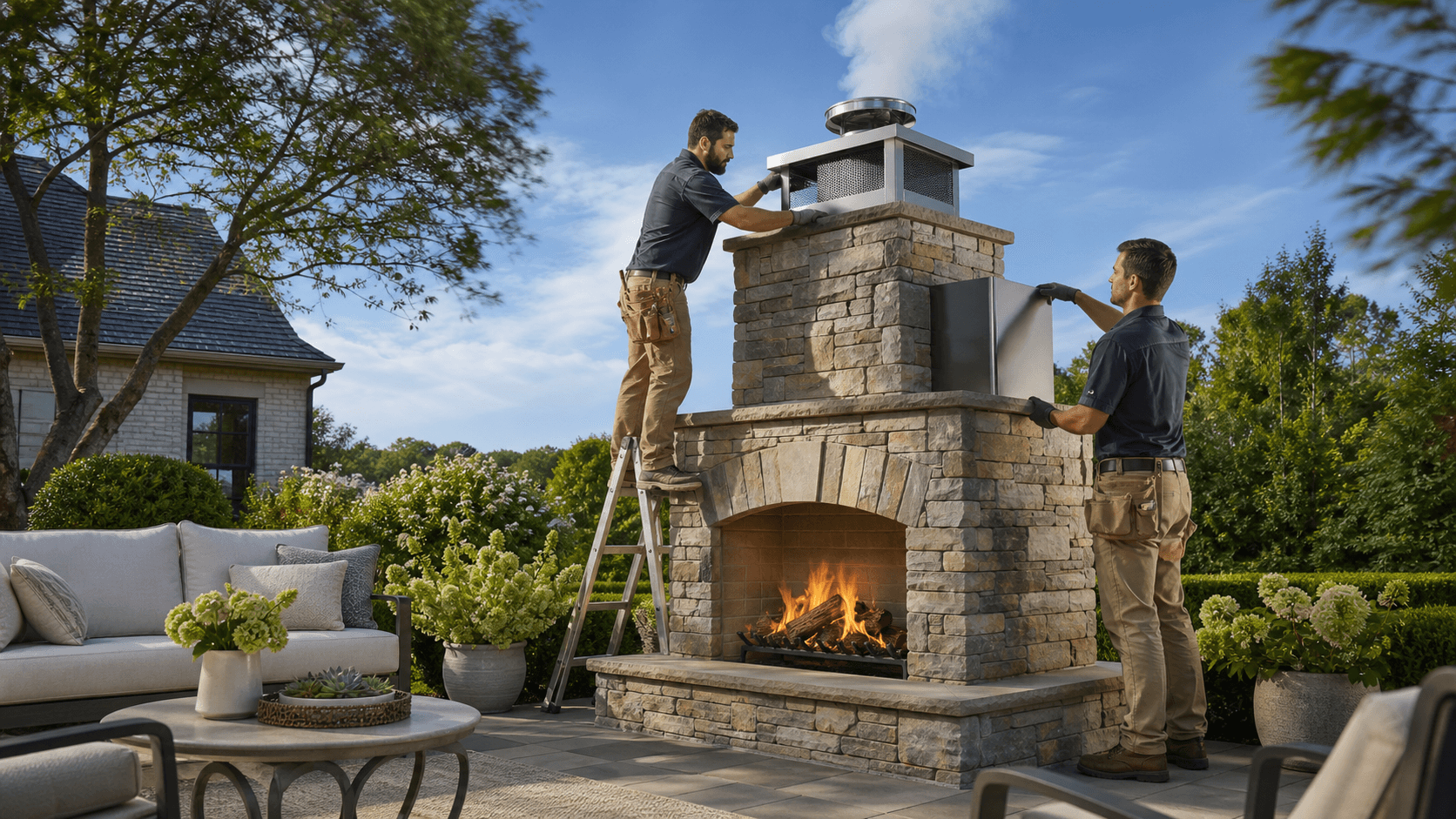
- Fire features positioned to enjoy the canopy without stressing limbs
- Structures such as pergolas or covered pavilions that borrow shade instead of fighting it
Plantings around the patio are chosen so they support, not compete with, the main tree. That usually means:
- Plants with root systems that won't tangle aggressively with the tree
- Species that handle partial shade and clay soil
- Irrigation that waters plant beds without soaking the trunk
Landscape lighting lets us highlight trunks, branching, and canopy texture after dark. We take care to:
- Keep fixtures off the bark so it can breathe and grow
- Run wiring routes that avoid major roots
- Use the right beam angles so the tree reads well from inside the home and on the patio
Structures such as pergolas, pavilions, covered areas, and outdoor kitchens are engineered for wind and load, but they also have to work with tree growth. We pay attention to clearances, falling limb patterns, and how shadows shift through the day.
Planning Timeline, Maintenance, and Realistic Budget Ranges
Fall is a strong planning season in Central Alabama. Temperatures are more comfortable for site walks, and tree canopies are easier to read as leaves start to thin. From there, projects typically move through:
- Site analysis and concept design
- Final plans with grading, drainage, and structural details
- Construction phases for hardscape, plantings, structures, and landscape lighting
Ongoing, a well-built patio around trees still needs some basic care. Homeowners should expect to:
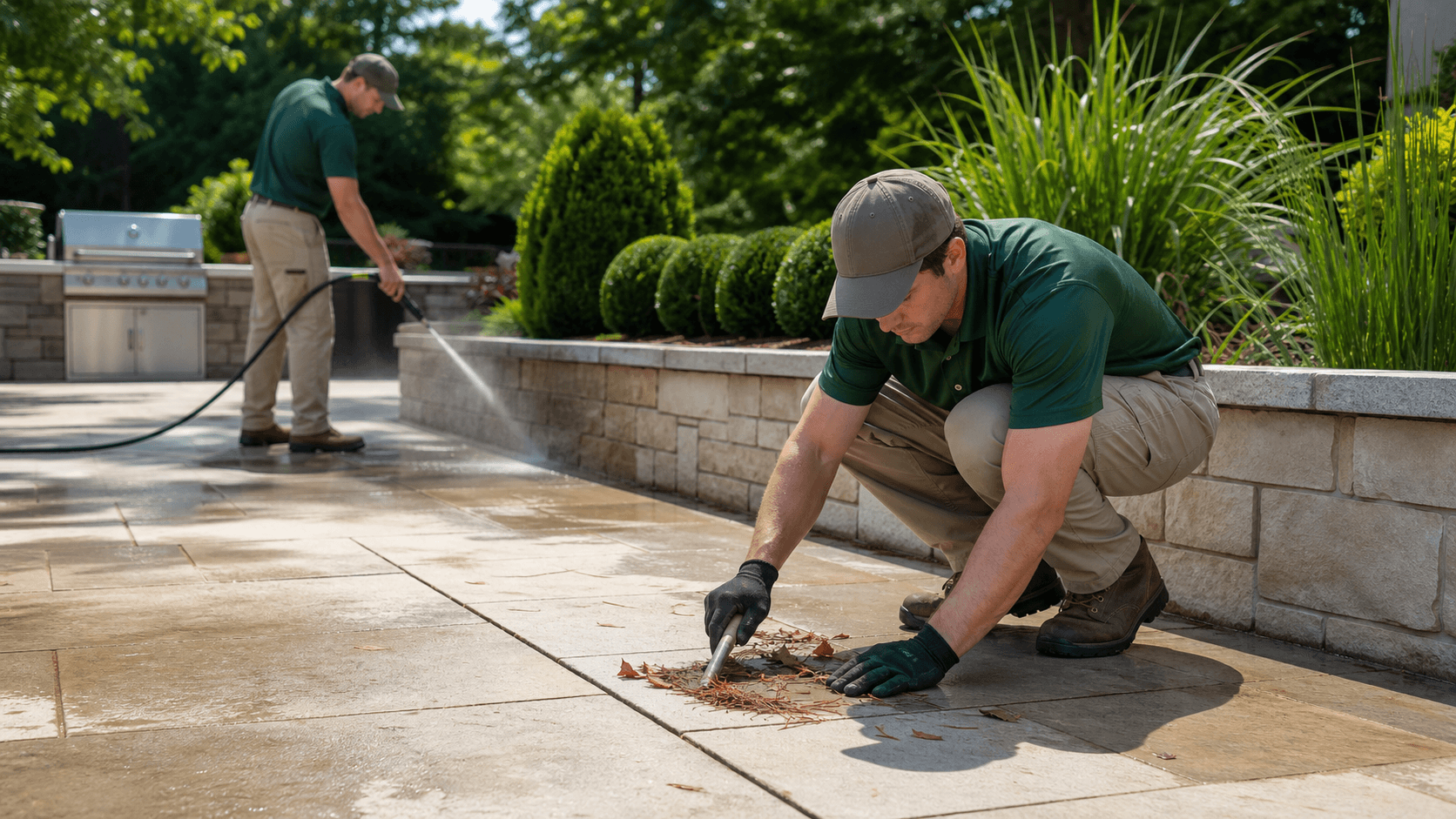
- Refresh joint sand or polymeric material as needed
- Watch for gradual root lift at edges and steps
- Coordinate pruning so limbs stay healthy and clear of structures
- Call a professional builder if they see movement, pooling water, or trip edges forming
Budget on a tree-sensitive patio is shaped by several things:
- Overall size and footprint
- Material selection and pattern complexity
- Amount of grading, retaining walls, and drainage required
- Added structures, outdoor kitchens, irrigation adjustments, and landscape lighting
Building correctly for Alabama clay and mature trees may add steps on the front end, but it often means fewer repairs, better tree health, and a safer, more usable outdoor living space over time.
When homeowners in Homewood plan custom patios around existing trees with an engineering-first mindset, they can keep the shade, protect their property, and gain a solid outdoor room that feels like it's always belonged there.
If you're thinking about a patio around mature trees on your Homewood property, let's talk about your yard and what the structure needs to do. Call (205) 305-7780, email info@woodpalmer.com, or reach out through the contact form at woodpalmer.com/contact.
Get Started With Your Project Today
Transform your outdoor space into a place you love spending time in with our team at Wood-Palmer Outdoor Creations. Explore your options for custom patios in Homewood and let us help you design a layout that fits your home and lifestyle. We will guide you from concept to completion so the process feels simple and straightforward. Ready to talk details and get a quote? Just contact us to begin.