Why Hardscape Maintenance in Birmingham Is Different
Landscape maintenance in Birmingham is about a lot more than mowing the lawn and freshening up mulch. On steep clay slopes and lakefront lots, your patios, walls, steps, and drives are sitting on soil that moves, swells, shrinks, and carries water in powerful ways. If that movement isn't managed, the first signs usually show up in the hardscape, not the grass.
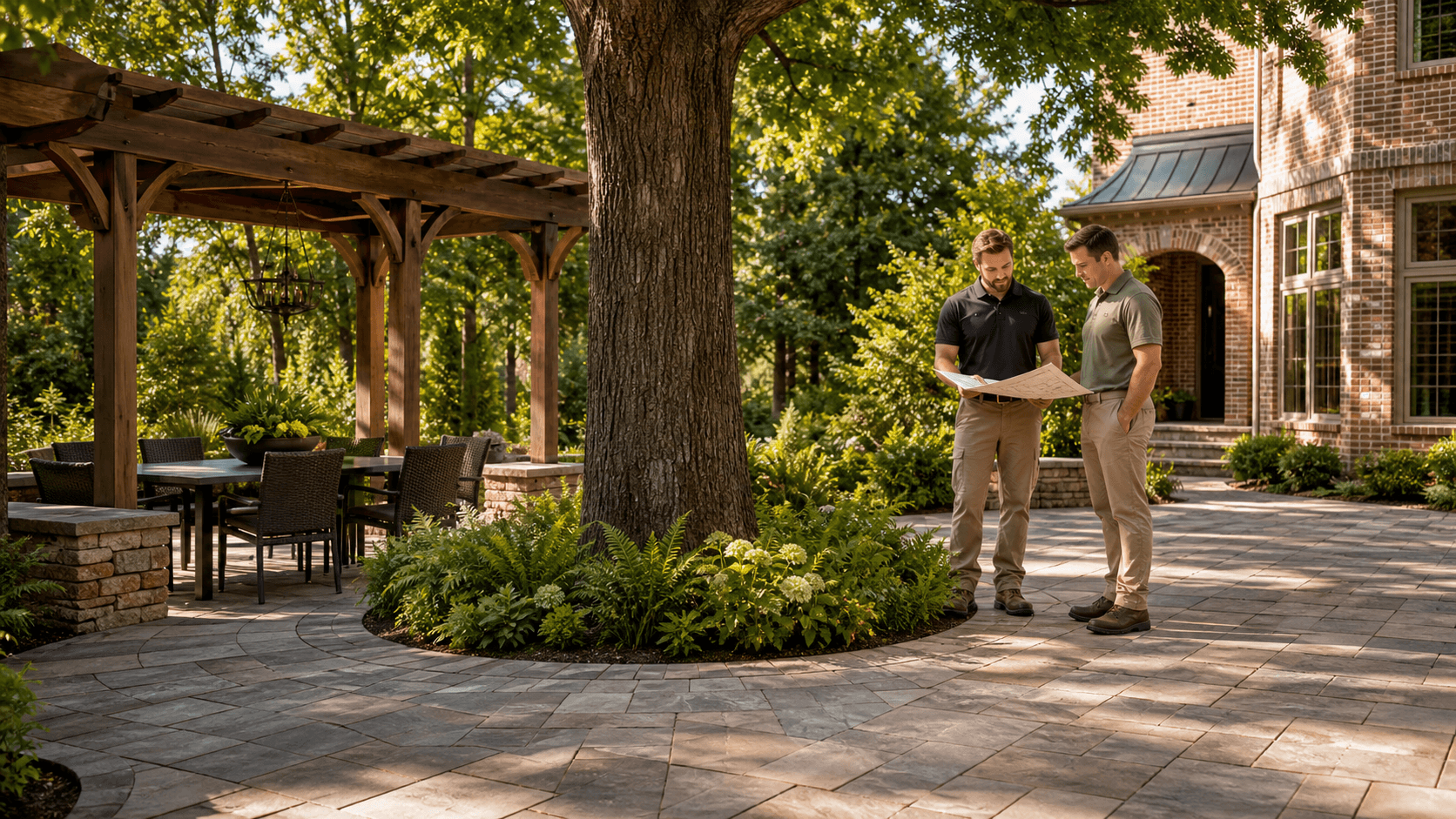
When we talk about maintenance, we're really talking about protecting drainage, grading, and structural integrity over time. The stone or paver surface is the finish, not the structure. At Wood-Palmer Outdoor Creations, we design and build with that in mind from day one. Our owner stays involved as these systems are planned and then checked over the years, so expectations for long-term care are built into the original plan, not treated as an afterthought.
How Birmingham Soil and Slope Affect Your Hardscape
Central Alabama's red clay holds water like a sponge, then lets go when it dries out. It swells when it's wet and shrinks and cracks when it's dry. That constant movement shows up here:
- Paver patios and walks that start to dip or ridge
- Retaining walls that bulge or open at the corners
- Pool decks that settle and send water back toward the pool or house
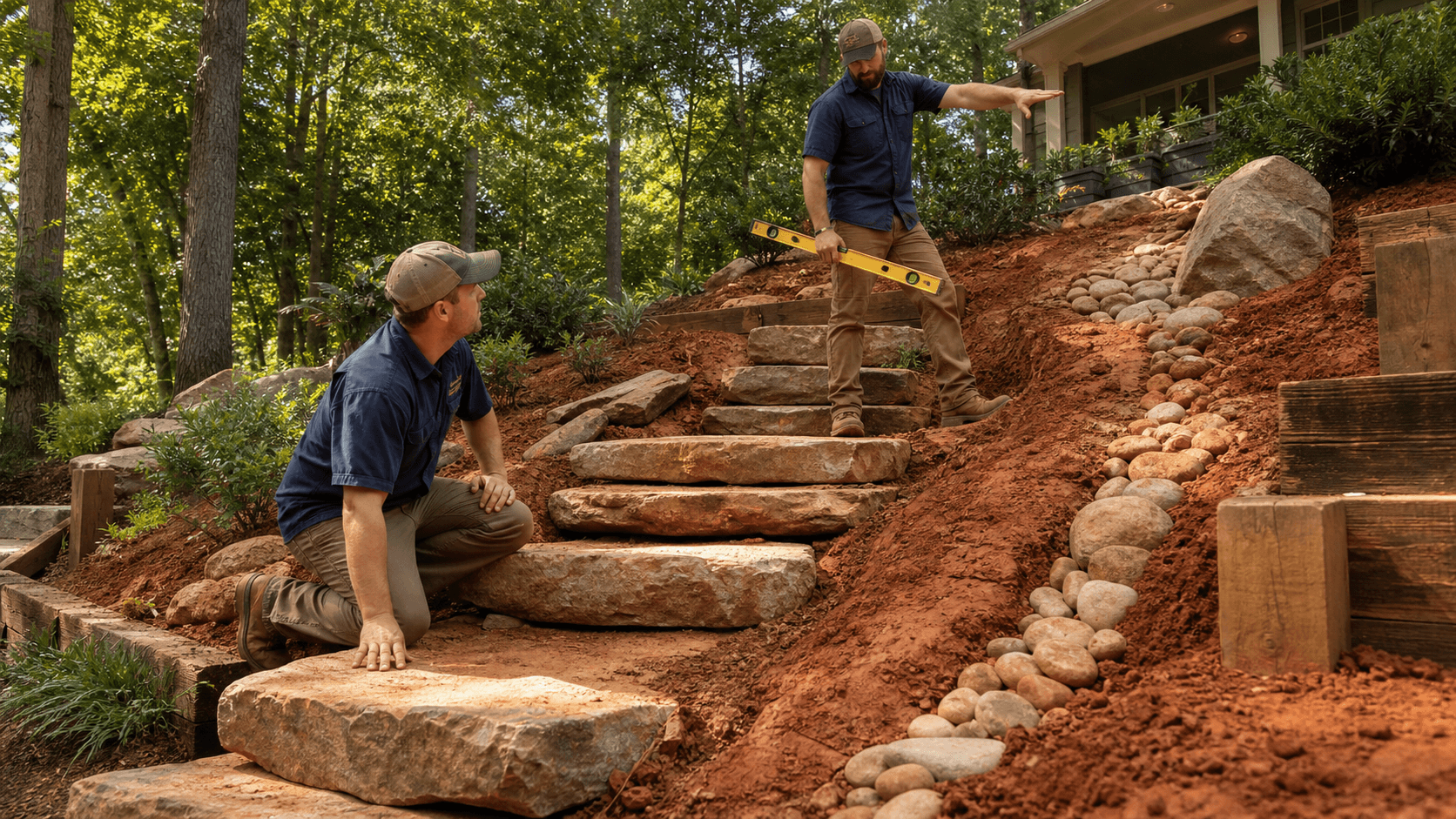
On hillsides around Mountain Brook, Vestavia Hills, and the lake areas, gravity adds another layer. Water wants to move downhill, and it'll press on anything in its path. Behind walls, that pressure is called hydrostatic pressure. Across steep drives and walks, it becomes sheet flow, carrying fines out of the base and into drains or low spots.
That's why the unseen parts matter more than the stone on top. A well-built system in this region often includes:
- Thicker, well-compacted base under pavers and slabs
- Geogrid and proper drainage stone behind retaining walls
- Expansion joints where concrete meets masonry or the house
- Designed drainage paths that give water a clear, safe route off the site
When a contractor understands how Birmingham soil behaves, seasonal movement is expected and managed. Maintenance then becomes checking and adjusting, not tearing out and starting over.
What Maintenance Really Means for Patios, Walls, and Drives
On patios and pool decks, maintenance is about catching small shifts early. A simple walk-through can tell you a lot. You want to look for:
- Joints that are washing out between pavers or stone
- Low spots where water lingers after a good rain
- Edges that start to separate from adjacent turf or beds
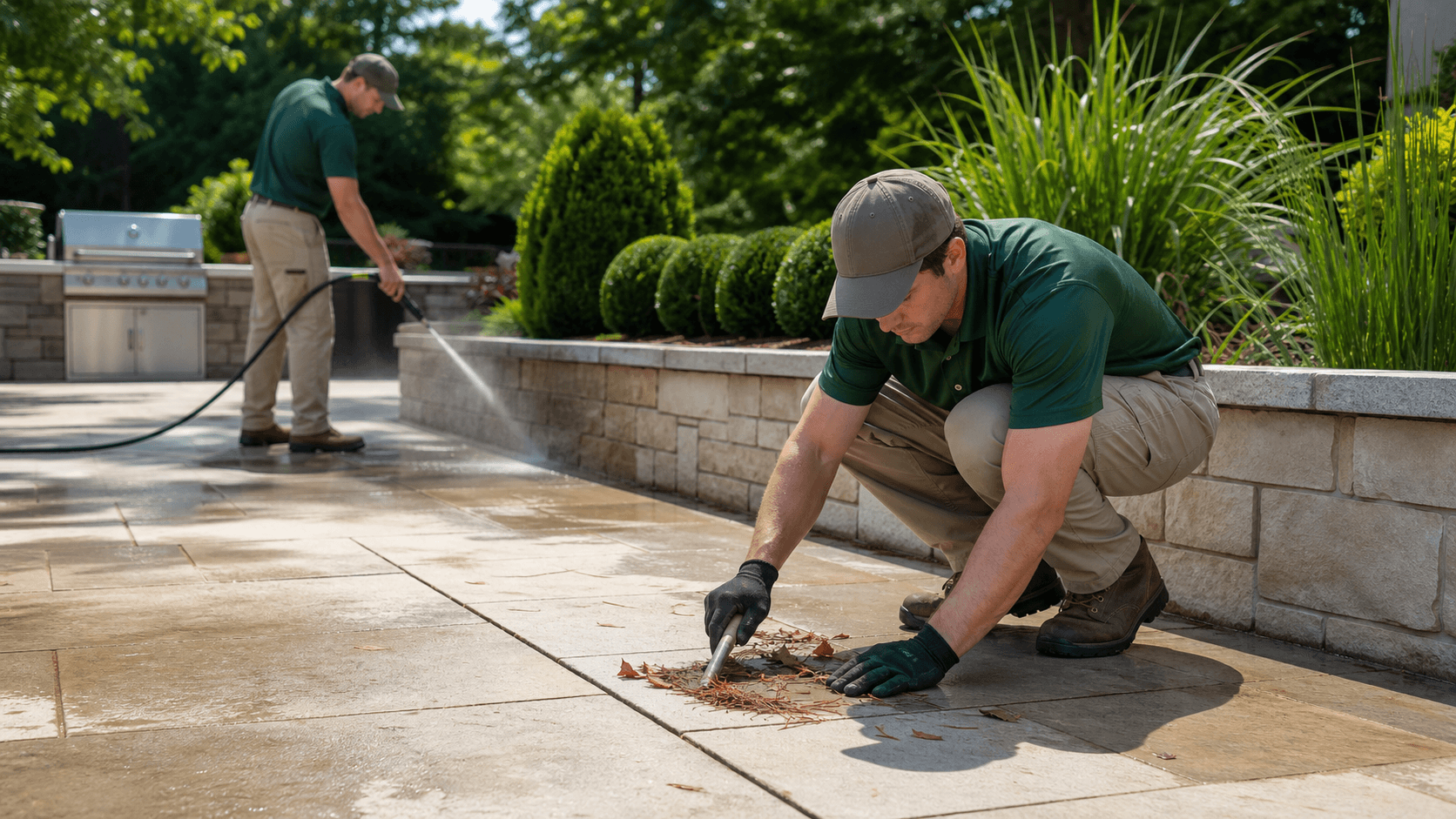
Cleaning and re-sanding paver joints, removing algae and buildup, and confirming that water still runs away from the house or pool all help protect the structure underneath. If you see trip edges starting to form, that's a sign that the base is beginning to move and needs professional attention.
Retaining walls and steps deserve the same level of care. Key items to watch include:
- Bulging or leaning sections, even if the movement is slight
- Cracks or gaps opening at corners or where steps meet walls
- Weep holes that are blocked, or no water coming out of outlets in a storm
- Erosion at the toe of the wall or along the side of steps
Clearing debris from weep holes and outlets often does more for a wall's long-term performance than trimming any shrubs around it.
Driveways and motor courts take the weight of vehicles, delivery trucks, and service equipment. Maintenance here focuses on:
- Ruts or tire tracks in paver or gravel areas
- Cracking or flaking in concrete or decorative finishes
- Standing water that appears after most rains in the same spots
- Trench drains and catch basins clogged with leaves, gravel, or pine straw
A maintenance-minded approach looks at what's happening under the surface so heavy vehicles don't slowly crush the structure below a nice decorative finish.
Drainage, Irrigation, and Erosion Control Working Together
On a Birmingham property, surface and subsurface drainage are a matched set. Surface grading is what you see: patios pitched slightly away from the house, lawns that carry water toward a swale, driveways that shed water to a trench drain. Subsurface drainage is what you can't see: French drains, underdrains behind walls, perforated pipes wrapped in stone.
Both systems need periodic inspection and cleaning. If surface grading is right but the subsurface drain behind a wall is clogged, pressure will build. If the pipe is clear but the patio now has low spots, water will sit and look for cracks.
Irrigation can quietly undo good drainage if it isn't tuned to the hardscape. Common problems include:
- Heads spraying onto stone instead of turf
- Overwatering beds that sit on top of walls
- Slow underground leaks under pavers or at valve boxes
Continued overwatering around structures can wash out base materials and create voids. A thorough maintenance routine in Birmingham should always include an irrigation check around built features.
Erosion and edge protection are the last pieces of this puzzle. The trouble spots are usually:
- Lake banks where fluctuating water levels eat away the shore
- Driveway shoulders where tires break down the edge
- Slopes above or behind walls that are left bare
Groundcovers, riprap, and smart transitions between turf and hardscape lock the edges so one late-summer storm doesn't undo years of work.
Seasonal and Long-Term Care for Your Hardscape
As leaves and pine straw fall, they do more than make things look messy. On patios, stone steps, and in drains, that organic layer holds moisture and stains surfaces. It also clogs grates, trench drains, and outlets that are supposed to move water away from the house and walls. A thorough fall cleanup is a structural step, not just a cosmetic one.
Even though Birmingham winters are milder, freeze and thaw cycles still happen. Water sitting in joints and hairline cracks can expand on cold nights and slowly open those gaps. Heavy holiday traffic on paver drives or crowded patios often exposes weak spots that have been slowly developing all year.
A simple fall checklist can help:
- Walk the property after a strong rain
- Note any standing water that lingers more than a day
- Look for new cracks, settlement, or loss of joint material
- Check that every drain outlet you can see is actually flowing
If you notice the same problems repeating, that's usually a grading or drainage issue, not just a surface problem.
At some point, it makes sense to call a builder instead of just a yard crew. Clear signs include walls that are bowing or cracking, washouts that keep coming back in the same area, water making its way to the house foundation, or paver sections that settle again and again after quick patches. A builder-led team looks past the symptoms and traces issues back to grading, base preparation, and water movement.
At Wood-Palmer Outdoor Creations, the same team that designs and installs your hardscape, planting, structures, irrigation, and landscape lighting also thinks through how those systems will be maintained on Alabama clay over the long haul. Our owner stays close to that process, especially on steeper terrain and lakefront structures, so patios, walls, drives, and lakefront work are treated like extensions of the home's foundation. When homeowners treat these elements the same way, with simple habits like walking the property after storms, keeping drain outlets clear, and asking questions before anyone digs near a wall or patio, those outdoor spaces tend to perform better and last longer in our climate.
Get Started With Your Project Today
If you are ready to keep your yard looking its best season after season, our team at Wood-Palmer Outdoor Creations is here to help. Explore how our landscape maintenance in Birmingham can be tailored to your property, goals, and budget. We will review your needs, recommend a practical plan, and schedule services that fit your routine. Have questions or want to schedule a visit now? Simply contact us to get started.