Protecting Steep Estate Yards From Alabama Storms
Steep yards in Vestavia Hills are beautiful, but they can be tough when the rain hits. The same hills that give those big views also give water a fast slide straight toward your home, driveway, and outdoor living spaces.
Heavy late spring and summer storms can turn a refined estate yard into a mess in a short time. Large roofs, long driveways, wide pool decks, and manicured lawns all collect and speed up runoff. Without a plan, that water looks for the lowest point, often right where you do not want it. In this article, we will walk through practical, architectural-grade drainage solutions in Vestavia Hills that protect foundations, keep outdoor spaces usable, and still keep curb appeal at a high level.
How Steep Vestavia Hills Lots Create Drainage Risk
On a steep lot, gravity does not take a break. The steeper the slope, the faster the water moves. That extra speed shows up as:
- Erosion along hillsides and beds
- Mulch washed into lawns and walkways
- Exposed roots around trees and shrubs
- Ruts and bare streaks in high-end turf
During strong summer thunderstorms, many estate owners see water sheeting across the driveway like a shallow river. It can:
- Pool in front of a garage or basement doors
- Seep along foundation walls
- Collect in low spots near patios, pools, or outdoor kitchens
The real cost is not just a muddy corner of the yard. Poor drainage can shorten the life of stone patios, outdoor kitchens, and other hardscapes. Plants can fail early when roots sit in soggy soil. Standing water invites mosquitoes. Over time, you can even see signs of moisture issues inside the home, such as musty odors or concerns with finishes near lower levels.
Smart Grading and Swales That Move Water Safely
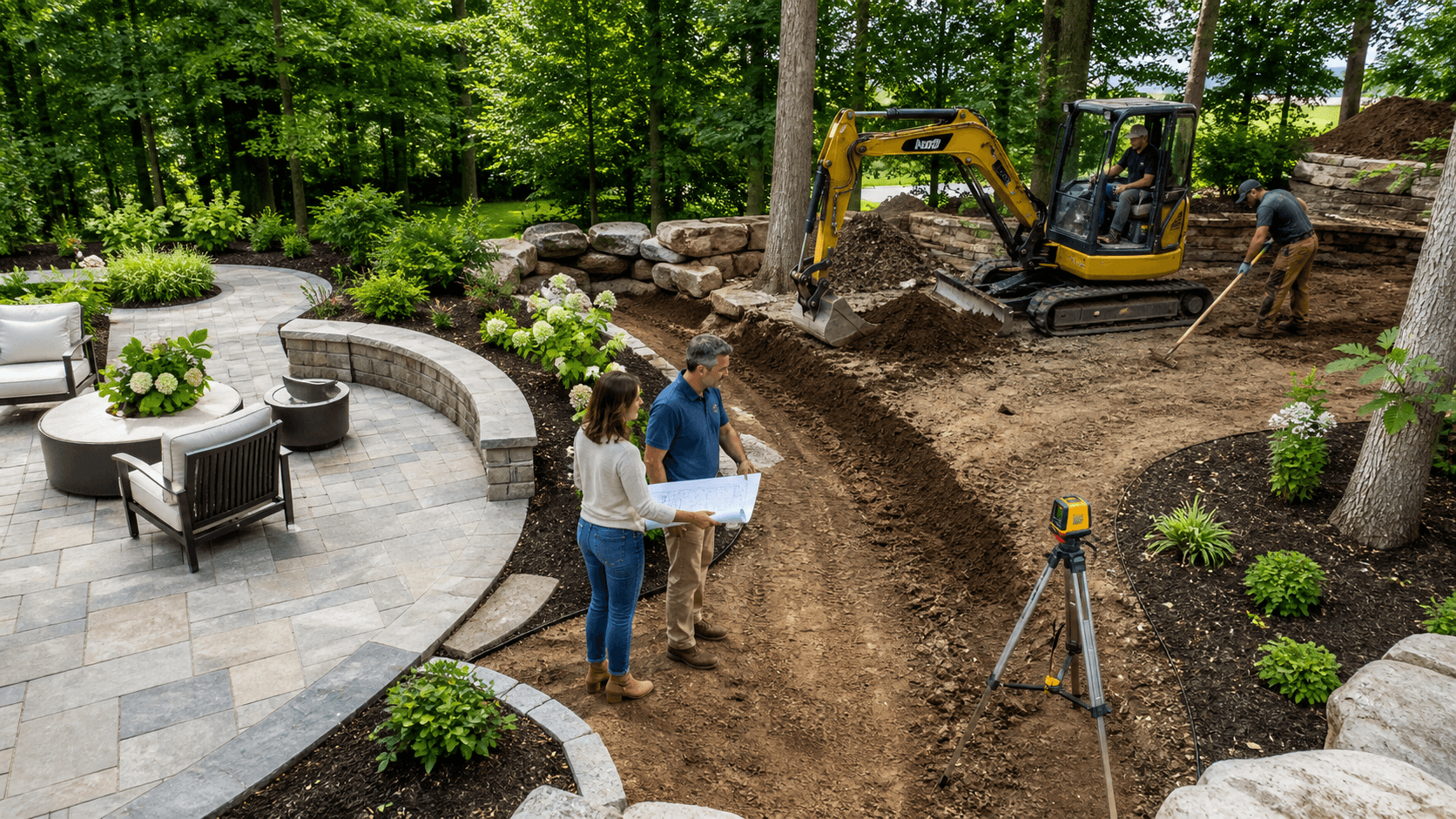
The first step to controlling water on a steep estate is often smart grading. We are not talking about huge cuts or ugly berms. Strategic regrading is subtle. It uses gentle contouring to nudge runoff away from the house, then sends it toward safe discharge points.
A good grading plan will:
- Pull water away from foundations and doors
- Avoid creating steep, unsafe drop-offs
- Blend with existing lawns and beds so the yard still feels natural
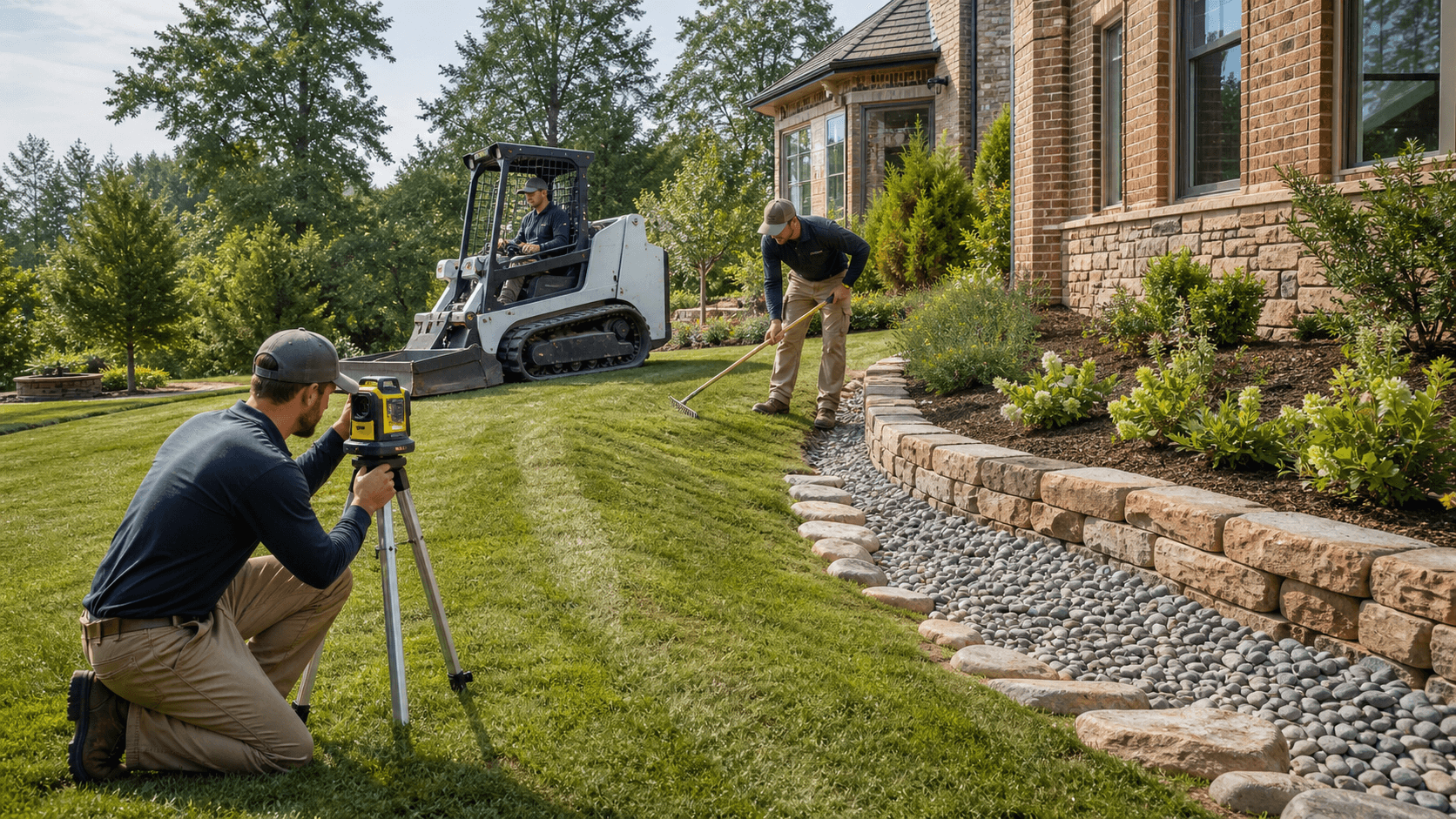
Grassed swales are another quiet hero. These are shallow, wide channels that you can mow like regular lawn. On many Vestavia Hills properties, swales run between homes or along the side yard, catching water that would otherwise race downhill.
A well-designed swale can:
- Slow water so it does not erode the soil
- Share drainage safely between neighboring properties
- Disappear visually once the grass fills in
An experienced design-build team looks at the whole site, not just one trouble spot. We study:
- Elevation changes from street to back fence
- Soil type and how well it drains
- Existing structures, trees, and hardscapes
The goal is to work with the natural slope instead of fighting it, giving water a clear, controlled path from high points to low outlets.
French Drains and Catch Basins for Steep Estates
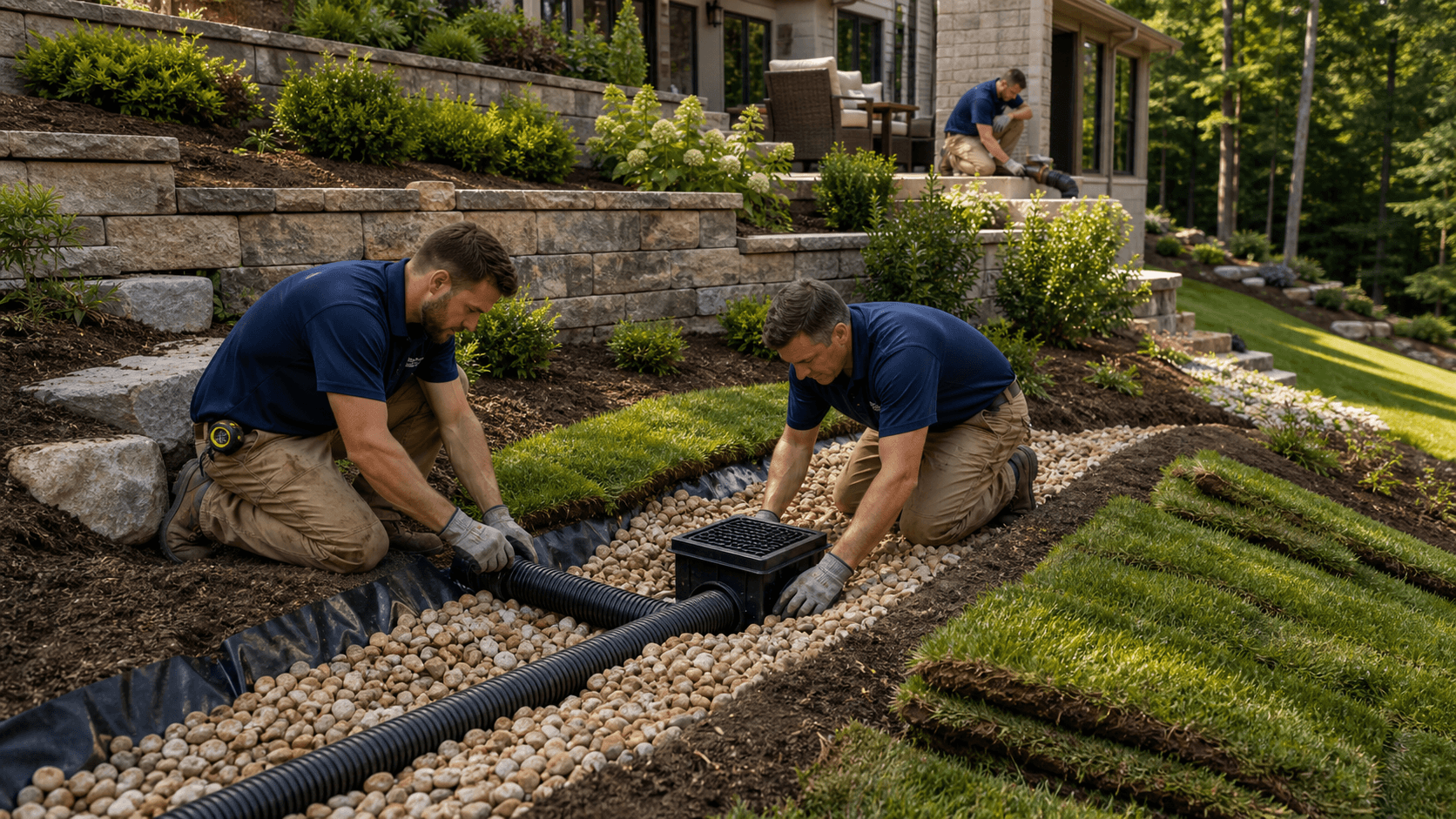
When grading alone is not enough, buried systems come into play. French drains are a common tool on steep lots. These are gravel-filled trenches with perforated pipe inside that collect groundwater and slow-moving surface water.
French drains work especially well:
- Along the uphill side of a foundation
- Behind retaining walls to relieve pressure
- Along the edge of long driveways or parking courts
- At the base of large slopes where water gathers
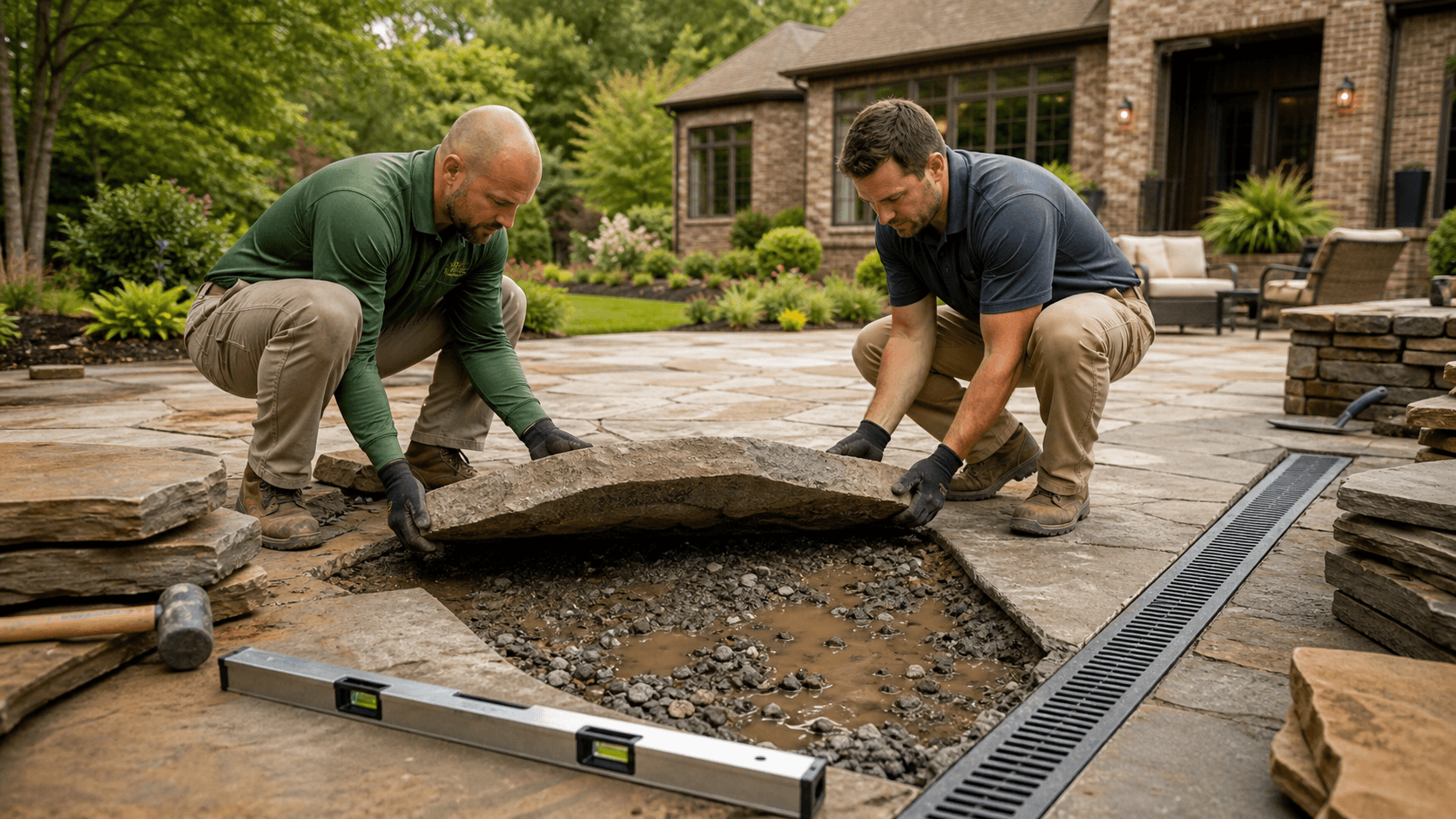
For fast, heavy runoff on the surface, catch basins and trench drains do the heavy lifting. Catch basins are in-ground boxes with grates that pull in water from lawns and beds. Trench or channel drains are long, narrow drains often set across:
- Driveways near garages
- Patio thresholds at doors
- Pool decks and outdoor kitchen edges
All of these components tie into solid underground piping that carries water to safe discharge points, such as approved daylight outlets or other designed release areas. The most effective drainage solutions in Vestavia Hills often combine French drains, catch basins, and solid pipe sizing that is ready for intense summer storms, not just light showers.
Retaining Walls, Planting, and Hardscapes That Control Water
On very steep estate yards, retaining walls do more than hold soil in place. When they are properly engineered, with drainage backfill and weep holes, they also manage water pressure behind the wall and guide it down in a controlled way.
Good retaining wall design should:
- Stabilize steep banks and protect structures above and below
- Include drainage stone and perforated pipe behind the wall
- Release water slowly through weep holes or drains at the base
Planting is another quiet but powerful tool. Deep-rooted groundcovers and shrubs help anchor soil and soak up part of the runoff. Terraced planting beds break a tall slope into smaller, gentler steps so water has more chances to soak in.
Thoughtful plant choices can:
- Slow surface flow with foliage and mulch
- Reduce bare soil where erosion starts
- Add color and texture while doing practical work
Around outdoor living spaces, hardscape choices matter too. Permeable pavers, gravel bands beside driveways, and stone ribbons between sections of patio help break up water flow. Instead of one smooth slide, water has to pass across joints and textured surfaces, which slows it and encourages infiltration.
Integrated Drainage, Irrigation, and Lighting Design
Drainage does not live on an island. On a steep yard, irrigation design has to respect how water already moves on the site. Sprinklers that throw too much water on a slope can undo all the benefits of a good drainage plan.
A coordinated plan looks at:
- Where stormwater naturally collects
- Which areas need more irrigation, and which need less
- How to separate steep zones from low-lying, wetter zones
Smart controllers and moisture sensors can adjust watering cycles based on real conditions. When soils are already wet from recent storms, the system can hold back, which helps prevent:
- Slope instability from saturated soils
- Root rot in ornamental plants
- Moss and algae on shaded hardscapes
Lighting is the final layer that ties function and safety together. Low-voltage landscape lighting can mark:
- Swales and drainage paths that cross walkways
- Steps and grade changes near patios and pools
- Retaining walls and raised terraces
On wet nights, guests can see where they are walking, and the design of the yard still looks intentional and beautiful instead of hidden in the dark.
Planning Drainage for Your Vestavia Hills Estate Yard
The best time to plan drainage improvements is before small problems become big ones. After a storm, walk your property and notice where water moves too fast, where it sits too long, and where it seems to push toward the house or key outdoor areas.
Some signs that it is time for a professional assessment include:
- Ruts or bare spots on slopes
- Mulch or gravel washing onto walks and drives
- Soft or spongy turf that stays wet
- Water stains or musty smells near lower-level walls
Thoughtful drainage solutions in Vestavia Hills protect more than just grass. They protect your home's structure, your outdoor living investments, and the long-term look of a luxury landscape. With a custom plan that blends grading, drains, walls, planting, irrigation, and lighting, steep estate yards can handle Alabama storms and still look refined all year.
Get Started With Your Project Today
If water issues are affecting your yard or outdoor living space, we are ready to help you fix them for good. At Wood-Palmer Outdoor Creations, our team designs and installs tailored drainage solutions in Vestavia Hills that protect your property and keep your landscape looking its best. Tell us about your project and goals, and we will recommend a plan that fits your home and budget. To schedule a consultation or ask questions, simply contact us today.