Why Homewood's Clay Matters for Your Outdoor Fireplace
Outdoor fireplace installation in Homewood is not the same as dropping a prefab unit on a flat, sandy lot. Our area is full of dense red clay, hills, mature trees, and older utilities that all influence where and how a fireplace can safely be built. If the base under that masonry isn't right for this soil, the structure will tell on you later with cracks, leaning, and water problems.
An outdoor fireplace is a permanent masonry structure. It's more like adding a small addition than setting a decorative accessory. The soil profile under it, the drainage around it, and the way it ties into the rest of your yard determine how it holds up through heavy Alabama rains and freeze-thaw cycles. You're not just stacking stone; you're building a small engineered structure that has to work with Central Alabama clay and weather, not fight against it.
Reading Your Homewood Backyard Before You Build
Homewood lots often have tight side yards, rear alleys, and older retaining walls left from previous projects. Those details matter before anyone talks about stone color. We pay close attention to:
- Narrow access paths that may limit equipment
- Existing patios, decks, and brick terraces that could influence placement
- Older concrete or brick that may not be designed to carry a new chimney load
Many yards already have a patio or deck, and it's tempting to stick a fireplace right on the edge. The problem is that most of those surfaces weren't designed for that weight. We look at how the existing hardscape was built, what kind of base is under it, and whether it can be structurally tied into a new fireplace without long-term movement.
Mature oaks and pines are another big factor. Their roots, drip lines, and shade patterns all affect where a fireplace makes sense. We also look at:
- Existing drainage swales that must keep working
- Neighbor sightlines and privacy needs
- Wind patterns that might blow smoke toward a house or deck
Under your grass or old patio, we want to know what the clay is actually doing. We evaluate topsoil depth, compaction of the red clay subgrade, and any fill that may have been pushed around when the house was built. Probing can reveal soft pockets, buried debris, or forgotten irrigation lines that would undermine a footing if we ignored them.
Slope direction matters too. If the yard pitches toward the house, we have to be more aggressive with regrading and drainage planning than on a yard that naturally drains away. All of this sits inside local code realities. We have to account for:
- Gas line routing and shutoff locations
- Clearances from structures and property lines
- Chimney height in relation to nearby roofs
Homewood's tighter lots also mean watching overhead power lines, low eaves, and basement windows. Those details change chimney design, fireplace height, and even whether wood or gas is the better fit.
Building a Stable Base in Alabama Red Clay
Homewood clay is dense and sticky, and it holds water like a sponge. When it gets wet, it swells. When it dries out, it shrinks and cracks. That movement is what can push on a fireplace footing and cause long-term trouble if the structure isn't designed for it.
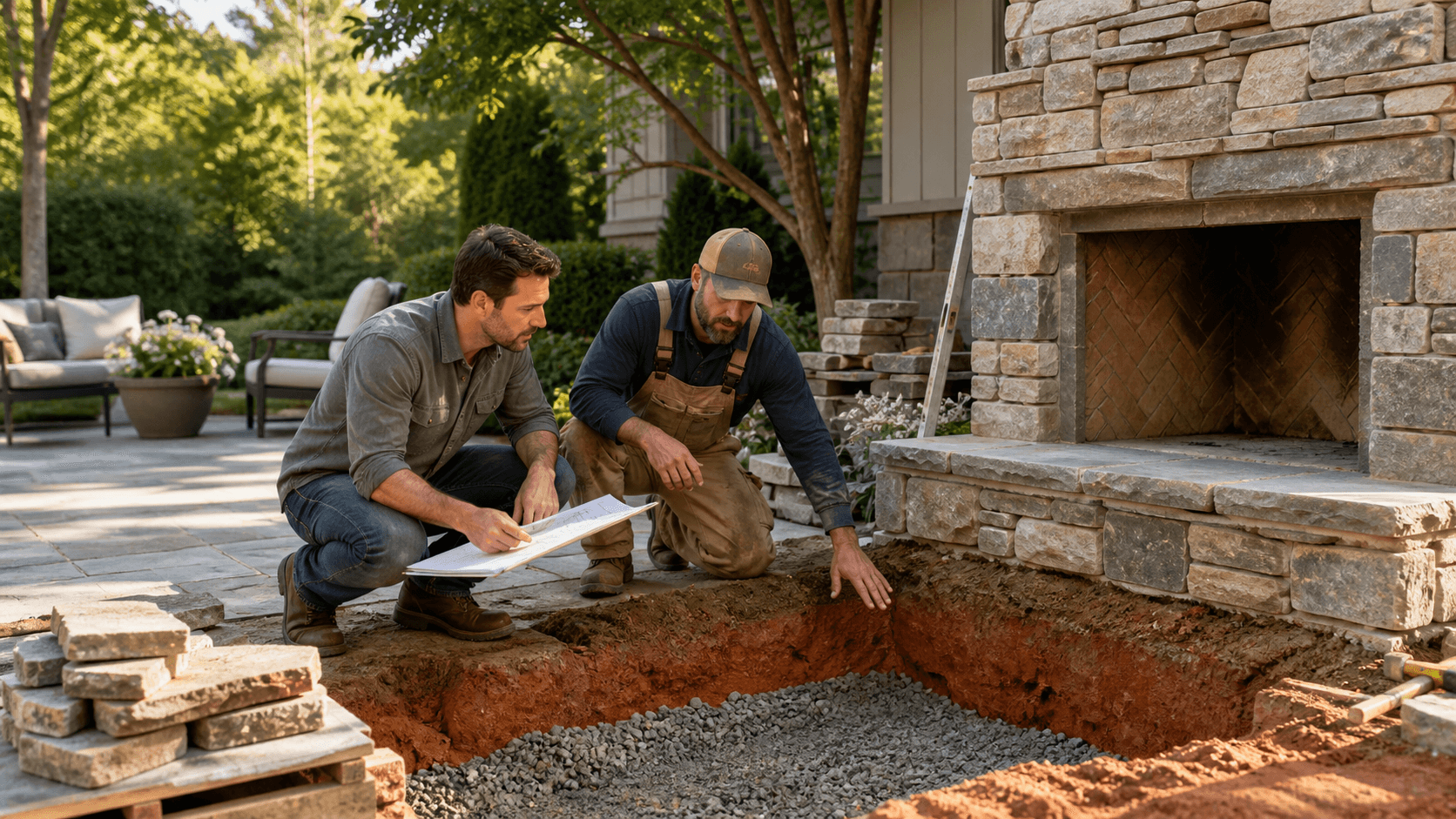
Good outdoor fireplace installation in Homewood starts well below the finished patio surface. We're focused first on subgrade and footing, then on what you see above it. That means removing organic topsoil and any loose fill until we reach consistent, load-bearing clay. Then we compact that clay thoroughly so we're not building on a spongy layer that will change with the seasons.
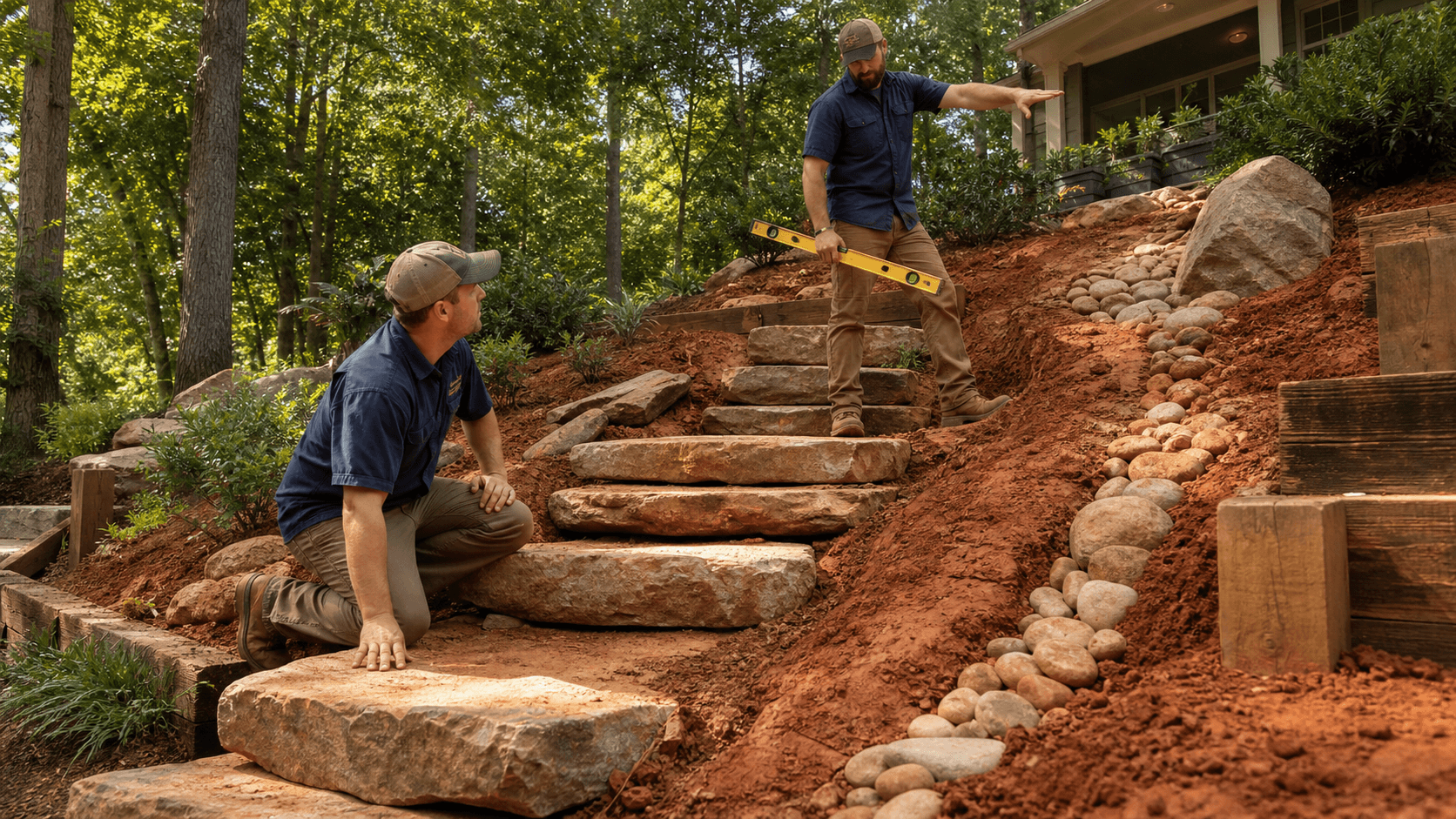
From there, we form and pour a properly sized, steel-reinforced concrete footing designed to spread the load of the firebox and chimney into the clay. On sloped yards, we may step the footing down the hill or cut into the slope and build a small retaining wall to create a stable pad. That decision depends on the height of the slope, drainage patterns, and how the rest of the hardscape will tie in.
Water management around the fireplace is just as important as the footing itself. We plan for:
- Positive drainage away from the house, fireplace, and patio
- Subtle grading so water doesn't pond against masonry
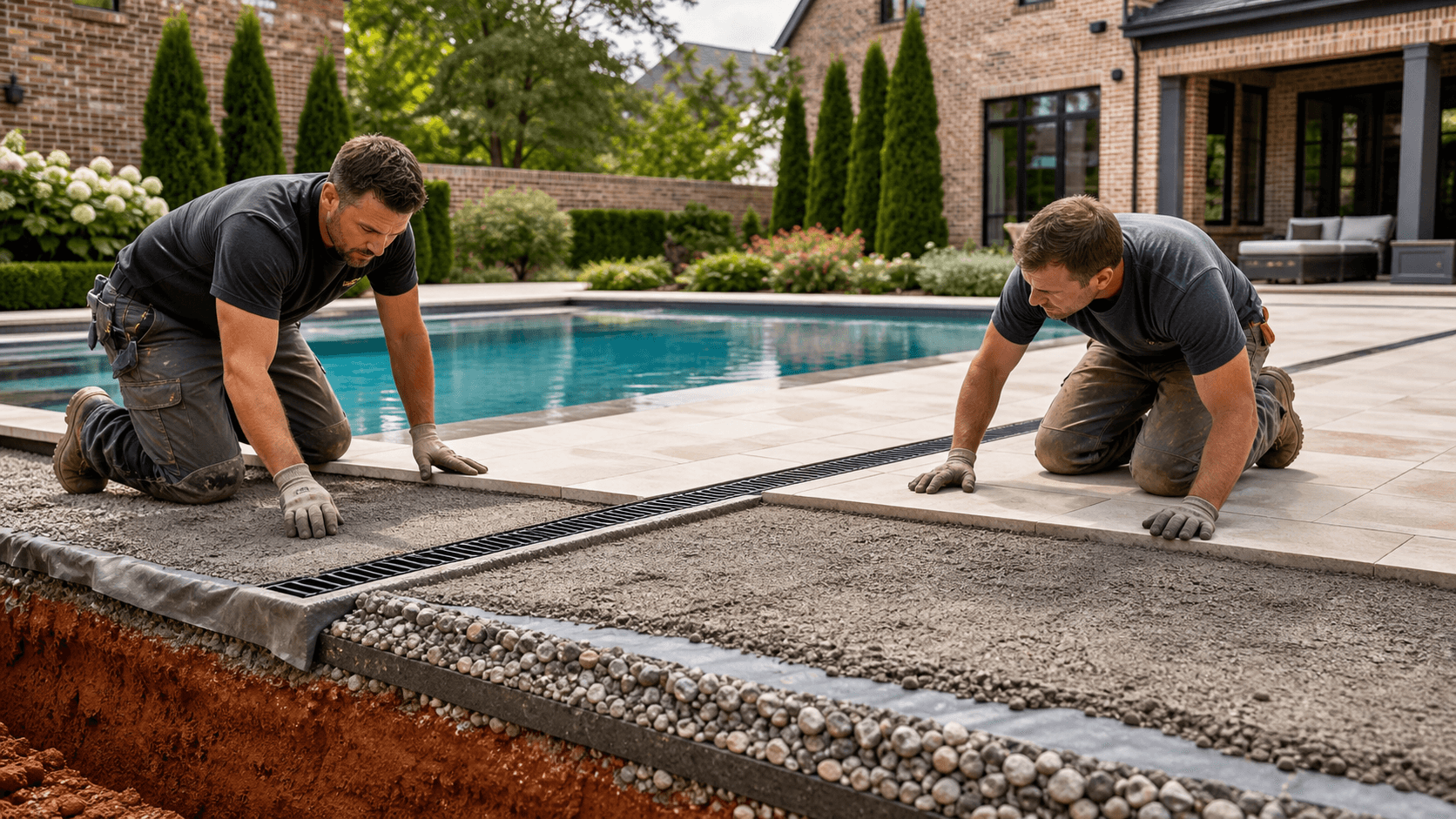
- Trench drains or gravel swales where runoff is concentrated
In some cases, we use gravel bases, drainage mats, or weep details to keep water from sitting underneath brick or stone. Gutter downspouts, uphill runoff, and future patio expansions are all part of the same conversation. A fireplace that's integrated into a larger hardscape and drainage plan is far less likely to settle, heave, or crack over time.
Choosing the Right Fireplace Type for Your Lot and Lifestyle
In tighter Homewood neighborhoods, fuel choice matters. Wood-burning fireplaces can throw sparks and smoke, which can be an issue near low limbs, wood fences, or close neighbors. Gas units avoid smoke and embers, but they need proper gas line routing and venting, and they feel different in terms of flame and heat.
We help homeowners think through:
- How close the fireplace will be to the house and neighbors
- Whether they want the crackle and smell of wood or the convenience of gas
- How often they realistically plan to use the space
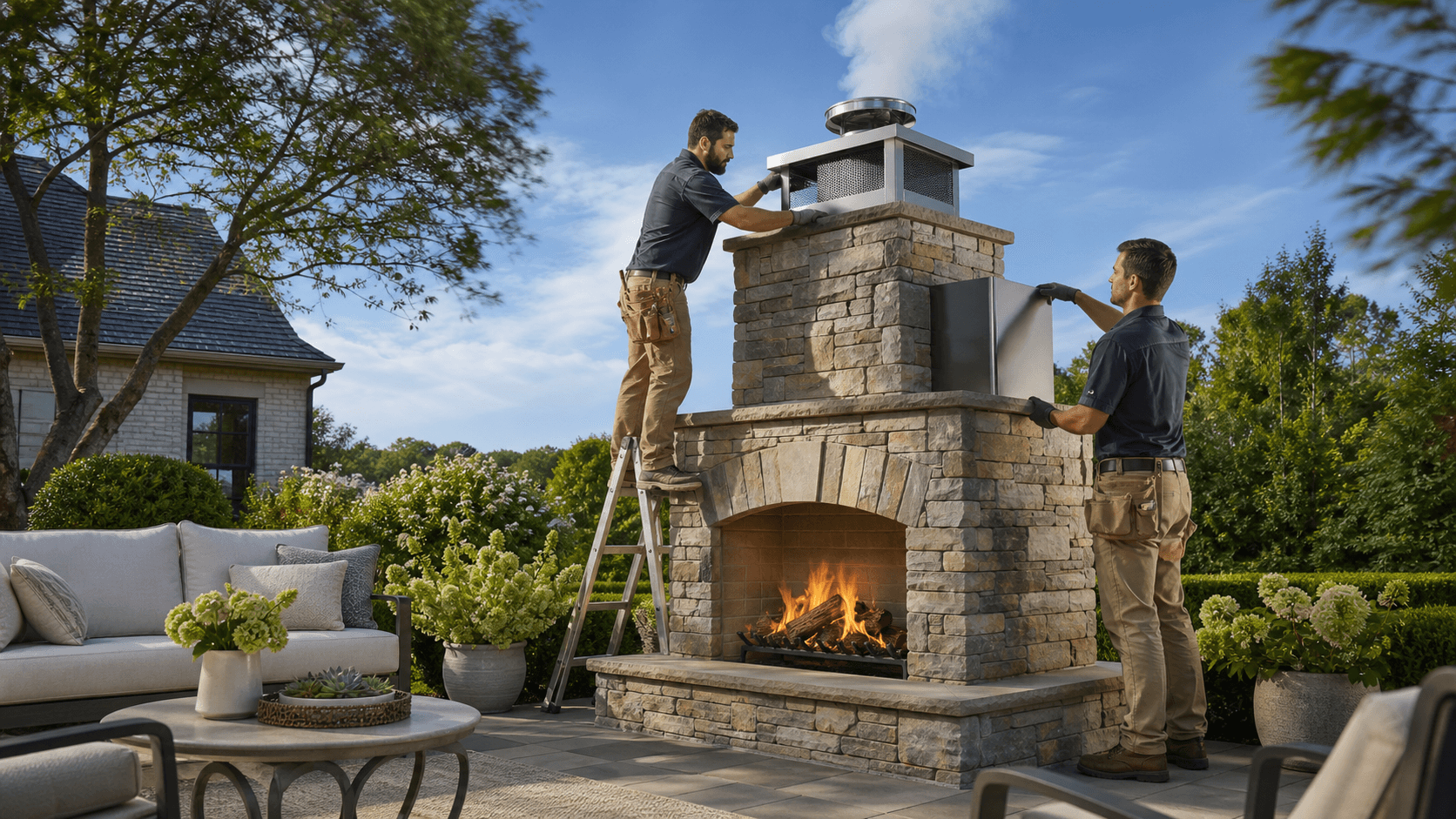
Structurally, there are full masonry builds and modular cores that are later clad in brick or stone. Both can be done correctly on clay-based soils when the footing, reinforcement, and drainage are designed for the load. Often, the best solution is an integrated plan where the fireplace ties into new or rebuilt patios, seat walls, and outdoor kitchen elements. This approach spreads loads, organizes traffic flow, and gives us more control over grading.
Material choices, such as brick, natural stone, and pavers, are matched to the house architecture and typical Homewood streetscapes, so the fireplace looks like it belongs there. Behind the finish, there are structural details that can't be skipped:
- Proper firebox and chimney proportions
- Correct flue sizing and clearances to combustibles
- Firebrick, insulation, and reinforcement that keep heat where it should be
With 75 years of combined leadership experience, the team at Wood-Palmer Outdoor Creations is used to working through these details in the yard, not just on paper, adjusting to what the soil, slope, and existing structures give us.
Budget Ranges and Long-Term Value in Homewood Clay
The investment for an outdoor fireplace installation in Homewood generally falls into a range shaped by several key factors. Size and chimney height matter, as do gas versus wood-burning, finish materials, and how easy it is to get equipment into the yard. Hard clay can be slow to dig, and in many Homewood lots, a good bit of the work is hand digging around tight access, tree roots, and existing structures. That labor and planning is part of protecting the rest of your property while the new structure goes in.
Integrating the fireplace with new hardscape, selective landscape adjustments, irrigation tweaks, and landscape lighting also adds to the scope, but it typically gives better long-term performance and everyday use. Instead of a standalone element, you end up with a space that functions well in different seasons, with seating, pathways, and lighting that make sense.
It's smart to think beyond the fireplace alone. Grading and drainage improvements around the fireplace can help prevent later issues with patios, foundations, and planting beds. We plan for year-round use by looking at:
- Seating layout and walking paths from the house
- Wind direction and smoke movement for wood-burning units
- Lighting for steps, patios, and gathering areas
Masonry and gas components will need some occasional care over time, so it helps to understand that this is a long-term structure, not a temporary feature. Planning and permitting ahead of the first cool evenings also helps. Soil moisture, weather patterns, and lead times all affect how quickly a project can move, and the best construction window is often before everyone else starts thinking about fire season.
Get Started With Your Project Today
Transform your backyard into a comfortable gathering space with our customized design and professional installation services. Explore our options for outdoor fireplace installation in Homewood and see how Wood-Palmer Outdoor Creations can bring your vision to life. We will walk you through every step, from concept to finished feature, so your new outdoor centerpiece fits your home and lifestyle. Let's discuss your outdoor space—contact us, send an email to info@woodpalmer.com, or call us at (205) 305-7780.