Building an Outdoor Kitchen That Fits Vestavia Hills Soil
Outdoor kitchen construction in Vestavia Hills starts in the ground, not at the grill. The clay under your feet, the slope behind your house, and how water moves across your yard all decide how well that kitchen will hold up. If the structure under your stone and steel is wrong, the nicest appliances in the world won't save it.
Here in Central Alabama, late summer and early fall are when people spend more time outside, cooking, watching football, and gathering with family. That's usually when homeowners start asking where an outdoor kitchen can go and how big it can be. The real first step is walking the site, reading the clay, and understanding what's already there, from old patios to existing walls.
When we look at a yard in Vestavia Hills, we start with the dirt and grades, not tile and cabinet finishes. We look at the red clay, the existing patio thickness, how water wants to travel, and what that means for footings and slabs. With an engineering-first mindset and 75 years of combined leadership experience behind our team, we treat these projects like structural builds, not decoration, and the owner is typically right there on-site for the key layout and structural calls.
What Makes Vestavia Hills Clay Different Under a Kitchen
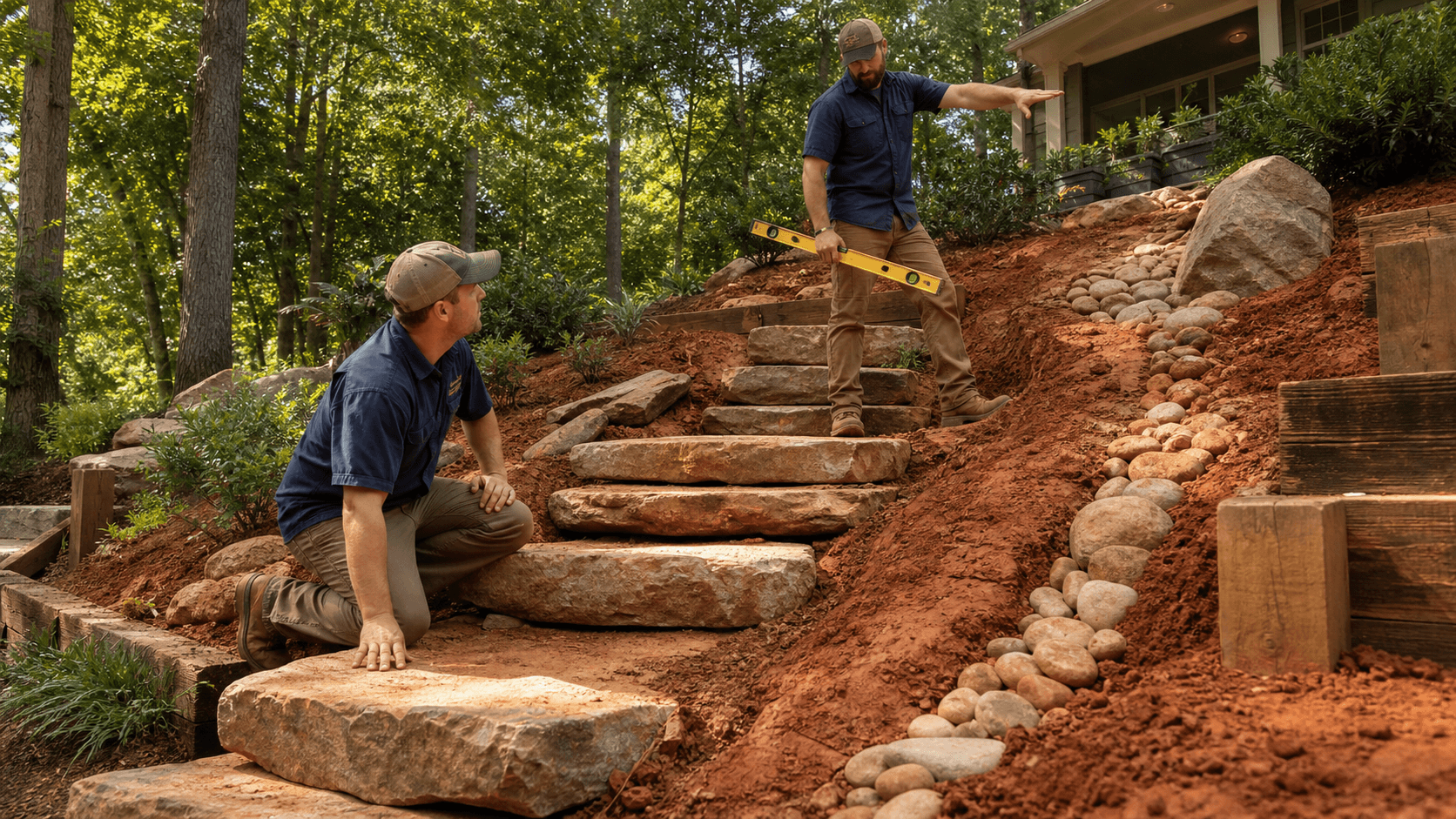
Vestavia Hills and the Shades Mountain area sit on dense red clay. If you live here, you know it well. It holds water after a storm, shrinks and cracks in a dry spell, and gets slick when wet and almost concrete-hard when dry. That behavior is exactly what can move a slab or twist a masonry cabinet if the base isn't designed for it.
That local clay affects things like:
- How wide and deep footings need to be
- Where to place steel reinforcement in slabs and walls
- How much movement to expect between wet and dry seasons
- How tall masonry bases and bar walls can safely be
Before anyone approves a layout for outdoor kitchen construction in Vestavia Hills, a good builder will evaluate the soil. That usually includes:
- Probing to check bearing capacity and find soft pockets
- Looking for areas of fill dirt versus undisturbed native clay
- Watching for tree roots that can grow under footings or slabs
- Studying existing cracking patterns in nearby concrete
A common mistake is setting a heavy kitchen island or masonry grill station on an old patio that was never designed for that load. Without checking slab thickness, steel, and existing cracks, you're asking that concrete to do a job it wasn't built to do. A smart plan either reinforces what's there or creates a new base that ties in correctly.
Grading, Drainage, and Base Prep on a Vestavia Hills Slope
Most Vestavia Hills backyards aren't flat. They fall off toward the street, into a wooded area, or alongside a neighbor. That slope isn't a problem if grading and drainage are handled up front. If they're not, you can end up with standing water under cabinets or pavers settling and rocking underfoot.
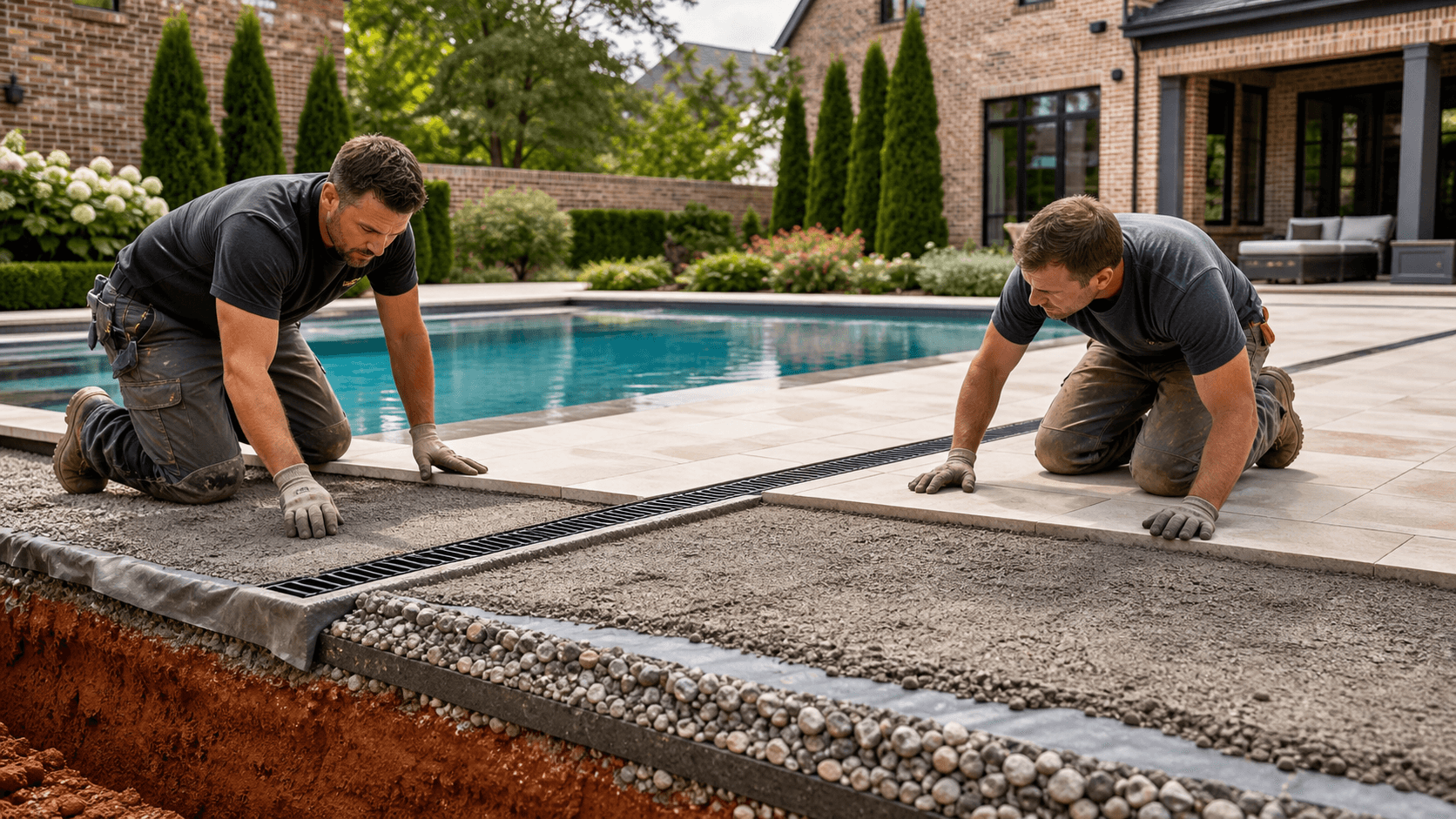
Proper base preparation usually looks like this:
- Excavating to the right depth and getting past soft topsoil
- Placing and compacting an aggregate base in thin lifts
- Using geotextile fabric where clay and base material touch
- Tying new concrete or paver bases into existing hardscape so they move together
Water management is just as important as compaction. In our climate, a heavy downpour can show every mistake in a single afternoon. A builder should be planning:
- A consistent pitch away from the house and doors
- French drains or catch basins in low spots
- Discharge points that don't erode slopes or wash out base material
- Ways to keep water from running under cabinets, appliances, and seating walls
Even though we don't see long hard freezes very often, a saturated clay base can still move with cold snaps and drying cycles in a way that mimics frost heave. That's why a strong base and clear water path matter so much here.
Structural Choices for Long-Lasting Outdoor Kitchens
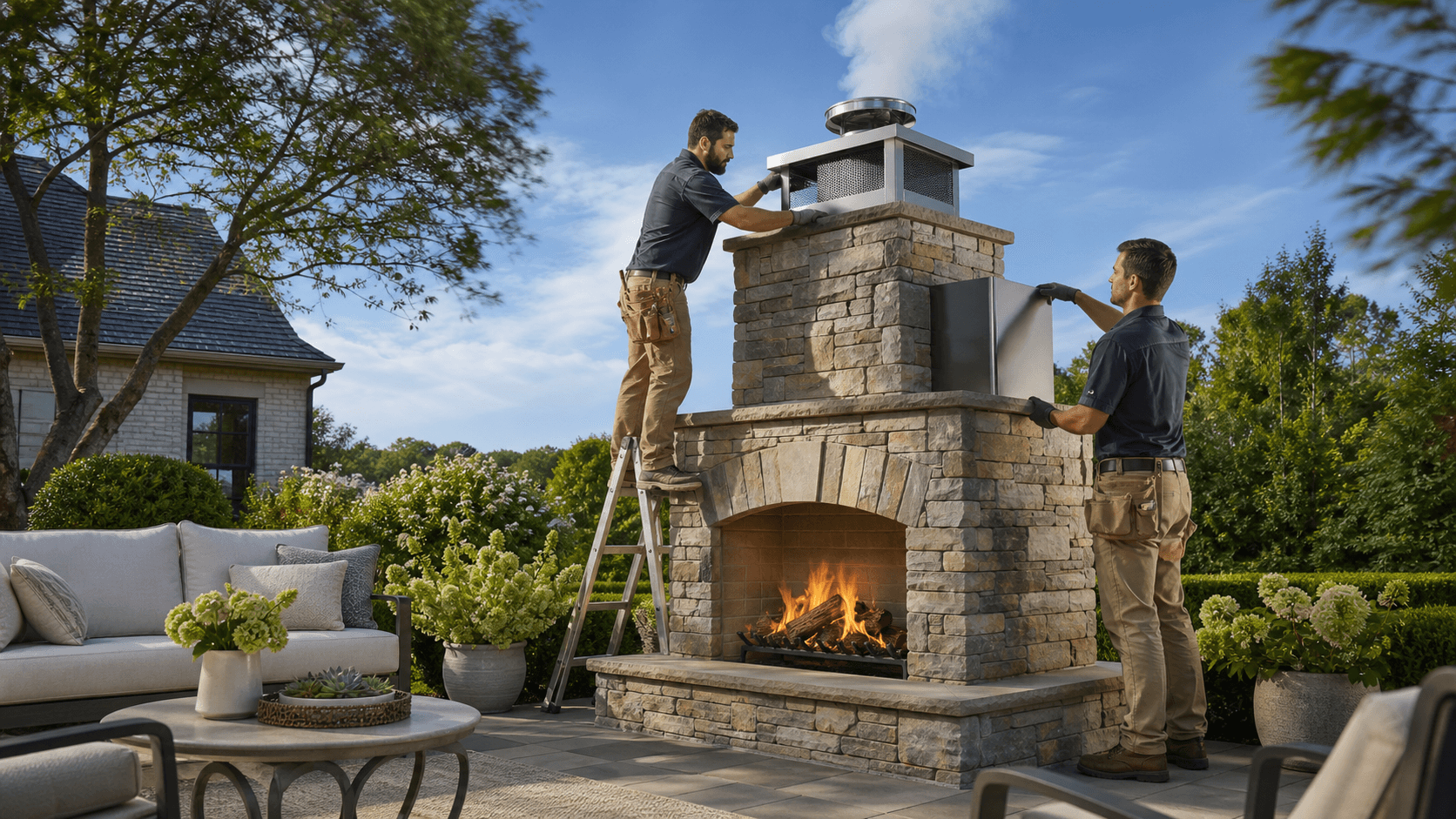
Once the ground work is right, structure comes next. In our area, outdoor kitchen frames are often built with:
- CMU block (concrete masonry unit)
- Poured-in-place concrete walls or slabs
- Steel-framed cabinets clad in stone or brick
Clay conditions and site access influence which option makes the most sense. CMU block and poured walls like a solid, reinforced footing. Steel framing can be lighter, but it still needs a stable slab that won't flex and twist as the clay moves.
Structural details to pay attention to include:
- Reinforced footings sized for the soil and loads
- Control joints in slabs to handle expected movement
- Mechanical anchoring of vertical elements like bar walls and posts
- Proper connections where a roofed pavilion attaches near the kitchen
Material choices also have to respect heat, humidity, and temperature swings. Many homeowners in Central Alabama lean toward:
- Natural or manufactured stone veneers that shed water cleanly
- Porcelain pavers that resist staining and handle thermal movement well
- Countertops rated for exterior use and grill-side temperatures
For pergolas or roof structures, a builder should account for wind loads on the exposed ridge or rafters and coordinate with gas, electric, and water trades so utility trenches don't weaken the structural base supporting those posts.
Layout, Utilities, Codes, and Cost Drivers in Vestavia Hills
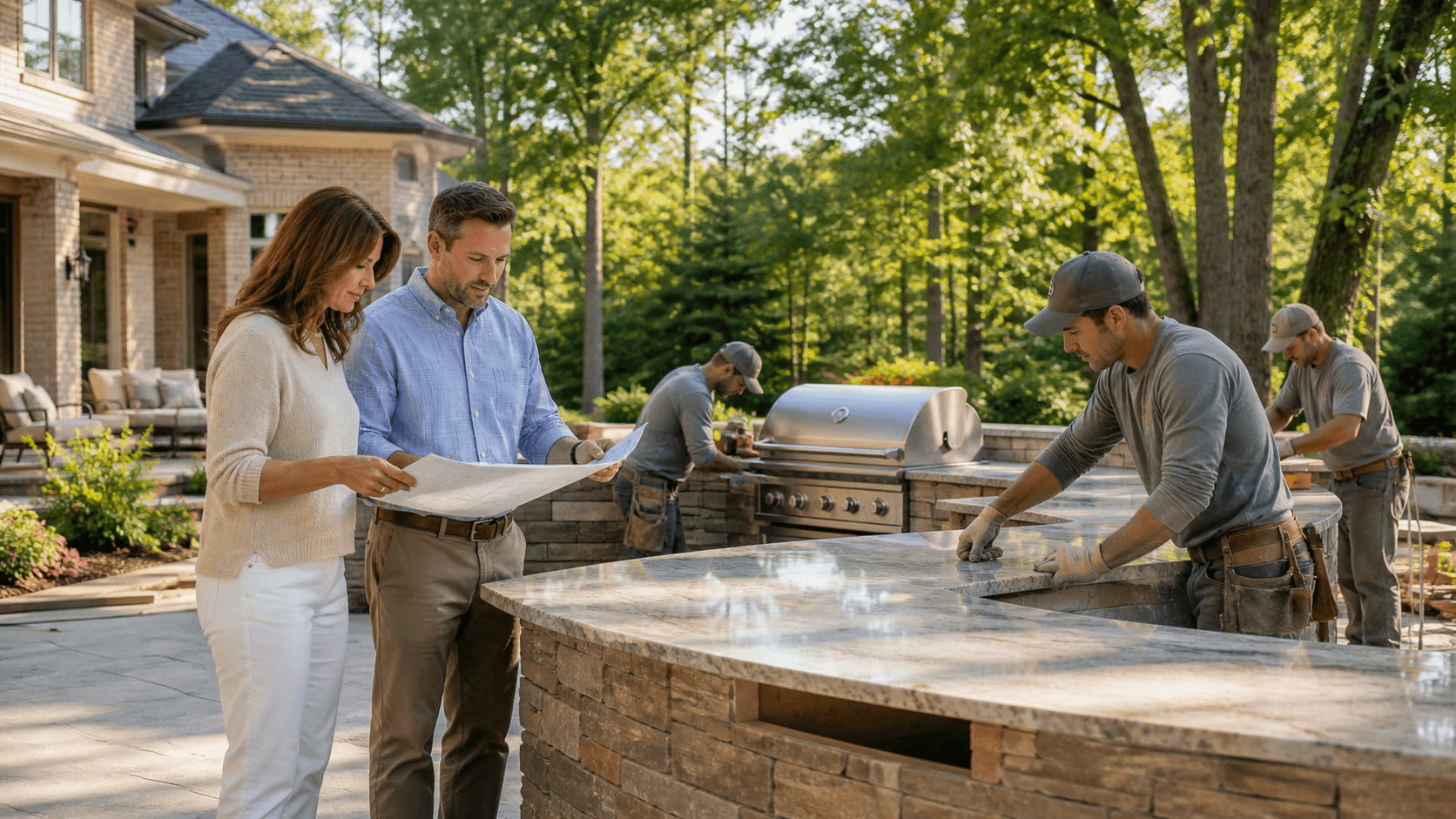
Layout always starts with how you actually move through the space. In Vestavia Hills, that often means connecting a kitchen to an existing rear porch or patio, keeping grills away from windows and soffits, and staying inside local setback lines. You want clear paths between:
- Indoor kitchen and outdoor grill
- Grill and serving or seating areas
- House doors and main yard or pool deck
Utility routing in clay needs a careful approach. Trenches for gas, electric, and water should be:
- Deep enough for code and protection
- Backfilled and compacted in layers
- Routed to avoid major tree roots and future planting beds
- Laid out where future service access is possible
At the same time, a builder must respect local and county requirements. Common items include minimum clearances around gas appliances, GFCI protection for outlets, and proper venting for built-in grills and side burners. Those technical pieces support the fun parts of the plan, like:
- Storage zones for tools and supplies
- Countertop landing space next to each appliance
- Seating walls and bar overhangs for guests
- Lighting and irrigation adjustments so the whole outdoor living area works together
Cost on an outdoor kitchen in Vestavia Hills is driven less by the appliances and more by what the site demands. Some of the main drivers are:
- How much excavation and grading the slope requires
- Whether retaining walls are needed to carve out a level pad
- The type of masonry cladding and paving materials you prefer
- Whether you're adding a roofed pavilion or staying open-air
- How far utilities need to run from the house
Dense clay can add steps, such as longer equipment time to dig, extra drainage solutions, thicker base sections, and more steel reinforcement for long-term peace of mind. It can help to think in tiers, like a compact grilling station, a full kitchen with seating, or a full kitchen tied into a pavilion and larger hardscape, instead of focusing on a single target number.
When you walk your Vestavia Hills backyard and think through clay conditions, slopes, existing patios, and how your family actually gathers, you get a much clearer sense of what an outdoor kitchen will really take to build well. That kind of ground-up view usually leads to better decisions, stronger structures, and outdoor spaces that hold up to Central Alabama weather and years of use.
Get Started With Your Project Today
If you are ready to turn your backyard into a true extension of your home, our team at Wood-Palmer Outdoor Creations is here to help. Explore your options for outdoor kitchen construction in Vestavia Hills and see what is possible for your space. We will guide you through design, material selections, and scheduling so the entire process feels straightforward. Let's talk about your property—give us a call at (205) 305-7780, send an email to info@woodpalmer.com, or contact us to start the conversation.