Stop Slope Creep Before It Becomes a Bigger Problem
Slope movement in Mountain Brook rarely starts with a landslide. It starts quietly. After a few late-summer storms, the red clay stays soaked, then slowly shifts. You start to see a fence lean, a patio crack along one edge, or a planting bed slump toward the neighbor's yard.
On these steep lots, a properly engineered retaining wall is not just a border. It holds soil in place, manages water, and protects the flat spaces where you have patios, play areas, and driveways. When retaining wall installation in Mountain Brook is planned correctly, you gain control over both soil and water on your property.
We're going to walk through how Mountain Brook clay behaves, what an engineer-minded contractor studies before building a wall, and how you can read proposals with structural performance in mind instead of just looks or height.
How Mountain Brook Clay Really Behaves Under Load
Most Mountain Brook yards share a similar soil profile. You usually have a thin layer of dark topsoil, then dense red clay, with rock pockets and ledge in random spots. That mix can carry a lot of weight if it's treated right, but it moves when water comes and goes.
Clay expands when it's wet and shrinks when it dries out. That seasonal cycling can push on the back of underbuilt walls, open gaps in mortar and small cracks in patios, settle fill dirt that was never compacted properly, and tilt fences and small garden walls downhill over time.
On a steep lot, that behavior is multiplied by gravity, which is why other local factors can change the design decisions quickly. A contractor who understands Mountain Brook soil will look at slope angle, tree impacts, existing drainage and nearby structures before talking about block styles or cap colors. Key conditions they'll evaluate include:
- Slope angle: The steeper the grade, the more the wall has to resist sliding and overturning.
- Trees: Large roots can both help and hurt, by holding soil yet also pushing on structures or stealing moisture.
- Existing drainage: Old French drains, collapsed pipes, and poor downspout locations can load a wall with water.
- Nearby structures: Driveways, garages, and walkout basements all add load to the soil behind a wall.
Reading Your Yard: Signs You Need More Than a Garden Wall
Some issues are cosmetic, but others point to structural problems that won't fix themselves. If you're seeing slope-related movement or water staying where it shouldn't, it's often a sign you need more than simple edging. Common warning signs include:
- Old railroad-tie or timber walls bowing out or rotting at the base
- Stepped cracks in brick or block walls near a slope
- Soil pulling away from a foundation or patio edge
- Soggy areas at the toe of a hill after storms, even when the top looks dry
- Pavers or stone steps settling unevenly along the downhill side
It also helps to understand the difference between decorative edging and a structural retaining wall, because they're built for different jobs. Decorative walls typically sit on shallow bases, hold back only a few inches of soil, and don't include drainage or reinforcement.
Structural retaining walls, on the other hand, are designed to resist pressure over time and often require more formal planning. They frequently involve:
- Engineering review above certain heights
- Permits from the local jurisdiction
- Deeper bases, drainage stone, and reinforcement like geogrid or steel
Risk increases in certain Mountain Brook conditions, such as walls right above a downhill neighbor's yard, driveways running along a slope edge, or elevated patios and outdoor kitchens built over fill dirt. In these spots, the wall is supporting not just soil but also people, vehicles, and outdoor structures.
Core Engineering Decisions Behind a Stable Retaining Wall
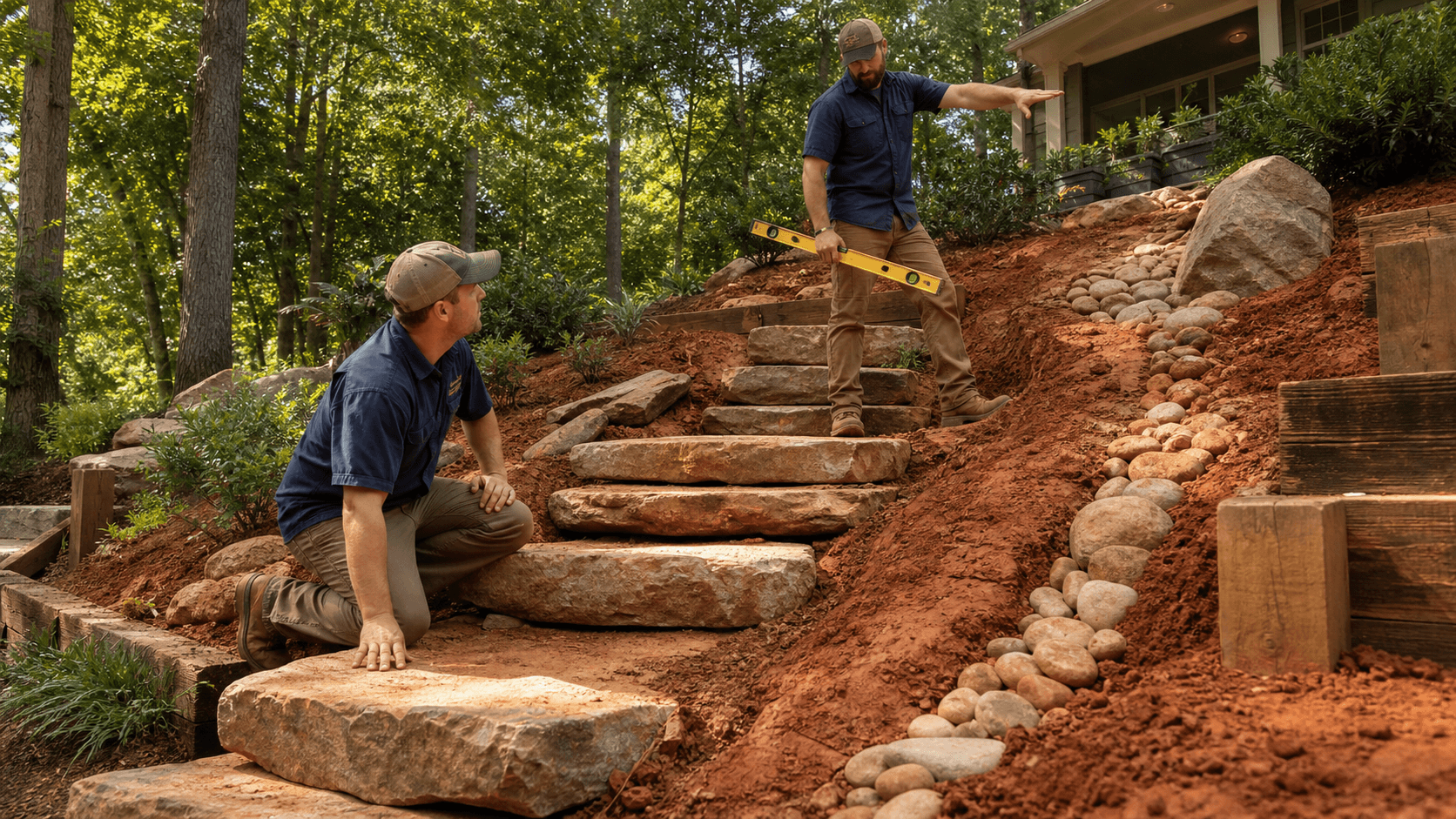
A retaining wall usually fails where you can't see it: at the base and behind the face. Good design starts with proper base preparation in Mountain Brook clay, which means excavating down to firm, undisturbed subgrade, removing roots and topsoil and any loose fill, placing a compacted stone base wide enough for the wall system, and checking level and alignment with accurate instruments (not just a string). Shortcuts here might not show up in the first year, but they tend to appear later as bulges, leaning, or long cracks.
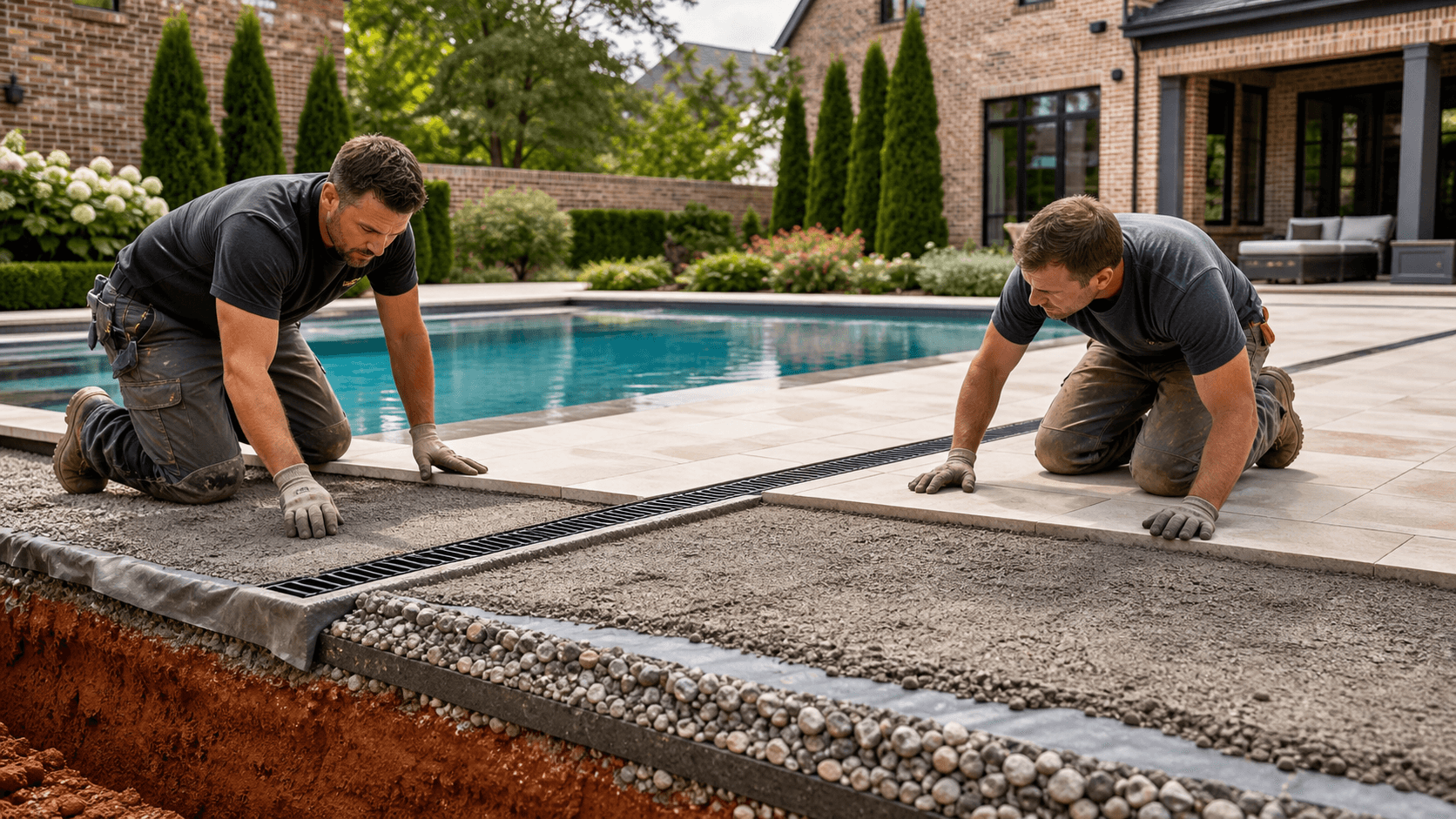
Drainage design is just as important as the base because the goal is to keep water from building pressure behind the wall. In most residential builds, that drainage package typically includes:
- Perforated pipe at the base of the wall, leading to a proper outlet
- Clean stone backfill directly behind the wall face
- Filter fabric to keep fine clay from clogging the stone
- Grading the surface so water is carried away from the wall, not into it
The wall system itself should match the site conditions and the loads it has to handle. Different wall types fit different needs:
- Segmental block: Good for many residential applications, especially when combined with geogrid for taller walls.
- Poured concrete: Better when you need a thinner wall with higher strength, often near driveways or garages.
- Masonry with reinforcement: Works when you want a traditional look, but it must be properly engineered and drained.
At Wood-Palmer Outdoor Creations, we keep the focus on structure first, so the wall matches the demands of Alabama clay and local grades. The owner stays involved in those decisions so the field work lines up with the design intent.
Evaluating Retaining Wall Installation in Mountain Brook
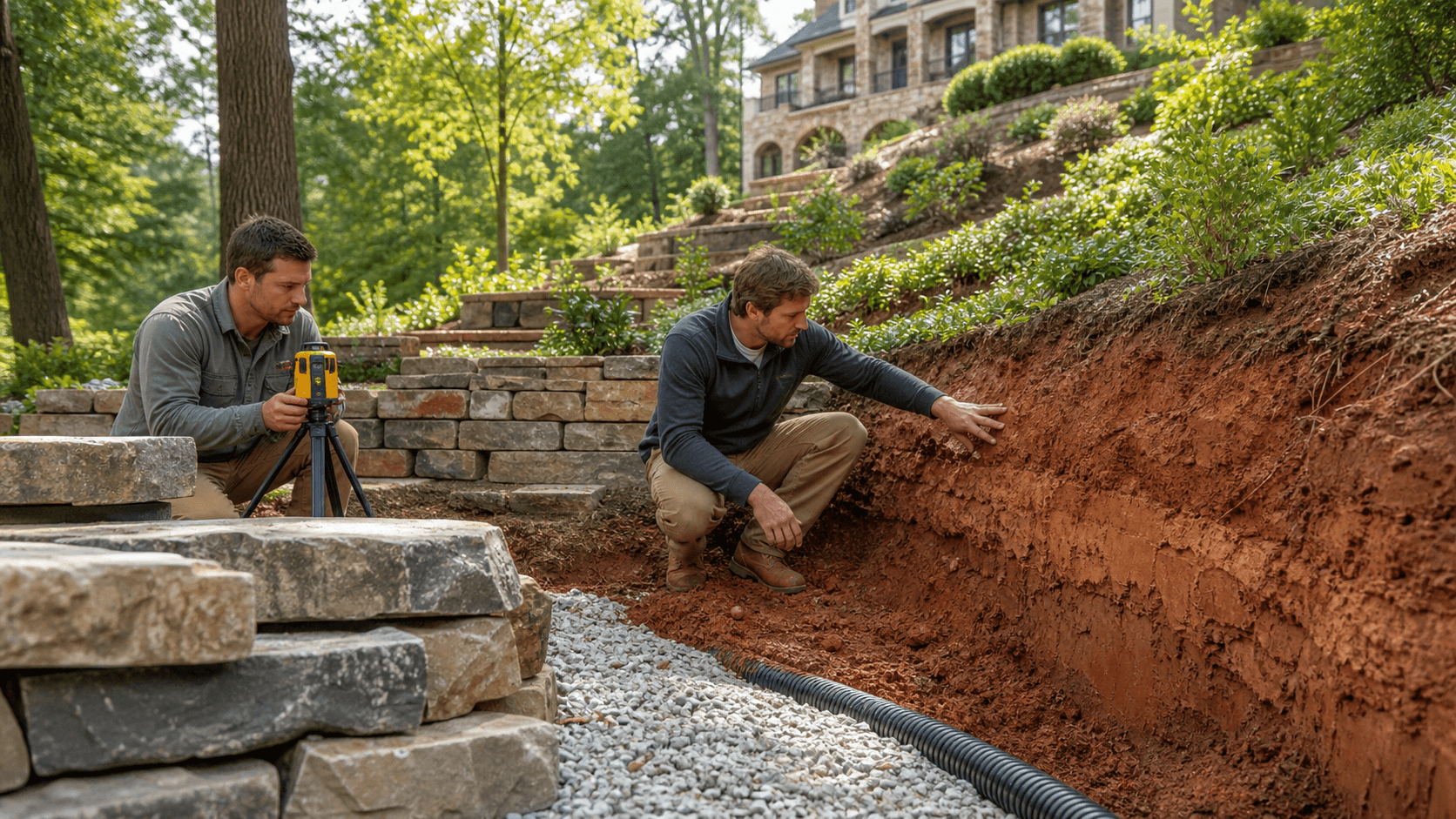
When a contractor who understands Mountain Brook slopes walks your property, they should be doing more than taking measurements for materials. They should probe or expose soil to see what's really under the surface, use laser levels to measure grade changes and tie-in points, study how patios, steps, foundations, and driveways relate to the slope, and watch where water is actually flowing after a rain (not just where pipes are drawn).
As you review proposals, it helps to ask direct questions that tie appearance to performance:
- How deep and wide will the base be, and what stone will you use?
- How will you handle drainage behind and in front of the wall?
- What compaction equipment and methods do you use for backfill?
- Will you use geogrid or other reinforcement, and at what intervals?
- How will you work around tree roots and existing utilities without weakening the wall?
When retaining wall installation in Mountain Brook is done correctly, you should expect a long service life, even with our clay and heavy rains. Slightly overbuilding the footing, drainage, and reinforcement usually costs less in the long run than tearing out a failed wall tied to a patio or driveway.
Connecting Wall Design to the Rest of Your Outdoor Space
Retaining walls shouldn't feel like separate objects. They're part of the overall outdoor plan, and a good layout ties into the way you actually use the yard. A wall design works best when it coordinates with:
- Patios and walkways, setting proper elevations and step heights
- Planting beds that won't overload the wall or trap water
- Irrigation, so heads don't spray directly onto the wall face
- Landscape lighting, with conduits planned so wiring doesn't disturb the structure later
On tight, hilly lots, we often prefer a series of lower terraces instead of one tall wall. This approach can:
- Create flat, usable zones for dining, play, or planting
- Break up the visual mass of a big wall
- Reduce the pressure on any single structure
- Give better, safer circulation paths up and down the yard
Planning for maintenance access also matters. You want to be able to service irrigation, lighting, and drainage without digging into the wall base. Routing downspouts to solid lines or swales, instead of dumping water at the top of the wall, protects your investment and keeps the clay from staying saturated along the face.
When all these pieces are thought through together, you get a yard that not only looks finished, but also holds up to Mountain Brook storms and soil cycles year after year.
Get Started With Your Project Today
If you are ready to stabilize your landscape and elevate your outdoor space, our team at Wood-Palmer Outdoor Creations is here to help. Learn how our proven process for retaining wall installation in Mountain Brook can bring lasting value and curb appeal to your property. Let's talk about your property—give us a call at (205) 305-7780, send an email, or contact us online to get started.