Build a Flagstone Patio That Fits Vestavia Hills Clay
A flagstone patio in Vestavia Hills has to do more than look good the day it's finished. It has to sit on red clay, deal with shallow topsoil, and work with the slope that usually falls toward the street or a drainage swale. The same stone can perform very differently depending on how it's installed over that clay.
We see this every week across Central Alabama. One yard gets a mortar-set terrace right off the back door, another has a dry-laid sitting area under the trees, and a third needs a permeable system at the bottom of a hill. The goal isn't just pretty pictures. The goal is a flagstone patio that drains, holds grade, and still looks sharp ten years from now. At Wood-Palmer Outdoor Creations, with 75 years of combined leadership experience, we pay as much attention to the base system as we do to the stone you see on top.
In this article, we'll lay out how Vestavia's clay affects your options, then compare mortar-set, dry-laid, and permeable flagstone systems so you can understand where each one makes sense for your yard, your slopes, and your long-term maintenance expectations. When we're on site with you, these are the same structural decisions we walk through together before we ever set the first stone.
How Vestavia Hills Clay Affects Your Flagstone Base
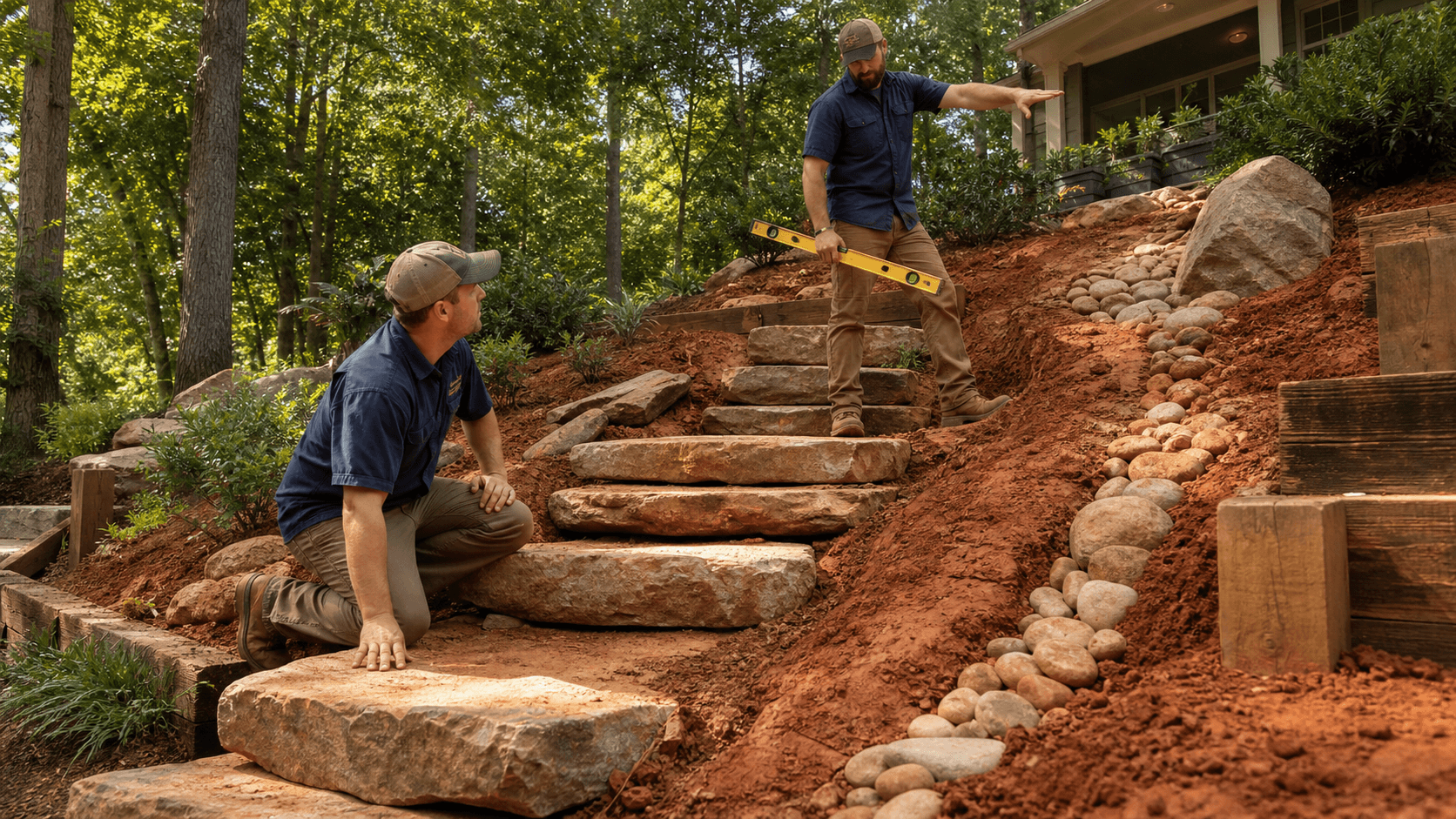
Most Vestavia Hills backyards share a few traits: heavy red clay, a thin organic layer on top, and grades that fall toward a neighbor, the street, or a drainage swale. Add in short, intense thunderstorms, and you get fast surface runoff and slow soaking.
That clay behaves like this:
- Water soaks in slowly, so it tends to run across the surface
- The soil swells when wet and shrinks when dry
- The upper couple of inches can be softer than the clay just below
- Movement shows up over time as heaving, settlement, or hairline cracking
All of that affects base preparation. Flagstone set straight on clay usually looks fine at first, then starts to rock, settle, or hold water. Two yards on the same street can need very different solutions because:
- One may have deeper topsoil or fill material
- Existing drainage paths might already be carrying water a certain way
- One house may sit lower, so water's trying to move back toward the foundation
From a structural standpoint, we focus on:
- Proper excavation depth into competent material, not just loose topsoil
- Using the right base aggregate for mortar-set, dry-laid, or permeable systems
- Adding separation fabric in the right places so stone doesn't pump into clay
- Keeping the patio from acting like a dam that traps water at the house
When the system doesn't match the soil and water patterns, the problems usually show up a couple of years later: ponding on the surface, loose stones, or grout joints popping. Getting the base right for Vestavia clay is what keeps that from happening.
Mortar-Set Flagstone Over Clay: When a Rigid System Wins
A mortar-set flagstone patio is a rigid assembly. In our region, that usually means a compacted stone base over the clay, a concrete slab or thick mortar bed, then the flagstone set in mortar with grouted joints on top.
This system shines in tighter, more formal areas:
- Right outside doors where you need exact heights and smooth transitions
- Stairs, landings, and walkways with tight curves or complex patterns
- Outdoor kitchens and grill areas that need a stable surface for equipment
On Vestavia lots, we pay attention to expansion joints in the slab, making sure finished heights stay above the brick ledge, and pitching the slab so water moves away from the house. We also make sure downspouts, scuppers, and drains aren't dumping straight onto the patio where water can sit against grout lines.
Pros of mortar-set flagstone:
- Very clean look with tight joints
- Stable surface for furniture and heavy features
- Good for complex borders and detailed shaping
- Joints are less likely to wash out
Trade-offs:
- Limited permeability, so water has to run off the surface or hit a drain
- More risk of cracking if the slab or base is underbuilt for clay movement
- Repairs, if needed, are more surgical and take more effort
On many estate homes in Vestavia Hills, a mortar-set terrace makes sense close to the house, then we transition to other systems as you move out into the yard.
Dry-Laid Flagstone Patios That Can Flex With the Soil
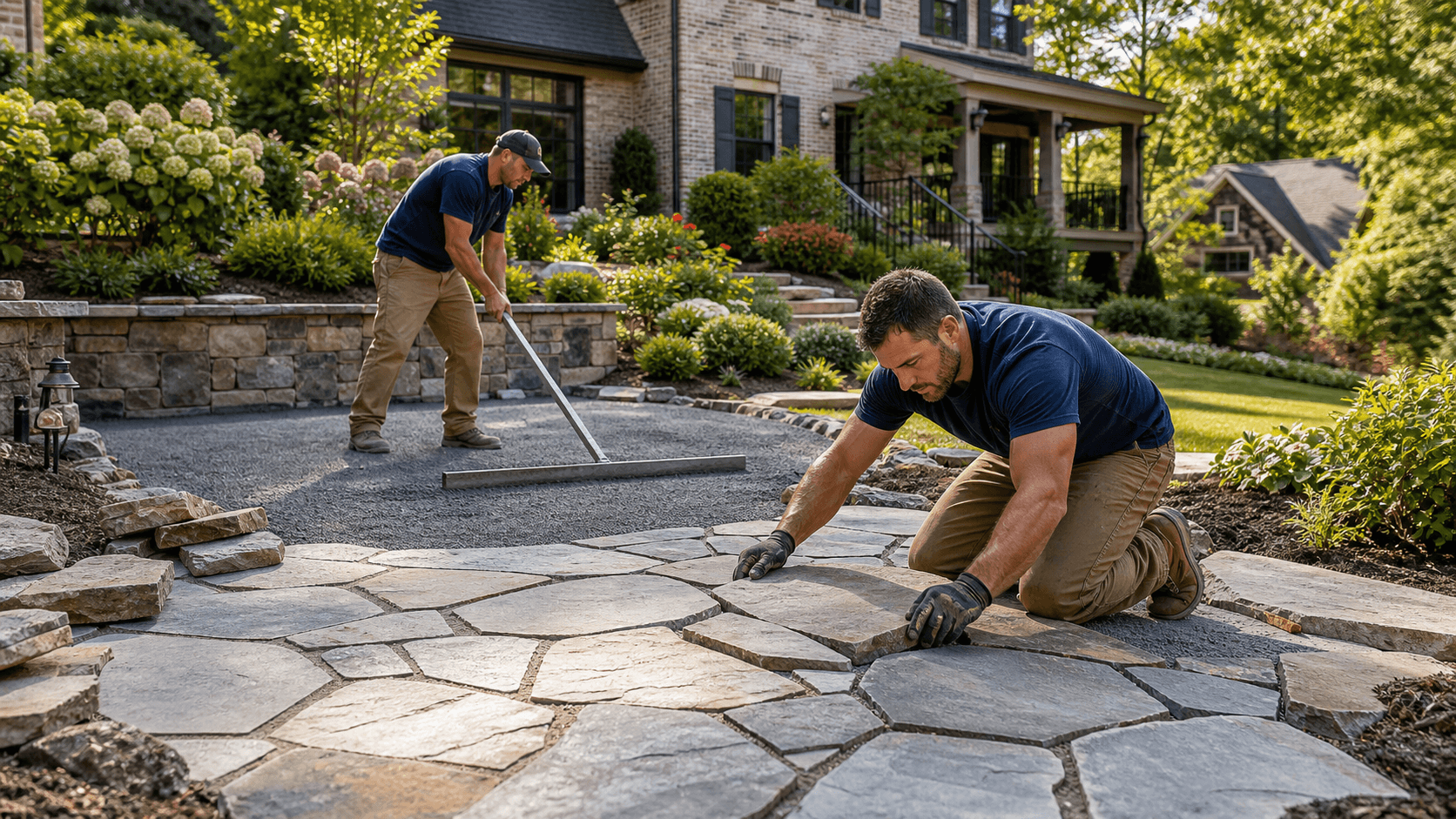
A dry-laid system skips the mortar on top. You have a compacted aggregate base over the clay, a finer topping stone like screenings, then flagstone laid directly on that bed. Joints are swept with stone or a polymeric material.
This is a strong option for a flagstone patio in Vestavia Hills that sits a bit away from the home, on moderate slopes, or around planting beds. The base can flex slightly as the clay moves with seasons, and individual stones can be lifted and reset if anything settles.
To make a dry-laid system work on clay, we focus on:
- Excavating deep enough to remove soft topsoil and reach firm material
- Using a base thickness and stone type sized to the slope and expected use
- Adding proper edge restraints where patio meets turf, beds, or retaining walls
Pros:
- More forgiving of seasonal soil movement
- Easier to adjust or repair small areas
- Slightly softer feel underfoot
- Often falls in the middle range on total project cost
Trade-offs:
- Joints can open or wash if not maintained
- Stones can move slightly if the base is underbuilt or water gets under them
- Not ideal right at door thresholds or tied to pool coping where movement is a problem
We often tie dry-laid flagstone into surrounding hardscape and landscape lighting to create gathering spaces beyond the main terrace, where a little flex in the system is actually helpful. As an owner-led team, we stay involved in those layout and grading calls so the way the patio ties into the rest of your yard makes sense long-term.
Permeable Flagstone Systems for Steep Or Wet Yard Conditions
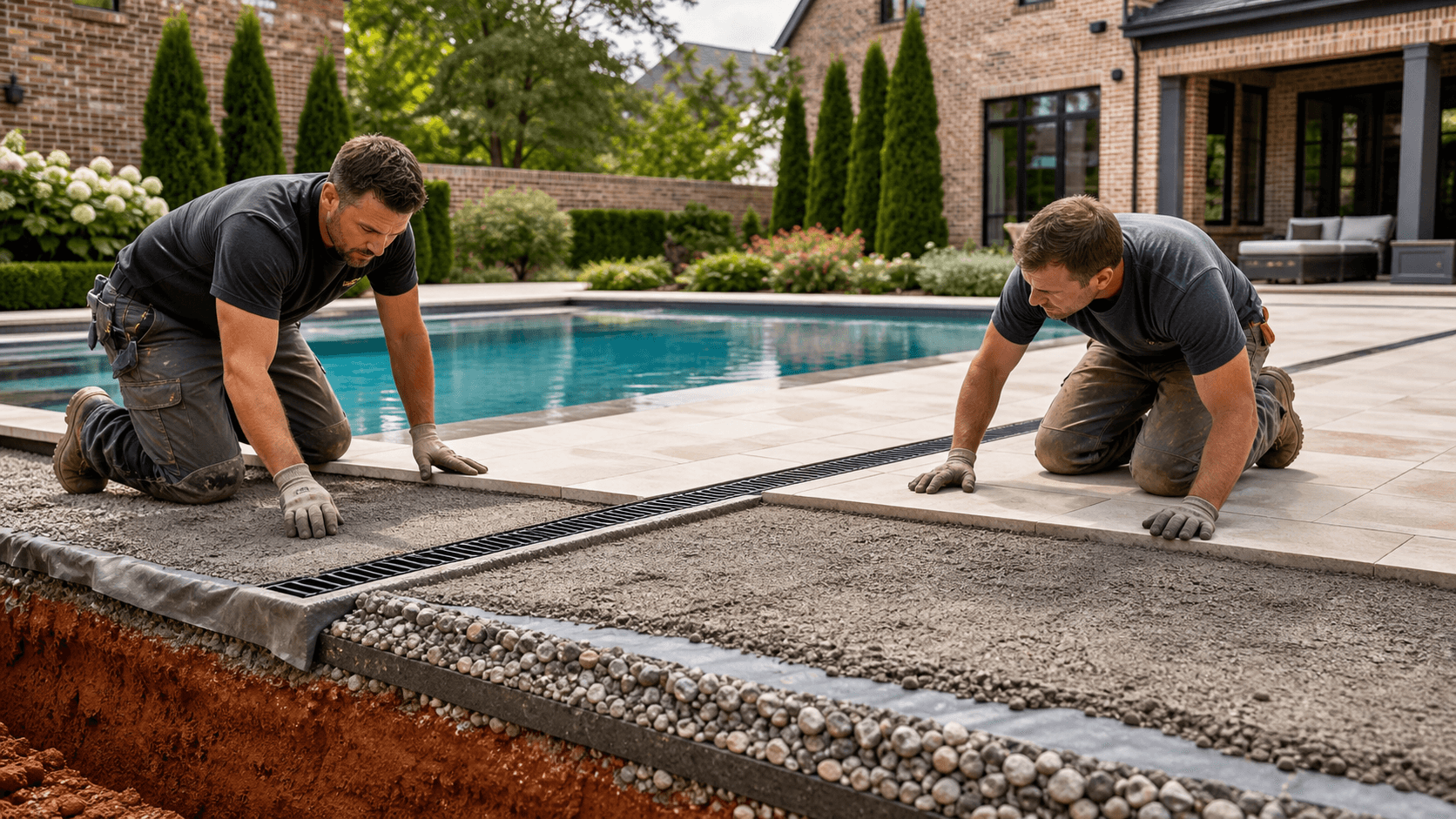
A permeable-style flagstone system is built to let water go through, not across. It has a deeper, open-graded stone base with void space for temporary water storage, then wider joints filled with clean rock or specialty aggregate.
This style earns its keep when:
- The patio sits at the bottom of a slope or in a natural swale
- You're near a lakefront and want to slow runoff before it hits the shoreline
- The yard has chronic wet spots where traditional systems would hold water
With Vestavia Hills clay, the engineering focus is on whether the subgrade can accept some infiltration, how overflow will leave the system when a storm is bigger than the design, and how to tie into French drains or daylight outlets when the soil alone can't carry all the water.
Pros:
- Reduces surface runoff in key areas
- Can help relieve localized wet spots
- Less standing water on the patio surface
- Often cooler underfoot in the summer heat
Trade-offs:
- Requires deeper excavation and more detailed design work
- Joints need to be designed so they don't clog easily
- Not always the right choice tight to foundations or heavy root zones
On high-end flagstone patios in Vestavia Hills with complex drainage, it often makes sense to mix permeable zones with rigid or dry-laid zones so water's controlled while the space stays comfortable and attractive to use.
Choosing The Right System For Your Vestavia Hills Patio
When we help a homeowner choose a system, we look at the soil, the existing grades, where water already wants to go, and how the space will be used. A dining terrace off the kitchen, a fire feature in the yard, and a path down to a lake edge may each need a different base.
Key questions we work through on site include:
- How close is this patio to the house, basement wall, or garage?
- Does water today move across this area or sit in it after storms?
- Is the priority a crisp, formal look or a more natural layout that can flex?
- Will any vehicles or service equipment ever cross this surface?
Often, the best result is a combination: mortar-set near the house and steps, dry-laid out in the yard, and permeable zones near drainage problem areas or lakefront edges. The stone on top can match, but the build underneath changes as the soil, slope, and water conditions change.
Conceptually, mortar-set systems usually land at the higher end because of concrete and labor, permeable systems add cost through deeper excavation and stone volumes, and dry-laid often fits in the middle. Access, grading, and site complexity all play a big role. At Wood-Palmer Outdoor Creations, we constantly come back to the same idea: the flagstone you see is only as good as what's underneath it, and getting that base system right for Vestavia Hills clay is where our 75 years of combined leadership experience really matter.
Transform Your Backyard With a Custom Patio Retreat
If you are ready to turn your yard into a relaxing outdoor escape, we can design and build a beautiful flagstone patio in Vestavia Hills tailored to how you live. At Wood-Palmer Outdoor Creations, we handle everything from layout and materials to the finishing details, so your new space feels complete from day one. Tell us about your vision and we will help you choose the right design, features, and budget. Whether you have questions or are ready to get started, you can email us, contact us online, or give us a call at (205) 305-7780.