Make Your Birmingham Backyard Easier To Use And Maintain
Good grading is the backbone of every long-lasting patio, path, and seating area in Birmingham. In our red clay and rolling lots, water wants to move fast, then sit where you least want it. If the yard is not shaped correctly before hardscape and structures go in, you get wobbly chairs, muddy edges, and cracking or settling over time.
Thoughtful landscape grading in Birmingham affects everything you feel when you step outside. It impacts:
- Comfort, so your chairs sit level and your table does not rock
- Cleanliness, so you are not tracking mud into the house after a storm
- Structural integrity, so patios, walls, and paths stay where they belong
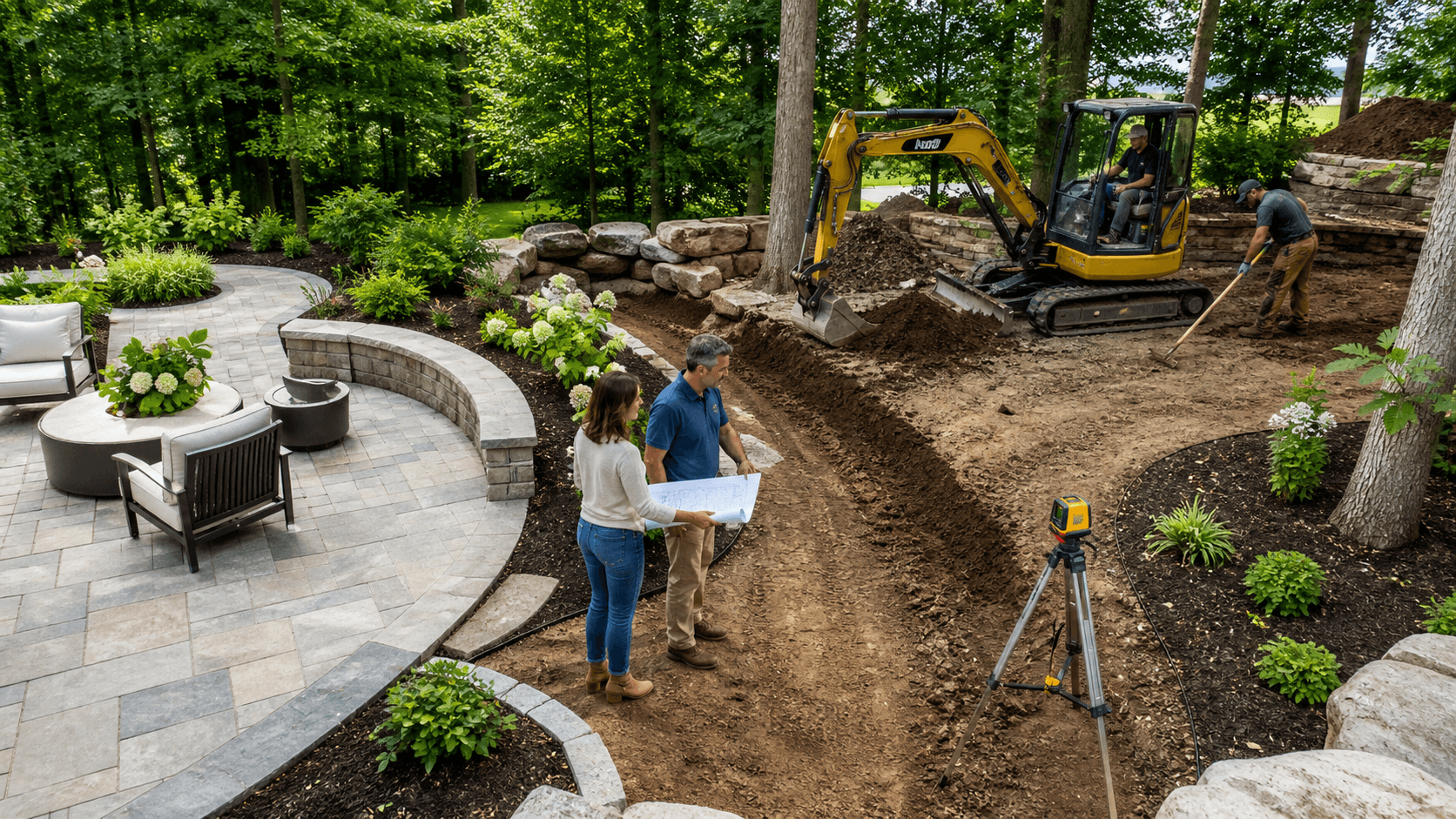
At Wood-Palmer Outdoor Creations, we treat each backyard like a small jobsite. Before we talk about pavers, stone, or furniture, we are reading slopes, soil, and drainage paths so the structure underneath your project is right. Our leadership team is closely involved in that process, walking properties and making sure the grading plan matches how you actually use the space.
Reading Your Yard's Natural Slope in Central Alabama
Most Birmingham lots share some traits: heavy red clay subsoils, some rocky pockets, and grades that look gentle until a hard rain hits. During fall storms, those hillsides can shed water quickly and push it toward your patio, pool deck, or foundation if the grading is not managed.
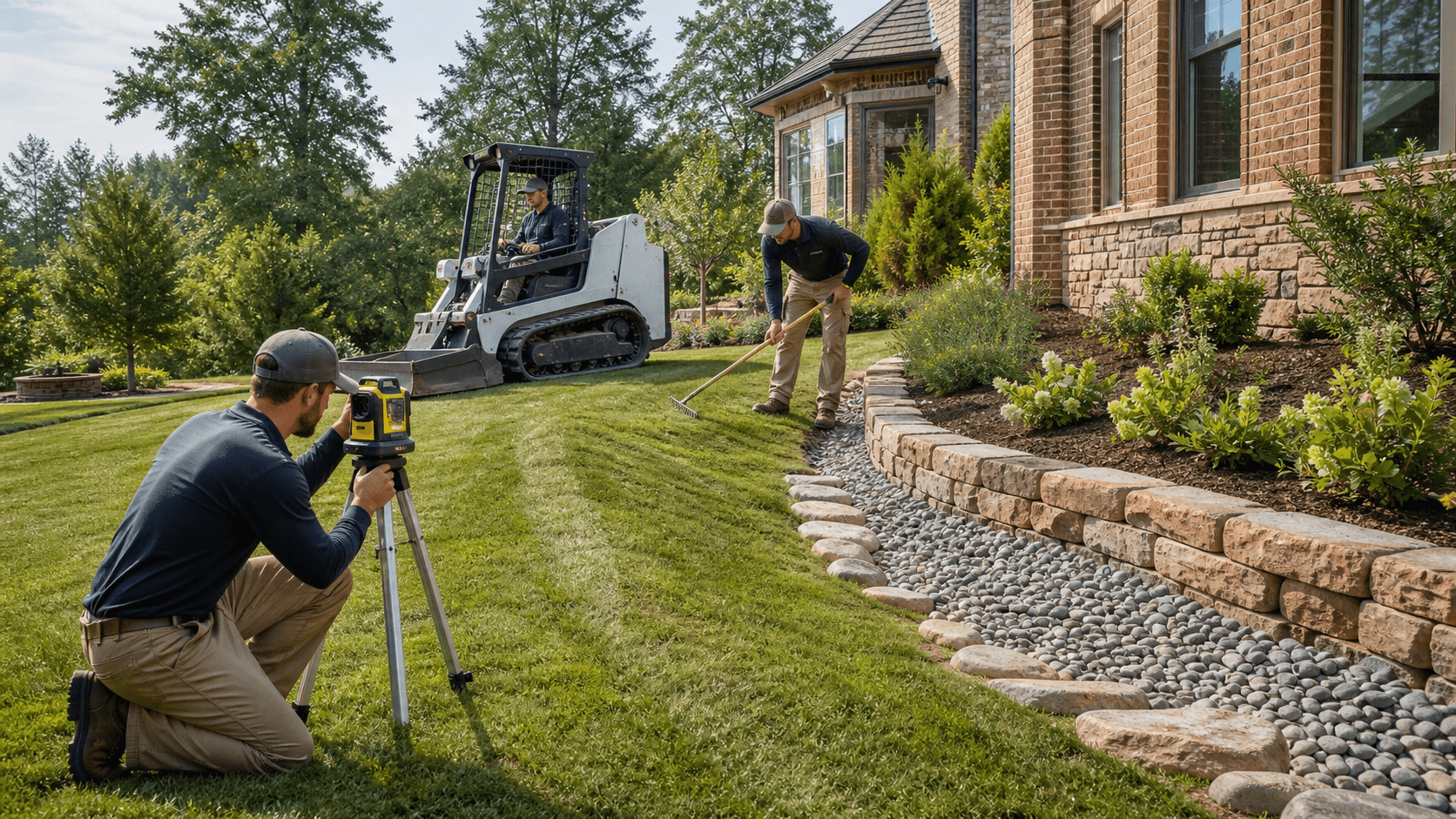
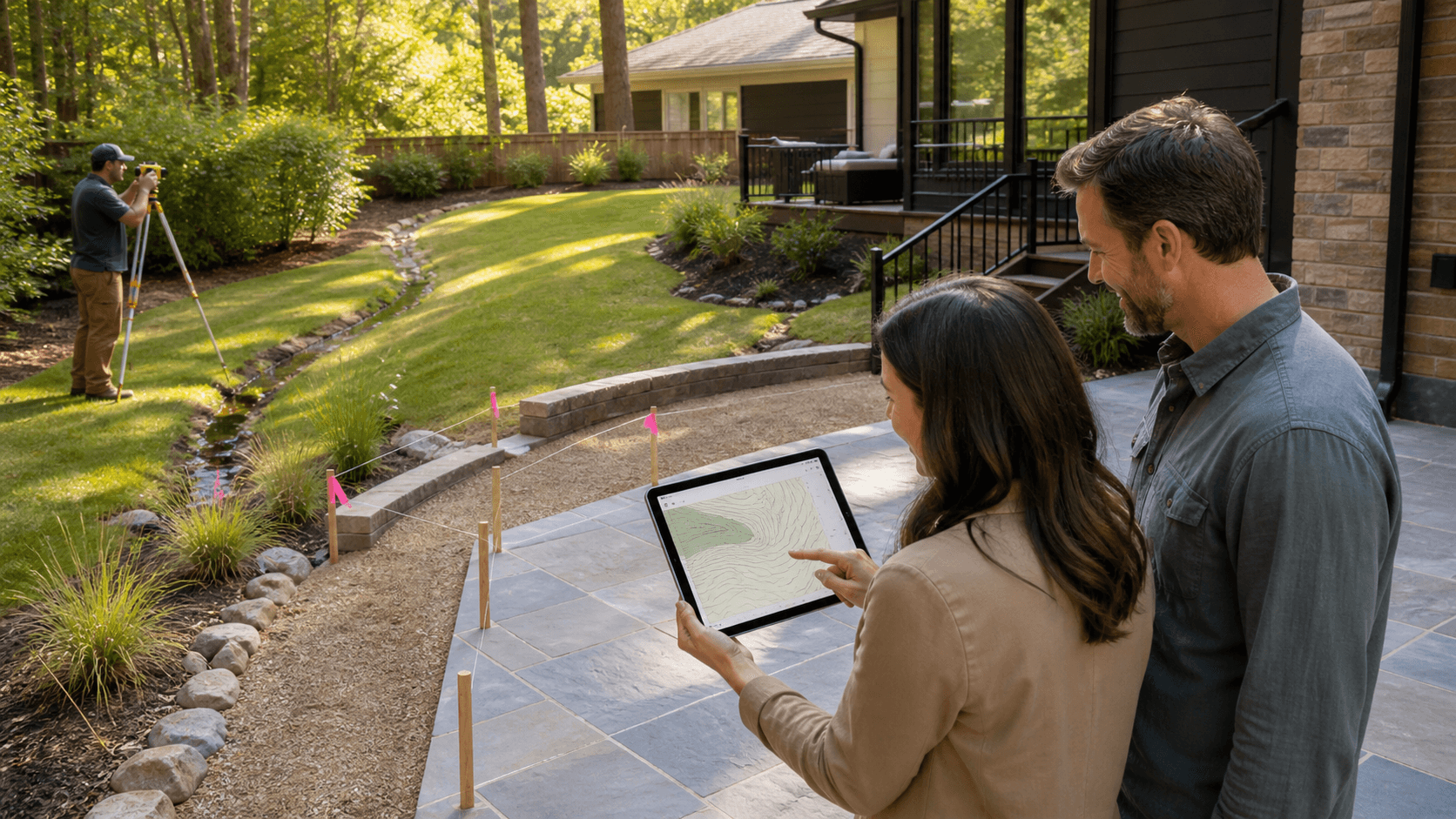
A professional contractor should not be guessing at grades. Instead of eyeballing things, we rely on tools such as:
- Laser levels to read how much fall we have across the yard
- String lines to check straight runs like future patios and walks
- Spot elevations to tie new work into doors, steps, and driveways
When you walk the property with a contractor, listen for specific language. You should hear clear talk about:
- High points and low points on the lot
- How surface water currently leaves the yard or gets trapped
- How any new grading will protect the home's foundation
- How the new work will tie into existing driveways and neighboring yards
If the conversation skips past all that and goes straight into colors and patterns, grading is probably not getting the attention it deserves.
Getting Patio Slopes Right for Comfort and Drainage
Patios need a slight, controlled slope. The goal is simple: enough fall to move water away from the house and off the surface, but not so much that it feels like your chair might roll downhill. The slope is usually gentle enough that you feel level when sitting, but water still knows which way to go.
Different surfaces react to slope and base prep in different ways:
- Pavers need a compacted base and even slope so they do not shift
- Natural stone needs tight setting and good support to avoid rocking
- Concrete needs correct pitch and control joints to manage cracks
- Porcelain slabs need a very stable, flat base with a consistent fall
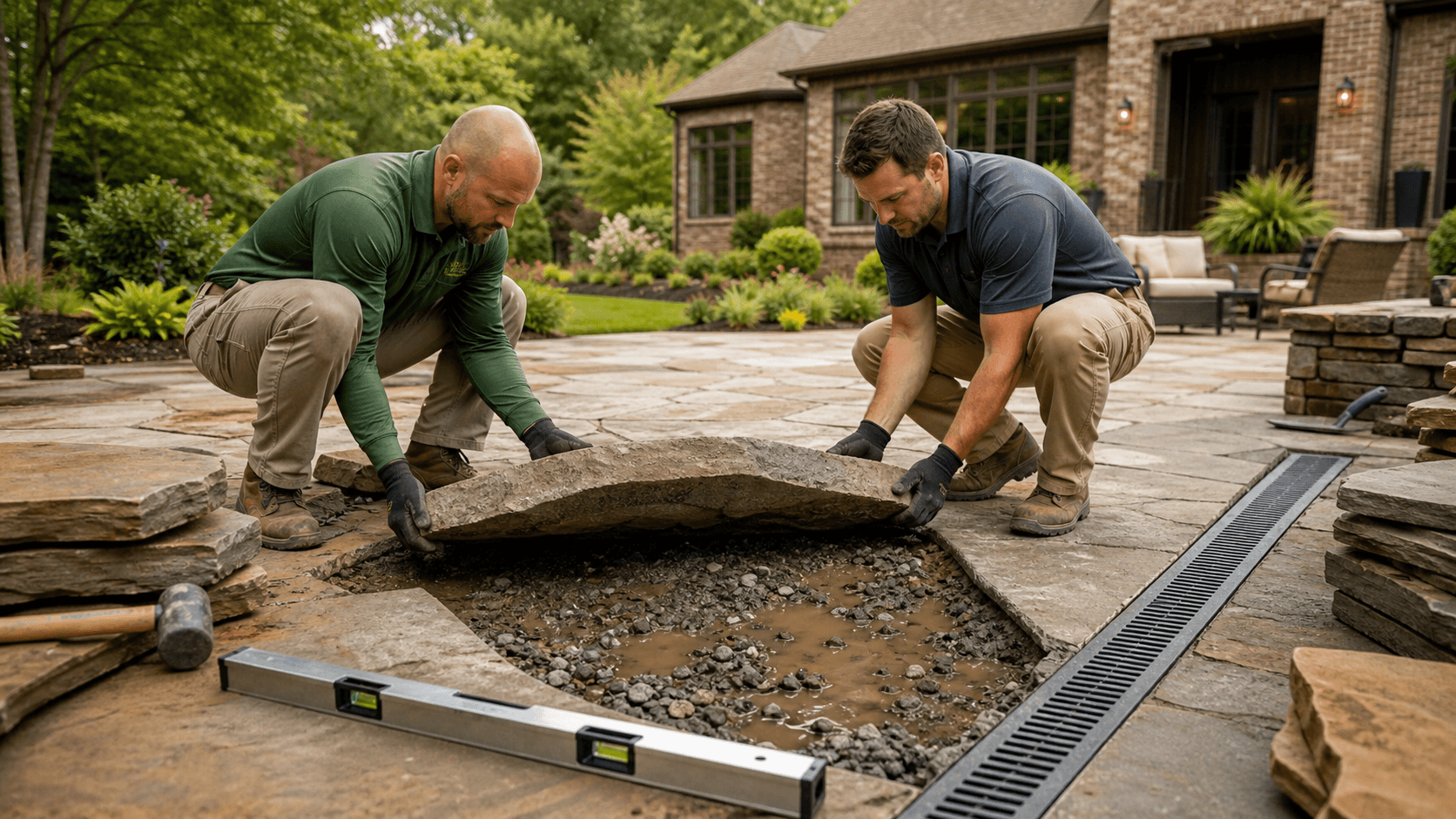
Base preparation and compaction matter just as much as the finish. If the stone looks great but the base is soft or uneven, you will see settling, puddling, and trip edges.
Common Birmingham patio issues include:
- Water running back toward the house because of poor pitch
- Ponding at the outside edge of a slab or at door thresholds
- Soft, muddy areas where water leaves the patio and has nowhere to go
We address those with design details like:
- A gentle slope directing water away from the home
- Surface drains or small swales at the patio edge
- Low retaining edges or seat walls that are built with drainage in mind
The goal is a clean, dry surface that feels solid underfoot and does not create new problems in your yard.
Designing Accessible Paths That Still Drain Correctly
Paths have to do two things at once: feel comfortable and safe to walk, and move water off the surface. In Birmingham, that balance can be tricky when you are tying a driveway, side yard gate, and backyard living area together across a sloped lot.
We think about:
- Keeping slopes gentle enough for all ages to walk comfortably
- Hitting the minimum grade needed so water does not sit on the walk
- Avoiding sudden grade changes that can create trip points
Path alignment is just as important as slope. We often:
- Follow the natural fall of the land instead of fighting it
- Break up grade changes with small landings or steps
- Tie into existing stoops and thresholds so there are no odd step heights
Surface choice and base prep matter for traction and durability in wet weather. A well-compacted base helps prevent heaving or settling, and the right jointing materials help water drain through where appropriate. Landscape lighting along the path, placed to light changes in grade and edges, makes those slopes easier to see at night and reduces missteps.
Micro-Drainage Around Seating, Fire Features, and Structures
Micro-drainage is the fine-tuning, the small grading and drain work right around the spaces where you actually sit and relax. With Birmingham's heavy clay, if water cannot soak in quickly, it will look for the lowest spots near:
- Corners behind seat walls
- Recessed fire pit areas
- Covered structures with concentrated roof runoff
- Transitions where turf meets hardscape
We address those trouble zones while building, not after the furniture shows up. Typical details include:
- Slight cross-slopes on patios so water does not settle under chairs
- Narrow channel drains at the base of seat walls or below roof drip lines
- Gravel-filled trenches that move water toward a catch basin
- Subtle grade changes that keep turf lines from becoming swampy edges
The key is that these solutions are built into the structure of the project. Once the pavers, stone, or concrete are installed, changing micro-drainage can mean tearing work back out, so it is worth getting right the first time.
How Landscape Grading in Birmingham Protects Your Investment
Good grading is not just about the next storm; it is about how your outdoor space holds up over years of weather. When water flows where it should, you tend to see:
- Less movement and fewer gaps in paver joints
- Healthier turf and planting beds that are not waterlogged or starved
- Dry, stable routes for conduit and wiring used for landscape lighting
Well-graded slopes also cut down on routine maintenance. You are less likely to fight:
- Erosion on banks or behind walls
- Mulch washing down into patios and paths
- Chronic muddy spots where people want to walk or sit
With 75 years of combined leadership experience, our team has seen what happens when grading is treated as an afterthought. That history is why we put engineering and drainage conversations up front, then design the space and the finishes around a solid grading plan that respects your yard rather than tearing it up more than needed.
If you are looking at a new patio, pool deck, or set of garden paths and want to be sure the grading is right from the start, let's talk about your property. Call us at (205) 305-7780, email us at info@woodpalmer.com, or reach out through the contact form at woodpalmer.com/contact.
Get Started With Your Project Today
If your yard is struggling with drainage issues or uneven ground, we are ready to help you turn it into a functional, polished outdoor space. Explore how our landscape grading in Birmingham service can support the long-term health and beauty of your property. At Wood-Palmer Outdoor Creations, we listen carefully to your goals and tailor a plan that fits your home and budget. When you are ready to talk specifics or schedule an on-site visit, simply contact us.