Transforming Birmingham Yards with Timeless Travertine
A travertine patio changes how an Alabama yard feels under your feet. On a hot, humid evening, the stone stays cooler than you expect, smooth and comfortable as you walk barefoot from the back door toward the pool, or outdoor kitchen. The surface looks clean and bright, and the entire outdoor area suddenly feels more like a private resort than a backyard.
Travertine is a natural stone formed over time by mineral-rich water. It comes in soft, neutral tones that work very well with the brick, stone, and stucco you see on many Birmingham estate homes. Many homeowners choose travertine when they want a refined, long-lasting outdoor space that feels calm, elegant, and pulled together.
At Wood-Palmer Outdoor Creations, we design and build architectural outdoor environments that feel like a true extension of the home. We focus on structurally disciplined work that holds up over years of Alabama weather. Here, we will walk through how travertine patio installation in Birmingham works, what sets it apart from other surfaces, and how to plan a project that fits the way you live outside.
Why Travertine Shines in Central Alabama Estates
Travertine works especially well with our climate. It stays naturally cooler underfoot, even in full sun, which makes a big difference when summer heat settles in. The stone usually has a lightly textured surface, so it offers good traction around pools, spas, and outdoor kitchens where water is common.
Some key benefits for Central Alabama yards include:
- Comfort in heat and humidity, with a surface that does not feel scorching in the sun
- Slip-resistant texture that supports safer walking near water
- Colors that hide dust and pollen better than dark concrete
- A surface that pairs well with both classic and newer homes
The look of travertine is another big reason it is popular in estate settings. Soft creams, warm beiges, and light grays blend easily with traditional red brick, painted brick, stone accents, and stucco. Instead of fighting the architecture, travertine tends to make everything feel more unified and intentional. That harmony helps long-term property value and curb appeal because the outdoor space feels like it belongs with the home, not like something added as an afterthought.
Durability depends heavily on how the stone is installed. In our area, we deal with clay-heavy soils, temperature swings, heavy rain, and frequent entertaining. A properly built base, careful drainage planning, and the right jointing methods help prevent shifting, cracking, or low spots that collect water.
Travertine also gives plenty of room for design expression. Common choices that work well with Birmingham styles include:
- Colors: ivory, walnut, light beige, soft gray blends
- Finishes: tumbled for a softer, more rustic edge, honed for a smoother, more tailored look
- Patterns: French pattern, running bond, stacked grids, or custom borders to frame key areas
Planning a Travertine Patio That Fits Your Estate Lifestyle
A successful travertine patio starts with how you actually spend time outdoors. Before shapes and patterns, it helps to think about what you want the space to do for you. Do you host big family cookouts, quiet coffee mornings, game-day gatherings, or all of the above?
Common outdoor uses that guide the layout include:
- Al fresco dining and grilling
- Poolside lounging and sunbathing
- Outdoor kitchens and bars
- Fire features or conversation areas
- Covered outdoor living rooms with TVs or fans
Once we know how you live outside, we look at how your home sits on the land. We study rooflines, window placements, doors, and existing hardscapes so the new travertine area feels like it has always been there. On a Birmingham estate lot, that may mean tying into existing brick steps, matching the scale of tall gables, or aligning patios with main sightlines from key interior rooms.
Sizing and flow are also important. As a simple rule, you want enough room to walk comfortably behind chairs when they are in use and enough space between outdoor zones so the area does not feel cramped. Thoughtful planning of furniture early in the design helps decide the needed square footage for dining, lounging, and circulation.
We also pay close attention to sun, shade, and views. Orientation to afternoon sun can guide where to place seating, pergolas, or pavilions. We look for ways to frame views of pools, lawns, or tree lines, while using structures or plantings to screen unwanted sights. This is how a travertine patio moves from a flat hard-surface to a true outdoor room that feels comfortable all day.
Inside a Travertine Patio Installation in Birmingham
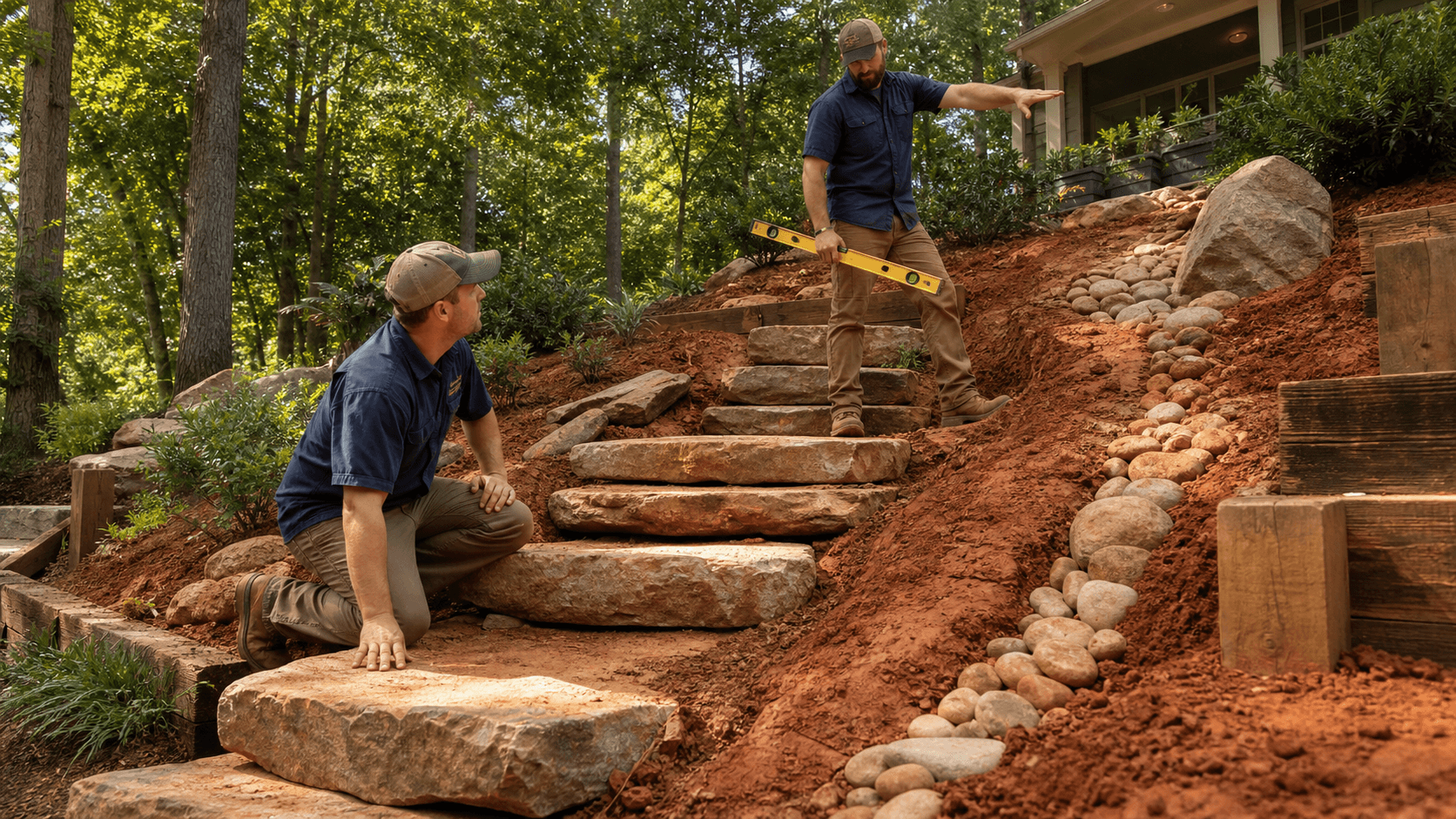
The process starts with a clear site evaluation and design phase. For Central Alabama yards, that means assessing soils, measuring slope, and noting how water currently moves across the property. Many estate lots have rolling grades, so we often plan retaining walls, wide steps, or gentle terracing to create level, usable spaces without fighting the natural lay of the land.
From there, we focus on building a stable foundation. This typically includes:
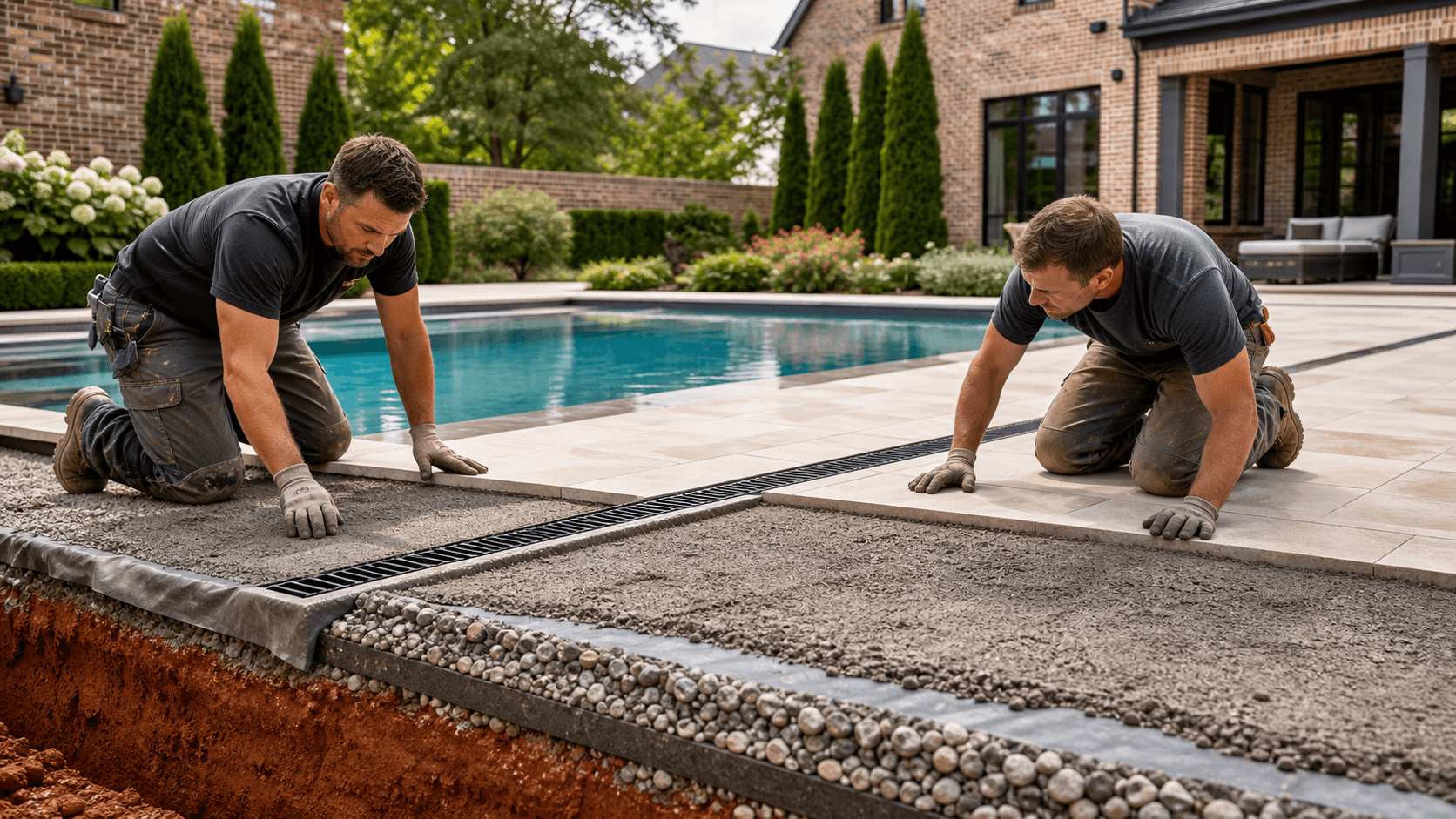
- Careful excavation to the proper depth
- Installing and compacting base layers suited to local soils
- Planning drainage paths so water moves away from the home
- Preparing edges to hold the field of stone securely
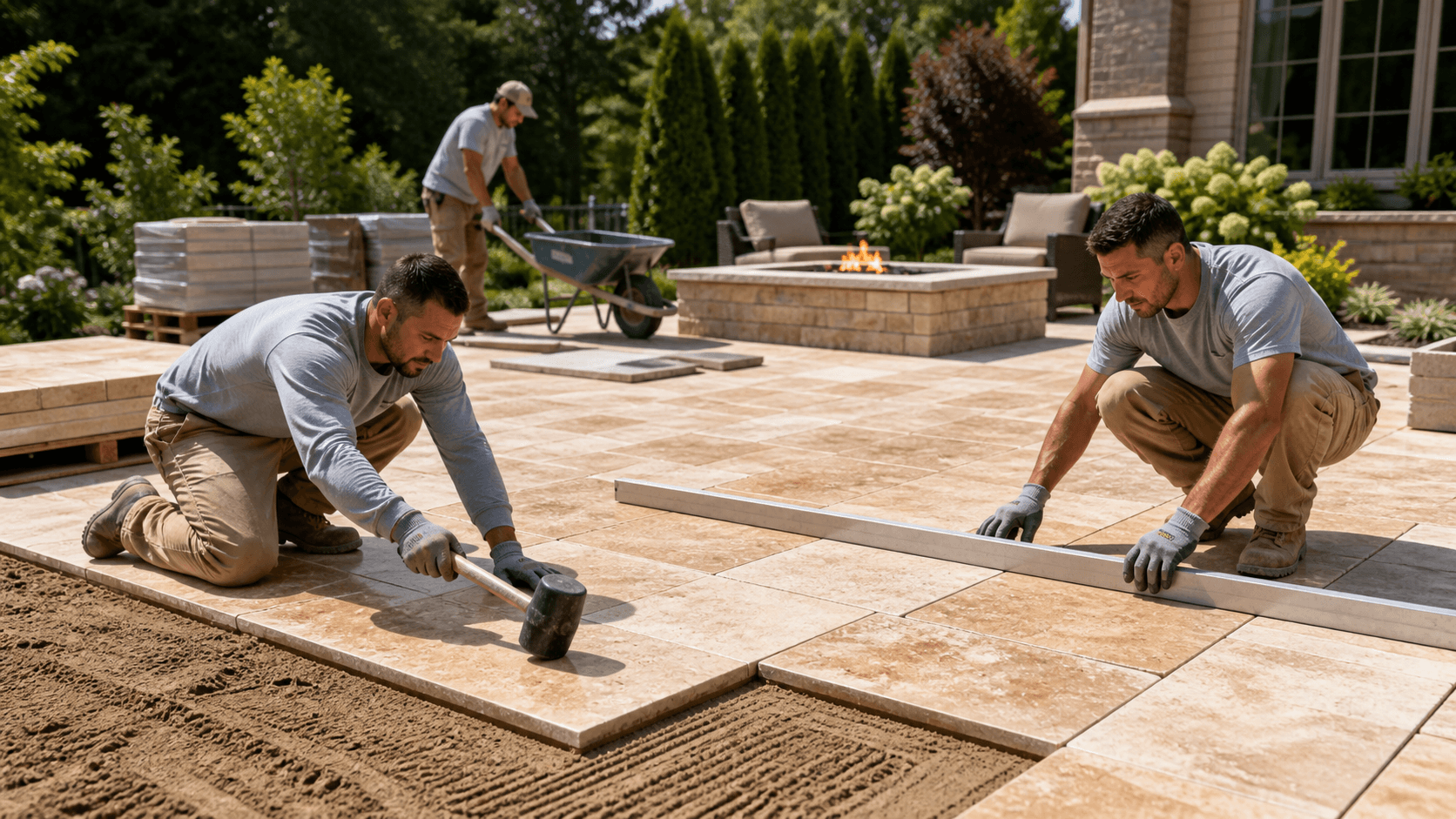
Getting the base right is what helps travertine stand up to heavy furniture, frequent gatherings, and weather over time. Once the base is solid, we begin setting the stone itself. Each piece is laid with attention to tight joints, clean lines, and smooth transitions at doors, thresholds, and pool edges. We also design coping and border treatments around pools and lawns so the patio feels finished and grounded.
Before stone is locked in place, we integrate the parts most people never see but always rely on. That can include:
- Irrigation adjustments so spray heads do not hit new hardscapes
- Underground wiring for low-voltage lighting and controls
- Gas lines for grills, fire features, or heaters
- Drain lines to collect and move water from downspouts or hardscape surfaces
Doing this coordination early keeps the finished travertine patio clean, safe, and ready for long-term use without constant disruption.
Elevating Travertine with Landscaping, Structures, and Lighting
A travertine patio really comes to life when it is connected to thoughtful landscaping. Stone alone can feel a bit hard. Softscape layers, like carefully placed shrubs, trees, and lawn panels, help relax the space and give it a resort-like feel. In Central Alabama, we consider sun exposure, plant size at maturity, and seasonal color so the planting design looks good throughout the year.
Structures are another way to stretch the usefulness of the patio. Depending on your home and goals, that might include:
- Pavilions or covered porches tied into the home's architecture
- Pergolas that create filtered shade and visual interest
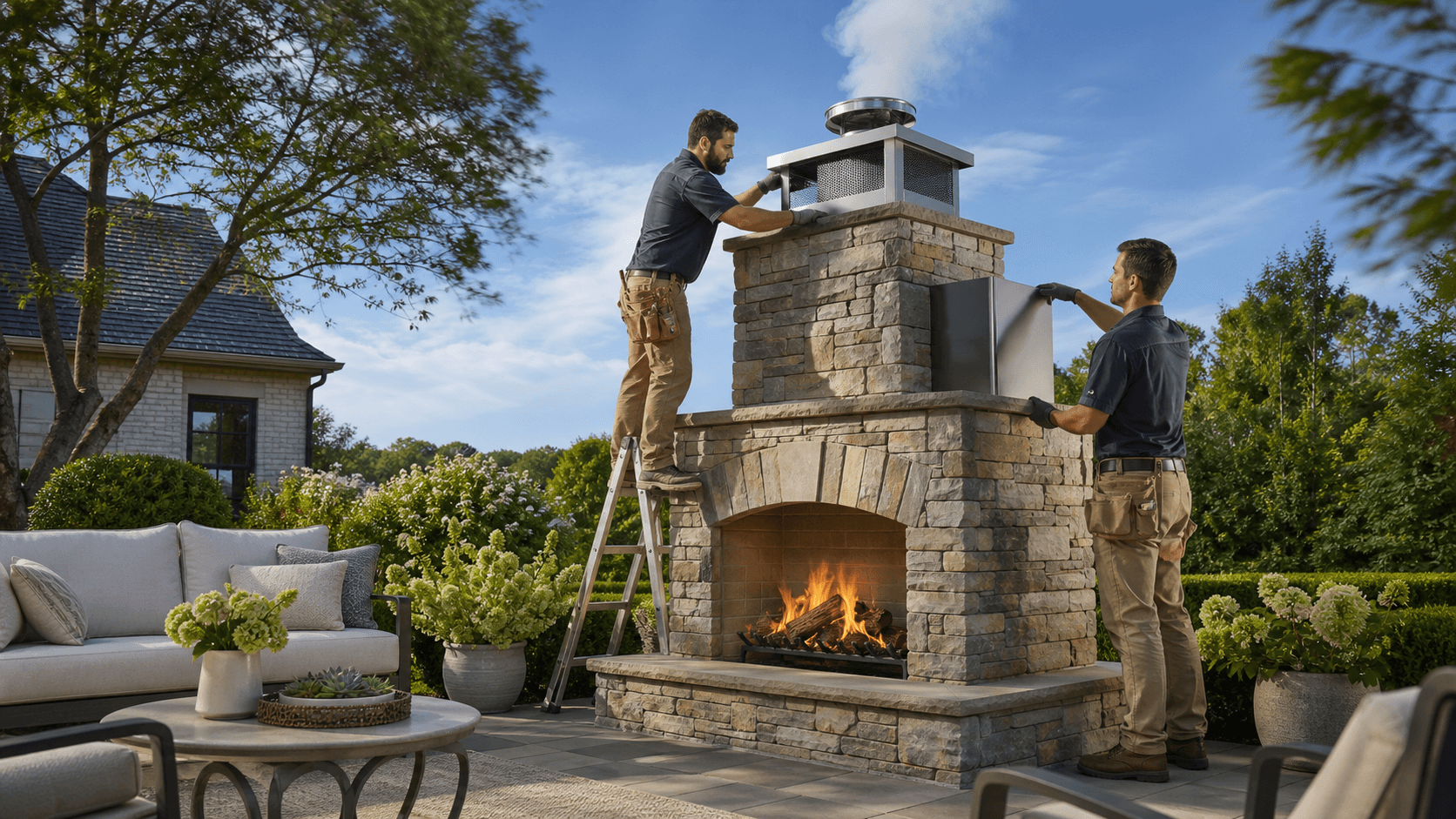
- Outdoor fireplaces or fire tables that anchor gathering areas
We design columns, beams, and rooflines to feel like they belong with the main house, not like separate backyard kits. This keeps the estate character intact and gives you a space that feels worthy of the home.
Lighting is the final layer that makes a big difference. Low-voltage landscape lighting can graze across travertine surfaces and walls, bringing out the stone's texture. Step lights and path lights improve safety, while sconces or pendants on structures help define outdoor rooms after dark.
Because of Alabama's weather, comfort features matter too. Ceiling fans in covered areas, discreet heaters for cooler evenings, and misting systems near hot, sunny spots all work especially well with travertine, since the stone itself already stays more comfortable than many other surfaces.
Keeping Your Travertine Patio Beautiful for Years
Once your travertine patio is in place, day-to-day care is fairly simple. Most homeowners do well with:
- Regular sweeping to clear pollen, leaves, and debris
- Occasional rinsing with a garden hose
- Gentle cleaning when needed to address spills or red clay dust
Sealing can be helpful in many cases, especially in areas with a lot of food and drink. We consider how you plan to use the space, then recommend an approach to protect the stone without changing its natural look too much. If a spill happens, cleaning it sooner rather than later usually keeps staining to a minimum. Over time, travertine can develop a soft patina, which many people find adds character.
It is also smart to protect edges and heavy-use zones. We suggest using proper pads under furniture legs, planning stable spots for grills and smokers, and being thoughtful about where large planters sit so weight is spread evenly. These simple habits help keep both the stone and the joints in good shape.
Sometimes, a professional needs to step back in. Signs like pooling water where it did not collect before, loose stones, failing joints, or settlement near steps and walls can point to a need for re-leveling or drainage adjustments. A design-and-build team that understands Central Alabama soils and construction methods can help service and upgrade existing travertine patios so they keep performing and looking good as your needs change over time.
Get Started With Your Project Today
If you are ready to turn your backyard into a relaxing, functional outdoor retreat, our team is here to help with expert travertine patio installation in Birmingham. At Wood-Palmer Outdoor Creations, we listen carefully to your ideas and guide you through material choices, layout, and design details that fit your home. Tell us about your project goals and timeline, and we will provide clear next steps and a straightforward estimate. Have questions or want to schedule a consultation now? Just contact us to get started.