Discover If Your Sloped Yard Can Host a Stone Patio
A sloped backyard in Vestavia Hills can feel like wasted space, especially when you would rather have a spot to relax, grill, or sit by a fire. A well-planned stone patio can turn that slope into a comfortable outdoor room that works for everyday living and for hosting friends. The key is matching the design and construction method to the grade you actually have, not forcing a flat patio where it does not belong.
Not every hill is a problem, and not every slope is easy. Some yards are perfect for stone patio installation in Vestavia Hills with only small changes. Others need more thoughtful engineering so they stay safe, dry, and stable in Central Alabama weather. We want to walk through how slope, soil, and structure all work together so you can start to tell if a stone patio is realistic for your yard and your goals.
How Slope and Soil Shape Your Patio Options
Vestavia Hills is not flat, and local homes sit on all kinds of grades. The way your yard drops or rises will shape what kind of patio layout makes sense.
Common slope types include:
- Gentle grades that fall a few inches over several feet
- Mid-slope backyards where the lawn drops off more quickly away from the house
- Steep edges or ravines at the back or side of the lot
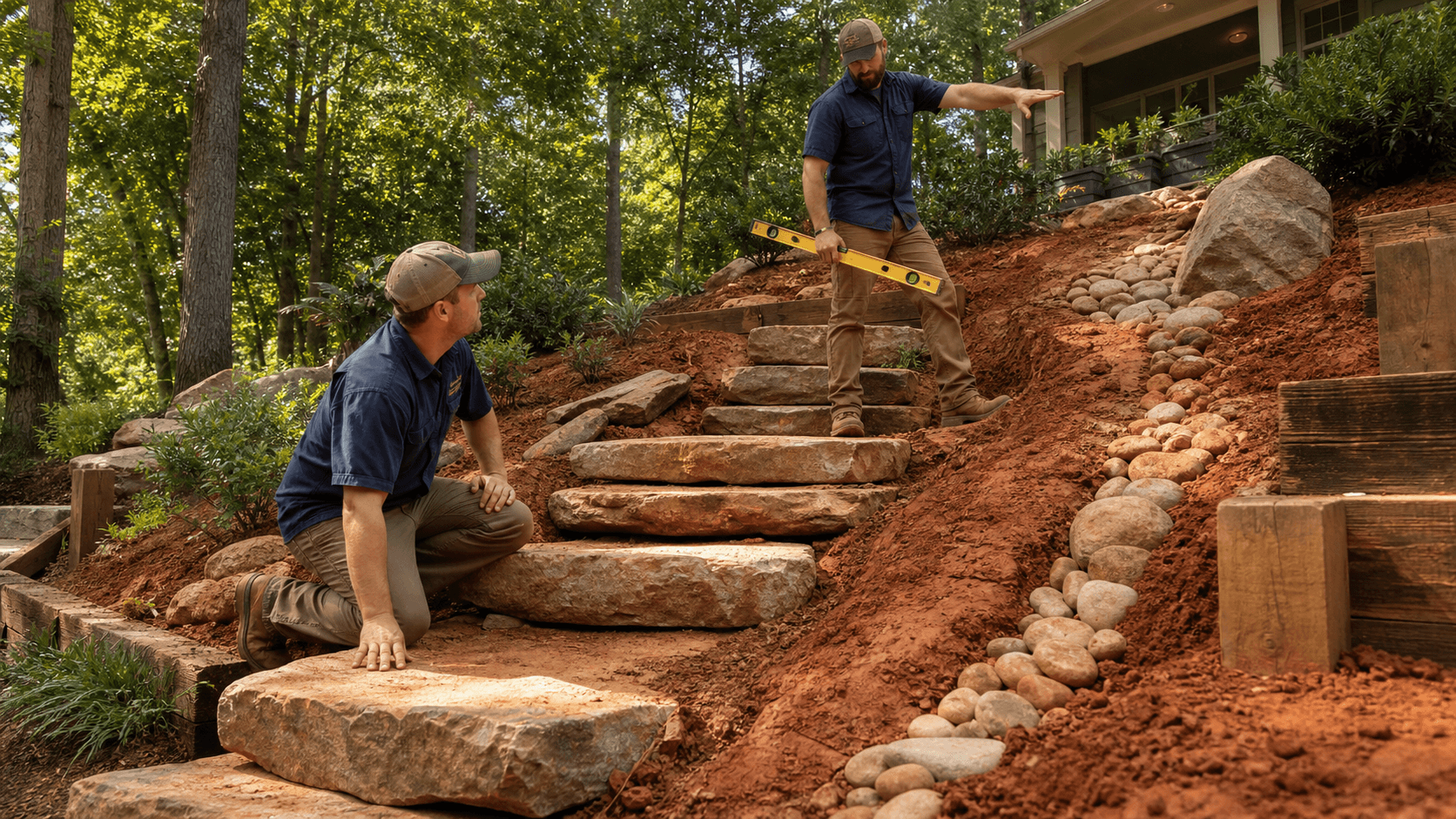
Gentle grades often work for a single-level patio with minor regrading. Mid-slope yards usually call for a mix of steps and small walls. Steeper drop-offs may need more serious retaining or a shift in where the patio is placed.
Under that grass, soil type matters as much as slope. In much of Central Alabama, we see:
- Clay-heavy soils that hold water and can get slick
- Hard, compacted areas where water travels on the surface
- Spots that erode when water races down the hill
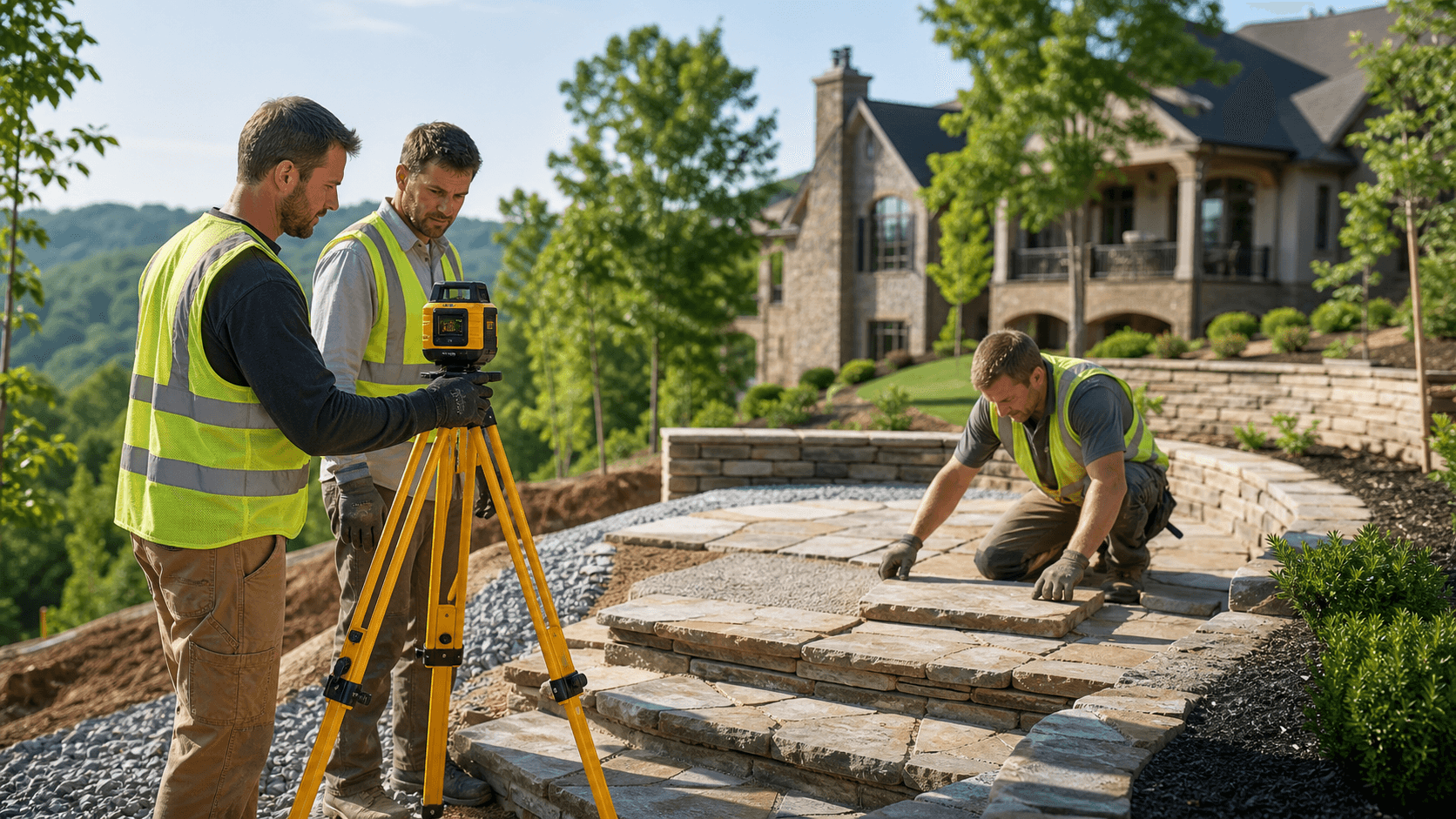
A professional site assessment looks at:
- How steep the grade is close to the house
- Where water currently flows when it rains
- How firm the subsoil is and how deep the good base can go
- Whether access for equipment is safe and realistic on the slope
These details help decide if you need retaining walls, how tall they should be, and where to cut or fill soil. They also guide where to place stairs, how to handle drainage, and whether the slope can safely hold the weight of stone and foot traffic over time.
Smart Design Strategies for Sloped Stone Patios
On a sloped site, design is not just about where to set a table. It is about turning grade changes into features that feel natural and easy to use.
Some of the most effective strategies include:
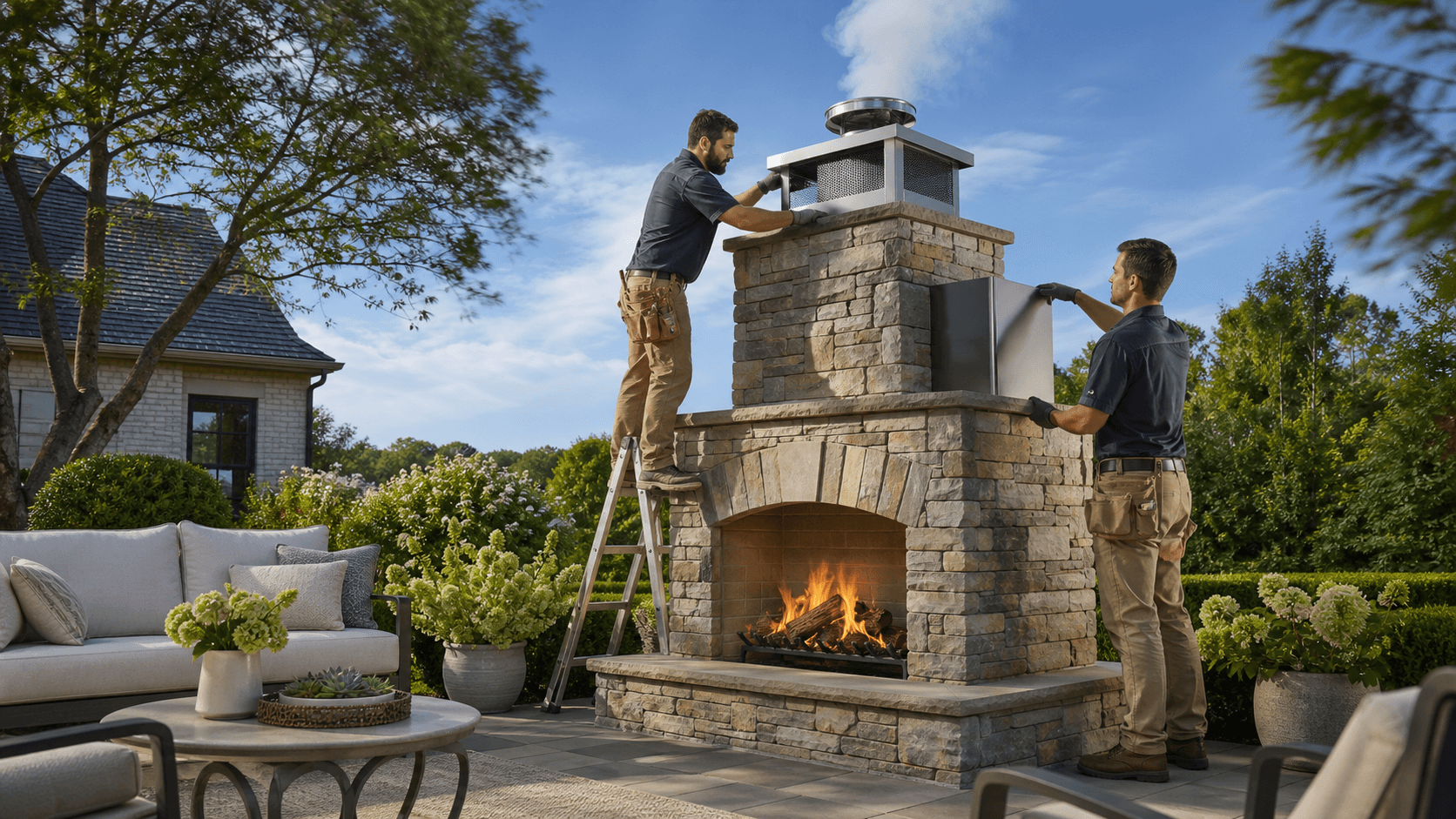
- Multi-level terraces: breaking the hill into flat platforms for dining, lounging, or a fire feature
- Integrated seating walls: low walls that hold back soil and also give extra seating
- Steps and landings: gentle transitions from one level to the next, wide enough to feel safe
Instead of fighting the hill, a good layout works with it. A higher terrace might be placed to grab a sunset view over the trees. A mid-level patio might be sized for a dining table, with steps down to a small lawn or future pool area. Planters can be tucked into corners of retaining walls to soften stone and help blend the patio into the landscape.
Safe, code-compliant steps and landings are especially important on slopes. Treads, risers, and handrails need to be planned with care so family members and guests can move comfortably from the house to each terrace, even in low light.
To make the space feel complete, we like to think in layers:
- Hardscapes like stone patios, walls, steps, and walkways
- Landscapes that stabilize soil, frame views, and add color
- Lighting that highlights edges, steps, and seating areas
The right lighting on a sloped stone patio can make a big difference. Soft path lights, wall lights, and accents in planting beds help people see elevation changes clearly and make the patio feel inviting at night.
Structural Safety, Drainage, and Long-Term Durability
Pretty stone on top only works if what is under it is strong and well planned. On a slope, structure and drainage are as important as the surface pattern.
Engineered solutions for stone patio installation in Vestavia Hills often include:
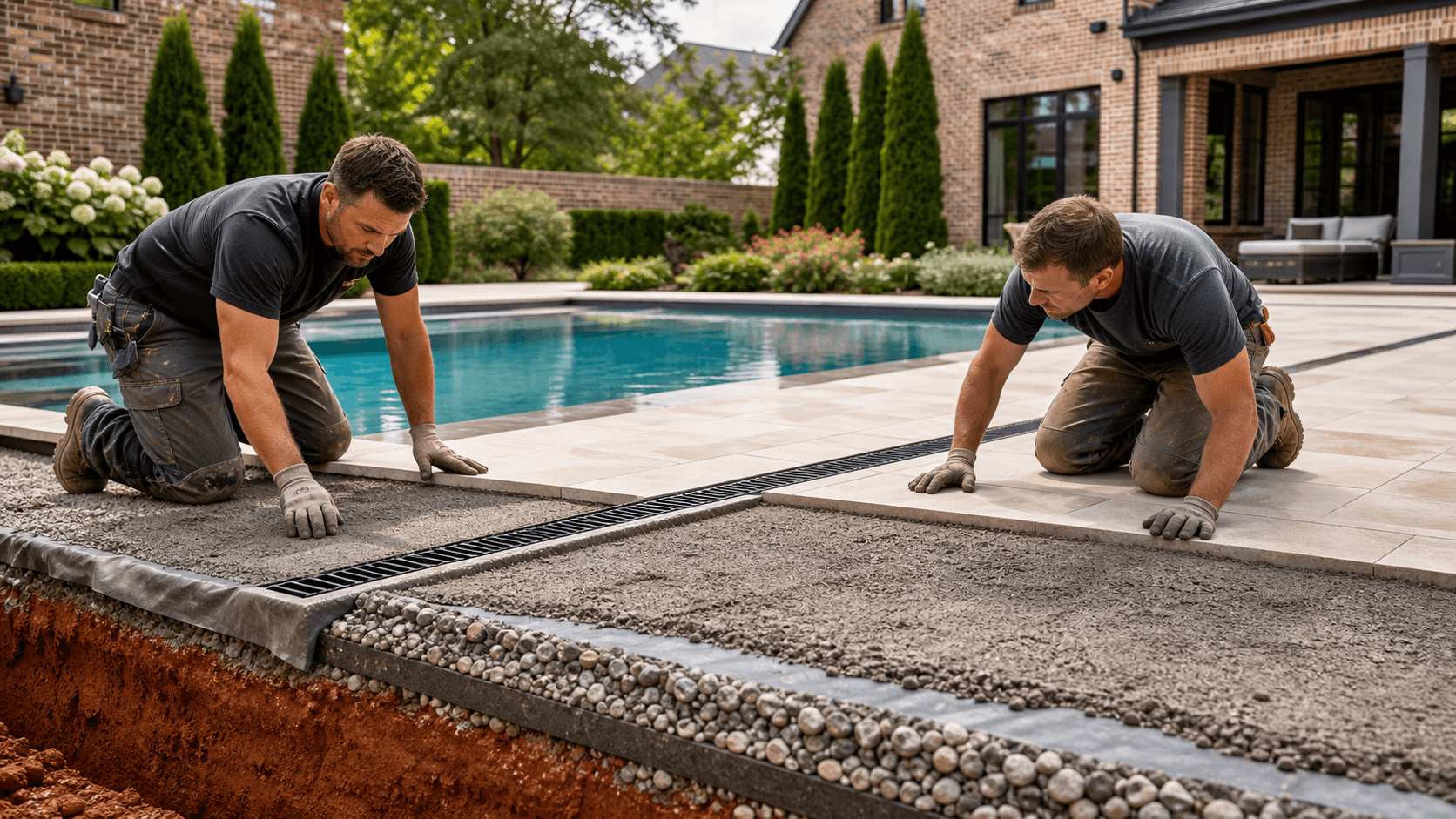
- Proper base preparation, with soil cut to the right depth and shape
- Layered stone base materials compacted in thin lifts for strength
- Retaining walls with proper footing and backfill when the grade change is significant
Drainage is another big piece. We need to move water where it will not cause trouble. That usually means:
- Directing runoff away from the house foundation and doors
- Creating swales or using French drains to collect and move water along safe paths
- Sloping the patio surface slightly so water flows off in a steady, controlled way
- Using joint materials or specific stone patterns that help manage surface water
Central Alabama has hot summers, heavy rains, and occasional freezes. Over time, poorly built patios may settle, shift, or crack, especially on a slope. Professional construction standards help protect against:
- Uneven settling that creates trip hazards
- Washouts under the patio edge during big storms
- Heaving or movement along retaining walls
Good engineering on the front end often means less repair, less worry, and a longer life for your outdoor space.
When a Sloped Stone Patio Makes Sense (and When It Doesn't)
Not every sloped yard is a good candidate for a broad stone patio, but many are. It usually makes sense when:
- The slope near the home is moderate, not a cliff
- There is enough room to build one or more terraces with safe steps between them
- You want permanent, low-maintenance outdoor space that feels connected to the house
A sloped stone patio might not be the best choice when:
- The grade change is extremely steep right off the back door
- There is very limited room to cut into the hill or build retaining walls
- Soil is unstable and would need major reinforcement before building
- Access for equipment is almost impossible without major disruption
In some of these cases, other options can be smarter, like raised decks, a small landing patio paired with a deck, or a series of smaller platforms instead of one big continuous stone area.
A simple checklist to think through your yard:
- How steep is the yard just outside your main door?
- Are you open to adding retaining walls and steps as part of the design?
- What do you want to do outside: dine, grill, relax by a fire, sit by a pool?
- How often do you plan to host friends and family outdoors?
- Are you comfortable investing in an engineered solution that treats the slope carefully?
Your answers will help shape how big the patio should be, where it might go, and how complex the structure may need to be.
Transform Your Sloped Yard with a Custom Patio Plan
A sloped yard in Vestavia Hills does not have to be dead space. With the right plan, it can become a layered outdoor living area that feels interesting, comfortable, and tailored to how you live. Instead of one flat rectangle, you might end up with a series of stone rooms that step gently down the hill and make the most of your views.
At Wood-Palmer Outdoor Creations, we focus on outdoor living spaces that respect the grades and weather patterns we see across Central Alabama. When we look at a sloped lot, we study the grade, soil, drainage, and how you want to use your yard, then shape hardscapes, landscapes, structures, irrigation, and lighting into one connected plan. With thoughtful design and solid engineering, a stone patio on a slope can feel natural, safe, and ready for years of outdoor time with the people you enjoy most.
Get Started With Your Project Today
If you are ready to upgrade your backyard with a custom outdoor space, our team is here to help you plan every detail. Explore your options for stone patio installation in Vestavia Hills and see how Wood-Palmer Outdoor Creations can turn your ideas into a space you will actually use and enjoy. We will walk you through design, materials, and timeline so you know exactly what to expect. Have questions or want to discuss your project goals directly with our team? Just contact us to schedule a no-pressure conversation.