Build an Outdoor Space That Can Handle Birmingham Weather
Clay slopes and pop-up storms are just part of living in Central Alabama. The ground holds water, then sheds it fast, and that can be tough on patios, retaining walls, and plantings that were never planned for this kind of terrain. When the rain hits hard, weak work shows up quick.
Pretty stone and nice plants are not what keep an outdoor space safe and usable over time. Structural integrity, grading that makes sense, and controlled drainage are what keep steps from settling, walls from leaning, and turf from turning into a swamp. Good landscape in Birmingham has to start with engineering decisions, then finish with style.
At Wood-Palmer Outdoor Creations, we treat every project like a structural build first. With 75 years of combined leadership experience and owner involvement on each job, we plan for the way Alabama clay and summer storms really behave, especially on steep or clay-heavy properties.
How Alabama Red Clay Behaves on a Slope
Central Alabama red clay is stubborn soil. It has low permeability, so water does not soak in quickly. It holds on to moisture, swells when wet, then shrinks and cracks when it dries out. Instead of letting rain sink deep, it often keeps water right at or near the surface.
On a slope, that behavior turns into:
- Fast surface runoff that looks like sheets of water
- Erosion ruts cutting through beds and bare spots
- Heaving and settling under patios and walks
- Hydrostatic pressure building up behind retaining walls
Many homeowners notice the same failure points over time:
- Patio settlement or cracking where it meets the house
- Standing water at the bottom of a hill or against a fence line
- Washed-out mulch beds and exposed roots after heavy storms
- Stair treads that move, tilt, or crack as the soil shifts
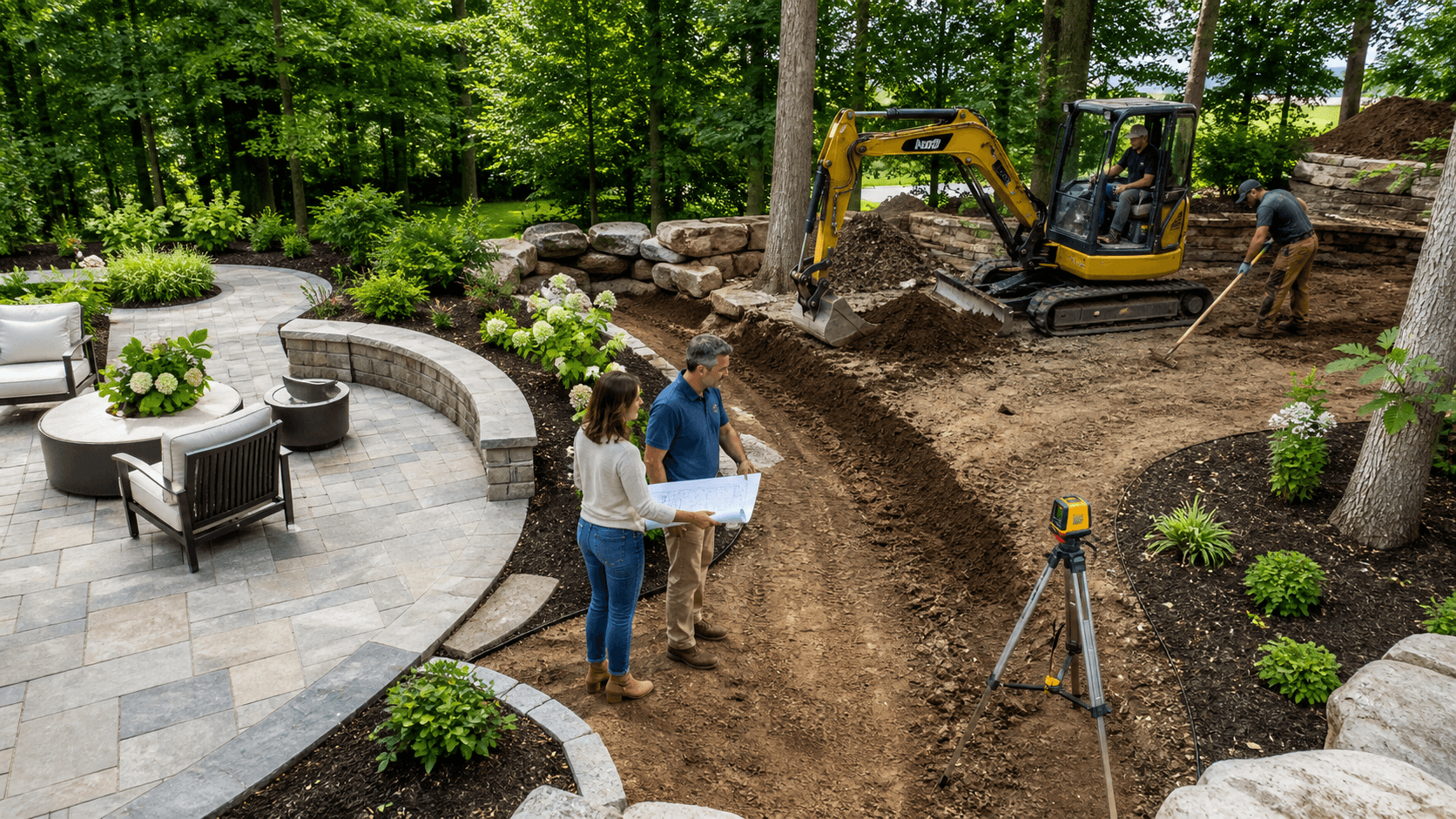
That is why a design/build contractor cannot just sketch something and start laying pavers. We have to study existing grades, the structure of the clay, and how water currently moves across the site. Before we talk about stone choices or plant colors, we look at where water starts, where it wants to go, and what it is going to push on along the way.
Engineering-Driven Site Planning for Clay Slopes
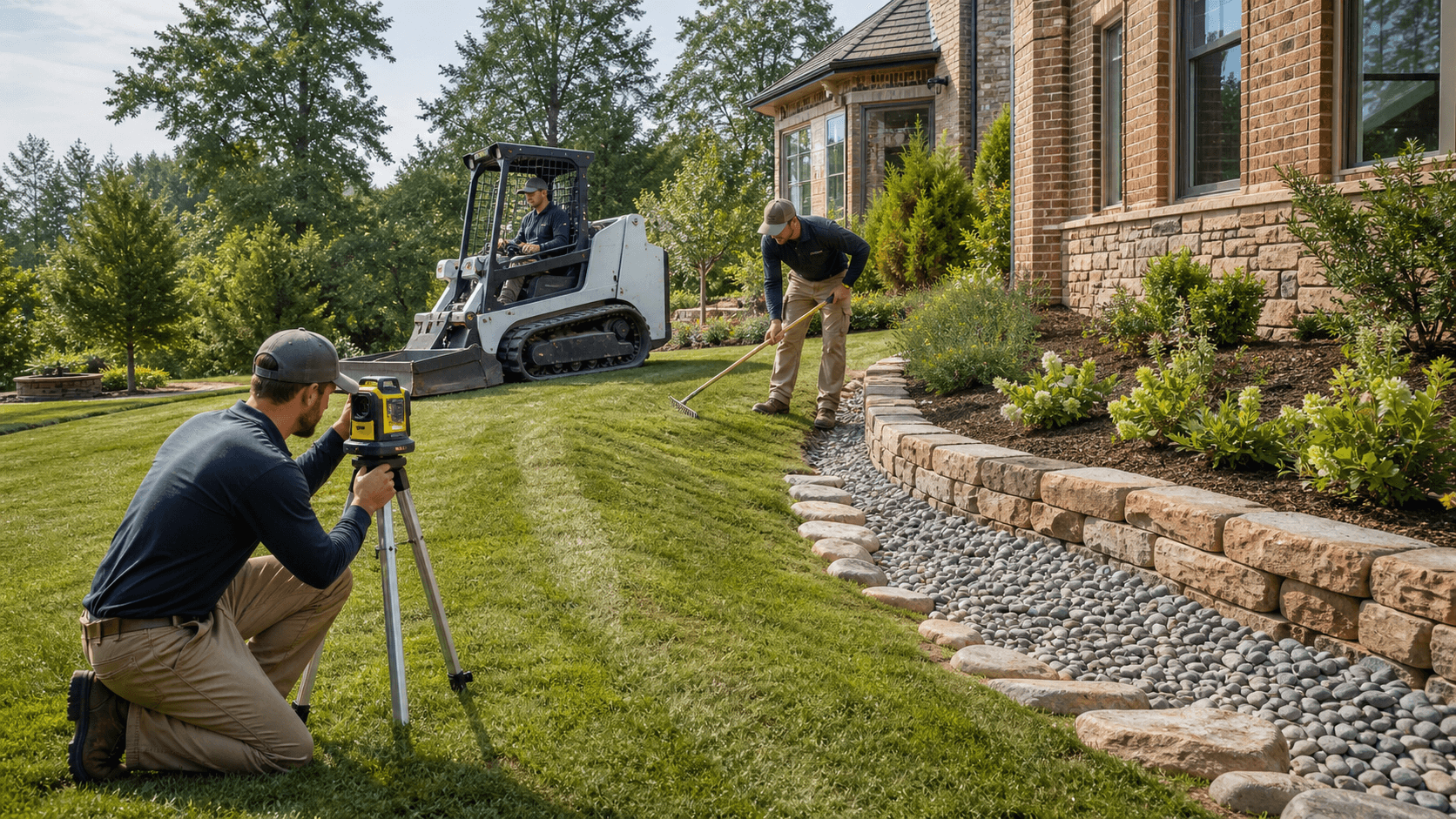
On a Birmingham slope, site planning is as much about control as it is about layout. We start by establishing finished floor elevations at the house, outbuildings, and key outdoor living areas. From there, we cut and fill in controlled lifts, tying new grades back into existing contours so we are not creating new water problems while solving old ones.
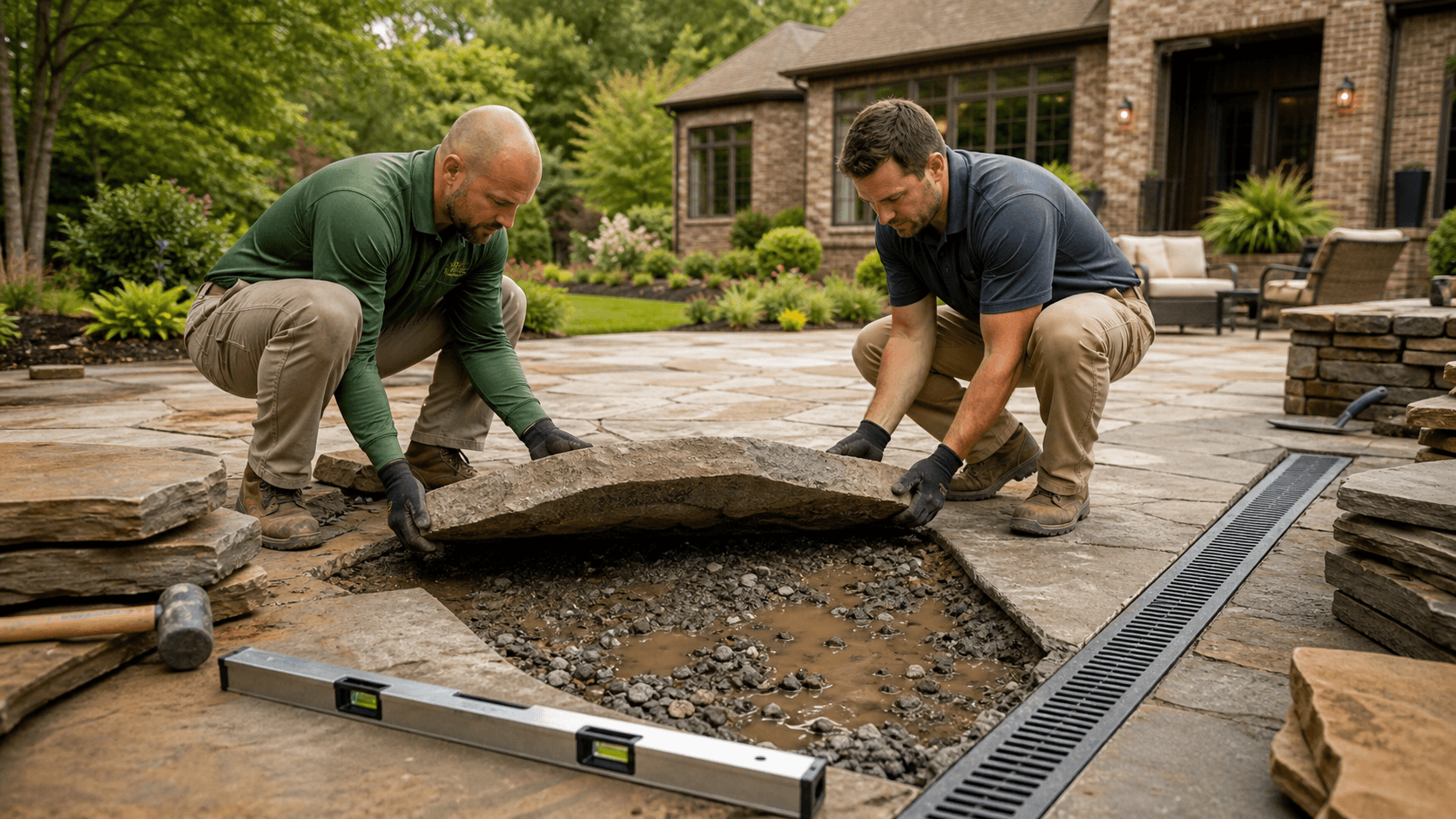
Under hardscape, the base is where long-term performance lives. Proper preparation usually includes:
- Excavation down to a stable subgrade
- Soil conditioning or undercutting bad, pumping clay
- Compaction to proper densities in thin layers
- Building a layered base that sheds water instead of trapping it
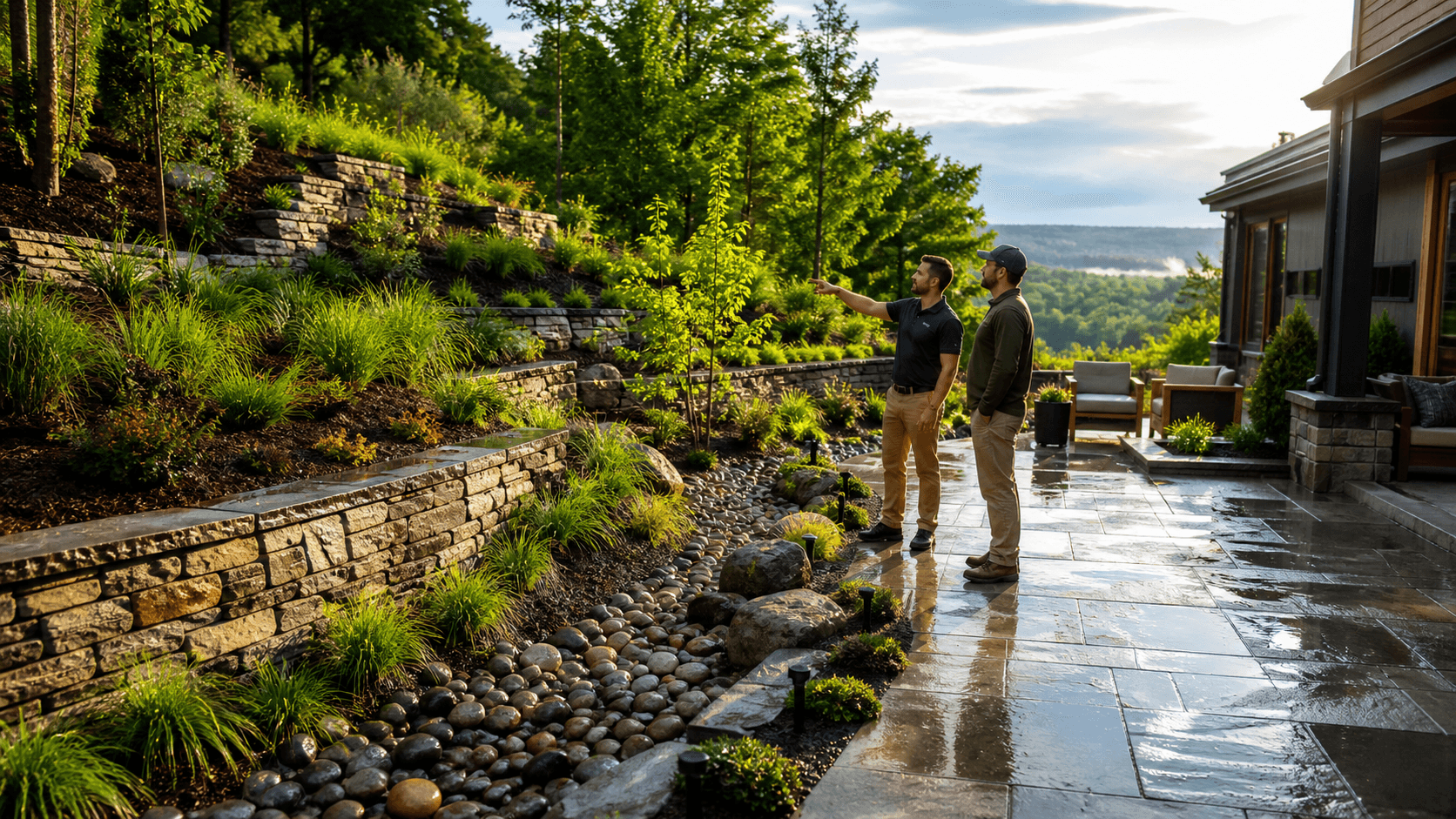
Retaining walls and terraces are tools to break a steep slope into usable pads. Built correctly, they manage lateral soil pressure instead of fighting it. That means:
- Wall thickness and footing sized to the height and load
- Geogrid reinforcement where needed to lock soil and wall together
- Free-draining stone and fabric behind the wall
- Drain pipes to relieve pressure and carry water out
This is not work you can eyeball. Small grade misses can send water into a basement or across a patio. At Wood-Palmer Outdoor Creations, we lean on engineering-driven planning so the grades on paper match how water and clay will behave in real storms.
Controlling Water During Summer Storm Season
Summer storms around Birmingham tend to be quick and intense. A cell moves through, drops a lot of water in a short window, then the sun comes back out. On clay slopes, that means high-volume runoff that hits hardscape, beds, and turf all at once.
To control that water, we use a full toolkit:
- Surface drainage like swales, catch basins, and channel drains
- Subsurface drainage like French drains, perforated pipe, and weep systems
- Downspouts tied into buried lines that carry water to safe discharge points
Hardscape, landscape, structures, and irrigation all need to work together. Patios and walks are pitched just enough to move water without feeling sloped. Lawn grades guide water into swales instead of toward door thresholds. Planting beds are placed to slow and filter runoff, but not in a way that traps water at the house. Irrigation is laid out so it does not overload zones that already stay wet.
When water is not managed, failure shows up fast:
- Steps get undermined and start to rock
- Pavers float or pump mud up through the joints
- Turf stays soggy and thin, then compacts and dies out
- Water pushes toward the foundation instead of away from it
Good drainage planning accepts that water is coming and gives it a controlled path, instead of letting every storm redraw your yard.
Building Hardscape That Stays Put on Birmingham Hillsides
Patios, walks, and driveways on clay slopes work harder than flat-yard installs. Gravity, water, and soil movement all try to pull things apart. We answer that with more attention to base thickness, edge restraint, and the way elements tie together.
Right materials and methods matter:
- Compacted aggregate base sized for the load and the slope
- Edge restraints that are anchored into stable base, not soft topsoil
- Proper jointing materials that resist washout and weed growth
- Deepened edge beams or thicker sections in drive lanes and turning areas
Structural connections keep everything acting as one system. Steps should lock into retaining walls, not just butt up against them. A pool deck or outdoor kitchen pad needs clear transitions and tie-ins to surrounding grades so one area does not move while another stays put. For estate-scale properties, we treat every hardscape surface as part of a single structural network, not a series of separate features scattered across the yard.
Planting, Irrigation, and Landscape Lighting on Clay Slopes
Plants do more than look good on a slope. They help hold it together. In clay, we favor deep-rooted, slope-stabilizing plants and match species to how wet or dry an area tends to stay. Groundcovers or shrubs often perform better than turf on steeper faces where mowing is a safety issue and roots need to tie soil in place.
Planting techniques have to respect clay:
- Amending carefully so we do not create a bowl that holds water
- Setting plants slightly high so crowns are not buried in wet soil
- Providing ways for excess water to move out of planting pockets
Irrigation on a slope needs to be engineered, not guessed. That means zoning slopes separately from flat areas, using matched precipitation heads, and running shorter cycles to avoid runoff. Weather-aware controllers that adjust for rainfall and soil moisture help keep clay from swinging between flooded and bone dry.
Landscape lighting on slopes and in clay needs planning too. We think about:
- Safe cable routing that avoids future digging and washouts
- Conduit or protected paths across unstable areas
- Stable bases for fixtures so they do not lean or sink over time
- Connections sealed and protected from wet, expanding soil
When structure, water management, planting, irrigation, and lighting are all planned as one system, a tough clay slope turns into a reliable outdoor space that works in everyday weather and in the middle of summer storm season.
Get Started With Your Project Today
Transform your yard into a space you truly enjoy with our customized landscape design in Birmingham services. At Wood-Palmer Outdoor Creations, we work closely with you to create outdoor spaces that fit your lifestyle, budget, and property. Let's talk about your property—give us a call at (205) 305-7780, send an email to info@woodpalmer.com, or fill out our contact form.