Moonlighting That Works Night After Night
Moonlighting is a structural lighting technique that throws soft light down from above, like a full moon, instead of blasting light up from the ground. It's about how you use your property at night, not about holiday-style decoration. In the Greater Birmingham area, with humid summers and big tree canopies, moonlighting gives you gentle, even light on patios, lawns, and drives without harsh glare.
At Wood-Palmer Outdoor Creations, we treat moonlighting installation in Birmingham as an engineered system. We think through load paths, wiring runs, drainage, and long-term maintenance before any fixtures are ordered. With 75 years of combined leadership experience, our team approaches each project like a structural build, not a decoration project. In this article, we'll compare pole and structure mounting, talk through beam shaping, and show practical ways to keep uplight and glare under control on estate-scale properties in Central Alabama.
How Moonlighting Behaves in Central Alabama Yards
Our soils are usually heavy red clay, slopes are common, and many properties mix dense hardwoods and pines with open lawn panels. All of that changes how fixtures can be mounted and how stable they'll be over time. A pole or bracket that might be fine in sandy soil needs different base preparation in Alabama clay so it doesn't lean or heave.
Humidity, insects, and pollen also matter more than most people think. Sticky summer air and yellow pollen film can:
- Cloud lenses and soften the beam
- Attract insects right into the light cone
- Leave residue that bakes on in the sun
If lenses stay dirty, the "moon" effect fades and you start seeing hazy blobs instead of clean pools of light. Our 75 years of combined leadership experience have taught us to start with grading, drainage, and structure, then choose fixtures that can be cleaned, serviced, and aimed without tearing up finished hardscape.
Mounting Options: Poles, Structures, and Trees
Pole mounting is often the right choice when there are few mature trees or when we're lighting large open areas. It shines in locations like:
- Broad lawn panels with no safe tree locations
- Pool decks and courts where tree debris is a problem
- Drive courts where you need consistent light along a route
In Birmingham's clay, that means engineering proper footing depth, base preparation, and wind loading. We also plan conduit routing so wiring is protected and serviceable. Pole placement is tied directly to hardscape layout, planting beds, and sightlines from key rooms inside the home.
Structure mounting uses the strength of the home, pavilion, or retaining wall. It's often preferable along lake homes, hillside properties, or where the architecture already gives good attachment points above the ground plane. With an engineering-first approach, we focus on:
- Fastening into structural framing, not just cladding
- Protecting the building envelope and waterproofing
- Routing wiring so it stays dry and hidden
Done correctly, fixtures disappear into soffits, beams, or wall faces, while patios, pool decks, and outdoor kitchens get an even, moonlike wash. The goal is clear: light the living spaces without turning the house itself into a spotlight.
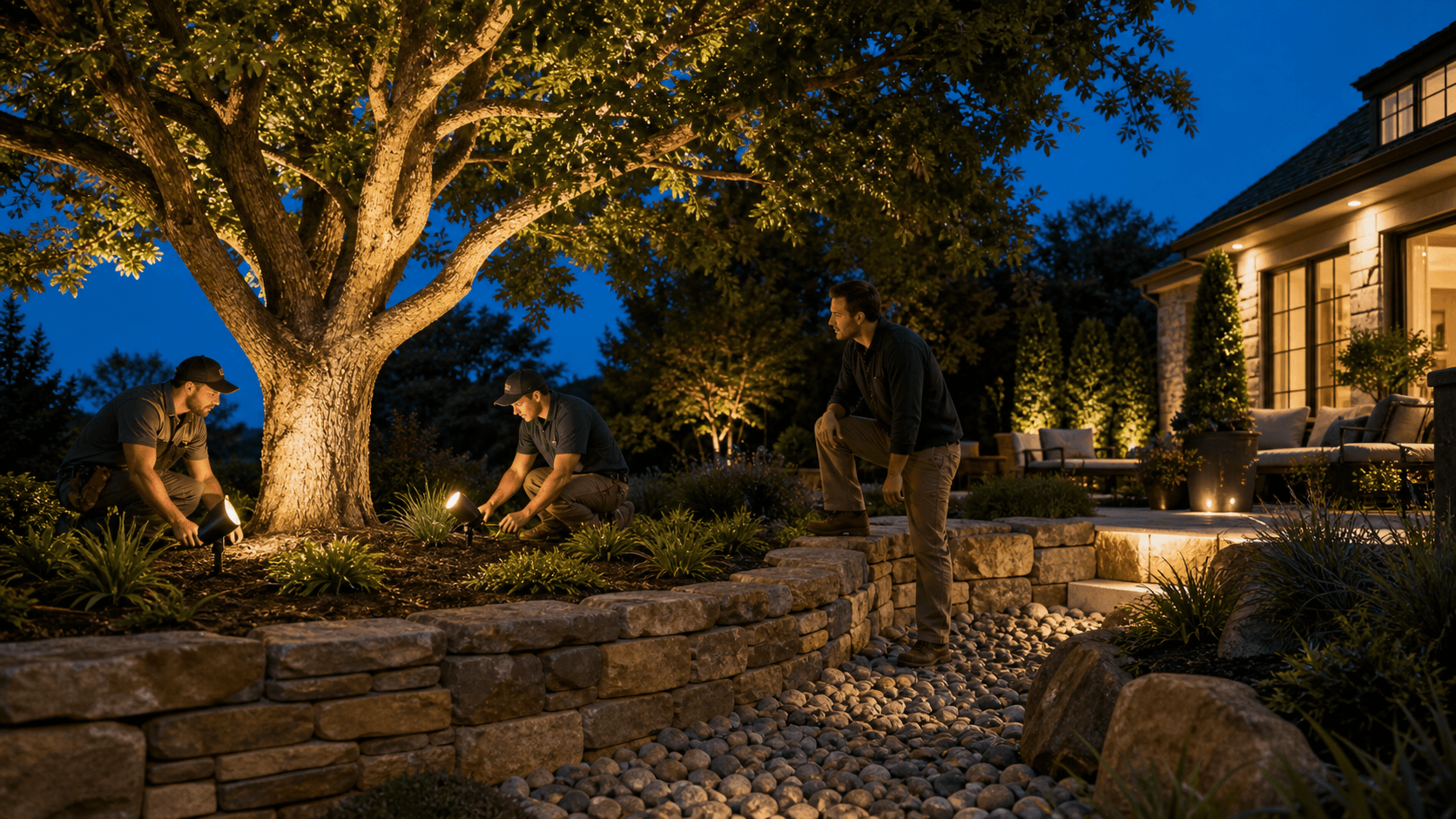
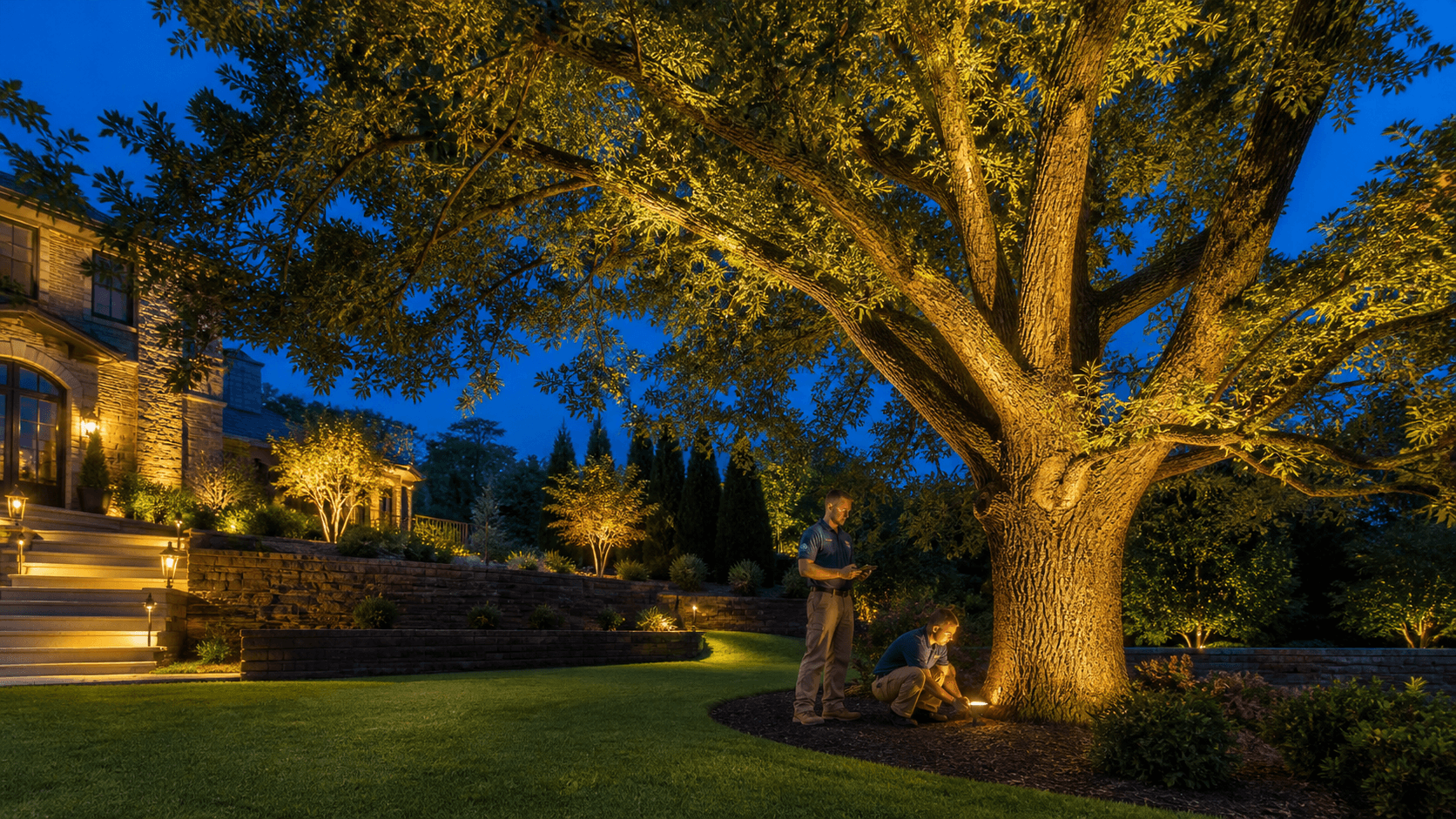
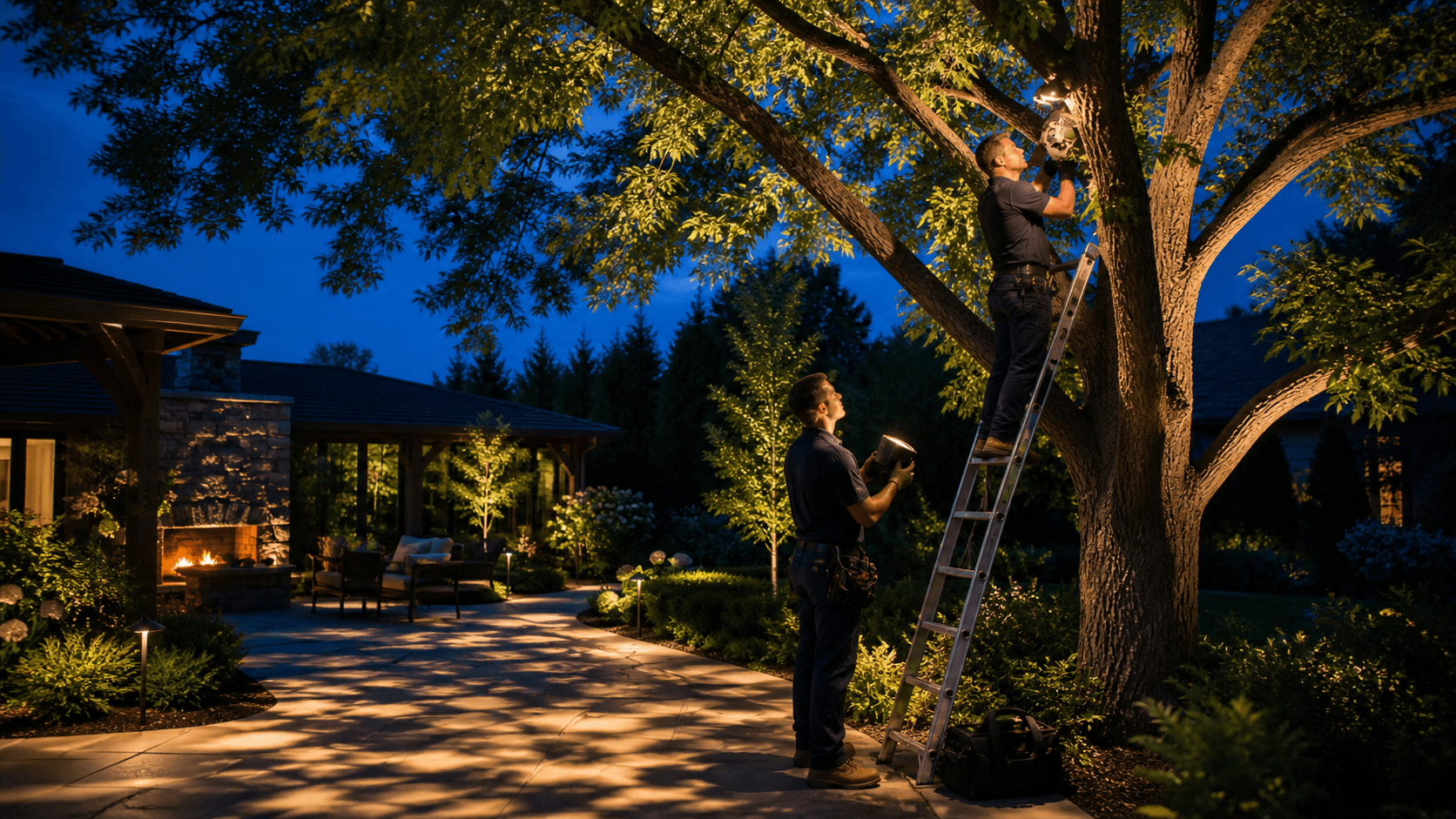
Tree mounting is popular, but trees aren't steel poles. In Birmingham's mixed hardwood stands, trunks move, grow, and shed. If you treat a tree like a post, you create stress points and future damage. We look at healthy attachment zones on the trunk, choose brackets that allow adjustment, and run cabling so it can shift with growth and sway. When needed, we coordinate with arbor care so pruning plans and light patterns work together.
Homeowners often ask about bark damage and fixture movement. With proper spacing and hardware, the tree can grow around fasteners while staying healthy, and we can re-aim fixtures as branches leaf out or are pruned. Light levels will change with the seasons, so we design with that in mind from day one.
Beam Shaping, Uplight, and Glare Control
The "moon" effect depends more on beam shaping than on fixture brand. We pay close attention to beam spread, beam angle, and cutoff:
- Beam spread controls how wide the light opens at ground level
- Beam angle is the geometry from the fixture to the target area
- Cutoff is how sharply the light fades at the edges
On patios, pool decks, drive courts, and lawn panels, we select lenses and aiming angles that avoid hot spots and ladder-like shadow patterns through branches. Light-colored hardscape or stucco can bounce a lot of light back, so we typically go with tighter beams, more shielding, and careful mounting heights.
In a moonlighting installation in Birmingham, uplight and glare aren't just about comfort. They affect neighbors, drivers, wildlife, and the night sky. Humidity, haze, and summer moisture amplify glare, making bright fixtures feel even harsher. To keep things comfortable, we often:
- Use downlight-only strategies from poles, structures, or trees
- Add shielding and snoots to hide the light source from normal viewing angles
- Limit tilt so beams don't clip roof edges or windows
- Set fixtures back from rooflines and deck edges
We also like to field-adjust after dark with the homeowner present. Seeing the property in real conditions helps dial in aiming, output levels, and switching so the system supports how you actually live outside at night. Our owner is often involved in these walkthroughs to confirm that the structural decisions and the final light levels line up with the overall plan.
Integrating with Hardscape, Drainage, and Seasons
Moonlighting works best when it's designed with hardscape and drainage from the very beginning. Footing locations for poles, conduit runs for wiring, and planting beds all need to live inside one coordinated plan. Heavy Alabama rains, gutters, and splash zones can shorten fixture life if they're not considered up front.
Grading and drainage plans tell us where water will go so we can keep fixtures and junction points out of low spots. On hillside lots, that may mean using structure mounting on walls or pavilions instead of putting poles where water will pond.
Seasonal growth cycles also come into play. Common Southeastern trees and shrubs change leaf cover through the year, so we think about:
- Fixture height relative to expected branch growth
- Beam selection that still works when canopies thicken
- Access routes for future pruning and service
With an integrated design-build process, one team, one plan, one standard, we coordinate structure, wiring, plantings, and landscape lighting so the nighttime side of the property stays aligned with the daytime plan. The goal isn't a one-night "wow," but a system that performs predictably across seasons without constant rework.
Get Started With Your Project Today
Transform your property with a custom lighting design from Wood-Palmer Outdoor Creations that highlights your home long after the sun sets. If you are ready to add soft, natural lighting to your landscape, explore our moonlighting installation in Birmingham and see what fits your space. We will walk you through design, installation, and fine-tuning so your outdoor areas look inviting and feel safe at night. Ready to enhance your property? Give us a call at (205) 305-7780, email us, or contact us to get started.