Why Clay Soil and Steep Yards Change Uplighting
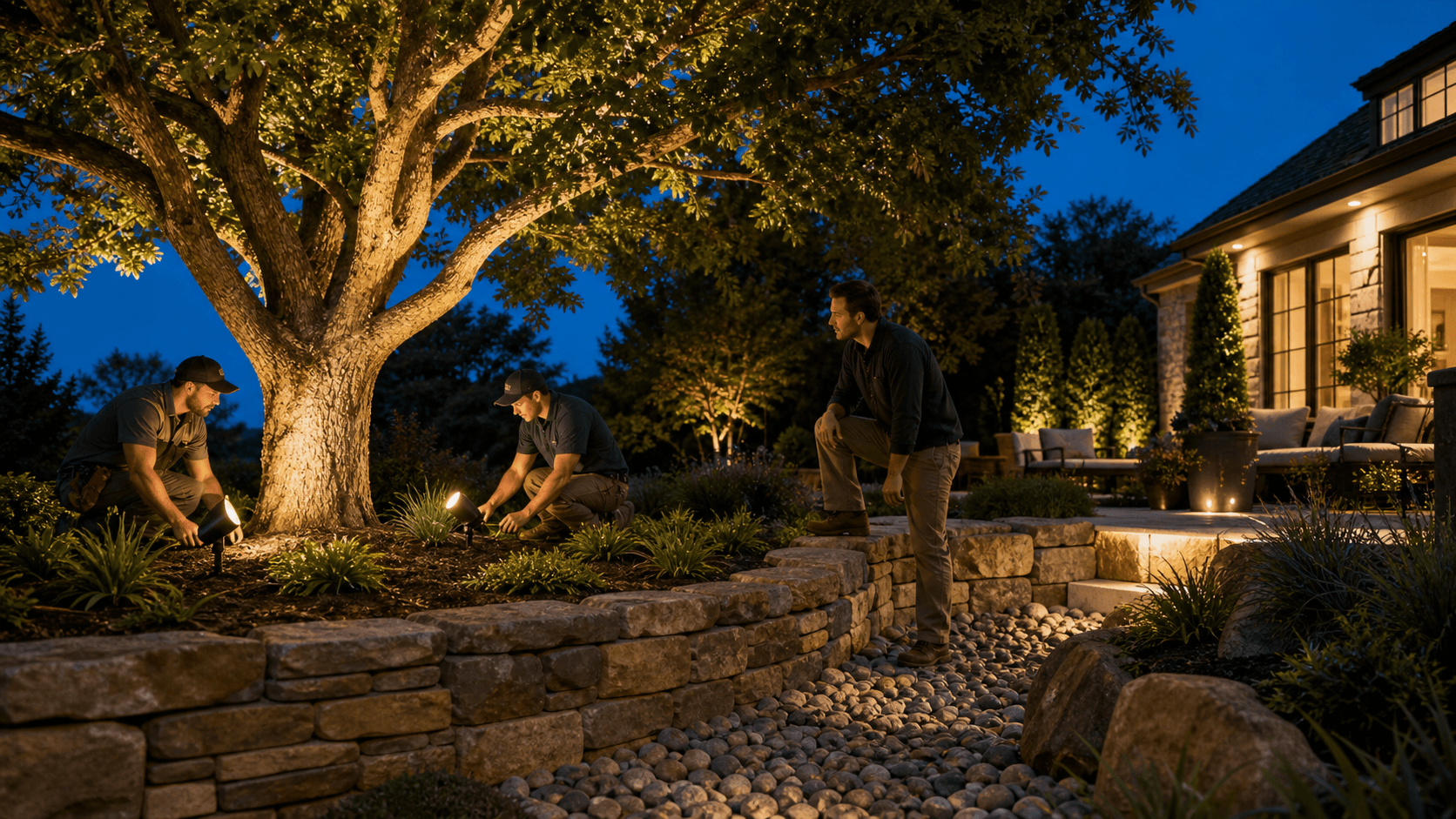
Landscape uplighting in Birmingham is not just picking pretty fixtures and pointing them at trees. On our red clay slopes, lighting is a structural decision that affects roots, runoff, and long-term stability in your yard.
Central Alabama lots often have steep driveways, big elevation changes, and mature oaks or pines sitting in heavy clay. That clay holds water, swells, shrinks, and forces tree roots to stay shallow and wide. When you start cutting trenches and dropping fixtures into that kind of soil, you are changing where water goes and how roots anchor.
In this kind of yard, we have to think like builders. Wiring paths, fixture wells, and conduit are part of the site structure. Done right, you get strong, safe lighting that shows off your trees without starving roots, washing out slopes, or creating muddy low spots that stay soggy after every storm. Around Birmingham and across the rest of central Alabama, that kind of structural thinking is what keeps these Southern clay hillsides stable long term.
At Wood-Palmer, the owner stays involved in these layout and trenching decisions, so what gets installed on your property lines up with how your particular slope and soil actually behave.
How Clay Soils in Central Alabama Handle Water and Load
Clay does not soak up water the way sandy or loamy soil does. In Birmingham's red clay, water tends to sit on top until it runs off downhill or finds the weakest, loosest soil it can.
Here is what that means around lighting work:
- Trenches and fixture wells act like tiny ditches if they are not detailed correctly
- Backfill that is too loose or too tight can hold water around housings
- Wet clay loses strength, then hardens like brick when it dries
When clay is wet, its bearing capacity drops. Fixtures can lean, junction boxes can move, and conduit on a hill can creep downhill over time. When it dries, that same clay shrinks and grips cables or boxes, putting strain on connections.
That is why "just bury the wire" does not work well here. An engineered lighting trench in clay will usually include:
- Controlled depth so we avoid major roots and unstable subsoils
- A clean bed for the cable to sit on, often with screened material
- Careful backfill and compaction to keep water from pooling in the trench
We are not trying to overbuild a simple system. We are protecting your wiring and your yard from the way clay reacts through wet and dry seasons.
Root-Safe Fixture Placement Around Mature Trees
Most big Birmingham trees, especially on clay, keep their roots shallow. The root system spreads wide in the top foot or so of soil, often far beyond the dripline. That shallow spread is how those trees breathe and stay anchored.
Around a mature tree, we think about three key zones:
- Trunk flare, where the trunk widens at the base
- Main feeder roots, radiating out just below the surface
- Dripline and beyond, where fine roots keep hunting for water
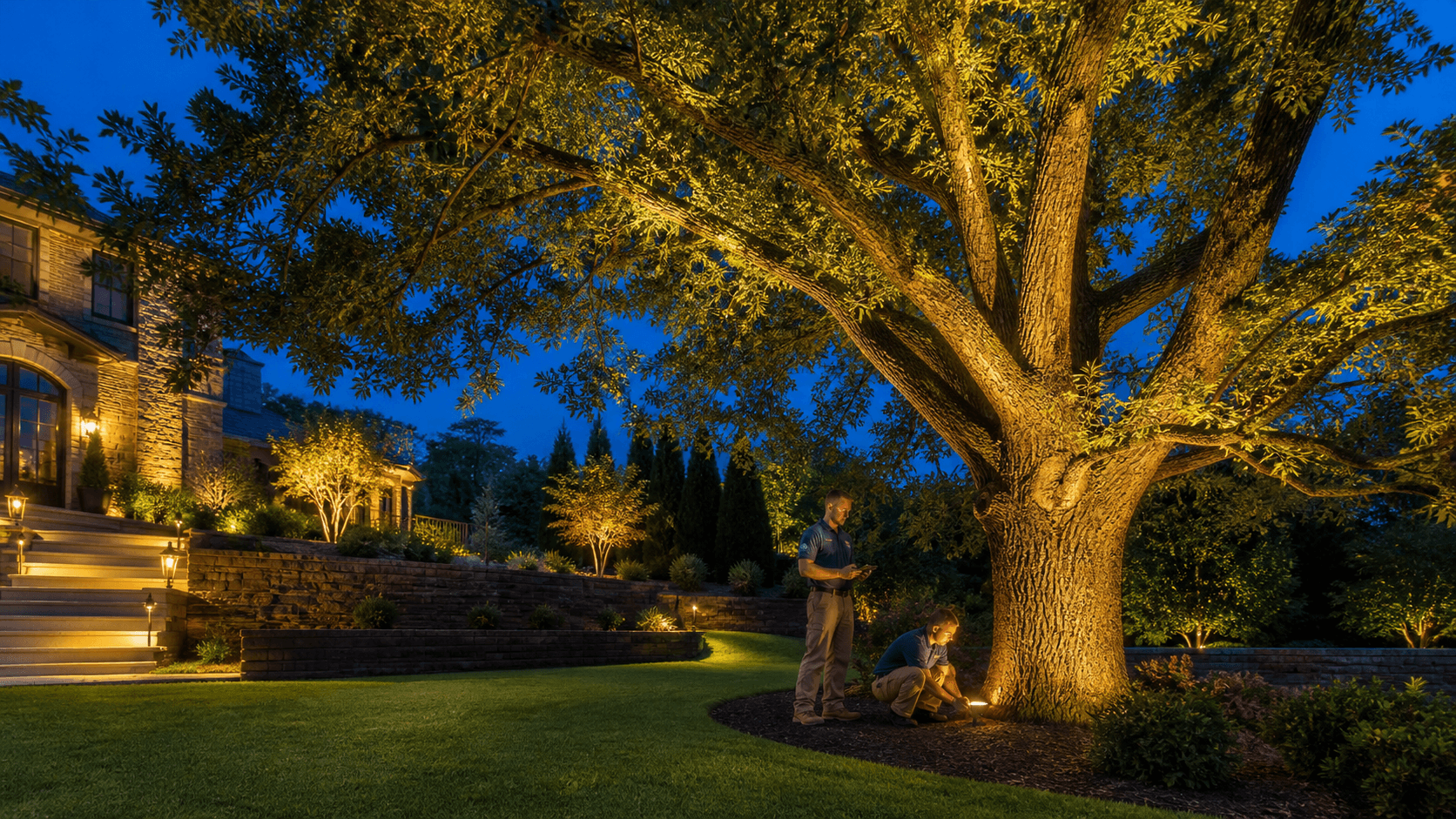
To keep uplighting root-safe, we avoid cutting a straight trench right through those main feeder roots. Instead, we place fixtures:
- Outside the trunk flare, on undisturbed soil
- At gaps between roots when we can see them near the surface
- Far enough from the bark that heat and light do not beat directly on one spot
Beam spreads and fixture angles matter too. A narrow beam can reach a tall canopy from farther away, so we do not have to crowd the root flare. Shields help keep light off the lower bark and out of bedroom windows, while still catching the branch structure high up.
The goal is strong tree lighting without compacting soil at the base, without ring-cutting roots, and without cooking one side of the trunk night after night.
Trenching Limits And Drainage Control On Steep Yards
On a big Birmingham slope, cutting one wrong trench can start a washout path. Clay does not heal from that easily. So we set "trenching limits" around key trees and on steeper grades.
For low-voltage lines in clay, we usually do not need to go very deep. Going deeper than required:
- Increases the chance of hitting major roots
- Cuts into layers that move more on steep banks
- Creates deeper channels where water wants to run
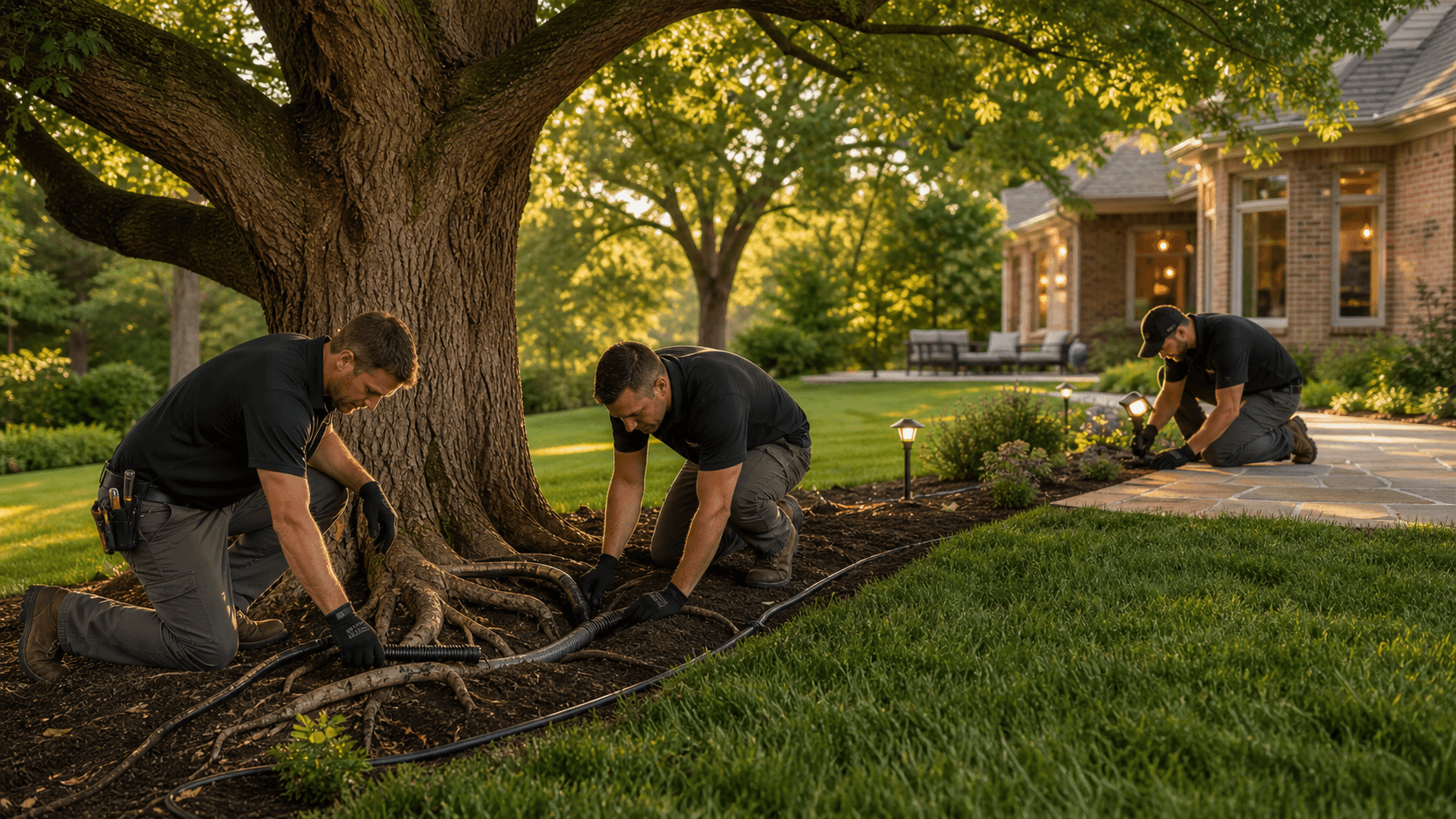
Around large trees, we often route cable around the outer edge of the root zone instead of straight in. On steep grades, machine trenching can be too aggressive, so we switch to hand-digging when we get close to:
- Retaining walls or seat walls
- Patio or driveway edges
- Exposed roots and trunk flares
We also look for smart shortcuts that do not cut soil at all, like:
- Tucking cable in bed edges that were already disturbed
- Sliding lines along hardscape joints rather than under them
- Running behind existing retaining walls and steps instead of across them
Once fixtures are in, drainage is the next structural piece. In clay, in-ground housings can turn into tiny bathtubs if the soil around them does not let water move.
To keep fixtures from filling with water or getting buried in mud, we:
- Set a gravel sump under and around in-grade housings
- Cut small drain paths or micro-swales that move water past, not into, fixtures
- Avoid placing fixtures right under roof lines, downspouts, or tight pinch points
On steep yards, the lighting layout has to follow how stormwater already wants to move. Downspouts, French drains, and retaining walls set the rules. We run trenches parallel to those systems or outside their main flow lines, so lighting works with the drainage plan instead of fighting it.
Wiring, Conduit, And Connections Built For Clay And Weather
Clay's constant wet-dry cycle is tough on wire jackets and connections. Add Central Alabama heat, sun, and the occasional surface freeze, and you start to see why a basic install can fail early.
For lighting in this soil and climate, we pay attention to:
- Conduit type and wall thickness, especially where slopes move
- Burial depth that keeps cable out of the worst surface swing but clear of big roots
- Connection methods that are rated for wet locations and do not depend on "staying dry"
We try to keep splices to a minimum, and we keep junction points where they can be reached without digging up root zones or steep banks. Just as important, we do not park connections in the bottom of a swale or right next to a drain outlet where the soil stays saturated for long stretches.
Fixture housings, cable jackets, and even transformer locations all have to stand up to:
- High summer heat on walls and posts
- UV exposure on any surface runs
- Freeze-thaw right at the top of the soil line
When wiring and drainage are treated like structural systems, landscape uplighting in Birmingham holds up longer, protects tree health, and respects the way our red clay hills really behave.
If you are looking at uplighting on a steep or clay-heavy yard and want to talk through the structural side of it, let's talk about your property. You can call us at (205) 305-7780, email us at info@woodpalmer.com, or reach out through the contact form at woodpalmer.com/contact.
Get Started With Your Project Today
Transform your outdoor spaces with custom lighting solutions designed and installed by Wood-Palmer Outdoor Creations. Explore how our landscape uplighting in Birmingham can highlight your home's best features and improve nighttime safety. If you are ready to discuss your ideas or schedule a consultation, simply contact us and we will help you plan the next steps.