Lighting Grand Oaks Without Sacrificing Tree Health
Tree lighting in Vestavia Hills should do two things at once: make your property look incredible at night and keep your mature oaks healthy for the long haul. Those trees are not just background; they hold steep driveways, frame lake views, and anchor outdoor rooms. Good lighting should respect that.
Around Vestavia Hills and the Greater Birmingham area, we see big oaks sitting on red clay slopes, tight side yards, and along long, curving driveways. When lighting is rushed, roots get cut, bark gets damaged, and the tree pays for it years later. Our goal is different. With 75 years of combined leadership experience, we treat tree lighting like any other structural element, planning for root zones, grading, wiring routes, and future access before a shovel hits the ground.
In this article, we will walk through how mature oaks react to construction around their roots, what root‑zone‑safe wiring actually looks like, and how trenching and maintenance can be done without slowly weakening the tree that holds your whole outdoor environment together.
How Mature Oaks Respond to Construction Around Roots
Most mature oaks in Central Alabama carry their strength close to the surface. In our red clay soils, roots tend to be wide and shallow, spreading far beyond the drip line. They reach under driveways, steps, retaining walls, and patios, tying your yard together like a big underground net.
The "critical root zone" is the area that matters most to tree health. In plain terms, it is usually at least as wide as the canopy and often wider. When that zone is cut, compacted, or kept too wet or too dry, the tree can start a slow decline. It might stand for years, but you see more dead limbs, thinning leaves, or sudden limb drop after storms.
Even small lighting projects can act like real construction if they are handled poorly:
- Trenching straight toward the trunk and slicing through feeder roots
- Running heavy wheelbarrows or equipment back and forth inside the drip line
- Stapling wires straight into bark or cutting into surface roots to "hide" cable
- Adding too many fixtures at the root flare and trapping moisture with mulch
In Vestavia Hills, the terrain makes shortcuts tempting. Steep lots, tight side yards, and existing hardscape can push someone to say, "We will just trench the straight shot." That straight shot often cuts the very roots that are holding a wall, a driveway edge, or a slope together.
Root-Zone-Safe Wiring Routes for Tree Lighting in Vestavia Hills
We plan wiring paths like utilities, not like decoration. That starts with walking the site, looking at root flares, slopes, and existing structures, and then choosing routes that respect those conditions instead of fighting them.
A root‑zone‑safe plan usually includes:
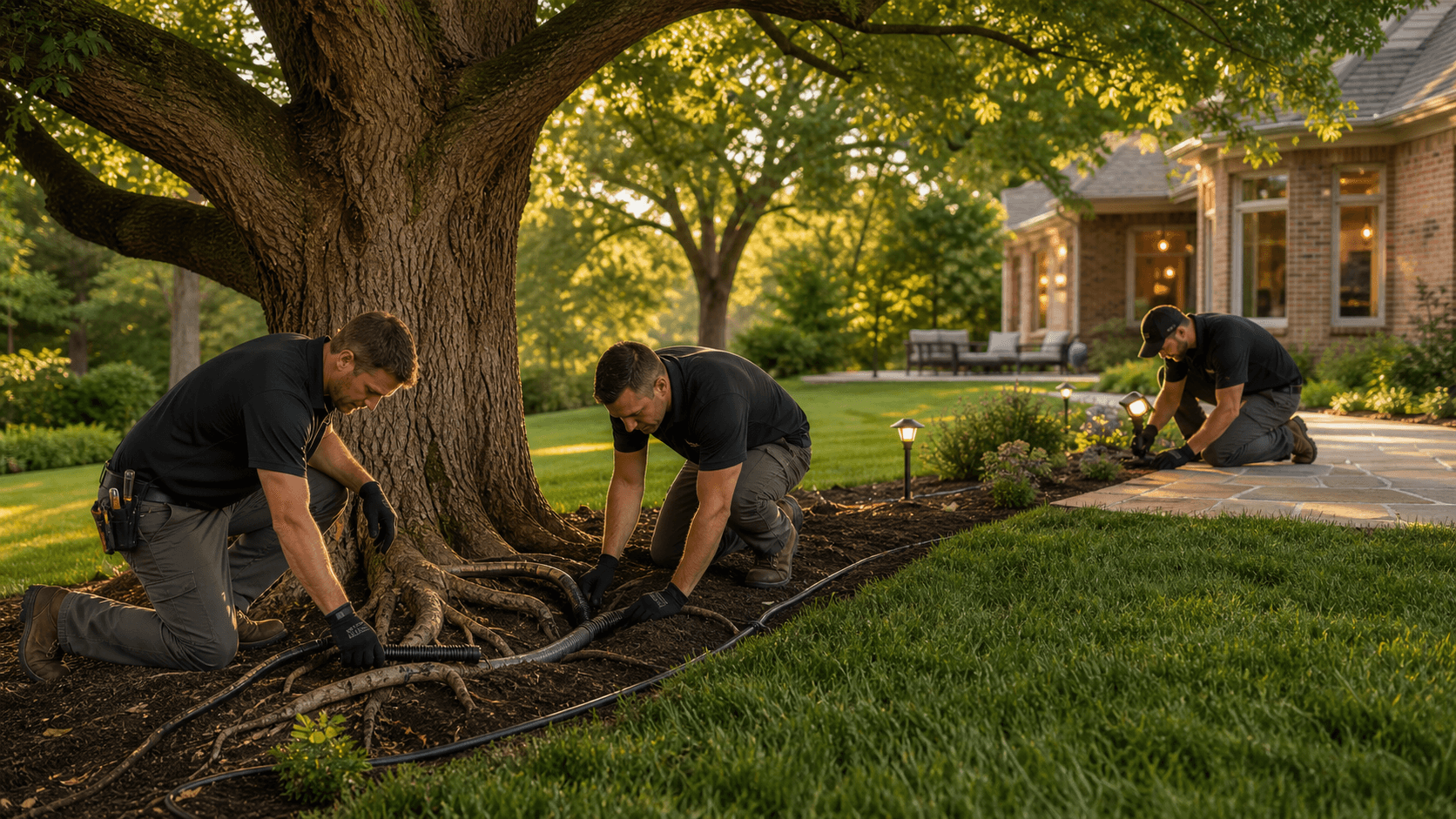
- Routing cable along bed lines, walls, and grade breaks instead of straight at the trunk
- Staying as far from the main root flare as the design will allow
- Crossing suspected heavy root areas at a shallow angle instead of a hard cut
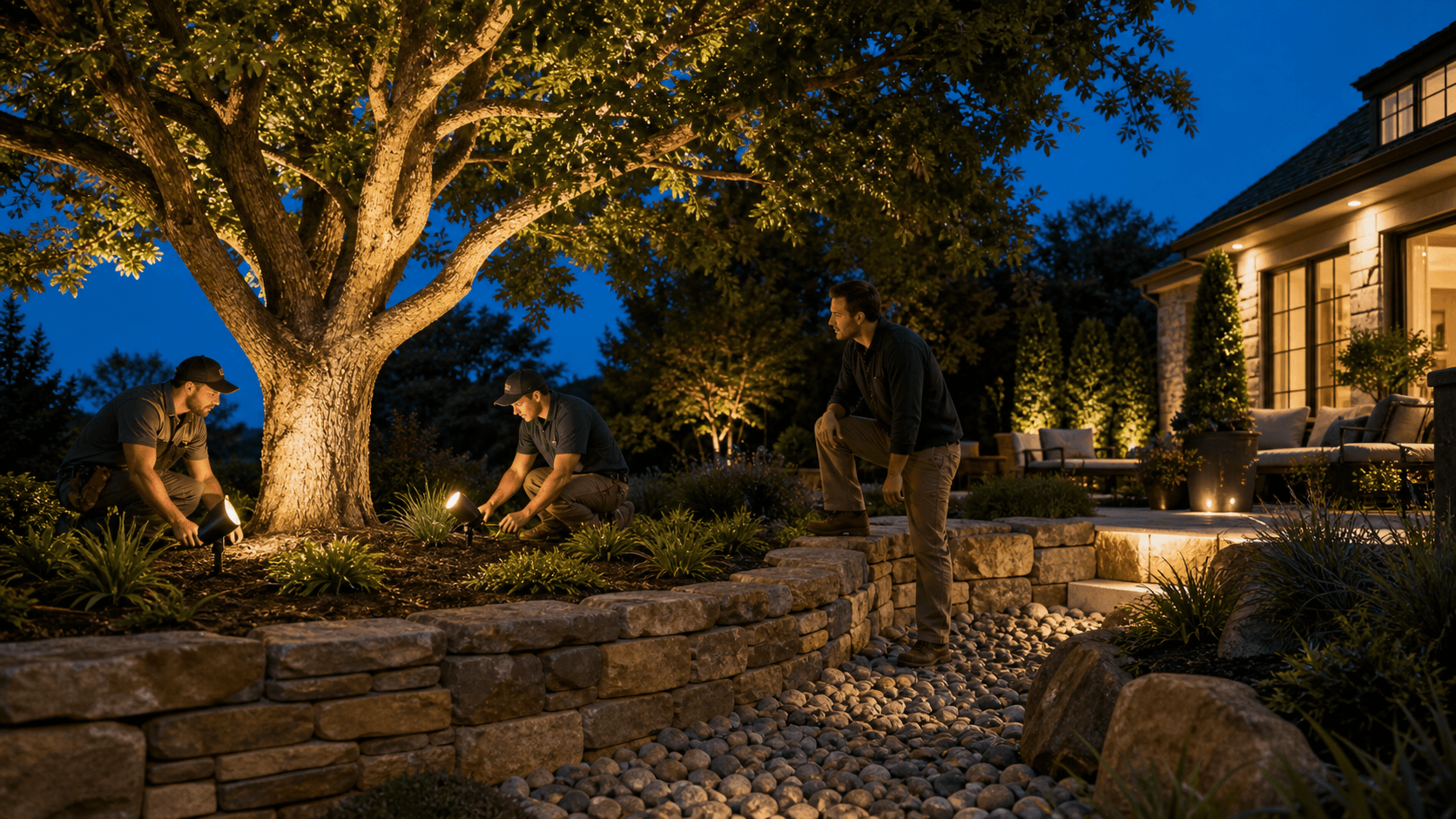
We often favor shallow hand trenching in mulch beds, where we can gently move soil and feel for roots instead of slicing with a machine. When we must cross a sensitive zone, directional boring under roots can protect the main structural roots while still getting power where it needs to go. If there are existing sleeves or conduits under walks or driveways, we will use those before we ever suggest a new cut.
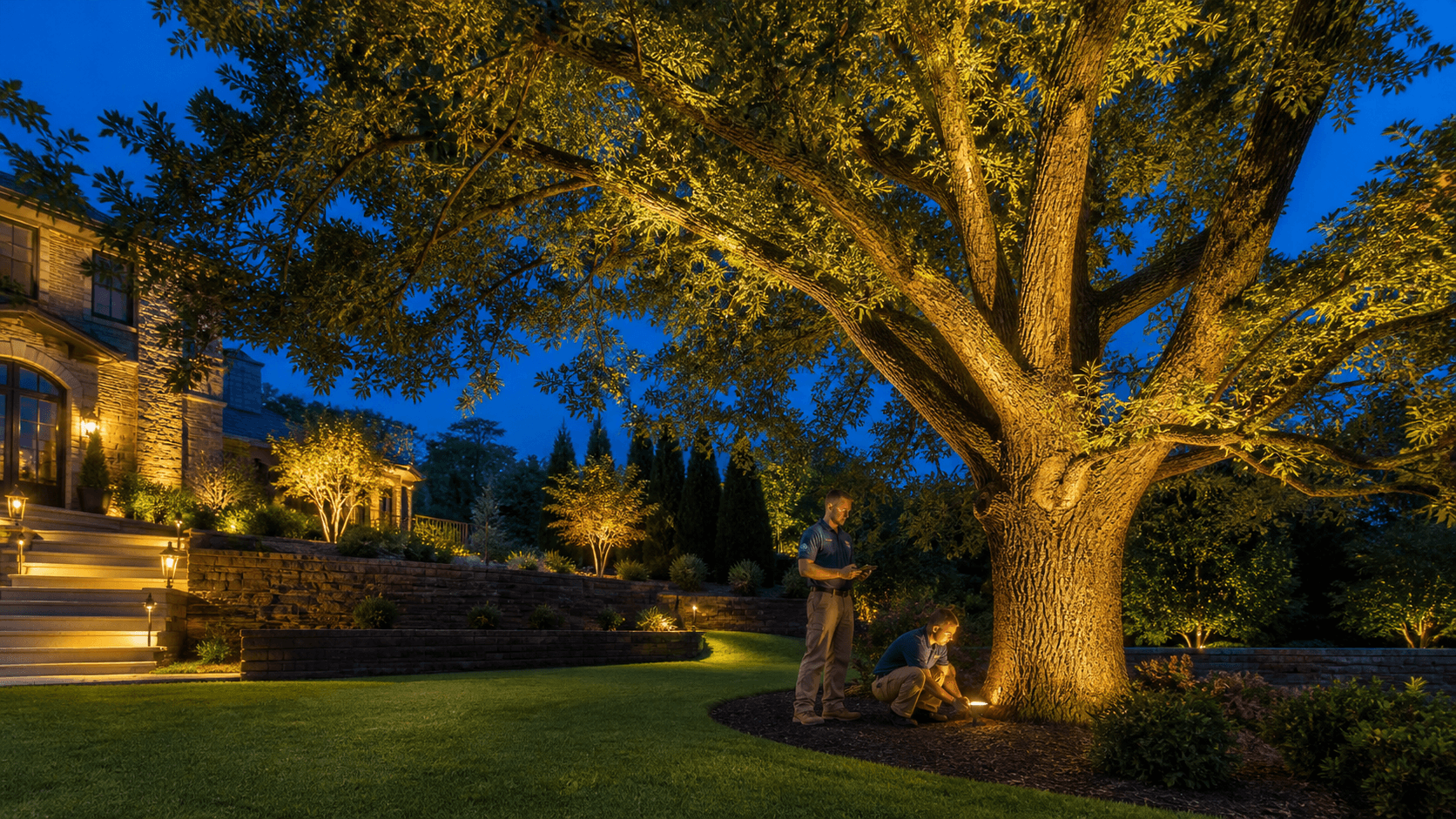
Fixture placement also matters. Some trees are best lit from the ground only, with carefully aimed LED fixtures set outside the root flare. When trunk mounting does make sense, we avoid nails or aggressive screws that bite into the cambium. Instead, we use non‑invasive fastening systems that:
- Spread pressure out instead of pinching one small point
- Can be loosened as the trunk grows
- Allow for easy adjustment as the canopy changes
Because Wood-Palmer Outdoor Creations handles hardscape, grading, and landscape lighting under one plan, we can coordinate wiring routes with future retaining walls, patios, or driveway changes so your tree does not get disturbed again every few years.
Trenching, Soil, and Drainage Around Established Oaks
In Alabama clay, how you open and close the ground around a tree can matter more than the size of the light fixture you install. Deep, narrow trenches running straight toward the trunk can act like a saw through key roots. Several shallower, offset runs are usually easier on the tree and on the structure sitting nearby.
When we do have to trench around mature oaks, we pay attention to:
- Depth and width, staying as shallow as the wiring spec allows
- Direction, crossing root patterns gently instead of cutting along them
- Soil handling, stripping mulch and topsoil first and keeping clay from getting smeared
Clay can seal up if it is smeared by shovels or tires in wet weather. That sealed layer can trap water over roots and create a perched water table. To avoid that, we backfill wiring trenches in small lifts, tamping lightly so the soil settles evenly without becoming a concrete-like strip that blocks drainage.
Compaction control is another key step. We limit wheelbarrow and equipment traffic inside the drip line, especially on slopes. Temporary plywood or ground mats help spread the load so one rut does not become a permanent drainage trench. We also avoid stacking stone, pavers, or soil against the root flare. That big flare at the base of the tree needs air. Burying it under new grade or heavy mulch can invite decay.
Poor drainage or altered grades around a mature oak can show up as:
- Root rot and mushrooms at the base of the trunk
- Heaving or cracking hardscape as roots search for air
- Settling patios or steps near the tree as wet clay loses strength
Thoughtful tree lighting in Vestavia Hills should protect both the tree and the walls, walks, and driveways tied to those roots.
Long-Term Maintenance That Respects Mature Tree Systems
Good tree lighting is not just about the install day. Every bulb change, fixture adjustment, or wire repair is another chance to hurt or help the tree.
We plan service access from the start by:
- Placing junctions where they can be reached without walking through root-heavy beds
- Locating transformers off to the side, not right at the base of key trees
- Grouping connections in accessible, dry locations away from constant foot traffic
Seasonal timing matters, too. If any invasive work is needed, cooler months in Central Alabama are usually easier on the tree than the peak of summer heat. The tree is under less drought stress and can recover from minor root disturbance more easily.
Ongoing inspections help the lighting system age with the tree instead of against it. Over time, we like to check:
- Straps or brackets on trunk-mounted fixtures so they are not digging into expanding bark
- Mulch levels around the root flare so fixtures are not buried and moisture is not trapped
- Conflicts between irrigation spray and fixtures or wiring so wet spots are not created at the base
Owner involvement on site keeps these decisions tied back to the original engineering intent. With 75 years of combined leadership experience guiding design and build work, we stay focused on long-term tree health, drainage, and structural durability, not quick shortcuts that only look good for one season.
Get Started With Your Project Today
Bring your outdoor spaces to life with thoughtfully designed tree lighting in Vestavia Hills tailored to your home and lifestyle. At Wood-Palmer Outdoor Creations, we listen to your goals, walk your property with you, and create a lighting plan that looks great every night of the year. Ready to get started? Give us a call at (205) 305-7780, email us, or fill out our contact form to discuss your property.