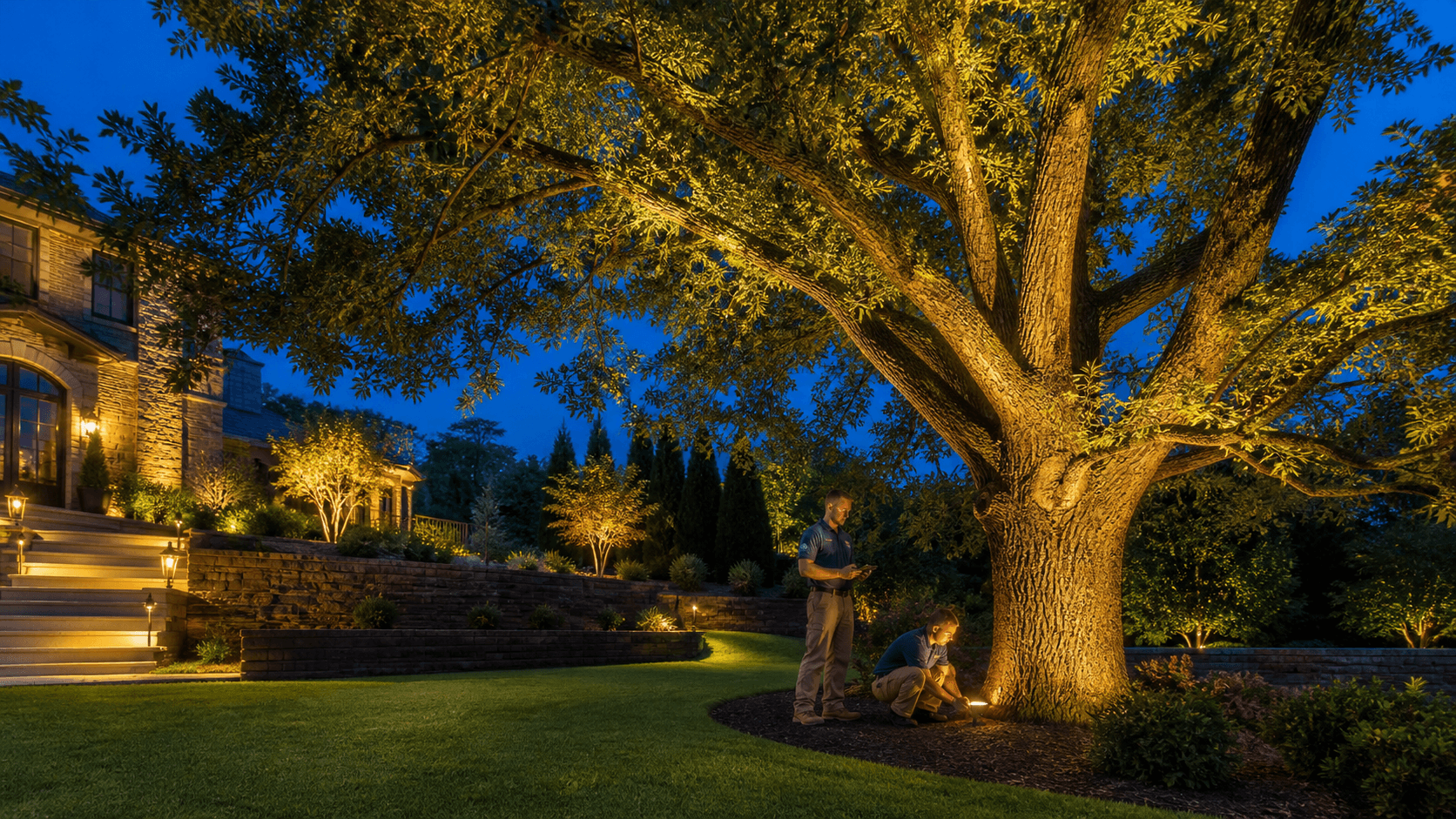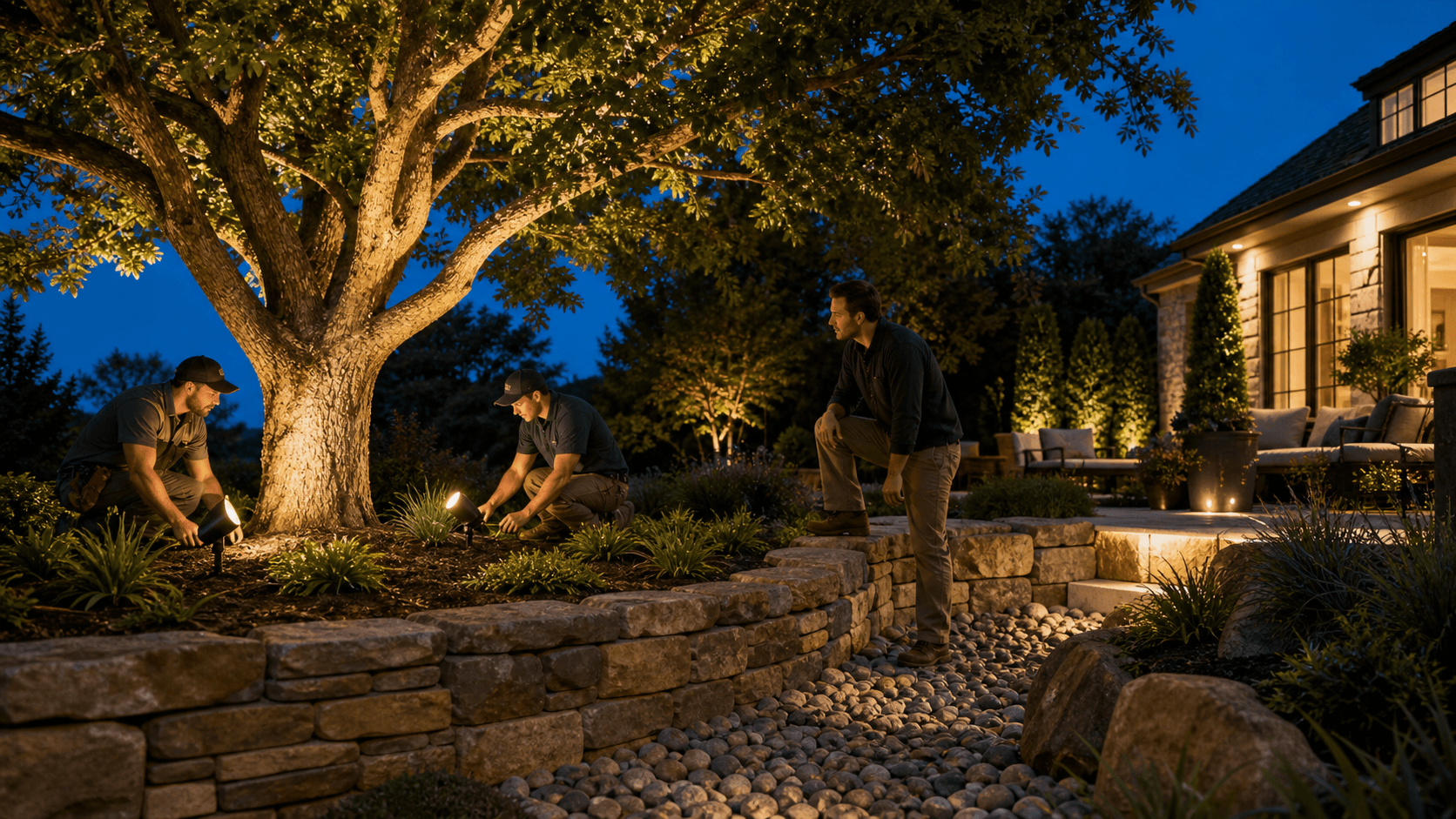
See Your Reading Tree, Not the Fixture
A reading tree is only as good as the light underneath it. If you can't sit in your favorite chair and clearly see the page without squinting, the space isn't working the way it should. Good tree lighting in Birmingham is about using that quiet corner of the yard on real evenings, not just taking a nice photo at dusk.
In Central Alabama, tree lighting isn't just pointing a spotlight up the trunk. It's a structural decision. Canopy height, root zones, grading, and surface drainage all affect where fixtures can safely go, how wiring runs, and how the light actually falls on the ground. When we treat the work like a small build instead of a decorative add-on, the reading area feels natural, safe, and comfortable.
At Wood-Palmer Outdoor Creations, we use an engineering-first approach backed by 75 years of combined leadership experience. We look at the tree, the soil, the slope, and the hardscape as one system. Our integrated design-build model means the same team is planning your patio, grading, wiring, and landscape lighting, so the reading tree area works as a whole instead of as a patchwork from different vendors. Our owners stay close to the fieldwork, reviewing layout and fixture choices the same way they'd look over a foundation or retaining wall.
Why Birmingham Yards Change How We Light Trees
Yards around Birmingham aren't flat, and they aren't all sand or loam. We deal with rolling terrain, clay-heavy soils, and a mix of tree types, and that changes how we design tree lighting in Birmingham.
A few local realities matter:
- Clay soils hold water, which affects drainage and fixture stability
- Slopes and low spots shift how we route conduit and protect wiring
- Tree type changes beam spread, light color feel, and mounting height
Oaks and hickories with broad limbs respond well to wider beams that spread through the canopy. Tall pines may need tighter beams and more precise aiming just to get usable light back down to the seating area. Crepe myrtles and smaller ornamentals often need multiple small fixtures instead of one bright source to avoid hot spots.
Slopes, swales, and cut-and-fill areas common in subdivisions, estates, and lake properties around Central Alabama also matter. We have to think about:
- Where water naturally moves during a storm
- How deep conduit should be to stay stable in clay and fill material
- Where fixtures can be anchored so they don't tilt after heavy rain
Humidity, pollen, and leaf density around Birmingham change how light looks at night. Dense summer foliage soaks up light. Leaf drop in fall opens up the canopy and can make the same fixtures feel brighter and a little harsher if they weren't planned with both seasons in mind. We also plan around existing patios, pool decks, and retaining walls so the tree lighting supports the way you already use the yard instead of fighting against it.
Getting Canopy Height Right Around a Reading Spot
Canopy height, in simple terms, is how high the lowest limbs are above the place you sit. That distance affects everything. It controls fixture type, beam angle, and how many fixtures we need for a comfortable reading light level.
For low, spreading canopies like some live oaks and maples, we often lean on several low-angle uplights. These sit outside the main root flare and push light up into the limbs. Done correctly, they create a soft, even pool of light under the tree. You get:
- Enough brightness on your book or tablet
- Gentle shadows that feel calm, not dramatic
- Minimal glare directly in your eyes
With higher canopies, such as pines or older hardwoods, we may use fixtures with tighter beams and higher output. The goal is to punch light up into the canopy, then let it bounce back down in a controlled way. That takes more engineering than guesswork. We treat the reading area like a task zone, not a spotlighted feature, so light levels are strong enough to read but not so intense that they wash out the rest of the yard.
Birmingham properties also bring longer driveways, backyard slopes, and elevated decks into play. If your main seating is on an upper terrace looking down toward the reading tree, we have to think through sightlines from above and below. Fixture locations are chosen so the tree feels connected to the living space instead of floating in a dark corner.
Glare Control So You Can Actually Read Outside
Glare is what happens when you see the bulb instead of the branch. You can have plenty of light on the ground and still not be able to read because your eyes are fighting a bright point source in the corner of your vision.
We handle glare with simple, practical steps:
- Shielding and shrouds to block the direct view of the lamp
- Beam spreads matched to the canopy size, not just fixture wattage
- Aiming that lights bark and leaves, not your eyes or windows
With 75 years of combined leadership experience guiding the work, we know that night comfort isn't something you guess at. We look at seating spots, porch views, and fire pit angles, then plan fixture locations so your common sightlines stay clean. That reduces eye strain, limits reflection off glass, and keeps walk paths between house, patio, and tree evenly lit without harsh hot spots.
In humid Birmingham evenings, there's often a slight haze in the air. That haze can scatter stray light and make glare worse if the design isn't controlled. Warmer-toned landscape lighting with good shielding typically feels more natural and easier on your eyes in that setting.
Drainage, Wiring, and the Root Zone Under Your Tree
Tree lighting in Birmingham only works long term if it respects drainage and roots. Saturated clay soil, downspout discharge, and natural low spots can flood fixtures, corrode connections, and stress the tree if the work ignores water paths.
An integrated grading, hardscape, and landscape lighting plan helps protect both the tree and the installation. Key points we look at include:
- Routing wires and conduit around the critical root zone, not through major roots
- Running lines in stable, well-compacted trenches that support nearby patios and walkways
- Keeping junctions and connections out of standing water areas
Fixture foundations matter too. In clay, lights can lean after a wet winter if they sit on soft soil. We often use gravel bedding, stable base preparation, and, where needed, small pads or anchors so fixtures stay where they were aimed. That keeps your reading light pattern consistent over time.
Coordination with irrigation is part of this picture. Poorly planned spray heads or leaks can keep the base of the tree and the fixtures wet, which is bad for both. Long-term care also means keeping mulch pulled slightly back from fixtures, preserving small weep paths for surface water, and allowing service access without tearing up finished hardscape.
Planning Seasonal Use For Fall Evenings in Birmingham
Cooler evenings and earlier sunsets make fall a natural time to think about tree lighting in Birmingham, but the design has to work year-round. Leaf-on and leaf-off conditions change brightness and shadow patterns, so we plan for both.
Dense summer foliage may need a bit more output or a few extra fixtures to reach comfortable reading levels under the canopy. In winter, when that canopy opens up, those same fixtures can feel brighter. The answer is usually balance, not just brighter or dimmer. We look at:
- Fixture count and location for both shade and bare-branch seasons
- Beam angles that fill the canopy without overlighting the trunk
- Light color choices that stay pleasant on hot summer nights and cool fall evenings
Peripheral lighting also matters. Gentle path lights, step lights on nearby hardscape, and subtle accents on walls or structures help your reading area feel like part of the overall outdoor room. That connection makes the space more inviting and safer to use after dark.
Because Wood-Palmer Outdoor Creations works under an integrated design-build model, we can plan the reading tree lighting at the same time as new patios, fire features, or retaining walls. Conduit, drainage, and structural items get installed in a single coordinated phase. That approach respects the tree, the yard, and the way you want to use your property for years of quiet evenings under your reading tree.
Let's talk about your property and how a well-planned reading tree could fit into the way you already use your yard. Call us at (205) 305-7780, email us at info@woodpalmer.com, or reach out through the contact form at woodpalmer.com/contact so we can walk the site with you and talk through options.
Get Started With Your Project Today
Transform your yard into a warm, inviting retreat with our custom tree lighting in Birmingham designed around how you actually use your outdoor space. At Wood-Palmer Outdoor Creations, we listen to your goals, walk your property, and recommend a lighting plan that highlights your trees while improving safety and curb appeal. If you are ready to talk through ideas or schedule a consultation, contact us and we will help you plan the next steps.