Build It Right the First Time in Homewood
Outdoor fireplace installation in Homewood is not just about a pretty stone face and a few chairs. It is a permanent structure tied to your home, your lot, and your neighbors, and it has to meet local codes and real-world site conditions. When fall evenings start to cool off, many homeowners begin planning, but the success of that project is shaped months earlier by permitting and design decisions.
In Homewood, an outdoor fireplace is treated as a structure, not a portable fire pit. That means setbacks, height limits, chimney details, and fuel choices are all looked at through the lens of zoning and building code. In this article, we are focusing on three big pieces that shape good projects: setbacks, chimney and smoke management, and gas vs. wood fuel, all from an engineering-first, builder-led point of view.
Our team at Wood-Palmer Outdoor Creations brings 75 years of combined leadership experience, and the same people who design the project also engineer and build it. In Central Alabama, with hilly backyards, red clay, heavy tree cover, and humid summers, we have to think about drainage, footing depth, and smoke behavior from day one, not after the concrete is poured.
Understanding Homewood Setbacks and Zoning Basics
Homewood typically views an outdoor fireplace in one of two ways: either attached or closely related to the main house, or as a standalone accessory structure. That classification can affect:
- How far it must be from property lines
- How tall the chimney can be
- How close it can sit to the house itself
Exact numbers come from city staff and the codes that are active when your permit is submitted. We always confirm with current rules instead of guessing from older projects.
On most Homewood lots we look at:
- Distance to side and rear property lines
- Separation from bedroom windows, doors, and porches
- Clearance from overhead utilities or low service lines
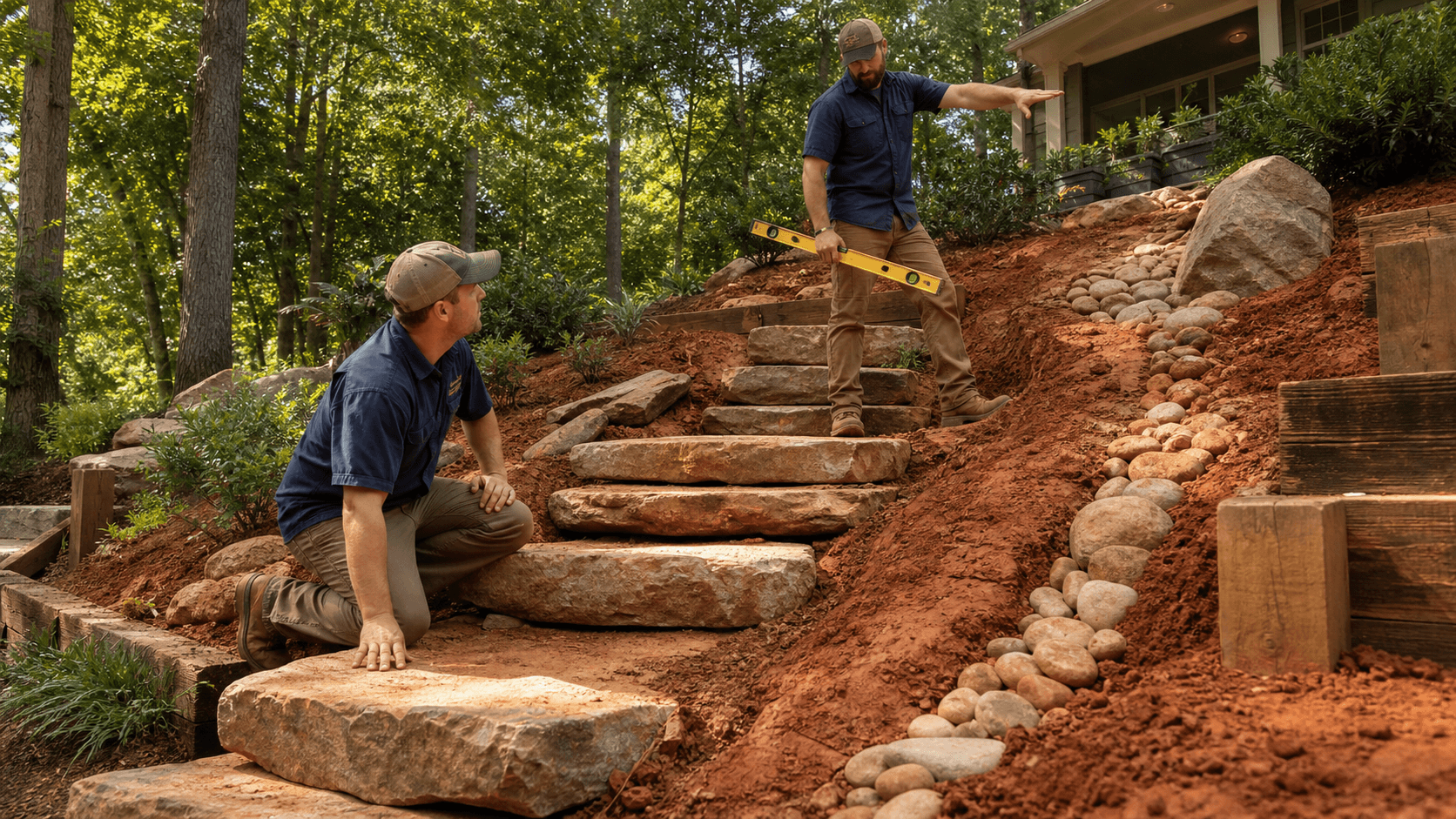
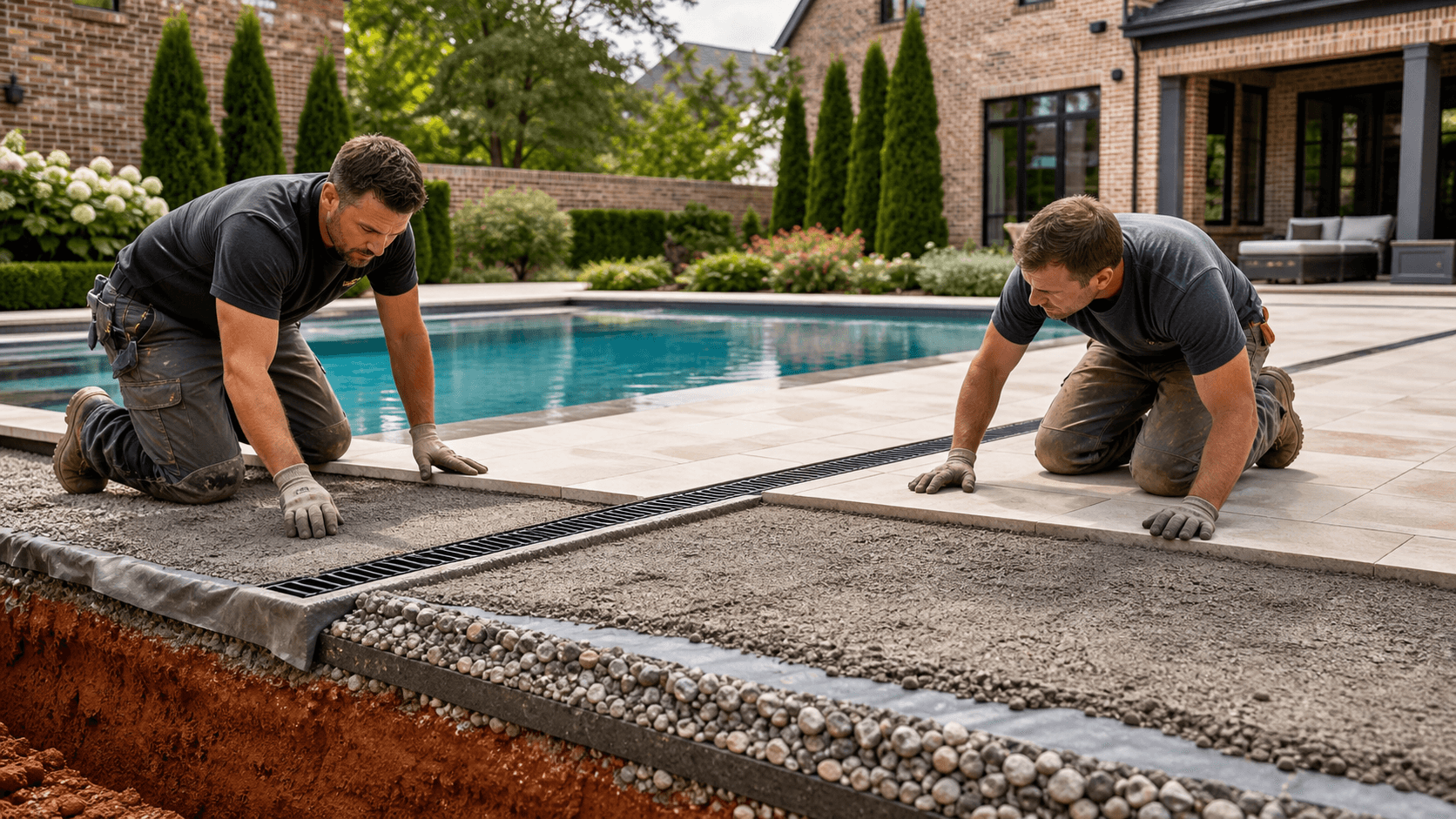
Older Homewood neighborhoods often have narrow, sloped lots. On those sites, we have to make sure stormwater does not pond behind the fireplace and push against the structure. We grade and drain the full hardscape area so water moves away cleanly, and we avoid building inside easements or over drainage swales that the city wants to keep open.
Because we work as an integrated design-build team, the fireplace, seat walls, retaining elements, and patio are all laid out together on one plan. That way everything meets setbacks as a single, code-compliant environment instead of a patchwork of separate installs.
Structural Foundations and Fire-Safe Construction
A good outdoor fireplace in Central Alabama starts in the dirt. Our clay soils can carry a lot of weight, but they move when water sits or when grading is poor. A code-compliant foundation is non-negotiable because all that masonry, plus a chimney, is heavy and concentrated on a relatively small footprint.
Typical structural elements include:
- Concrete footings at the right depth for local frost and soil conditions
- Steel reinforcement to tie the footing and vertical structure together
- Block or solid masonry cores that transfer chimney loads down into the footing
Those structural pieces have to work with the surrounding hardscape. If the patio slab or pavers move one way and the fireplace moves another, cracks show up. We engineer the base so everything, including seat walls and steps, behaves as a single system.
Fire safety is another core piece. We pay close attention to:
- Clearances to wood fences, siding, and roof overhangs
- Firebrick and high-temperature mortar inside the firebox
- Proper separation or insulation when we attach to wood-framed roofs or covered structures
Owner involvement in our work keeps those decisions grounded in field experience. The goal is not just to pass inspection once, but to have a structure that performs year after year.
Chimney Height, Draft, and Smoke Management in Tight Lots
Homewood has close-in homes and big canopy trees, so chimney design matters a lot more than many people expect. Chimney height is not just about looks. It relates to:
- The main roofline and any nearby covered structures
- Large branches that can trap smoke
- Neighboring windows, porches, and outdoor sitting areas
We size the firebox opening, flue, and throat as a set, so the fireplace actually draws. If the firebox is too wide, or the flue is too small, smoke will roll out the front. Draft and performance are engineering problems, not guesswork.
Smoke management is also a neighbor issue on tight lots. We pay attention to:
- Wind direction on your site
- How walls, slopes, and tree lines can hold smoke in
- Whether the opening should be turned slightly to blow away from nearby homes
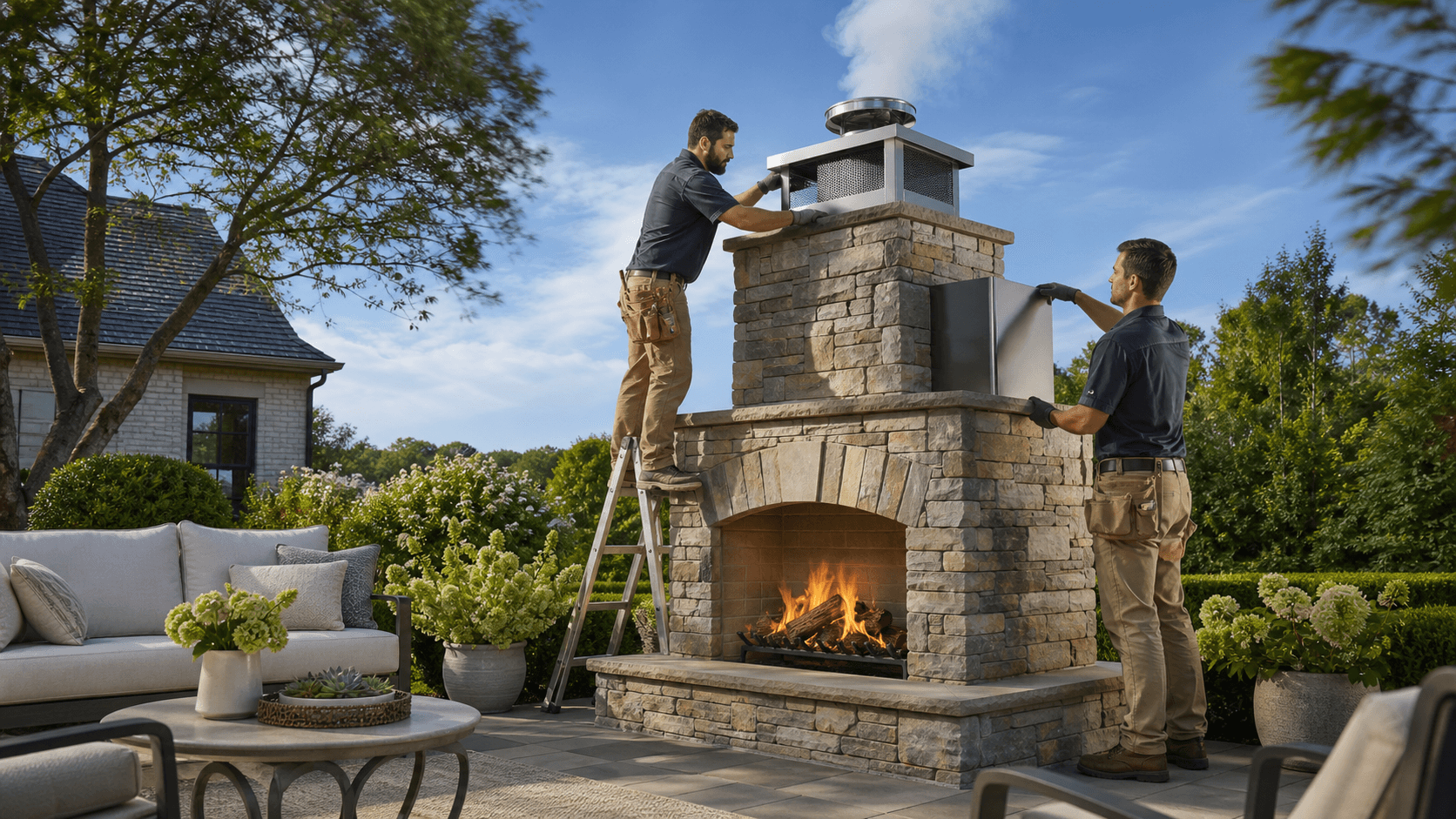
We typically include chimney caps or spark arrestors and keep the termination clear of combustible soffits and trims. Inspectors will usually confirm chimney height and clearances at final inspection, but our goal is to design those details right up front.
Gas vs. Wood in Homewood: Code, Utility, and Structure
Choosing gas or wood for an outdoor fireplace is not only about personal preference. Each fuel type affects code requirements, construction details, and how the structure is used over time.
For gas fireplaces, we are looking at:
- Proper gas line sizing for the length of run and BTU load
- Regulator and shutoff locations that inspectors can access easily
- Trenching routes that do not cut across main drainage paths or conflict with irrigation or existing utilities
Gas systems also have specific inspection steps, including pressure tests and leak checks. All of that has to be coordinated around the structural footing and hardscape layout, so we are not tearing up finished work to fix a pipe.
For wood-burning fireplaces, code concerns shift to:
- Ember and spark control, especially near dry leaves or wood fences
- Ash management, so cleanup does not stain or damage the hardscape
- Chimney liners, caps, and clearances from overhanging limbs in yards with mature oaks and pines
In Central Alabama's climate, many homeowners want the convenience of a push-button gas fire for quick weeknight use, but still like the feel and sound of real wood. Each choice affects long-term upkeep, soot staining on masonry, and how close we place landscape lighting fixtures so they are not impacted by heat or residue.
Permitting, Inspections, and Integrated Project Flow
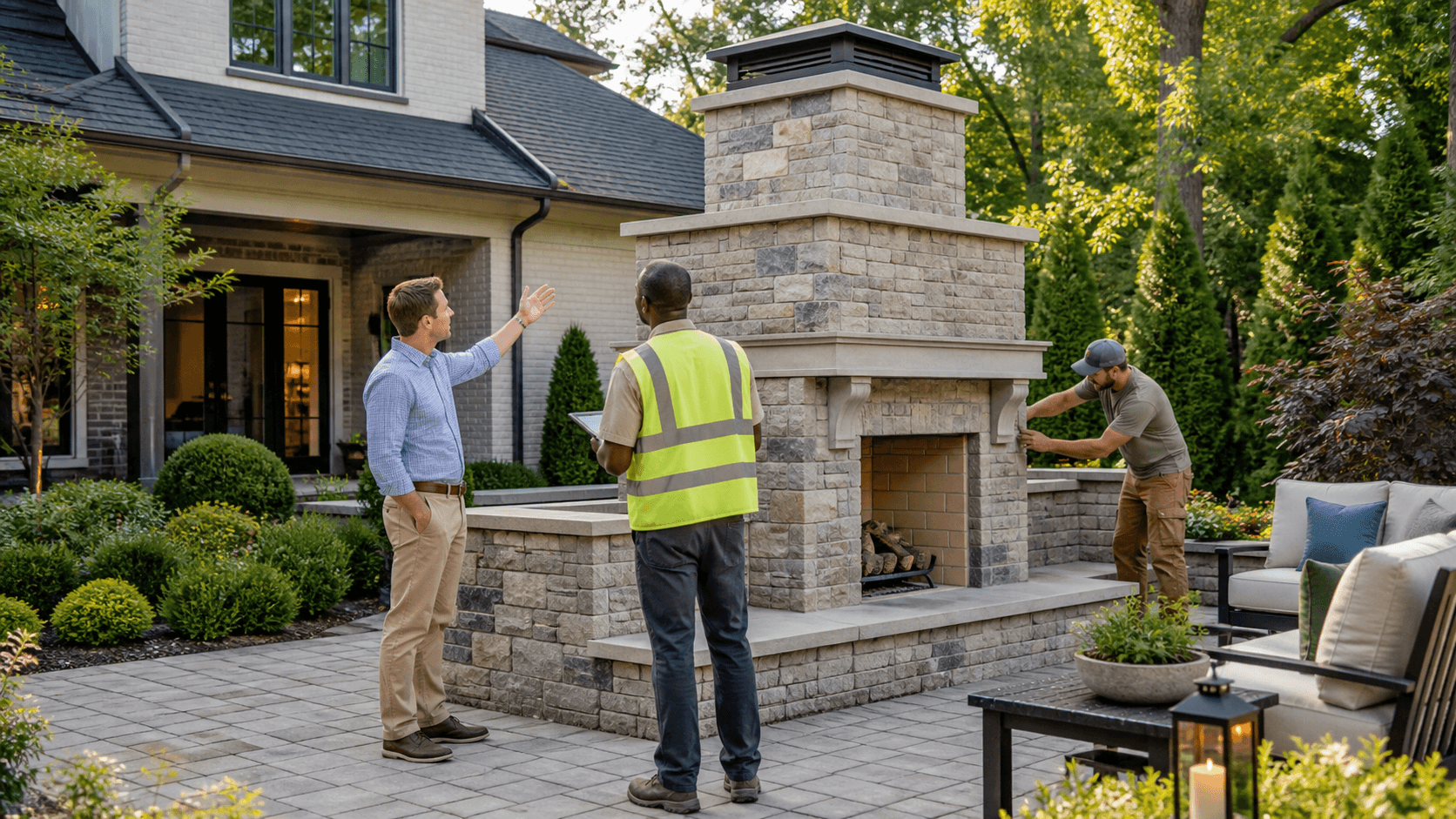
For outdoor fireplace installation in Homewood, the permitting path usually starts with a detailed plan. That plan shows:
- Footing sizes and reinforcement
- Overall dimensions and chimney height
- Any gas lines and connections if a gas system is included
Once the permit is in hand, inspections often follow a sequence. Footings are inspected before concrete is poured. If gas is included, a rough gas inspection happens before finishes go on. The final inspection looks at clearances, chimney configuration, and general structural stability.
Because we design and build as one team, drainage changes, footing adjustments, structures, hardscape, irrigation shifts, and landscape lighting runs are all coordinated on a single plan. That helps avoid repeated trips back to the city for revisions every time something in the yard needs to adjust. For homeowners who want a fireplace ready for cooler evenings, it is smart to start the design and engineering work in late summer, so there is room for city review, any needed plan changes, and the occasional rainy stretch that slows concrete work.
When all these pieces come together, you end up with an outdoor fireplace that fits your Homewood lot, respects your neighbors, and feels like it has always belonged with the house.
Get Started With Your Project Today
Transform your backyard into a welcoming gathering space with our custom design and expert outdoor fireplace installation in Homewood. At Wood-Palmer Outdoor Creations, we listen to your vision and recommend solutions that fit your home, lifestyle, and budget. If you are ready to talk through ideas, timelines, and next steps, simply contact us. Let us help you create an outdoor feature that you will enjoy in every season.