When we plan new outdoor living spaces here in Central Alabama, the first priority isn't the pavers or the plants. It's the water. On most higher-end properties in Birmingham and the surrounding suburbs, some kind of drainage system is already in place, and it'll go a long way toward deciding how long your investment really lasts.
At Wood-Palmer Outdoor Creations, we treat that existing drainage as the starting point. In this article, we'll walk through how we plan landscape design in Birmingham around the drainage that's already there. We'll look at how your yard actually moves water, what we pay attention to on-site, and how we tie hardscape, grading, plantings, and structures into one system that works with Alabama clay instead of fighting it.
Start Smart: Work with the Drainage You Already Have
Most homes in our area already have pieces of drainage in place, like:
- Shallow swales running along the lot line
- Surface drains or catch basins in low spots
- Downspouts tied into black pipe that disappears into the yard
- Driveways pitched toward the street
The problem is, those items were usually installed just to keep water out of the basement or off the driveway, not to support an outdoor kitchen, fireplace, or a large paver patio. When new construction gets dropped into that yard without respecting the existing water paths, trouble shows up fast.
That's when you see:
- Patios settling or dipping where water is trapped
- Soggy turf hugging the edge of a seat wall
- Erosion scars on the downhill side of a steep backyard
A smart outdoor living plan doesn't erase what the terrain is already doing. It tightens it up. We reshape grades, reinforce swales, and set structures on a proper base so everything, from the first storm to the hundredth, works together instead of fighting itself.
How Birmingham Terrain Really Moves Water
Central Alabama has its own set of site quirks. Under the surface, we deal with red clay that holds water in the top few inches, and pockets of rock that force water sideways. On many of the lots in places like Mountain Brook, Vestavia Hills, and Homewood, the backyard drops away quickly from the house.
Our weather stacks on top of that. Summer pop-up storms and tropical systems can dump a lot of water in a short time. Winter brings long, soaking rains. So a yard here doesn't just get damp, it gets hammered in short bursts and then long, stayed-on-wet periods.
When we look at how that water's moving, we think in simple terms:
- Sheet flow: water spreading in a thin layer across the surface
- Concentrated flow: water channeling into tighter paths through swales or drains
- Storage: spots where clay holds water near the surface or at the foundation
Clay doesn't let water soak away quickly. It tends to:
- Hold water at the surface, making muddy areas
- Push water sideways along the top of the clay layer
- Trap moisture around foundations and retaining walls
Your existing swales, downspouts, and driveway slopes are already telling us where that water wants to go. Our job is to listen and then design around that story.
Evaluating Existing Drainage Before You Draw Anything
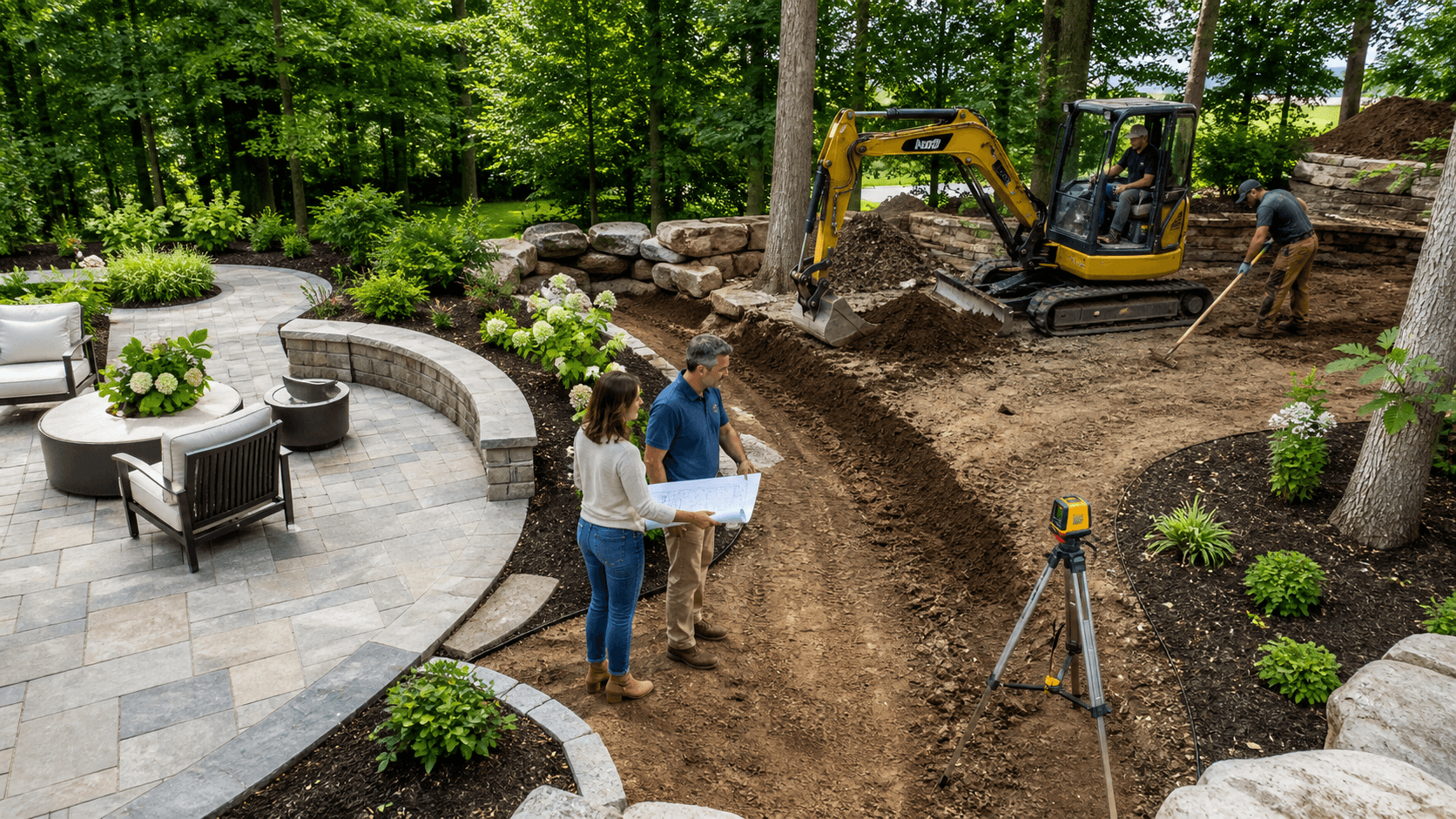
Before we talk about pavers, plantings, or landscape lighting, we walk the site like a builder, not a decorator. With 75 years of combined leadership experience guiding Wood-Palmer Outdoor Creations, we know what to look for before a shovel ever hits the ground.
We pay close attention to:
- Grades right off the house, especially within the first 10 to 15 feet
- Low spots and soft areas that stay wet after a rain
- Gutter locations, downspout discharge points, and any visible underground tie-ins
- Signs of past problems, like washed-out mulch, exposed roots, cracks, or settling in steps and walls, or mildew lines on the foundation
Simple field checks matter. When possible, we like to see:
- How water actually moves during a real storm
- Where runoff from neighboring yards enters your property
- Natural overflow paths toward the street, a drain inlet, or a rear tree line
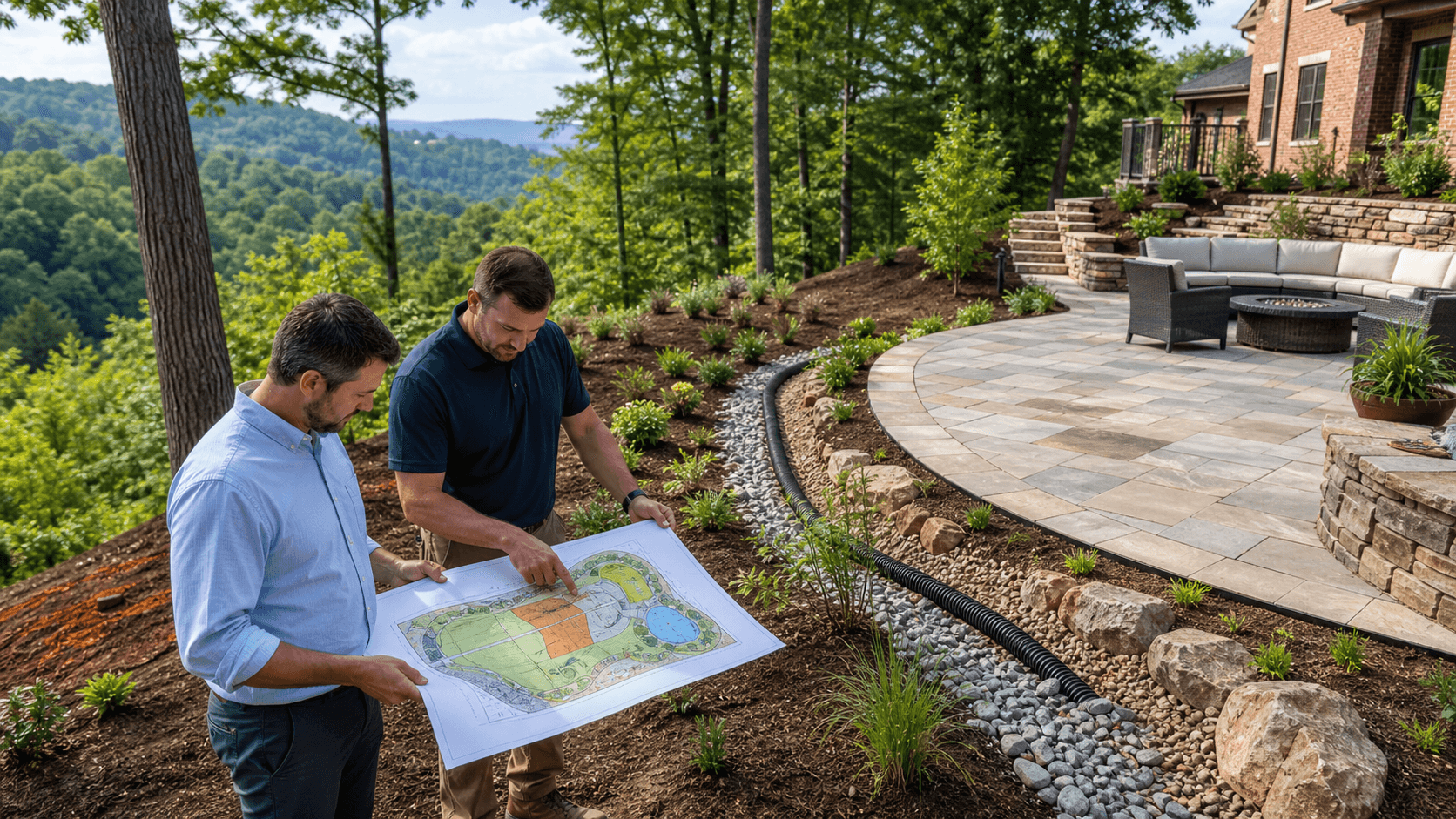
From there, we decide if an existing swale should be kept and sharpened, if we need to cut a new swale, or if we should capture water and pipe it away before it ever reaches planned structures. Those early calls shape the whole design.
Designing Hardscape Around Existing Water Paths
Every patio, walk, and wall on your property is part of the drainage system whether it was planned that way or not. Good landscape design in Birmingham treats hardscape as both structure and water control.
A few key decisions we focus on:
- Patio elevations and slopes: Finished paver surfaces must pitch away from the house and toward an existing drain or swale, not toward your foundation or your neighbor.
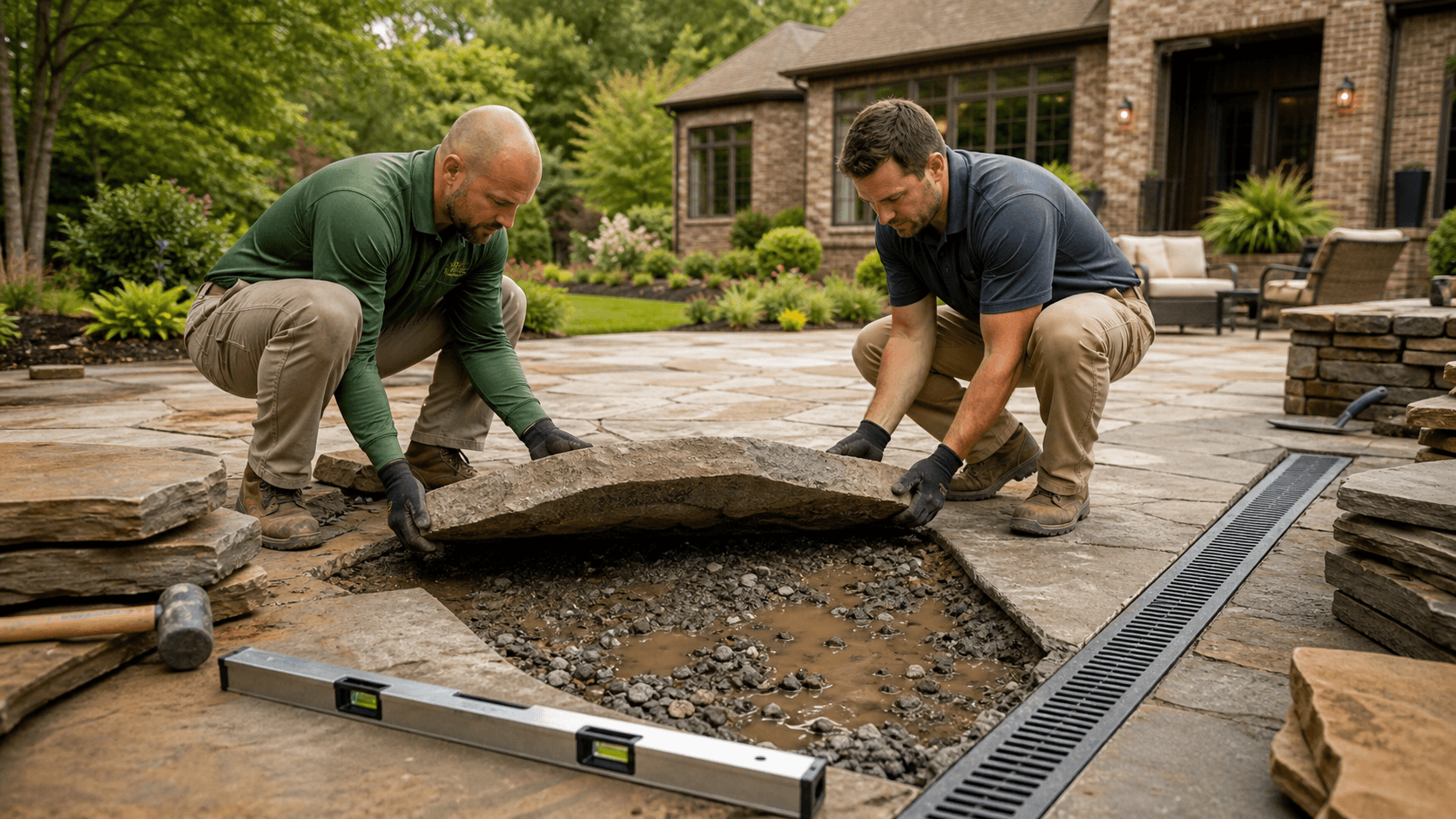
- Base preparation in Alabama clay: We over-excavate soft clay, install proper aggregate depth, and compact in layers so the surface doesn't settle when it's loaded with storm water.
- Integrated drains: At pinch points where known water paths cross a planned walk or patio, we build in channel drains, catch basins, and solid drain lines to carry water through the hard surface instead of letting it pile up against it.
Existing retaining walls and steps are another big factor. When we tie new work into older structures, we often:
- Add relief drains behind walls holding back wet soil
- Rebuild transitions so water doesn't concentrate at step landings
- Stabilize slopes below walls to prevent washouts that can undercut the structure
Done right, the whole outdoor living space works like a controlled, engineered watershed.
Grading, Planting, and Structures That Support Drainage
Grading changes don't have to be dramatic to be effective. Many times we:
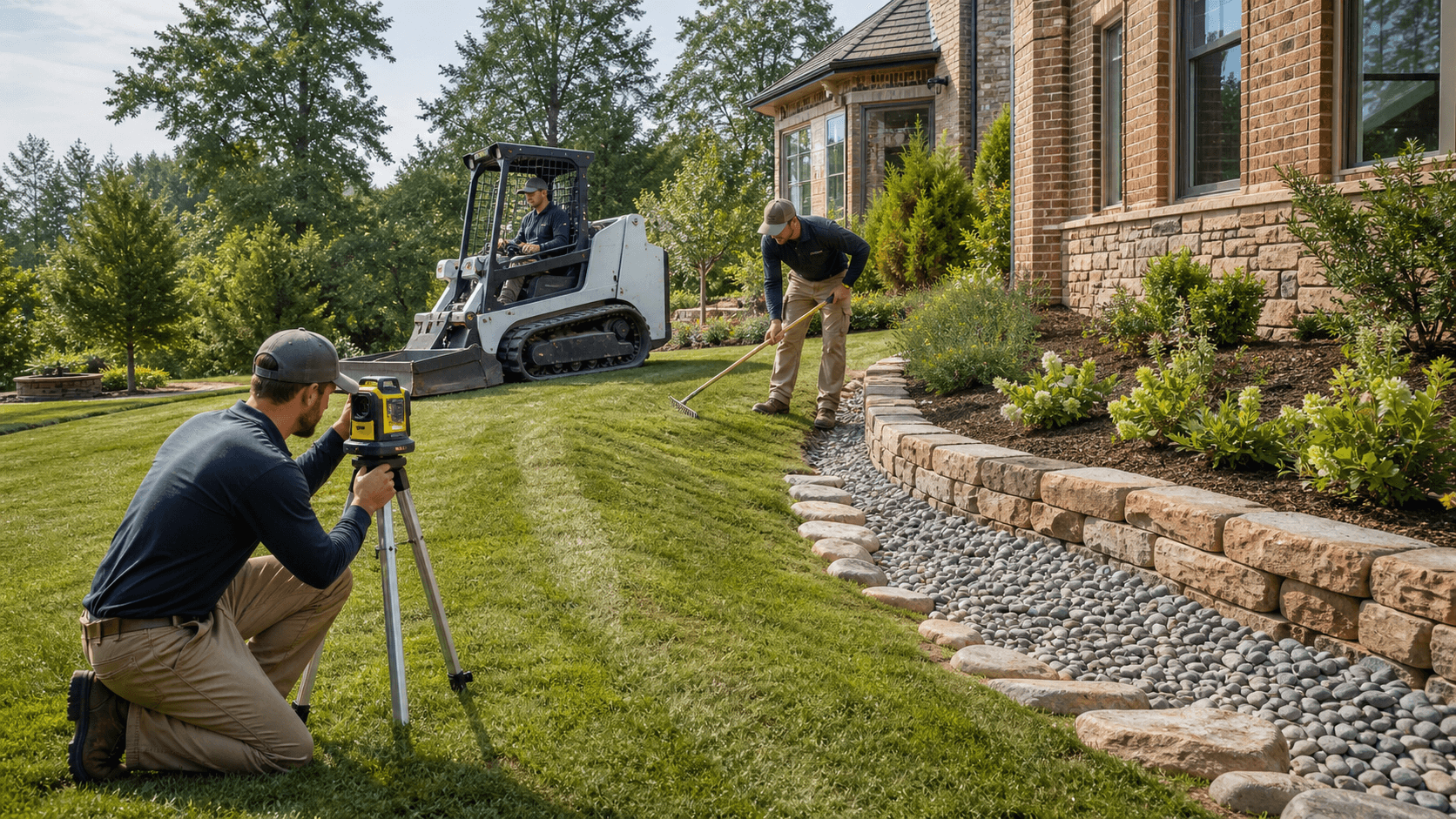
- Deepen or clean up an existing swale so it carries water more clearly
- Feather slopes away from a new fireplace, kitchen, or sitting area
- Build subtle berms to nudge sheet flow toward a safe outlet
Plants are part of the system too. The goal isn't to block drainage, but to slow and stabilize it.
We like to think about:
- Deep-rooted shrubs and trees on slopes that show erosion
- Avoiding heavy, water-loving plants right up against foundations, steps, and walls
- Using groundcovers and well-anchored mulch along drainage-adjacent beds to hold soil without damming the water
Structures like covered patios, pergolas, and outdoor kitchens create new roof areas and splash zones. Those roofs need planned:
- Gutters sized for local storm intensity
- Downspouts that tie into the broader drainage plan, not just dumping at a post
- Hard surfaces graded so water moves away from seating and cooking areas even in a hard Birmingham summer rain
When everything is designed as one system, your yard sheds water safely and your outdoor living spaces stay comfortable and usable.
Planning Landscape Design in Birmingham Season by Season
Timing matters on these projects. Around August into fall is a smart window to commit to a plan that respects existing drainage. Rain patterns start to shift, and there's usually enough time to get earthwork and hardscape in place before the wetter winter months.
As we look at the calendar in Central Alabama, we usually think in terms like:
- Heavy earthwork and grading when the ground is workable, not saturated or frozen
- Major hardscape and structures followed by plant installation in fall or early spring, when roots can settle in around the adjusted drainage
- Landscape lighting once grades, walls, and key structures are locked in, so wiring and fixtures fit the final layout
Matching the build schedule to local weather, soil, and drainage conditions goes a long way toward making sure your project performs well for years, no matter how hard it rains.
Get Started With Your Project Today
Transform your yard into a space you love spending time in with our tailored landscape design in Birmingham. At Wood-Palmer Outdoor Creations, we listen carefully to your ideas and turn them into a practical, beautiful outdoor plan. Reach out today so we can discuss your goals, answer your questions, and provide a clear path forward. If you're ready to get started, give us a call at (205) 305-7780, send us an email, or contact us through our form so we can talk about your property.