Why Tight Homewood Yards Drain so Poorly
Backyards in Homewood look charming from the street, but they can be a headache once heavy rain hits. Water backs up against basements, pools under decks, and sits in muddy strips along fences. None of that is an accident. It is the result of lot layout, soil, and years of quick fixes stacked on top of each other.
Older Homewood neighborhoods have steep cross streets, narrow lots, and shared property lines. Most yards sit on compacted red clay with just a thin layer of topsoil. That clay holds water like a pan. Tight lot lines and aging footing drains leave almost no room for water to spread out or soak in. Every small change, like a new patio or raised bed, can block water that used to have a path out.
When we walk a Homewood backyard, we are not thinking "Where can we stick a French drain?" We are thinking like builders: How does this yard move water, inch by inch, around foundations, retaining walls, and patios? Drainage is a structural decision, just like a footing or a wall. In a tight Homewood yard, you do not have acres to work with. You have a few inches of fall to protect your house, your hardscape, and your neighbor's property.
Reading a Tight Backyard Like an Engineer
The first step is a real site walk, not a quick glance from the porch. We like to see a yard right after a storm, when the story is fresh. We walk the fence lines, the back of the house, the corners where patios meet walls. We look for water stains, soil washed off piers, algae on concrete, and damp marks along slab edges.
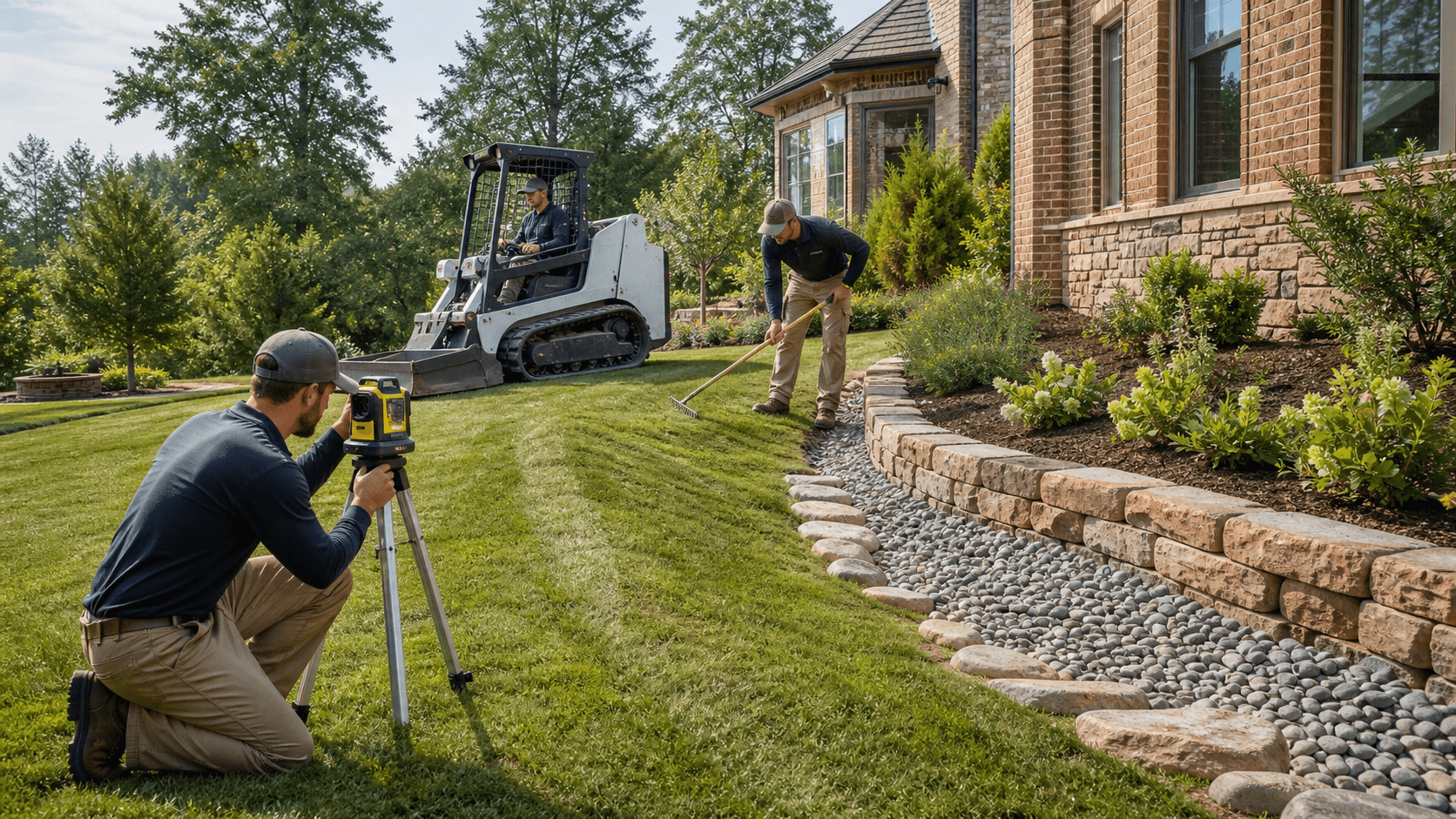
We also put tools on the ground. A simple builder's level or laser grade shows where the true low points are, not just where the puddles happen to appear. In Homewood, those low spots are often:
- Along the back foundation wall
- At the base of basement or patio doors
- Where an old patio meets newer work
- In the strip between two fences or garages
Red clay and shallow roots change how water moves. Surface water will always take the path of least resistance, even if that path is under a patio, along a foundation, or straight into a neighbor's yard. One inch of wrong grading against a house can hold water where it should not sit. In a tight yard, that single inch might be the difference between a dry crawlspace and a recurring moisture issue.
Many older patios, walkways, and carports in Homewood were built flat. Drainage standards were different, and storm intensity was not front of mind. Those flat surfaces now trap water, bounce runoff back toward the house, or send it straight to the lowest corner of the yard, which is often the exact spot you want to use.
Why "Easy" Fixes Fail in Homewood Backyards
When a yard stays soggy, homeowners are often sold quick fixes. The problem is that most of those fixes ignore structure and elevation. They are band-aids on a structural problem.
Common short-term solutions that often fail include:
- Short strips of corrugated pipe stuck on a downspout with no real outlet
- Shallow French drains dug into red clay with little or no stone base
- Single surface drains dropped in a low spot with no thought about where they discharge
- Sod laid over existing depressions without correcting grading below
In red clay, fines quickly clog thin, shallow drains. Corrugated pipe sags, fills with sediment, and loses what little slope it had. During a big summer storm, these systems can back up or simply move the problem three feet over. Sometimes that means water now breaks out on a driveway, beside a basement door, or across a property line.
We often see downspouts tied into undersized pipe that has almost no pitch. The pipe fills, water looks like it is "tied in," but it is actually backing up right at the foundation. Beds are built higher than patio edges, so mulch dams the water against the house. Sod is rolled over low, wet ground, so every storm brings mud back to the surface.
Any drainage solution in Homewood that does not respect elevation, pipe sizing, and real base preparation is just postponing a more expensive repair. Water will always win if the structure is not right.
Structuring Reliable Drainage Solutions in Homewood
Good drainage solutions in Homewood start with grading. Before we talk about pipe or drains, we first establish positive pitch away from the house, patios, and retaining walls, all within the narrow footprint the lot allows. That might mean small but precise changes: shaving a half-inch off a patio edge, lowering a bed, or reworking a swale along a fence.
From there, we decide how to move water with purpose. Different tools solve different problems:
- Surface drains and catch basins for obvious low spots and hardscape edges
- Buried solid pipe to carry roof water out to a safe discharge point
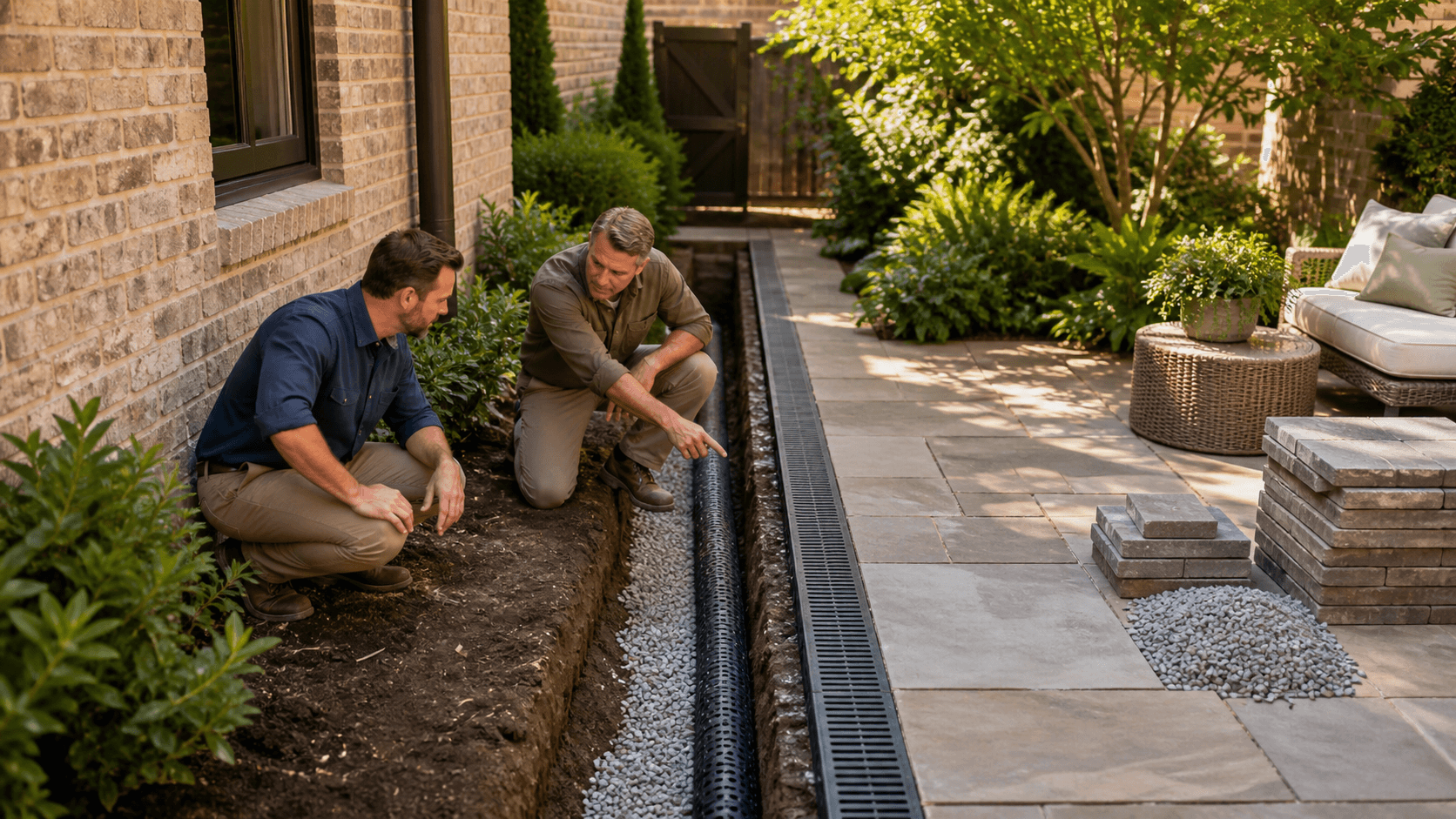
- French drains with stone where subsurface water tracks along foundations
- Shallow swales to guide sheet flow across the yard without creating trip hazards
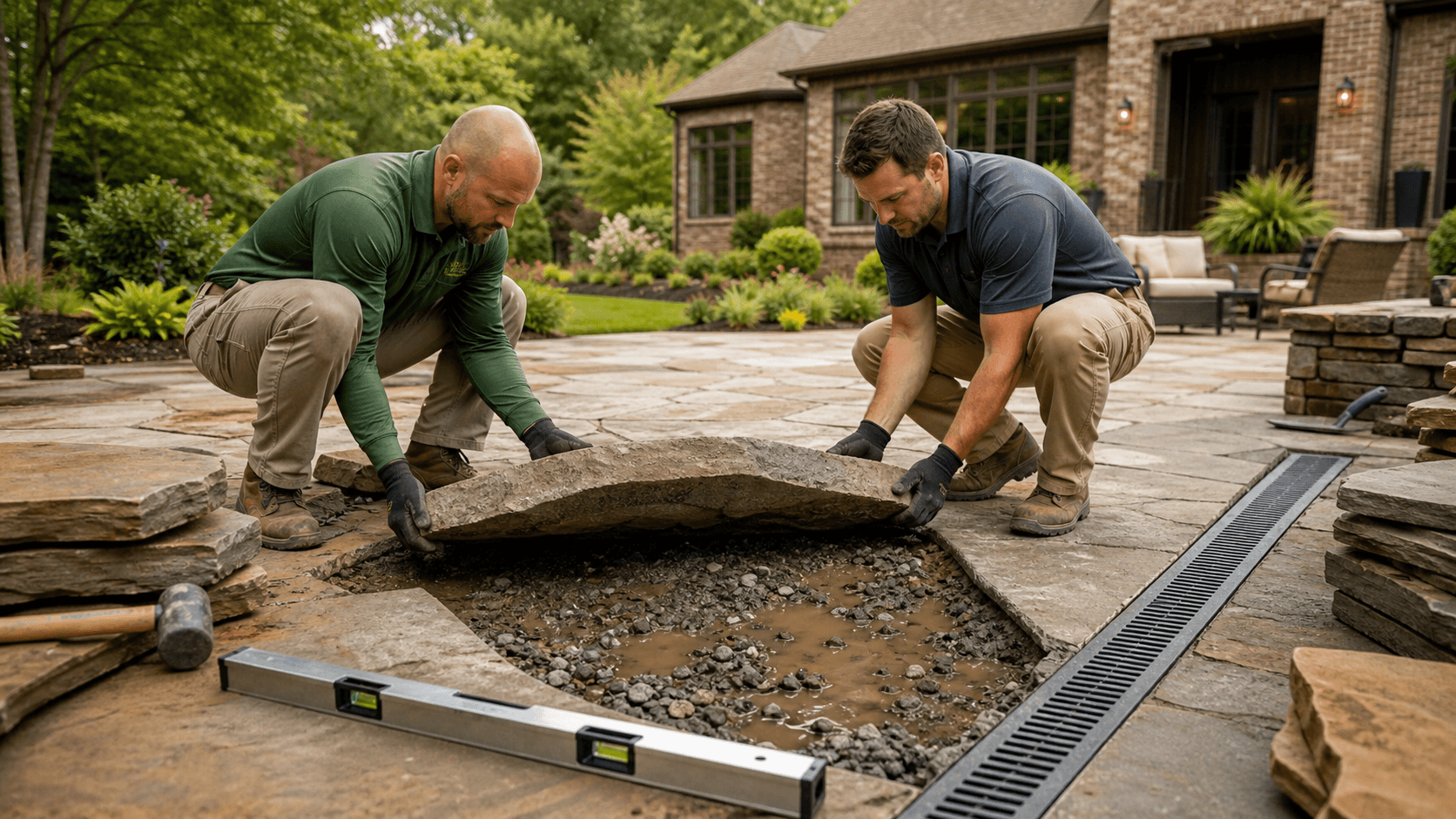
Structural details matter. Around French drains, we use crushed stone bases and proper filter fabric so clay does not choke the system. In many tight yards, rigid PVC holds its grade better than flimsy corrugated pipe. Where heavy traffic or mowers pass, concrete collars or catch basins keep grates from settling.
Hardscape design and drainage are tied together. We pitch patio surfaces slightly, enough to move water without feeling sloped underfoot. Retaining walls get properly wrapped drainage stone and outlets where the water can get out. Steps are laid out so water does not pool in the bottom tread or push against a door.
Working Around Neighbors, Easements, and City Rules
Older Homewood lots share more than charm. They share water. Tight setbacks, common fences, and driveways side by side mean that runoff may cross two or three properties before it ever sees the street.
That's why discharge planning is just as important as collection. You cannot legally push all your water onto a neighbor's driveway or concentrate runoff so it creates damage. Good grading and outlet locations respect both physics and city expectations. Many times, the right path is to carry water to:
- A curb or gutter point that actually has fall
- An existing rear drainage easement
- A shared low area that has capacity to handle the flow
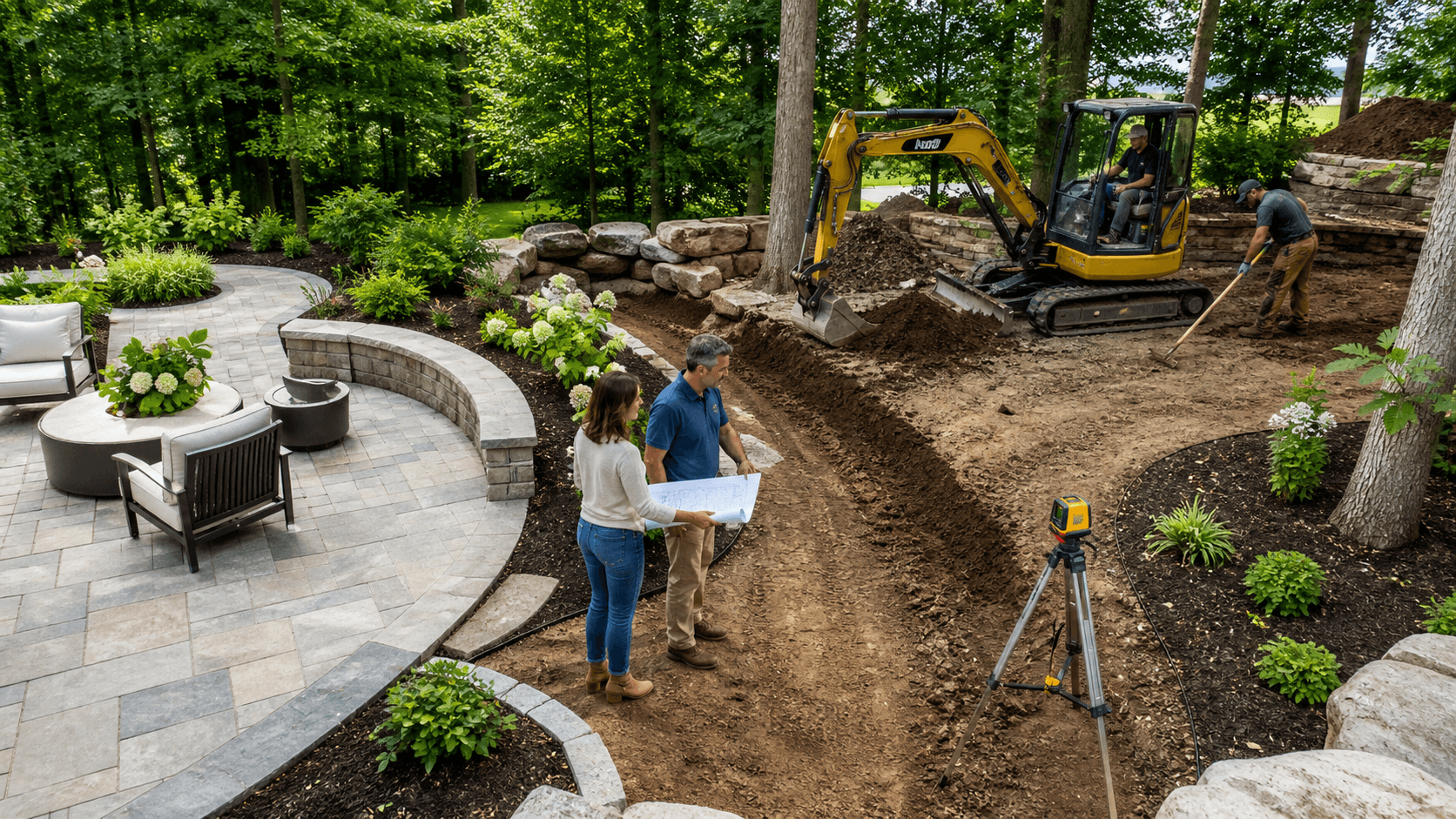
We also have to weave around utilities, easements, and existing trees. Careful trench routes avoid irrigation lines, gas, and power. Root-aware excavation keeps key trees stable, which matters in tight yards where a single oak or pine anchors both shade and privacy.
Sometimes the correct solution means conversations with neighbors or the city. It is better to create a clean, legal path for water than to force it into a direction it naturally fights.
Tying Drainage Into Long-Term Outdoor Plans
Strong drainage is the first layer under everything else you want to build outside. Pavers, outdoor kitchens, fire features, turf, and planting beds all depend on dry, stable base conditions. When that base stays wet or moves seasonally, hard surfaces crack, joints open, and structures shift.
In Central Alabama, late summer and early fall are good times to address grading and drainage. Soil is workable, storms still test the system, and you can get critical base work in place before colder, wetter spells. That timing helps new work stay where it is supposed to stay.
Even if a homeowner is not ready for the full outdoor project, it makes sense to start with drainage, grading, and basic infrastructure. We often phase a project this way: first we correct flow, install key sleeves and lines, and set grades. Later, we come back to build out patios, walls, and structures on a base that is already proven.
Before the first trench is dug, it helps if you watch your yard during the next heavy storm. Notice where water stands, how long it stays, and where it tries to exit the property. Simple notes, photos after rain, and a record of any basement or crawlspace issues give a clear picture. That way, drainage can be treated like what it really is in a tight Homewood backyard: the structural foundation that everything else depends on.
Get Started With Your Project Today
If drainage issues are affecting your yard or foundation, we are ready to help you protect your property and restore peace of mind. At Wood-Palmer Outdoor Creations, our team will assess your landscape and recommend tailored drainage solutions in Homewood that fit your goals and budget. Let's talk about your property—give us a call at (205) 305-7780, send an email to info@woodpalmer.com, or reach out via our contact form.