Choose the Right Home For Your Vestavia Hills Fire Pit
A permanent fire pit is one of the hardest working features in an outdoor space. It pulls people outside on warm summer nights, gives you a spot to gather when football season kicks off, and keeps your yard useful when the air turns cooler. Where that fire pit actually sits on your Vestavia Hills property has a bigger impact than most folks think.
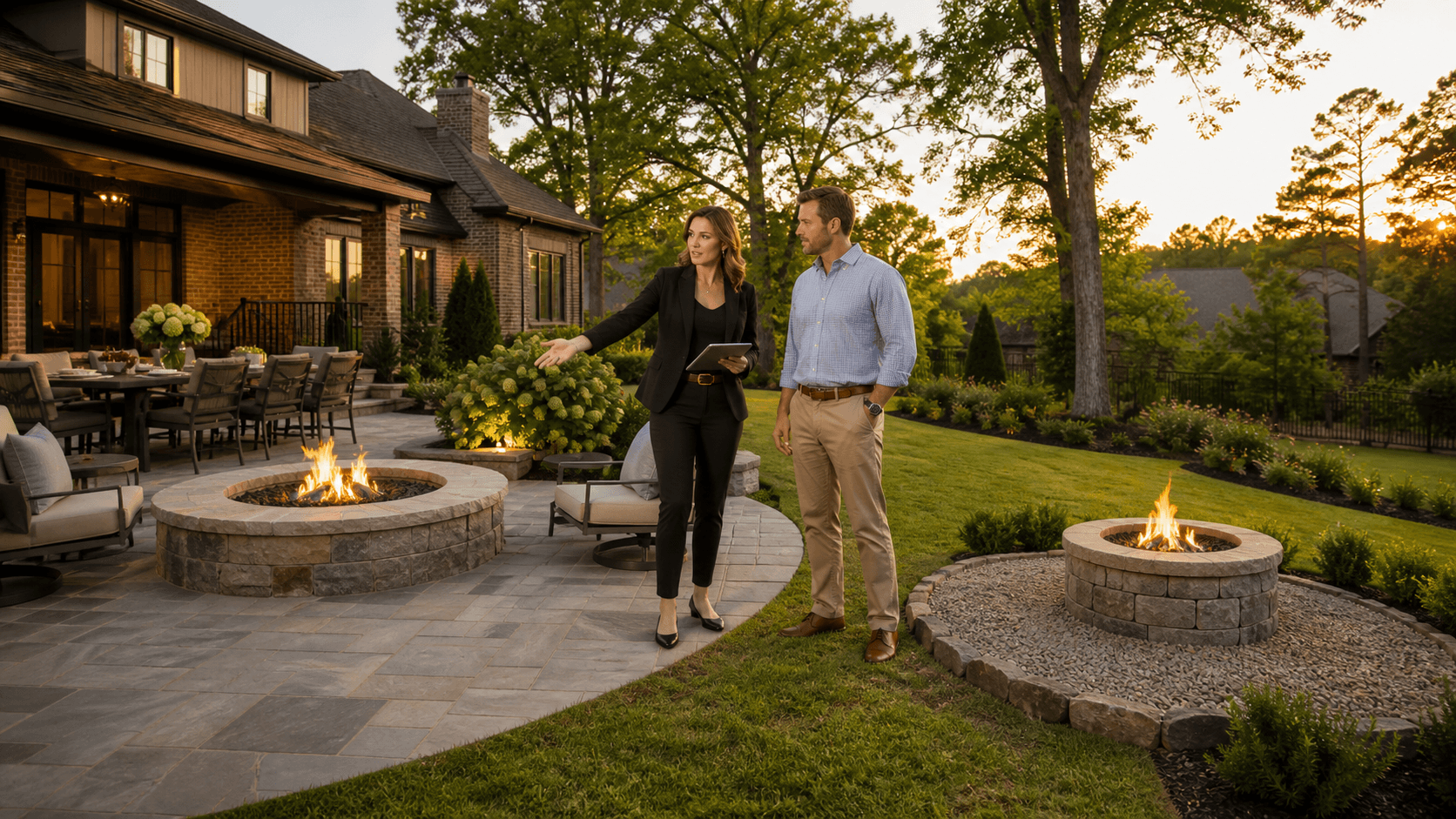
One of the first decisions is simple to ask but not always simple to answer: should your fire pit sit on your existing patio, or live on its own standalone pad a few steps away? That choice affects safety, long-term structure, drainage, smoke movement, and how your family moves through the space. In Central Alabama, with rolling grades and clay-heavy soils, the wrong placement or weak base can lead to cracking, settling, and an outdoor area that never quite feels comfortable.
At Wood-Palmer Outdoor Creations, our design decisions start with how things are built, not with what is easiest to lay out on paper. With 75 years of combined leadership experience, we look at structure, drainage, and day-to-day use before we ever talk about finishes. Let's walk through how we think about fire pit installation in Vestavia Hills, when a patio makes sense, when a separate pad is smarter, and what we look for on your property.
How Your Existing Patio Was Built Matters
Not every patio in Vestavia Hills was designed to carry a heavy masonry fire pit that concentrates load and heat in one tight area. Many older patios behind homes were poured as simple walk-out slabs, meant for a grill and a few chairs, not as full hardscape assemblies.
When we look at an existing patio, we want to understand things like:
- How thick the concrete or paver system is
- What kind of base preparation was used under it
- How the clay soil was handled and compacted
- Whether the patio was ever meant to carry added structures
If the base is thin or soft, a permanent fire feature can push that surface past what it was built to handle. You can start with tiny hairline cracks around the fire pit that slowly turn into wider structural cracks. Control joints can heave, and the transition where the house foundation meets the patio can move if extra weight and heat are added in the wrong spot.
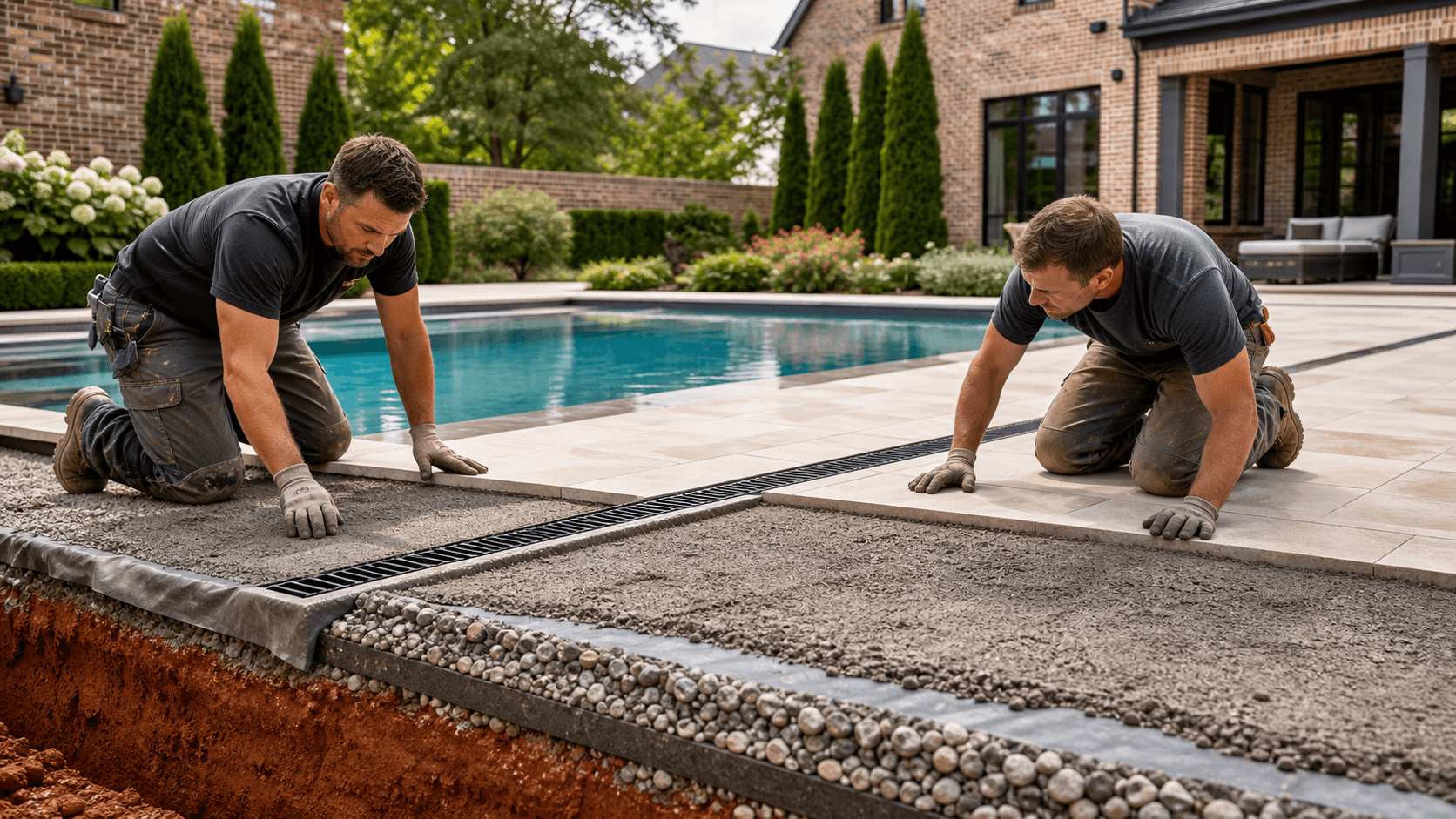
Drainage is just as important. A fire pit built on top of a patio can interrupt the way water is supposed to run off the slab. If the original slope was already borderline, that extra mass can trap water, send runoff back toward the house, or create standing puddles at door thresholds.
On many projects, we'll carefully inspect exposed edges or, when needed, open up a small section of the existing surface to see what's really under there. That tells us whether the patio can safely carry a new fire pit or whether we're better off with a separate pad that has its own engineered base.
When a Fire Pit Belongs Directly on the Patio
There are plenty of properties where putting the fire pit directly on the patio is the right call. This usually works well when:
- The patio is newer and was built as a true hardscape system
- The base is properly compacted and thick enough for added load
- The slab has steel or fiber reinforcement
- The surface is sloped correctly away from the home
When those boxes are checked, setting the fire pit on the patio often gives you the best day-to-day use. You get a tight connection back to the house, shorter walks to the kitchen, and easy access from structures like covered seating areas or structures that include outdoor kitchens as part of the layout. It keeps everyone in one main zone instead of breaking the yard into scattered pockets.
We still have to pay attention to safety and clearances. That means appropriate distance from doors, windows, and siding, thinking through overhangs, and handling venting details if the fire pit is gas-fed. Landscape lighting around the seating and step areas helps people move safely after dark without washing out the fire itself.
The strongest setups are the ones where the fire pit is designed into the patio from the start. We can thicken or reinforce the zone under the fire pit, plan joint layouts so they don't crack awkwardly under heat, and tie in adjacent hardscape features like seat walls or low steps. On flatter rear yards in Vestavia Hills, this patio-centered layout often makes the fire pit the true anchor for outdoor living.
When a Standalone Pad Is the Smarter Structural Choice
Vestavia Hills has plenty of lots where the house sits up high and the backyard falls away quickly. On these properties, a standalone fire pit pad usually gives us more control and better long-term performance.
A separate pad lets us:
- Build a dedicated base, tailored to the fire pit's weight
- Adjust thickness and reinforcement specifically for heat and load
- Separate movement in the yard from movement at the house
- Fine-tune slope for drainage away from structures
By not tying everything into the main patio, we can set the pad at a slightly different elevation. That can relieve water pressure at the house, keep runoff moving through swales or French drains, and avoid wet spots around your primary seating area. In our clay soils, where water likes to sit if it finds a low spot, that extra control matters.
Design flexibility is another big benefit. With a free-standing pad, we can:
- Push the fire pit toward a view line, such as Shades Mountain or a tree line
- Drop the pad one or two steps down from the main patio for a "terraced" feel
- Tuck the fire feature into a more private corner of the yard
- Align the seating to work with common wind patterns, not against them
For heavier masonry fire features with taller walls, large seat walls, or integrated wood storage, isolating the structure on its own pad helps keep any settlement from telegraphing back into the main patio. That can save the primary hardscape surface from carrying stress it was never meant to see.
How We Decide What Is Right for Your Property
Fire pit installation in Vestavia Hills isn't a one-size decision. When we walk a property, we study both the ground and how you want to live outdoors.
On site, we typically look for:
- Existing cracks or low spots in current patios or walks
- How hard or soft the soil feels at transitions and edges
- The direction water takes after a typical summer storm
- Slopes away from the house and along fence or tree lines
We also ask how you plan to use the fire pit. Are you gathering a few people most nights or larger groups on weekends? Do you want the fire as an extension of a covered structure or as its own quiet spot further out? Are there future phases, like structures that incorporate outdoor kitchens or a lower terrace, that the fire pit needs to work with later?
With 75 years of combined leadership experience, we balance the engineering side with daily comfort. That means thinking about wind patterns that push smoke, seating depth so knees aren't up against the fire ring, kids moving around the space, and sightlines from inside the house.
Sometimes the conclusion is simple: the existing patio is built to carry the fire pit, and we design it in place. Other times, a standalone pad adds a bit more upfront work but protects the primary patio and keeps the whole structure more stable over time. Either way, the goal is the same: a fire feature that feels like it truly belongs on your Vestavia Hills property and keeps working year after year.
Get Started With Your Project Today
If you are ready to transform your backyard into a comfortable gathering space, we are here to help you plan and build it the right way. Explore your options for fire pit installation in Vestavia Hills and see how Wood-Palmer Outdoor Creations can bring your vision to life. Tell us about your goals and budget, and we will recommend a custom design that fits your home. Give us a call at (205) 305-7780, send an email, or use our online contact form so we can talk about your property.