Turning Steep Estate Slopes Into Usable Space
Steep ground around a home can be beautiful and frustrating at the same time. In the Birmingham area, we see it every day along the Red Mountain ridges, the river valleys, and the bluffs above the lakes. The views are great, but walking, building, or even mowing those slopes can feel almost impossible.
Most folks are told one thing about a hill: "You need better drainage." Drainage matters, but good landscape design in Birmingham on a slope is more than that. We have to think through how to hold the grade, how people will move safely, how equipment will build it, and how the slope will stay stable for the long haul. At Wood-Palmer Outdoor Creations, we lean on our 75 years of combined leadership experience and look at these sites like builders first and designers second. Early fall is a smart time to plan, when temperatures ease up, rainfall is more predictable, and grading, retaining work, and planting on steep ground can settle in before winter weather.
Reading the Slope Before You Move Any Dirt
Before a bucket ever touches the hill, we read the slope. We put simple questions on the ground:
- How steep is it, and how long is the run?
- Is the soil heavy Alabama clay or imported topsoil from a past project?
- What trees, roots, and existing features are already doing some of the work?
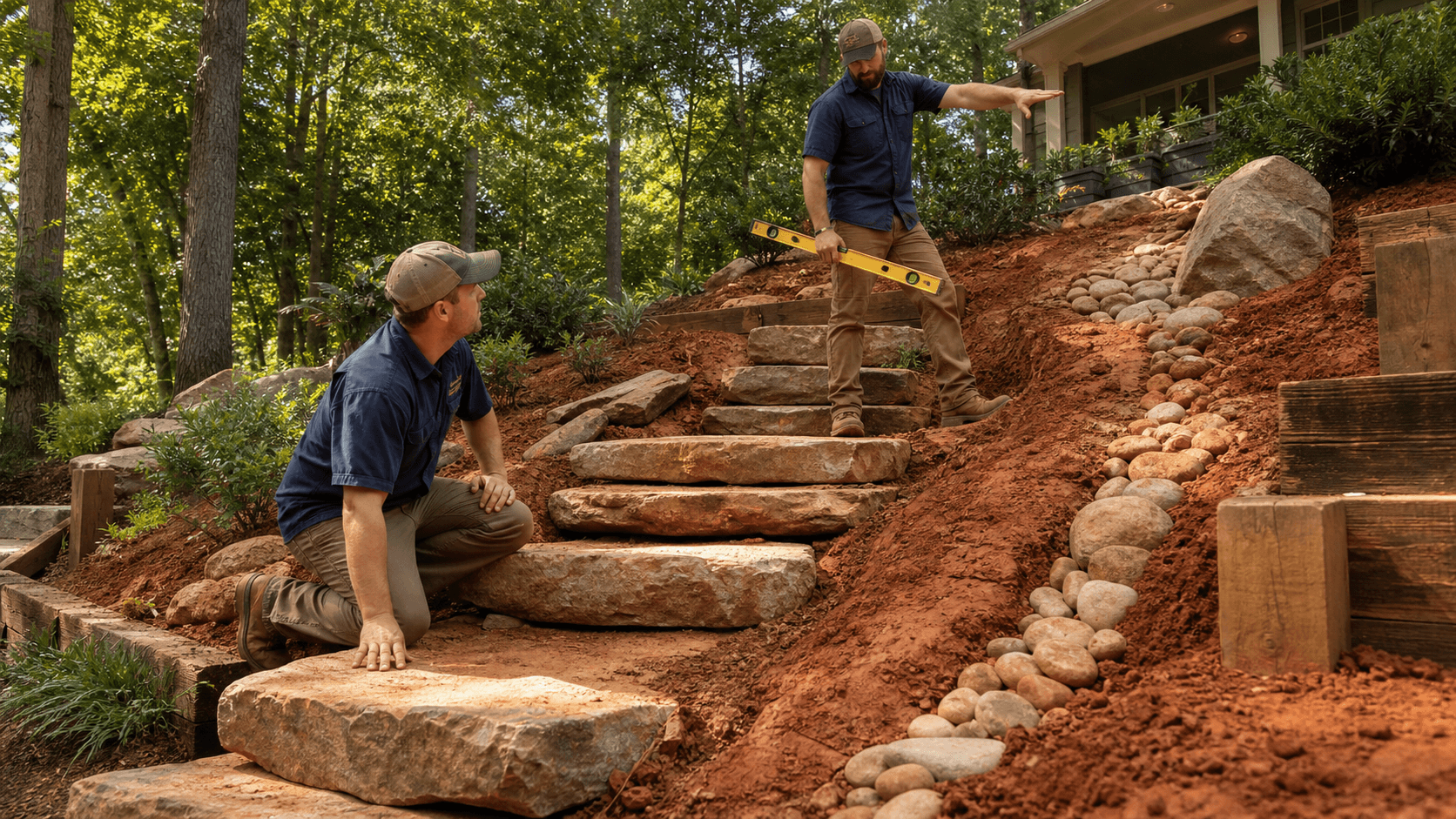
Clay subsoils around Birmingham can hold water and put a lot of pressure on any wall or terrace. Loose fill dirt from an old cut can slump if it is not compacted the right way. Big tree roots might be helping keep a bank in place, so cutting them without a plan can cause more sliding later.
A builder-minded team also looks at the job like a construction site, not just a pretty drawing. We walk the property and think about:
- Load paths and where weight from walls, patios, or structures will travel
- Where machines can safely enter, turn, and work without tipping
- How to stage block, stone, and concrete without over-excavating the hill
On steep Birmingham sites, good grading is part engineering. That means thinking about bearing capacity, compaction targets, slope angles, and how this groundwork will affect hardscape, structures, irrigation, and landscape lighting later.
Choosing Retaining Strategies That Fit Alabama Hillsides
Not every hill calls for the same retaining solution. The right choice depends on height, load, soil, and access. Common options include:
- Segmental retaining walls with concrete blocks and geogrid
- Poured-in-place concrete walls
- Boulder or stacked stone walls
- "Green" terraces that combine low walls and deep planting beds
Segmental walls often make sense near driveways or next to a home where the loads are higher and you need a reliable, engineered system with proper base preparation and drainage. Poured walls may be needed when space is tight and you need a thin, strong profile close to a structure or property line. Boulder walls and green terraces can soften tall drops into a series of shorter, more natural-looking transitions down to a lower lawn or lake dock.
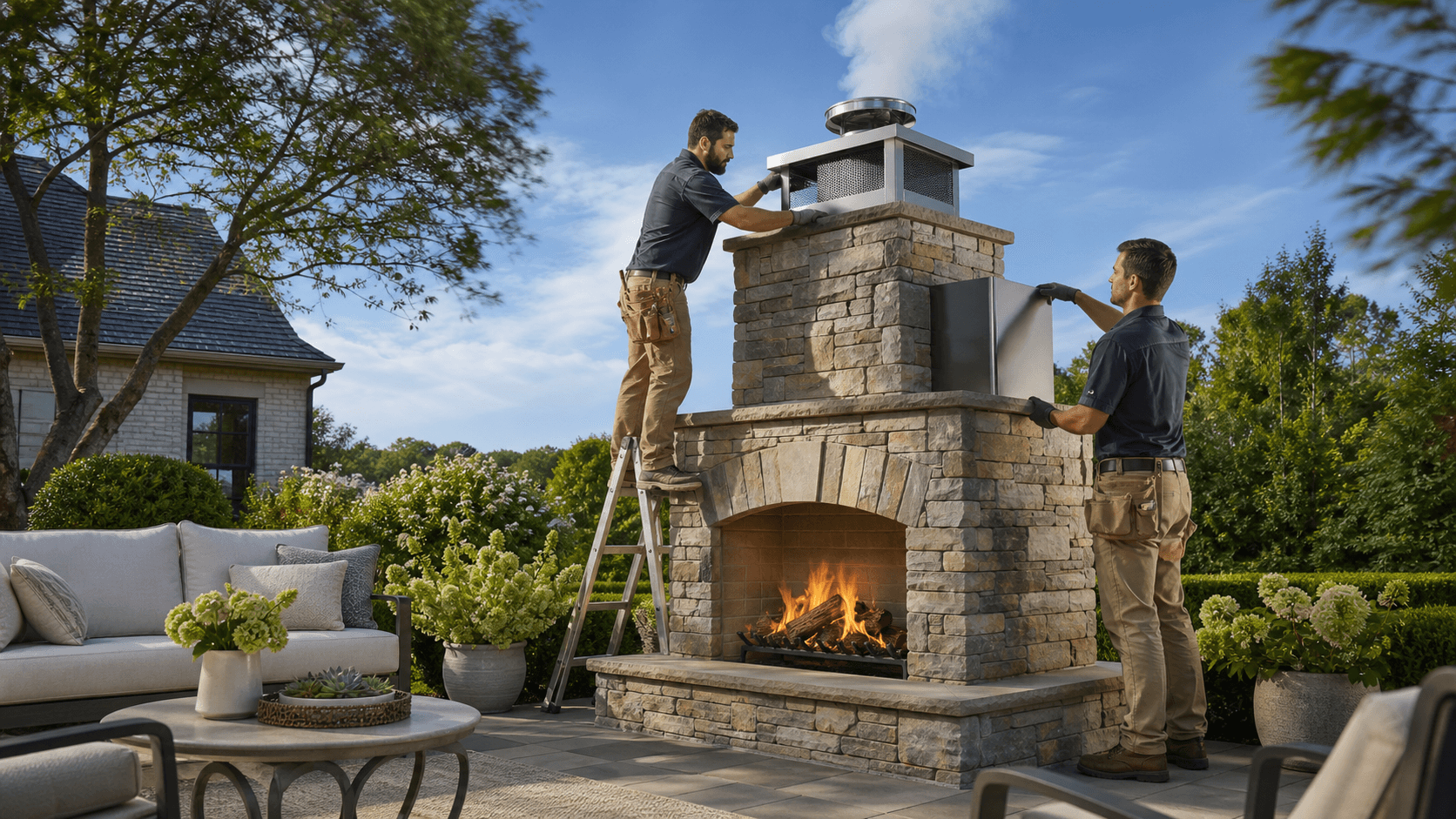
Real Birmingham properties bring real limits. Lake lots can be narrow, with rock on one side and water on the other, which cuts down how much you can dig out behind a wall. Tying a new wall into an existing foundation takes careful planning so you do not create a new stress point. Wall height, backfill type, and soil pressure all drive decisions about geogrid length, footing depth, and step-backs. When it is done right, the retaining work does more than hold back dirt. It creates flat terraces where you can have outdoor rooms, fire areas, and future structures like pavilions with integrated outdoor kitchens as part of the overall structures plan.
Access, Constructability, and the Reality of Birmingham Slopes
Access often decides what is even possible on a steep site. If you cannot safely get machinery where the wall needs to go, the whole plan has to change. We think up front about:
- Tracking paths and temporary ramps for machines
- Protecting existing hardscape, driveways, and entries during work
- How to bring in and store materials on tight estate or lakefront sites
Narrow mountain roads around places like Mountain Brook or steep lake roads can limit truck size or crane placement. Some lots have water on one side and rock on the other, so equipment has almost no room to maneuver. That is where stepped terraces may be a better answer than one tall wall, both for safety and long-term use.
Homeowners should know there are trade-offs. A more substantial retaining system up front can mean less disturbance later and more stable patios and structures. Smaller, stepped walls might fit better where space is tight but may add more stairs and landings. With 75 years of combined leadership experience, we try to see crane locations, hoisting paths, and safe work zones before a single retaining block is ordered.
Planting, Soil Stabilization, and Systems Beyond Basic Drainage
On steep ground, plants are not just decoration. Good landscape design in Birmingham uses planting and soil work as structural tools to help hold the slope, protect walls, and keep soil from washing away.
Plant choices change on a hill. We lean toward:
- Deep-rooting native plants that grab into the clay
- Groundcovers that knit the surface together between steps and walls
- Shrubs that do not mind heat bouncing off stone or concrete
- Different mixes for north-facing shade vs south-facing sun
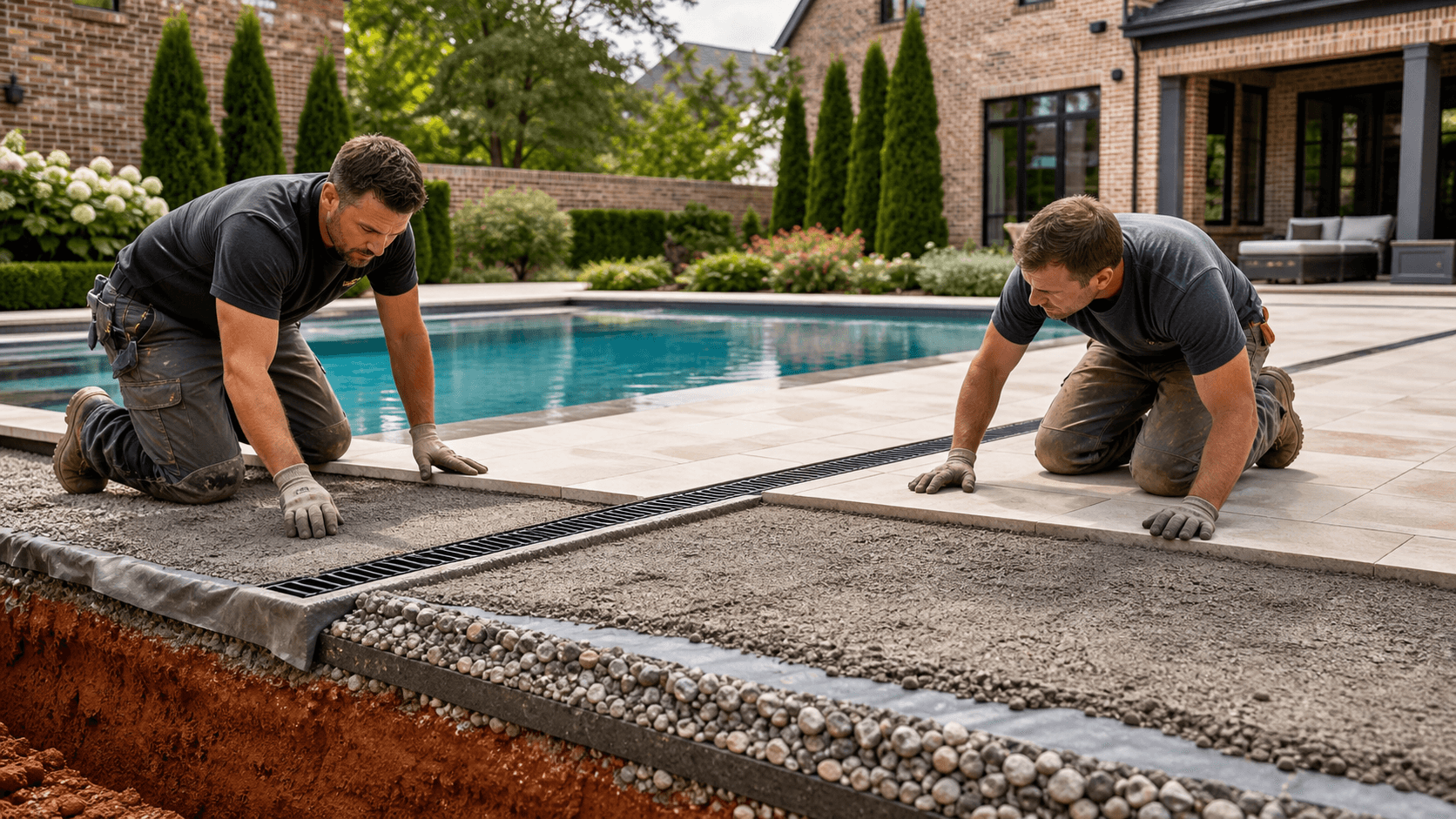
Soil work can include amending clay where we can reach it, using erosion-control blankets on open slopes, temporary seeding to hold bare dirt, and staged planting so disturbed areas are locked down quickly after grading and wall building. Irrigation has to be zoned carefully on a slope, with pressure managed so heads do not cause washouts or soggy pockets at the bottom. Landscape lighting along hillsides needs thoughtful aiming and shielding so you light steps and paths for safety without blasting glare across a valley or lake.
Layering Hardscape, Structures, and Lighting on a Hill
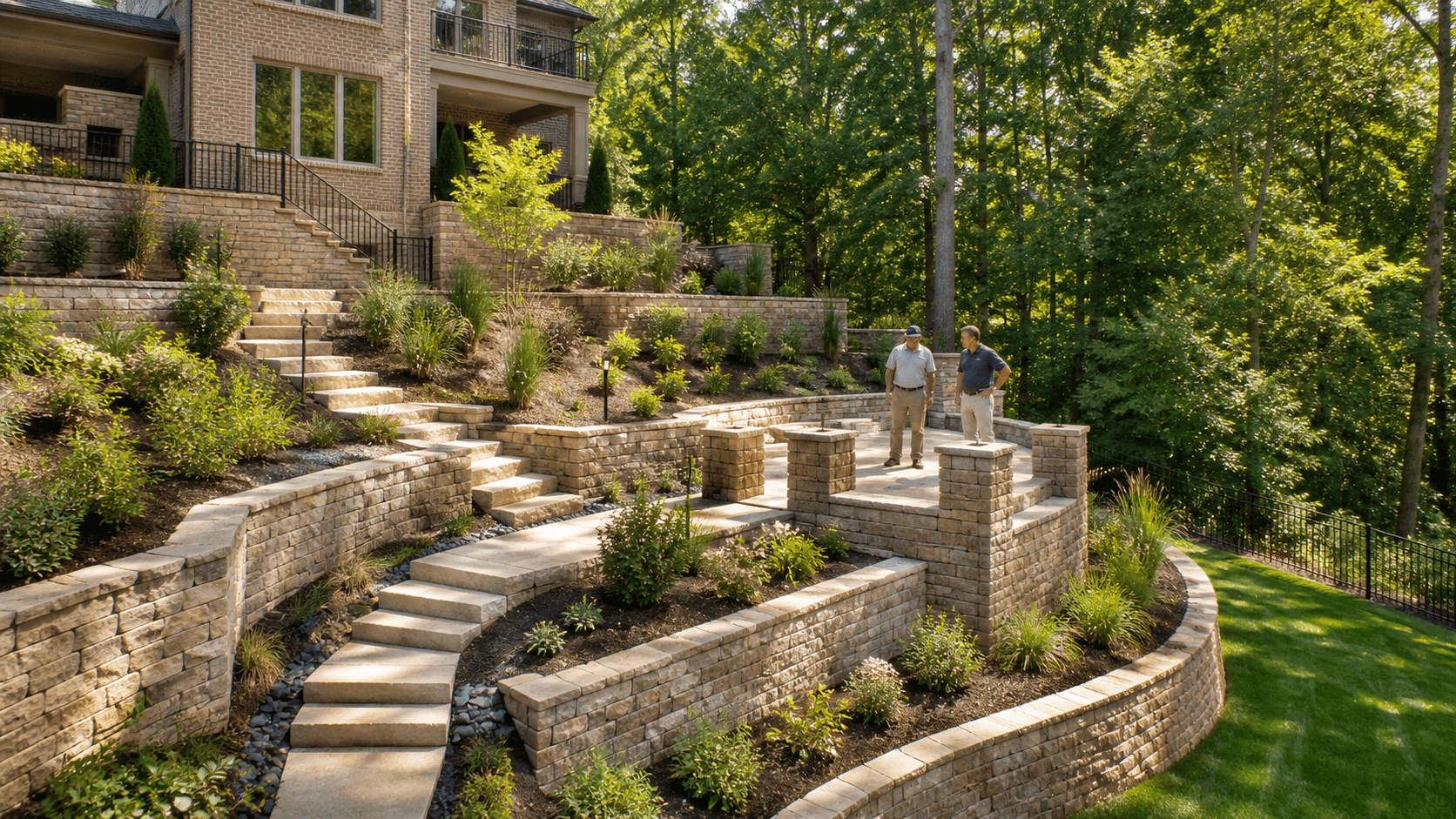
Thoughtful landscape design in Birmingham can turn a steep hill into a series of outdoor experiences instead of one big drop. Upper patios can sit near the home, mid-slope landings can create quiet sitting areas, and lower lawns or boat docks can become the final stop in the sequence.
Structural thinking drives how all of this fits together. Step heights and tread depths should feel natural for daily use, not like climbing a ladder. Paved landings must tie into retaining systems and structures without creating trip lips or weak joints that will settle. Outdoor kitchens, as part of the structures on the property, along with pavilions and covered areas, should sit where the soil can support them and the nearby walls can handle the load, with wind and sun angles that work with the hillside instead of against it.
Landscape lighting and wiring need to be planned from the first grading sketch. Conduit often runs through walls and under stairs. We allow for future fixtures, low glare angles, and safe, even light on stairs, landings, and paths. When all the pieces work together from the ground up, a steep Birmingham slope becomes a strong, usable extension of the home instead of a no-go zone.
Get Started With Your Project Today
Transform your yard into a space you truly enjoy with our tailored landscape design in Birmingham. At Wood-Palmer Outdoor Creations, we work closely with you to create an outdoor environment that fits your style, budget, and daily life. Let's talk about your property—give us a call at (205) 305-7780, email us, or contact us online to get started.