Natural stone patios in Birmingham can stay attractive and safe, even in heavy heat and humidity, if they're built and protected as a complete system. The stone on top is only part of the story. How the base drains, how the joints are built, and how the surface is sealed all decide whether you get a clean, solid patio or a slick, stained one.
We build in Central Alabama every day, so we see what our summers do to stone. In late July, humidity is high, storms pop up fast, and shaded backyards can stay damp well into the afternoon. That mix is hard on natural stone patios in Birmingham, but with the right planning, you can control efflorescence, algae, and moisture staining instead of just chasing them with cleaners. Around here, our leadership is hands-on with these decisions, so the field crews are following a clear plan instead of guessing on-site.
Why Birmingham's Climate Beats up Stone Patios
Our climate puts patios through constant wet and dry cycles. Hot sun brings surface temperatures up, then a storm drops a quick inch of rain, and everything gets soaked. As patios go from wet to dry again and again, water and dissolved minerals move up through the stone and joints.
Here's what that tends to create:
- Efflorescence, white or chalky haze on stone and grout
- Algae, slick green film that shows up first in shaded, damp areas
- Moisture staining, dark patches and rust-like spots that linger after rain
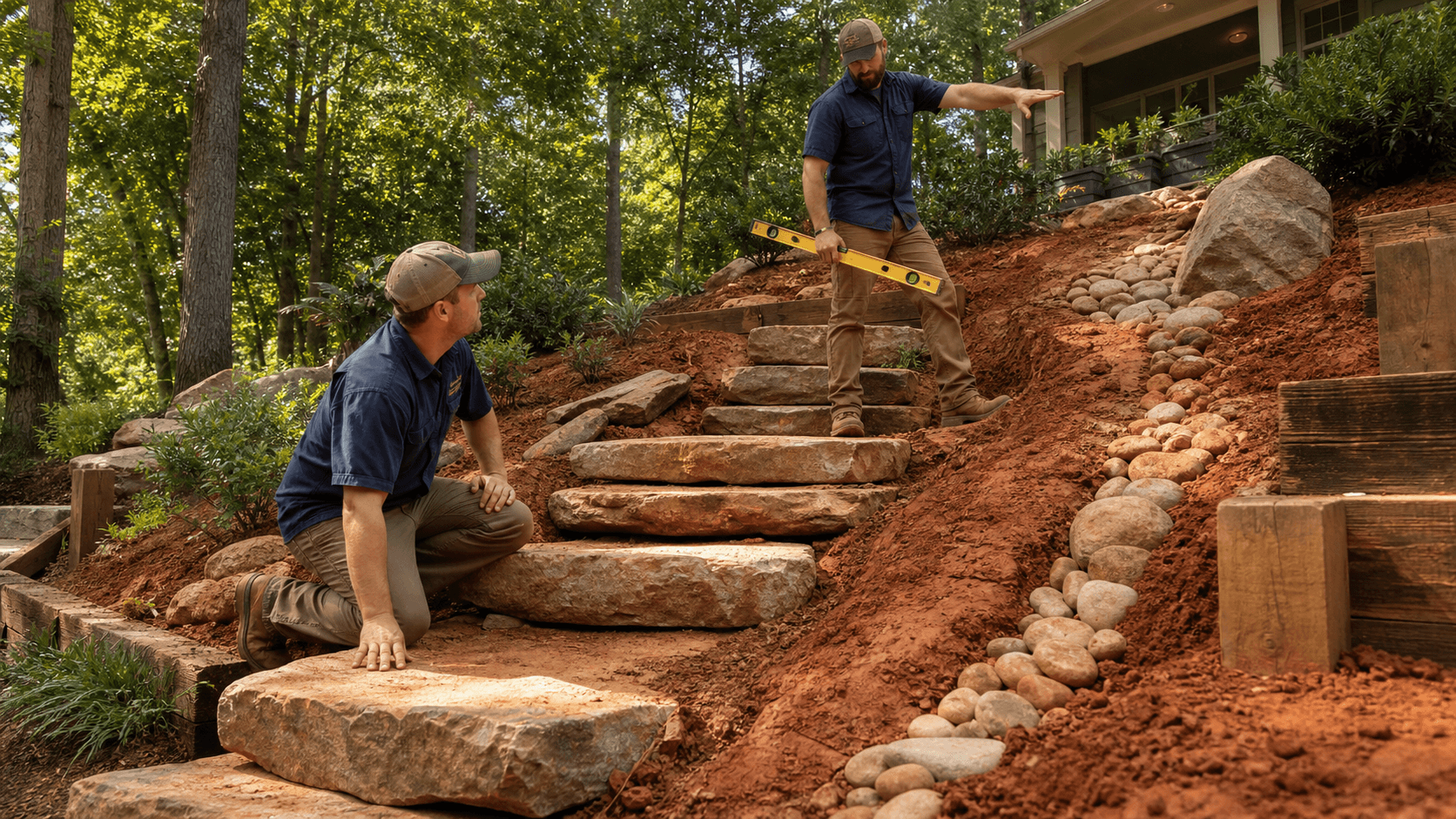
Central Alabama clay holds water like a sponge. In areas like Mountain Brook, Vestavia Hills, and Hoover, we also deal with slopes and shallow rock. If water under the patio has no place to go, it tracks through the stone system instead. Shade from big oaks and pines keeps surfaces cooler and wetter, and leaf litter drops tannins and organics that feed algae and staining. Sun and airflow matter just as much as sealers in how long a patio stays clean.
Building a Base That Drains Instead of Stains
A stone patio should be treated like a horizontal structure, not just a finish. That starts at the subgrade.
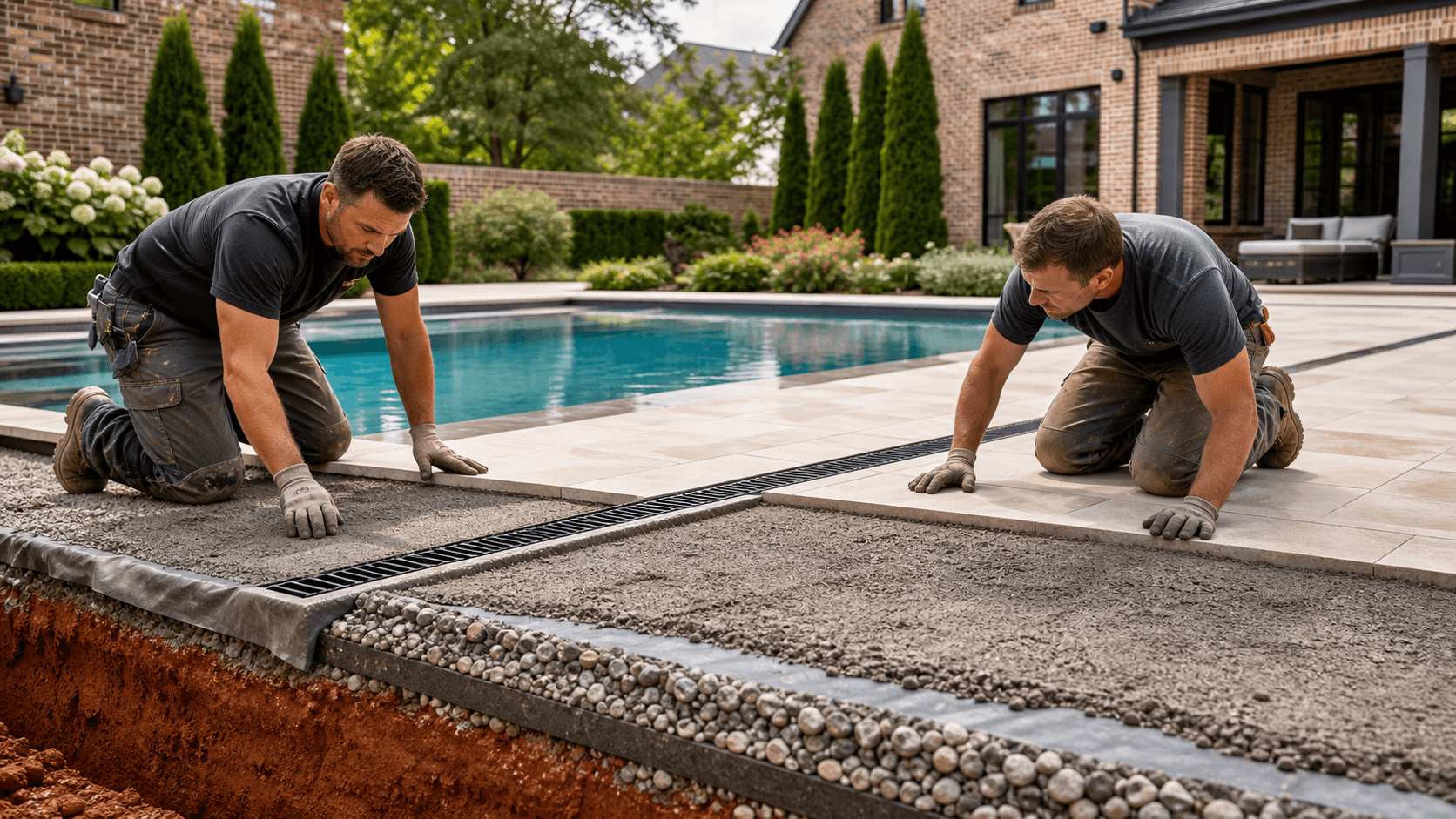
We want the native clay cut to a uniform depth, then compacted so it's firm and even. In softer or disturbed soils, a geotextile layer helps separate the clay from the stone base so the base doesn't pump into the soil over time. On top of that, an open-graded aggregate base, compacted in lifts, allows water to move downward instead of staying trapped under the stone.
Slope is just as important. The finished patio should fall away from the house and toward a planned discharge point. Small changes with a laser level during construction keep:
- Water from ponding on the surface
- Edges from staying constantly wet and turning dark
- Joints from becoming algae strips along the low side
Solid edge restraint finishes the structure. If the edges wander or roll, stone can move, joints open up, and more water gets in where it shouldn't. We treat edges and transitions like structural details so the bed stays locked in over time.
Choosing Joint Materials That Work in Our Summers
The joint material is where structure and moisture control meet. The right choice depends on how the stone is set.
For stone set as a slab over a concrete base, mortar or grout-style joints are common. They tie the surface together, but they're rigid. If water is trapped under the slab or the base holds moisture, that pressure has to move somewhere. It often pushes through the stone or along small cracks and feeds efflorescence.
For stone dry-laid over aggregate, polymeric sand or resin-based joint compounds are common options. They're more flexible and can let some water pass. Done correctly, they help:
- Reduce weed growth
- Limit joint washout in storms
- Keep joints tighter and cleaner over time
Permeable joints that let water drain down through the system can work well if the base is designed for it. The joint width and depth need to be correct, and the material needs to be compacted right. Timing matters too. Joints installed when the stone and base are still wet from recent rain tend to trap moisture and show algae faster, especially in shaded zones with low airflow.
Sealing Stone to Control Efflorescence and Staining
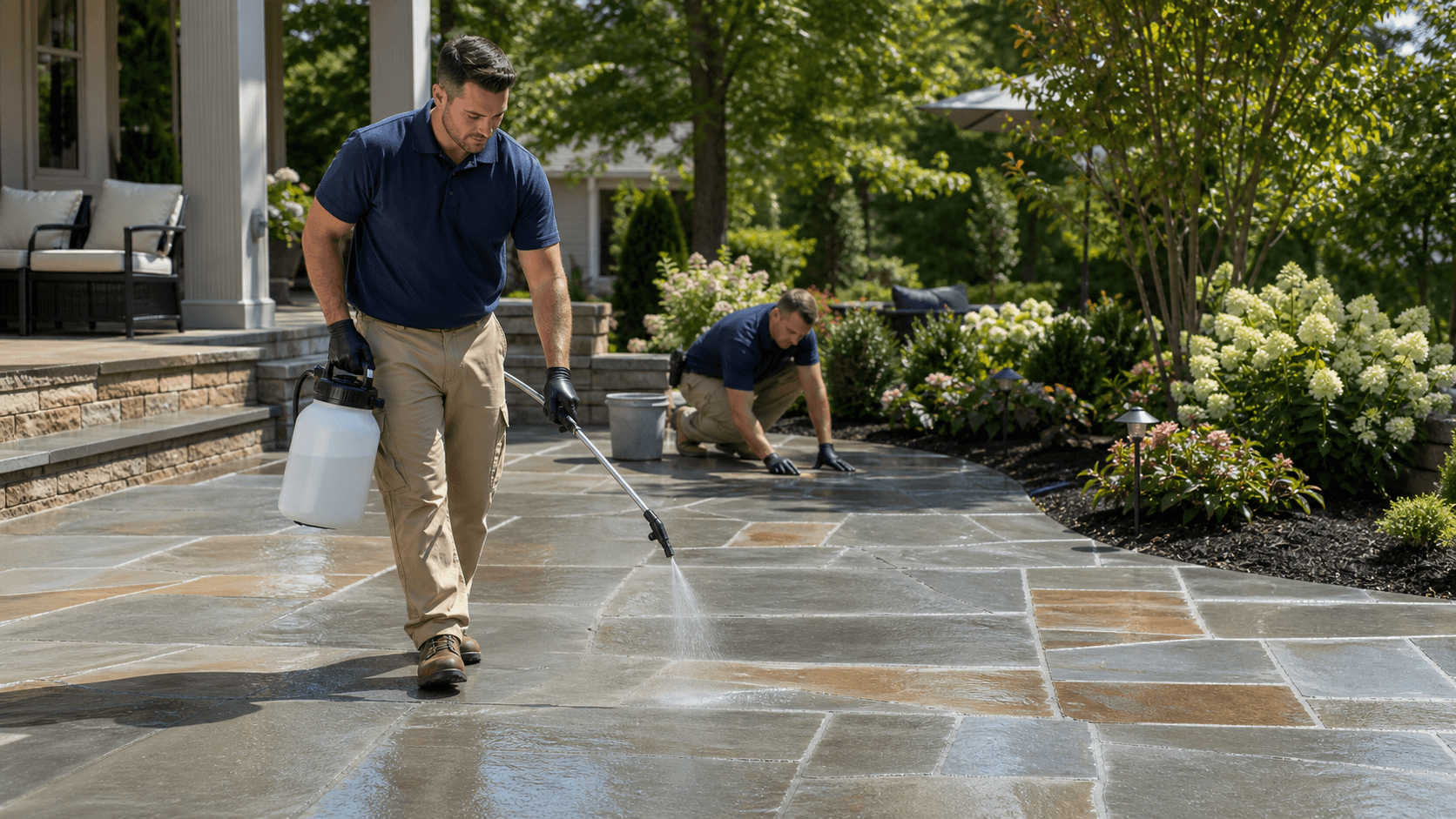
Sealer choice in Birmingham is really about managing moisture, not just making stone shiny. In our humid climate, penetrating sealers that soak into the stone and stay breathable are usually a better match than thick film-forming coatings that sit on top.
A breathable sealer helps slow how fast water soaks in, which means:
- Less time the stone stays dark and blotchy after rain
- Less leaf and acorn staining on lighter stone
- Less moisture available for mildew and algae to grip into the surface
Efflorescence control is more about sequence than brand. Mortar and concrete need time to cure. Early efflorescence should be cleaned in a controlled way. Only then should the stone be sealed. If sealer is applied too soon, it can lock in salts and moisture and actually make the haze worse and harder to remove. Many patios do well when they're sealed after they've been through several wet and dry cycles so hidden moisture has a chance to move out first.
Maintenance Habits That Keep Patios Safe and Clean
Even a well-built and sealed patio in Central Alabama needs some simple care. Heavy pressure washing or strong acids can scar stone and joints, so cleaning should be planned, not aggressive.
A basic routine usually includes:
- Light surface rinsing when pollen and dust build up
- Gentle cleaners appropriate for stone, not random household chemicals
- Spot cleaning early signs of algae instead of waiting until the whole surface is slick
- Visual checks for new white haze, joint cracking, or areas that stay wet too long
The planting right against the stone also matters. Dense shrubs can block air movement, and mulch or soil piled above stone height can hold water against the edges. Keeping plants trimmed back and grades set so water moves off the patio helps all the drainage work under the stone actually do its job.
Before resealing or resurfacing, it's smart to look at how the patio is built, not just how it looks. Drainage paths, base behavior, joint condition, and stone type are what drive efflorescence, algae, and moisture staining on natural stone patios in Birmingham. Treating those elements as a single system is how patios stay cleaner, safer, and more stable through our humid summers.
Get Started With Your Project Today
If you are ready to transform your backyard into a space you actually use and enjoy, our team at Wood-Palmer Outdoor Creations is here to help. Explore how our custom-designed natural stone patios in Birmingham can fit your home, lifestyle, and budget. We will guide you through materials, layout, and installation so you know exactly what to expect at every step. Have questions or want a quote? Give us a call at (205) 305-7780, email us at info@woodpalmer.com, or contact us online to talk about your property.