Older Homewood yards handle water very differently than newer neighborhoods. Tight lots, hills, clay soil, and older homes all combine to hold water where it does not belong. When that water is sitting against a basement wall or under a patio, it stops being a small annoyance and starts threatening the structure of your home and outdoor spaces.
We spend a lot of time solving drainage on these older streets, and there is a pattern we see over and over. In this article, we'll walk through why yards hold water, what we look for on a site visit, the core drainage solutions in Homewood, and how all of that ties into hardscape, structures (including outdoor kitchens), and retaining walls.
Why Older Homewood Yards Hold Water so Easily
Homewood's older neighborhoods are packed in tight. You have small side yards between houses, steep driveways, and low pockets between streets like Broadway and Roseland that fall down toward the Shades Creek valley. Water has a short distance to travel, but a lot of obstacles on the way.
Several things tend to stack up over time:
- Original grading that never expected modern additions
- Heavy clay soils that drain slowly once they're compacted
- Aging foundations and masonry that don't like constant moisture
- Layer after layer of driveway, patio, and room additions
Each time someone added concrete, a porch, a garage, or a small retaining wall, the water pattern shifted a little. After a few decades, those small shifts can push water toward basements and crawlspaces instead of out toward the street or a rear property line. On these lots, one wrong slope on a new patio can send a lot of water straight to a foundation wall.
Our weather adds pressure too. In Central Alabama, fall often brings heavy, slow-moving rain cells that sit on the ridge for a while. When those storms hit already saturated clay, water has nowhere to go, and the weak spots in a yard or hardscape show up fast.
Reading the Water on an Older Homewood Lot
When we walk a Homewood property, we're reading how the water wants to move. We look at it the same way we look at a structural build, just with water as the load.
A typical walk-through includes:
- Checking where water lays after a storm or irrigation cycle
- Looking at downspout locations, sizes, and gutter capacity
- Watching how runoff crosses the yard, driveway, and any existing hardscape
Older homes leave clues. Mildew lines on a foundation wall show how high water has climbed. Eroded mulch beds and exposed roots tell us where water is speeding up. Washed-out sand joints in brick or stone walks point to concentrated flow. Soft spots along fence lines, under decks, or beside a retaining wall usually mean water is trapped in the soil.
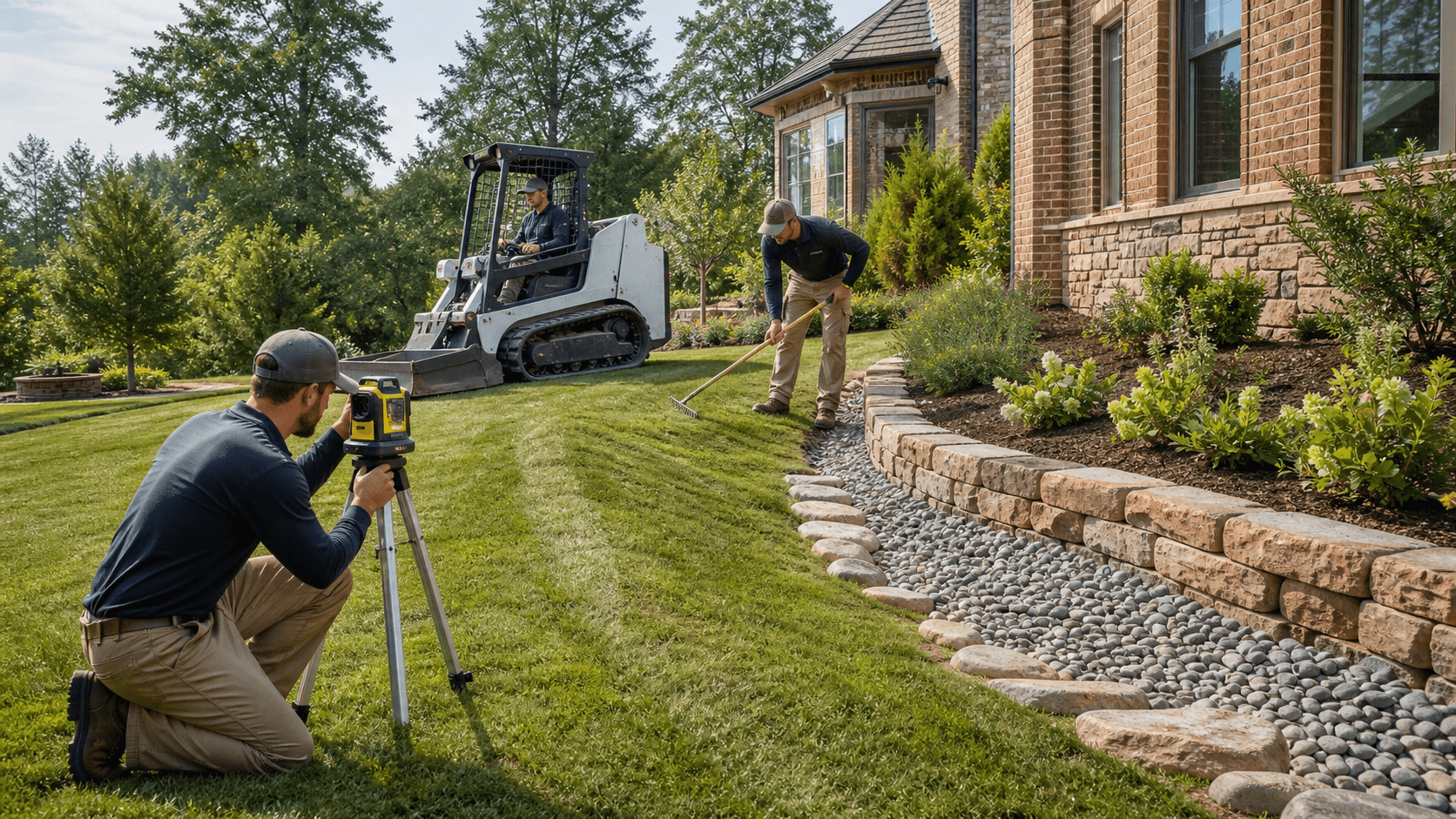
We don't guess at slope. We use laser levels and grade rods to understand the actual elevations and how much fall we have to work with. On these tight Homewood lots, we have to think three-dimensionally: your yard, your neighbor's yard, and the street or alley all interact. Any fix has to move water away from your home without pushing it straight onto the next yard downhill.
Core Drainage Solutions in Homewood's Older Neighborhoods
Effective drainage solutions in Homewood almost never come from one simple trench. They're usually a combination of surface grading, subsurface piping, and a few targeted hardscape adjustments.
Typical tools we use include:
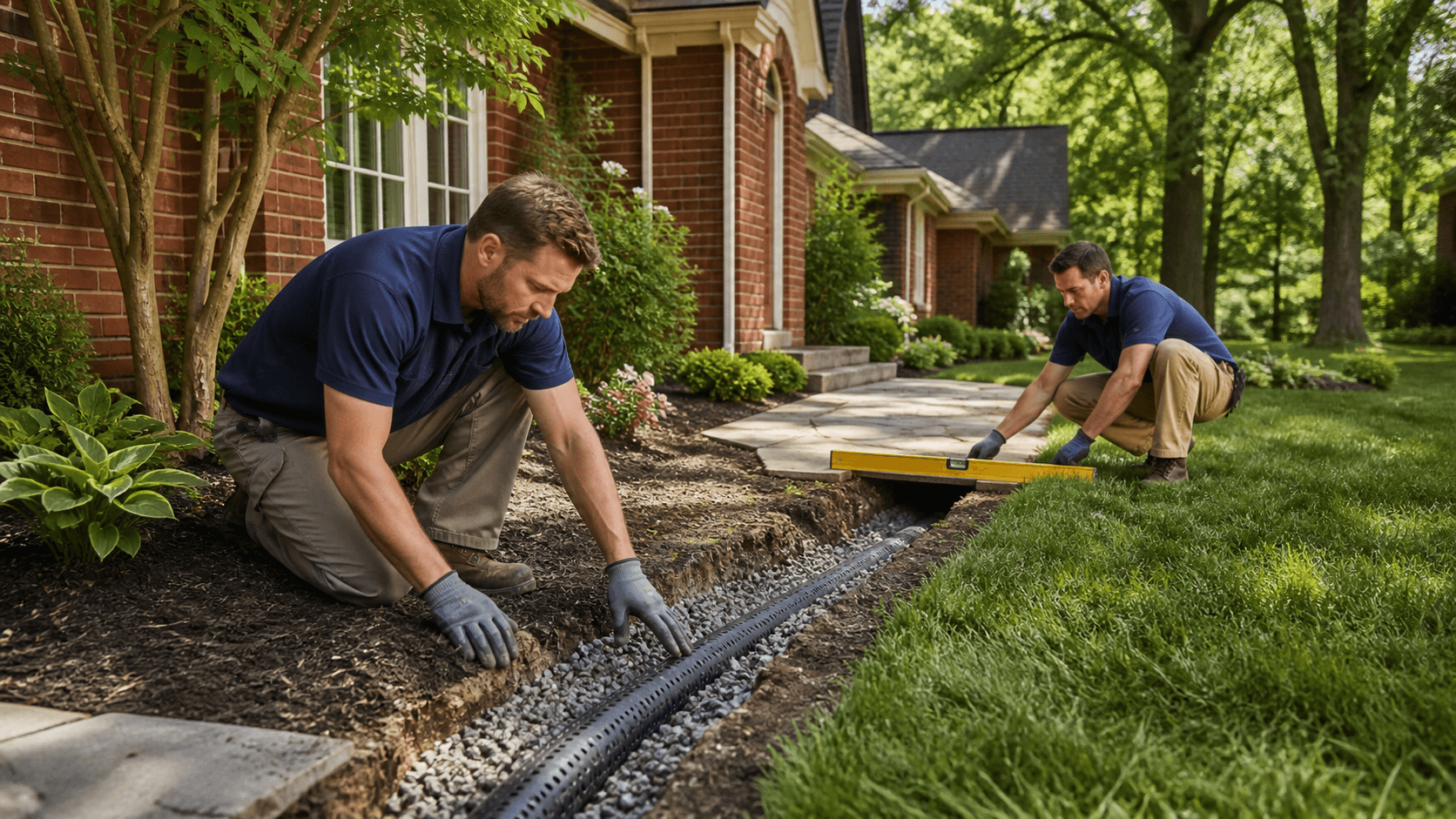
- French drains in heavy clay areas that stay saturated
- Catch basins in low pockets where surface water collects
- Solid PVC drain lines tied to downspouts and yard inlets
- Daylight outlets set where they actually have fall and can move water
A big part of our work is protecting structural integrity. That means keeping water away from foundations and crawlspace vents, relieving hydrostatic pressure on basement walls, and making sure we don't undermine existing patios, walks, or retaining walls. Small grade changes at the house, combined with properly sized drain lines, often make a big difference.
Seasonal timing also matters. Early fall is usually a strong window to install drainage, because soils are still workable and the winter rains haven't saturated everything yet. That gives new systems time to settle and work before the ground stays wet for long periods.
Tying Drainage Into Hardscape, Structures, and Planting
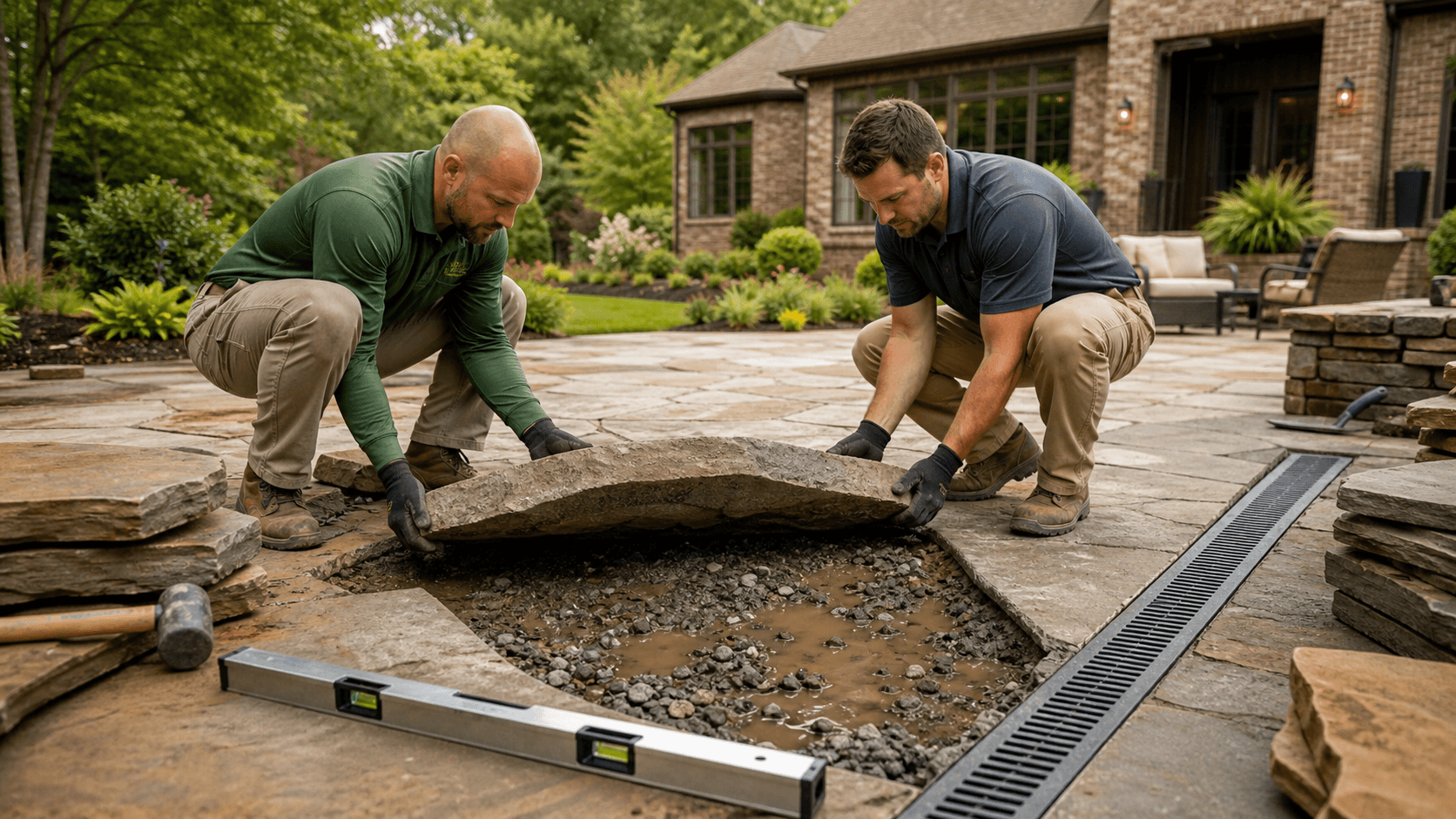
Any new hardscape can either solve a drainage problem or create one. A patio that's graded correctly, with the right base preparation and a clear discharge path, will carry water away from the house and into areas that can handle it. One that's too flat or sloped the wrong direction will hold water against walls and door thresholds.
Structures like covered porches, pavilions, and outdoor kitchens (as part of the overall structures plan) change where roof water lands. When we add a roof, we're creating a new catch area that has to be tied into the drainage plan. Concentrated roof runoff that just dumps at one corner can chew up a yard or start washing out a footing.
We often use planting design to help control water, without turning the conversation into lawn care. Shallow swales, well-shaped beds, and the right plant material can slow water down and guide it to inlets or lower turf areas.
We also have to think about everything in the ground. Landscape lighting conduit, irrigation lines, and drain pipes all share the same spaces. If they're not coordinated, any future repair becomes a mess of cut wires and broken pipe. Our goal on older Homewood properties is to plan those systems together so they support each other long term.
When a Retaining Wall Is Part of the Drainage Plan
On many Homewood streets, the house or driveway sits on a slope that has to be held in place. Retaining walls aren't just visual features; they're structural pieces that control how water steps down from one elevation to the next.
Behind every wall, the unseen details matter:
- Clean gravel backfill that lets water move freely
- Perforated drain tile at the base of the wall
- Weep holes or outlets so water doesn't build pressure
If those elements are missing, hydrostatic pressure builds up and the wall starts to lean, bow, or crack. We see this often with old railroad-tie walls or brick and block walls that were built without proper drainage.
Sometimes the right answer isn't more pipe, it's a modest wall and corrected grading that create clean, stable steps in the yard. That can be especially helpful in narrow side yards between older homes, where there's no room for wide swales and long, shallow slopes.
What to Expect From a Wood-Palmer Drainage Project
At Wood-Palmer Outdoor Creations, our 75 years of combined leadership experience shape how we approach older Homewood lots. We treat drainage as a structural system, just like a wall footing or a patio base.
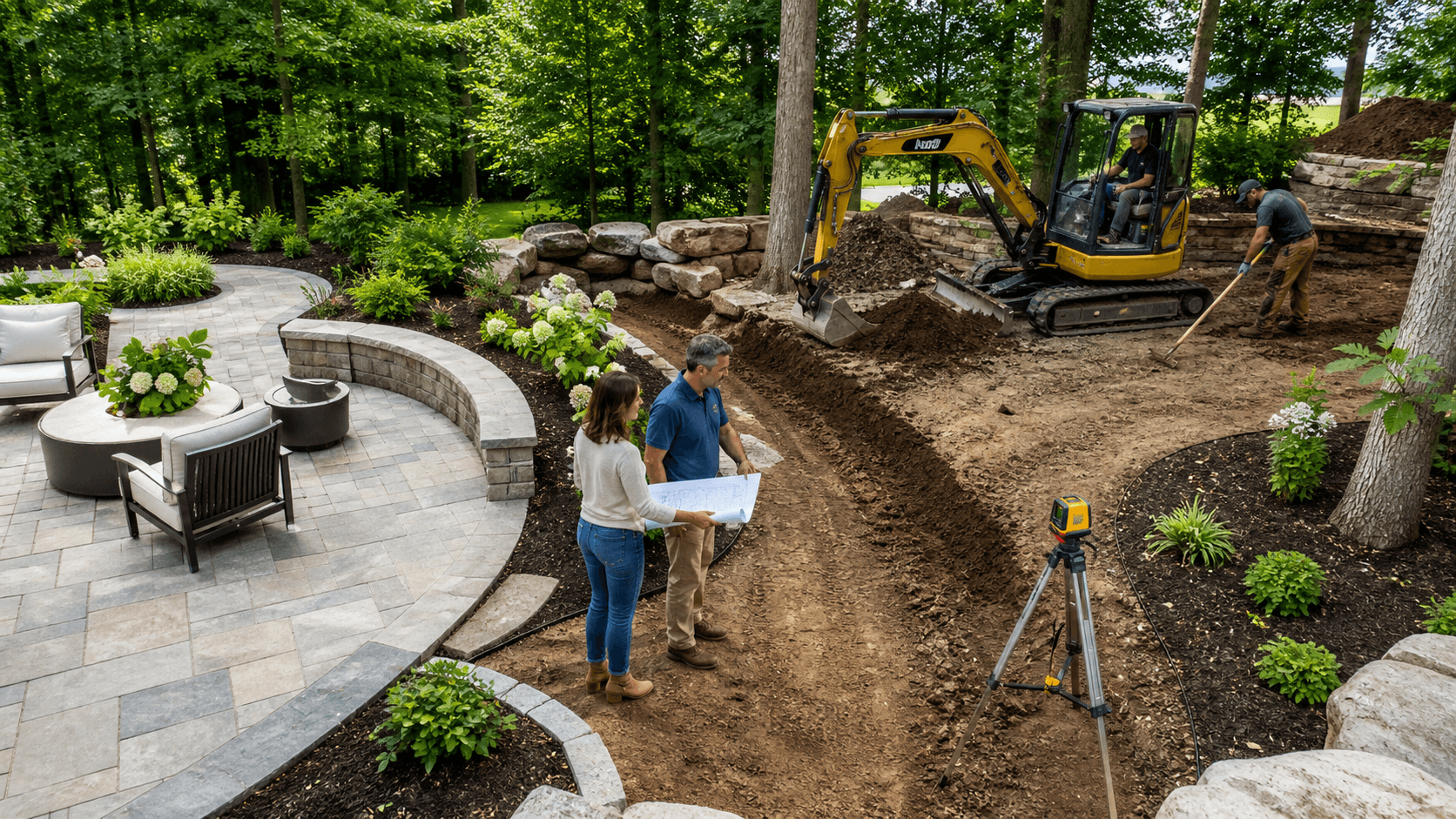
A typical project starts with an on-site evaluation. We verify elevations and slopes, study how water is moving across the whole property, and note how any planned hardscape, structures (including any outdoor kitchen work), irrigation, or landscape lighting will interact with that water. From there, we design a drainage plan that works with the yard's constraints, not against them.
Construction on tight lots brings its own realities. Access for machines can be limited, so we plan how to move material in and out while protecting mature trees and existing patios and decks. There will be some site disturbance while trenches are open and grades are being adjusted, but the goal is always to leave a stable, clean site ready for the next phase of your project.
Several factors usually influence the scope of a drainage project, including lot size, the amount of pipe and structures required, whether retaining walls are involved, and how difficult access will be. When all of that is planned as one integrated build, it creates a yard that manages water well and supports the hardscape and structures you want to use for years.
If you're seeing water sit against your basement wall, under a patio, or along those tight side yards in Homewood, let's talk about your property. Call us at (205) 305-7780, email us at info@woodpalmer.com, or reach out through the contact form at woodpalmer.com/contact to discuss what's going on with your yard and how drainage, hardscape, and structures can work together on your site.
Get Started With Your Project Today
If you are seeing standing water, soggy spots, or erosion in your yard, we can design a custom solution that fits your property and budget. Explore our drainage solutions in Homewood to see how Wood-Palmer Outdoor Creations can protect your landscape and foundation. We will walk you through your options, answer your questions, and provide a clear plan before any work begins. Ready to move forward or schedule an evaluation of your property? Simply contact us and we will follow up promptly.