How Smart Pavilion Design Tames Birmingham Weather
An outdoor pavilion in Central Alabama has to do more than look good. Around Birmingham we live with hot, humid summers, surprise afternoon storms, and the occasional strong wind pushing off Red Mountain or across the Cahaba River valley. If a pavilion isn't planned for that, it'll be uncomfortable to use and can have long-term problems.
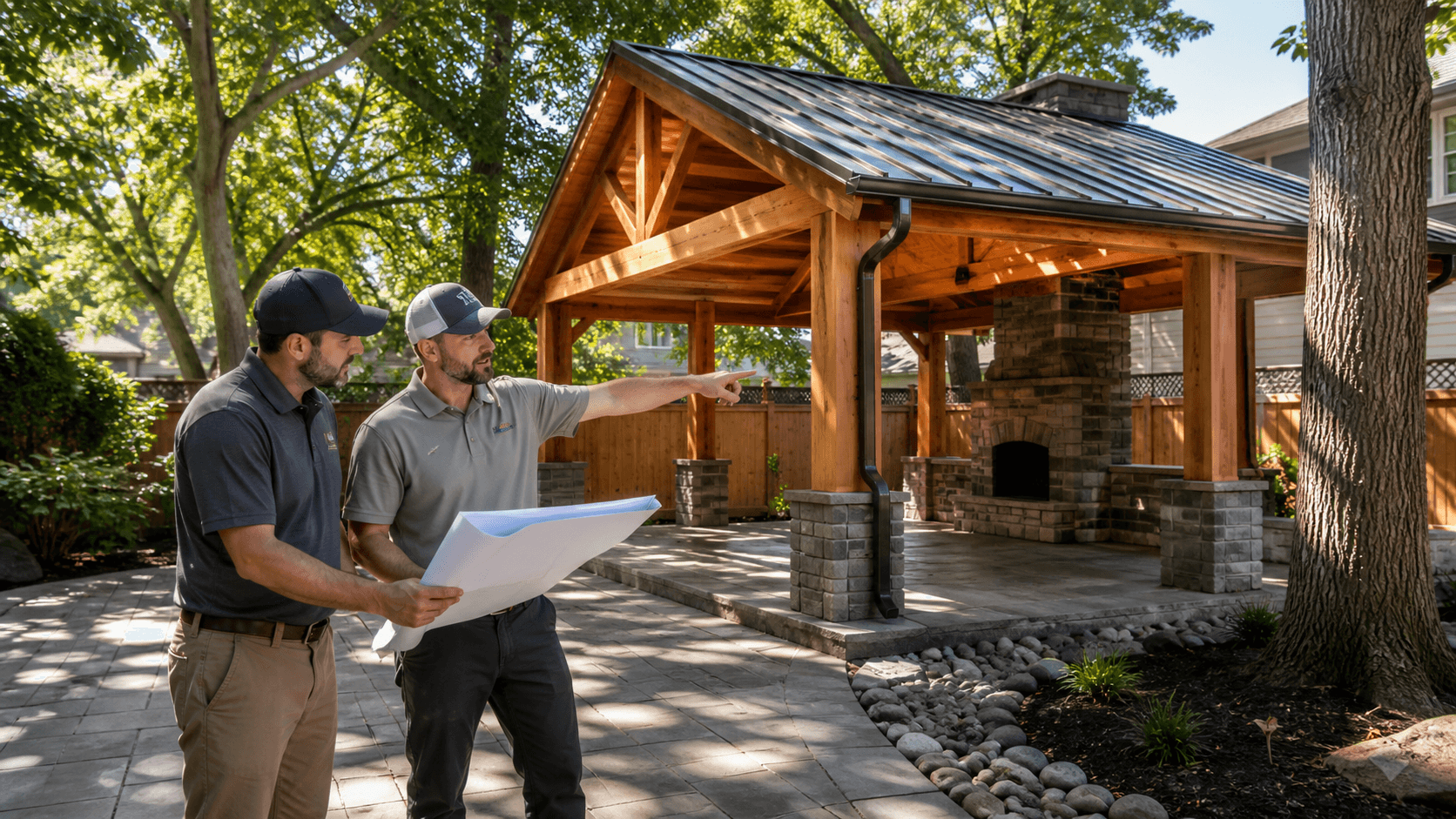
A good outdoor pavilion contractor in Birmingham doesn't just set posts and throw a roof on top. We think about wind loads, sun angles, and those heavy summer downpours that hit our red clay soils. When we step into a backyard, we're reading the site: where the wind comes from, how shade moves through the day, and how water already flows. Those decisions shape how the pavilion feels to sit in, how it weathers storms, and how well it ties into the rest of the property.
Reading Wind and Sun Before a Single Post Goes in
Wind behaves differently in each part of Greater Birmingham. In Mountain Brook, Vestavia Hills, and Homewood, hills and tight lots can bend and speed up the wind around houses and tall pines. In Hoover, Greystone, or Chelsea, more open ground can leave a pavilion more exposed. We look at:
- Prevailing wind direction for everyday breezes
- How nearby houses, fences, and trees create wind tunnels or sheltered pockets
- Whether the pavilion will sit on a ridge, mid-slope, or tucked in low
Those details help us choose roof orientation, pitch, and connection hardware so the structure can handle both normal breezes and sudden storm gusts. We pay special attention to overhang size, how the roof is tied into beams, and how posts are anchored for uplift resistance.
Sun and shade matter just as much. A west-facing opening might feel fine in spring, then be almost unusable at 4 p.m. in August. We look at:
- Morning versus afternoon sun, especially strong western exposure
- Existing tree canopy and how it'll grow over time
- Shade patterns across seasons, not just one time of year
From there we decide how much solid roof coverage you need, where open gables make sense, and whether pergola-style ends can provide filtered light without baking the seating area. Sun patterns also drive where we place ceiling fans and lighting so they actually help with comfort instead of fighting glare.
Structural Choices That Keep Pavilions Solid
Under every good pavilion is a footing system matched to Alabama clay and rock. Around Birmingham, we hit everything from soft topsoil to hard red clay and pockets of rock in the same yard. That affects footing depth, diameter, and steel reinforcement. We think through:
- Bearing capacity of the native soil
- How shallow our frost line is, but still confirm footing depth
- Extra strength needed to handle both roof weight and wind uplift
Attaching to an existing patio is different from pouring new concrete. Sometimes the old slab is too thin or not reinforced for column loads, so we core-drill and add piers or pour new footings beside it. Base preparation and compaction always matter, especially on clay that holds water and moves if it isn't properly supported.
For framing, our engineering-first approach comes into play. We size beams and rafters for span and load, not just appearance. We rely on:
- Proper post bases that keep wood off concrete and out of standing water
- Hurricane clips, straps, and through-bolts, not just nails
- Lateral bracing so the pavilion doesn't sway or rack during strong gusts
Roofing material also plays a role. Metal roofs are lighter and shed water fast, but they can be louder in a storm and need careful attention to uplift resistance at the edges. Shingle roofs add weight and a softer sound profile, which affects framing design and connection details.
When a pavilion ties into the home, we pay close attention to how it connects at the wall and roofline. Flashing has to be done right so water doesn't find a path into the house. Load paths have to be clean so we don't create a weak spot where the old structure and new structure meet. We also align roof pitch, fascia lines, and column style so the pavilion looks like it belongs with the home instead of feeling tacked on.
Drainage and Grading So Stormwater Goes Where It Should
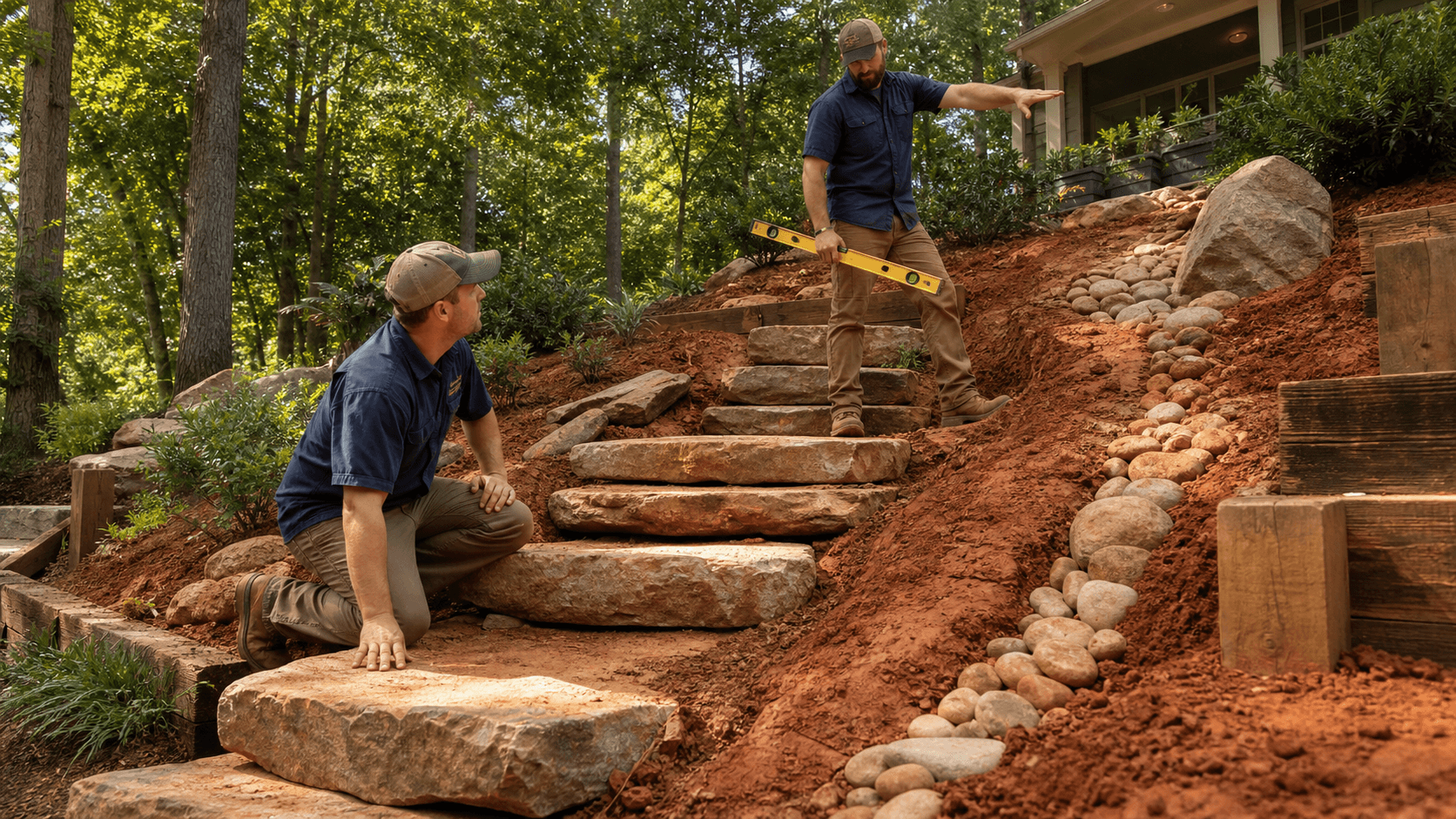
Storm water control starts long before the first footing is dug. We walk the yard and look for:
- Low spots that still hold water a day after a thunderstorm
- Existing swales and natural flow lines
- Downspout locations and where that water is already going
Putting a roof and hard surface in one area speeds up how fast water gets there and how it leaves. That often means adjusting grading so water moves around the pavilion instead of through it.
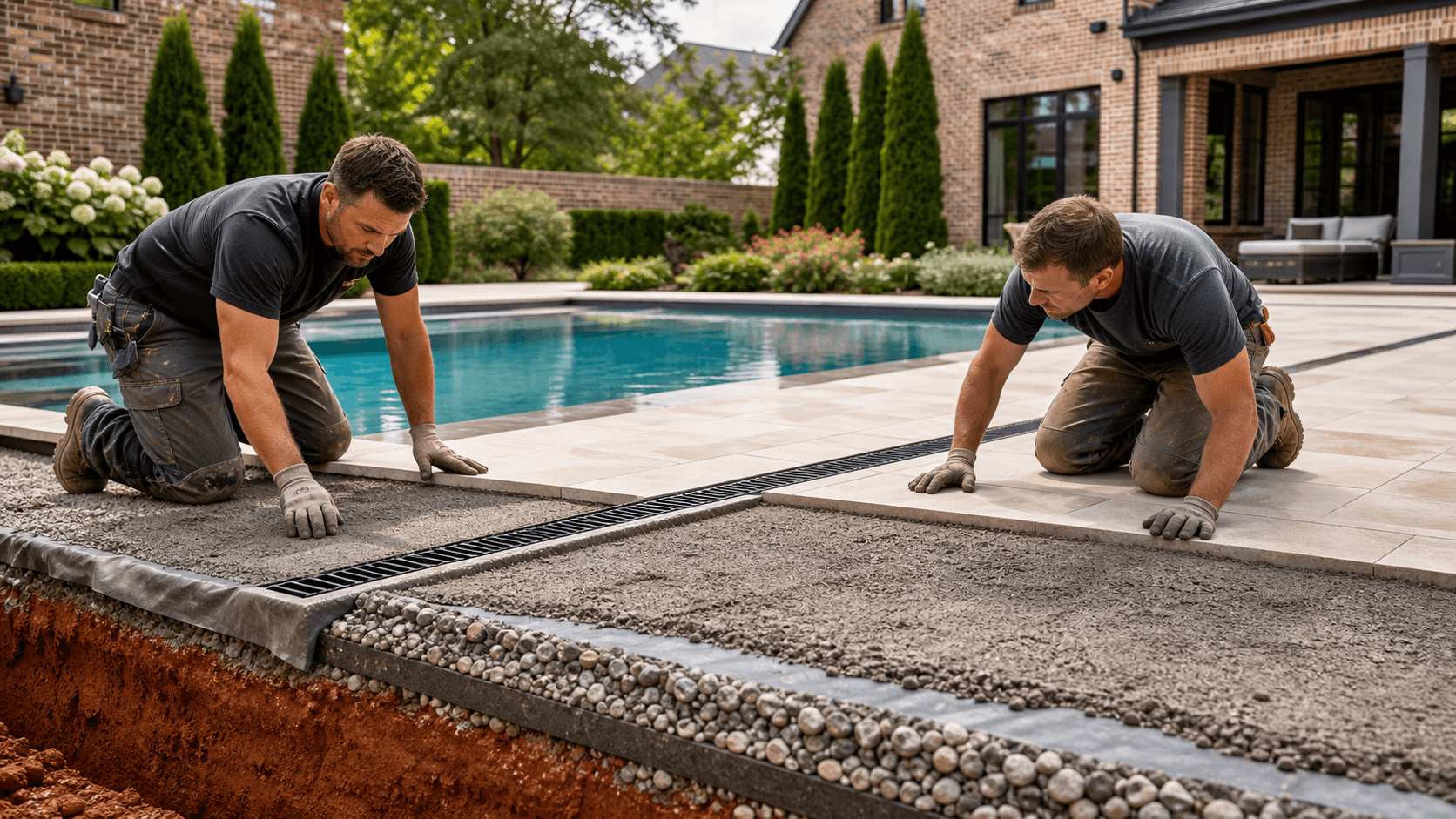
Under pavers or a concrete floor, we test and shape the subgrade, then build up a compacted aggregate base at the right thickness. Alabama clay is sticky when wet and hard when dry, so poor compaction can lead to settlement, cracking, or heaving. We set careful slopes so surface water runs away from the structure and into planned drainage routes.
Roof runoff needs a plan too. We decide if gutters or open eaves make more sense and place downspouts where they won't dump water at pavilion corners. From there, we may tie into:
- French drains
- Underground drain lines to daylight
- Surface swales that carry water to a safe discharge point
All of this has to work with nearby hardscape, plant beds, and lawn areas, so you don't end up with one dry, solid pavilion and a muddy mess around it.
Planning for Real-World Use All Year Long
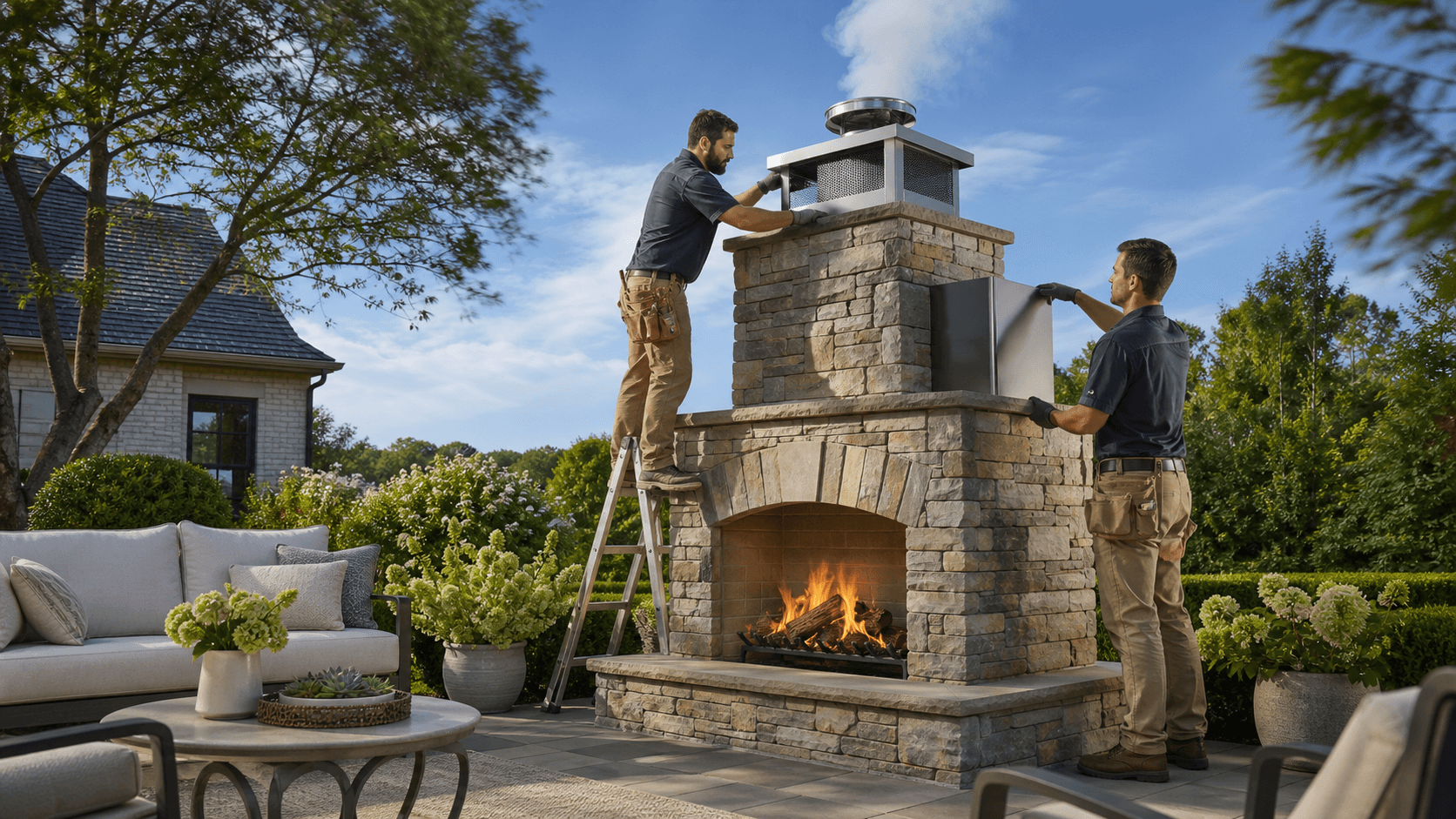
Comfort is the whole point of adding a pavilion. In our heat, good airflow makes a huge difference. We think about ceiling height, whether gable ends stay open, and where to hang fans so they move air across seating without fighting the natural breeze. If you want an outdoor kitchen, we also plan the roof shape to keep smoke from trapping under the ceiling.
For shade, we often combine solid roof areas where people sit and cook with more open sections that let in softer light. For cooler days, we plan wiring and clearances for heaters, plus lighting that makes the space useful without glare on a TV or hot spots at eye level. Furniture layout stays in mind so walking paths stay dry and clear.
Most pavilions end up using power, gas, or water. That means planning utility runs before we dig the first footing. We look at:
- Trench paths that avoid big tree roots
- How to protect lines under future hardscape or planting beds
- Shutoff valves and access panels so maintenance stays simple
Every site in the Birmingham area is different, from slopes in Bluff Park to tighter lots in Homewood and larger properties toward Trussville or Chelsea. Pavilion size, roof style, finish level, and how much grading or drainage work is needed all change what it takes to build it the right way. Taking time to read the site up front is what keeps the finished structure comfortable, solid, and working with your property instead of fighting against it.
Get Started With Your Project Today
If you are ready to transform your backyard into a space you will actually use and enjoy, we are here to help. As your trusted outdoor pavilion contractor in Birmingham, Wood-Palmer Outdoor Creations will guide you from first ideas through final construction. Tell us about your vision, and we will design a custom pavilion that fits your home, lifestyle, and budget. Have questions about your project? Give us a call at (205) 305-7780, email us, or contact us online to talk about your property.