What Your Vestavia Hills Driveway Needs Below the Pavers
A paver driveway in Vestavia Hills does not live or die at the surface. The pattern and color may catch your eye, but the real success sits down in the dirt where most people never look. On our hills, with our red clay and long slopes, a driveway is a small structural project, not just a finish choice.
If the base, drainage, and load-bearing design are wrong, the nicest pavers in the world will shift, rut, and fail. With 75 years of combined leadership experience, Wood-Palmer Outdoor Creations approaches every driveway like an engineered system. As owners, we stay involved on-site so details below the surface don't get skipped. Let's walk through what should be happening under a properly built paver driveway in Vestavia Hills before anyone starts unloading materials in your yard.
Understanding Vestavia Hills Soil, Slopes, and Water
Central Alabama red clay is tough on driveways. When it's dry, it can feel like concrete. When it's wet, it holds water like a sponge, then expands and softens. As it dries back out, it shrinks and can crack. That movement is hard on any rigid surface that's just sitting on top.
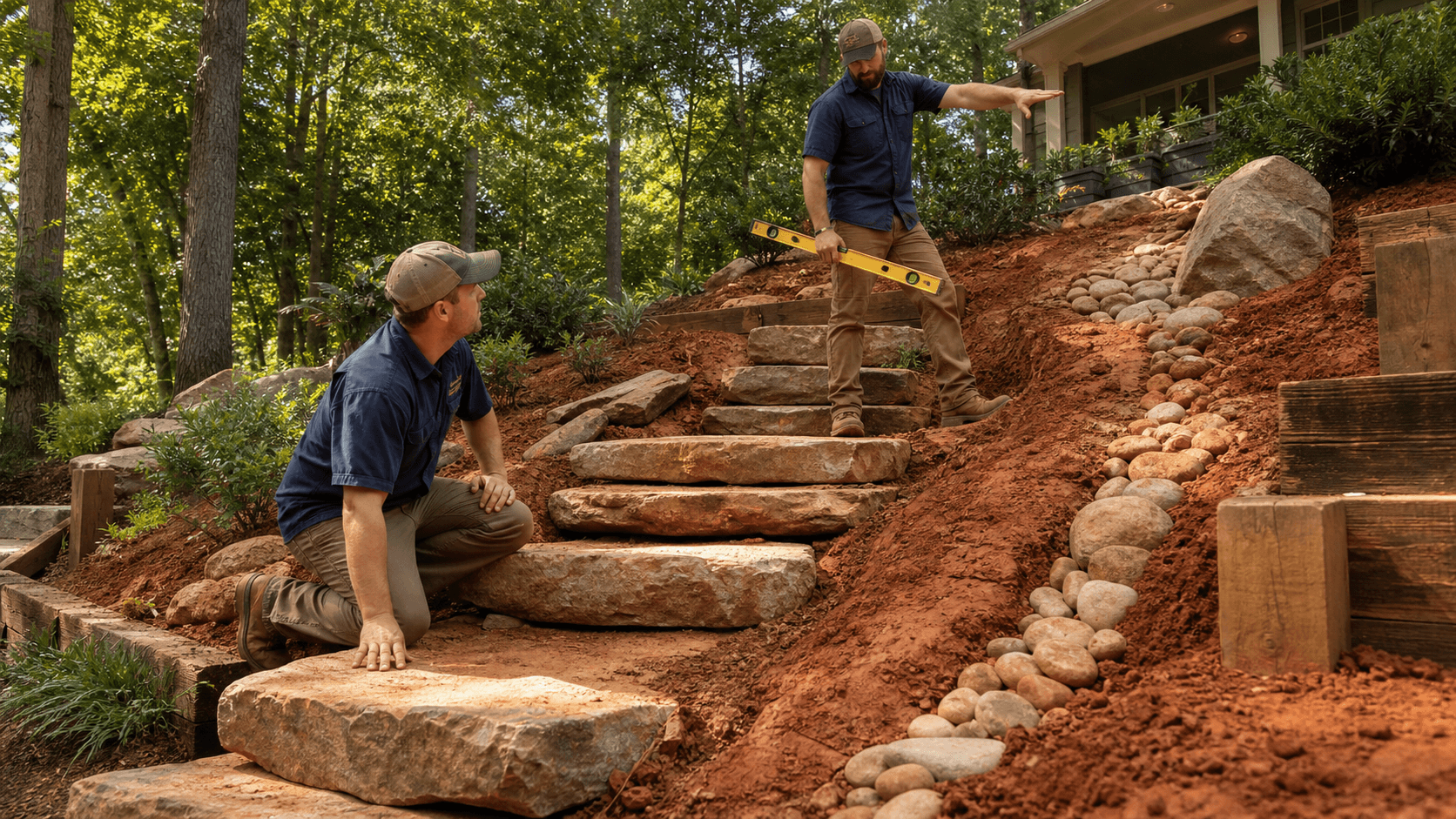
Vestavia Hills adds another layer of challenge with its terrain. Many homes sit on:
- Steep driveway approaches
- Long runs from street to garage
- Side slopes that shed water across the drive
Water always follows gravity. It wants to run down the driveway toward the street, your garage, or your foundation. If that water is not managed, it will find weak points in the base, create soft spots, and start the process of settling and heaving.
Drainage and grading are structural decisions, not cosmetic add-ons. They affect:
- How fast water leaves the driveway surface
- Where that water goes next
- Whether your base stone stays locked or starts to pump and move
Around mid-September, we often see late-summer storms followed by steady fall rain. That timing can help or hurt a driveway build. If the base is not compacted correctly before heavy rain hits, water can work into the stone and clay and break down the structure. A good driveway design in Vestavia Hills starts with a site-specific assessment: soil conditions, slope percentage, and existing drainage paths through the yard.
Building a Stable Base That Can Carry Real Weight
A paver driveway carries more than just cars. It has to stand up to delivery trucks, service vehicles, and turning movements at the garage. That means the base has to be built like a structural section, not a patio.
Proper base work usually includes:
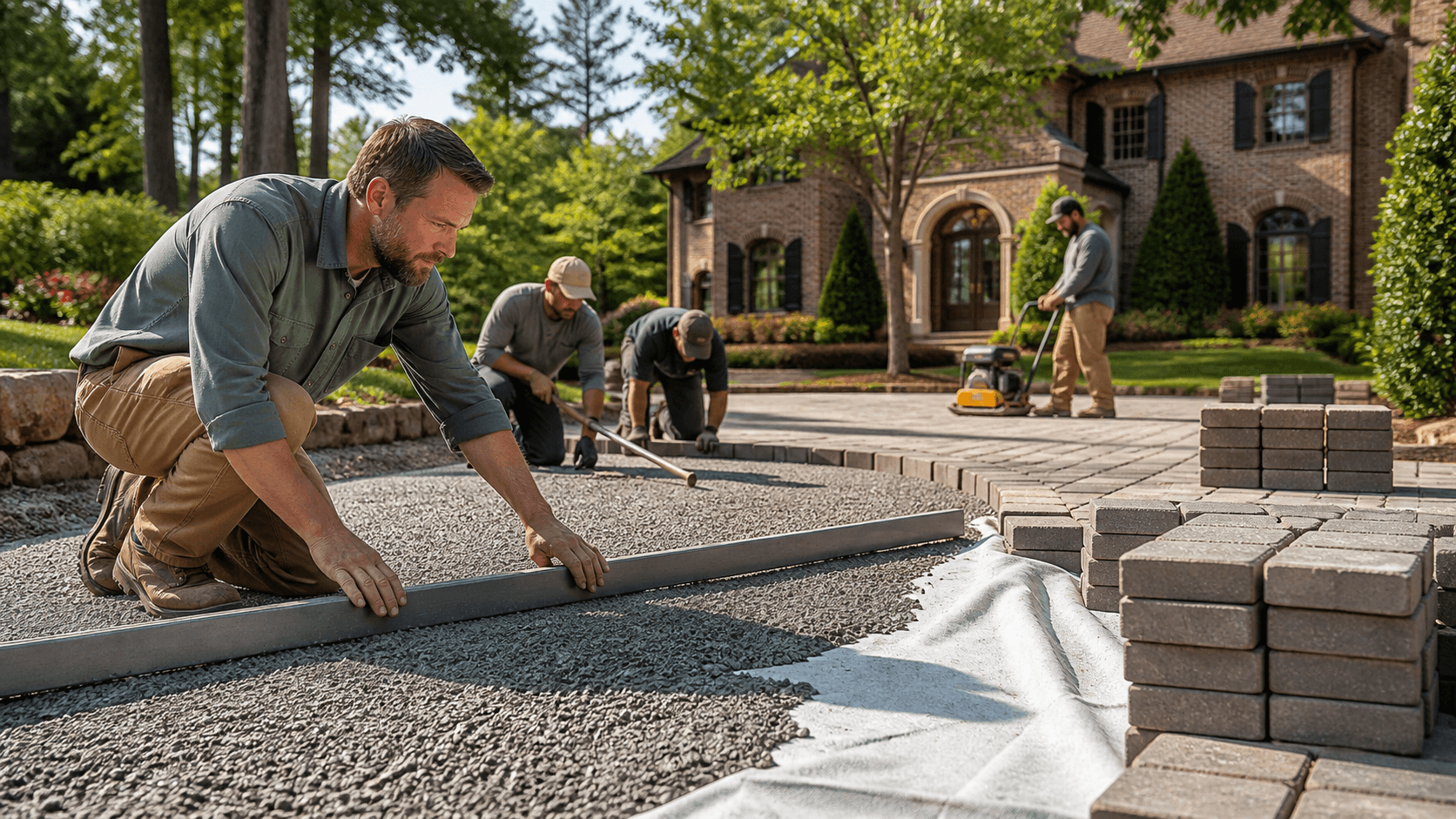
- Excavation deep enough for a driveway section, not just a thin layer under pavers
- Removal of organic material and any obviously soft, unsuitable soils
- Placement of base stone in layers, or lifts, with compaction between each lift
Angular stone is key. The fractured faces of the rock help it lock together and spread the load from your tires out into the soil below. Uniform compaction across the entire driveway keeps one area from settling faster than another, which is what causes dips and trip edges.
In many Vestavia Hills yards, we're working directly over red clay. That is where separation becomes important. A suitable underlayment or geotextile between the clay and the base stone can:
- Keep the stone from pushing down into soft clay
- Reduce pumping when water moves through the soil
- Help hold the structure together on slopes
With 75 years of combined leadership experience, we treat a paver driveway like a small civil project. That mindset shapes how we plan excavation depths, choose stone gradations, and sequence compaction so the driveway can carry real weight for the long haul.
Drainage, Edge Restraints, and Jointing That Keep Pavers Locked
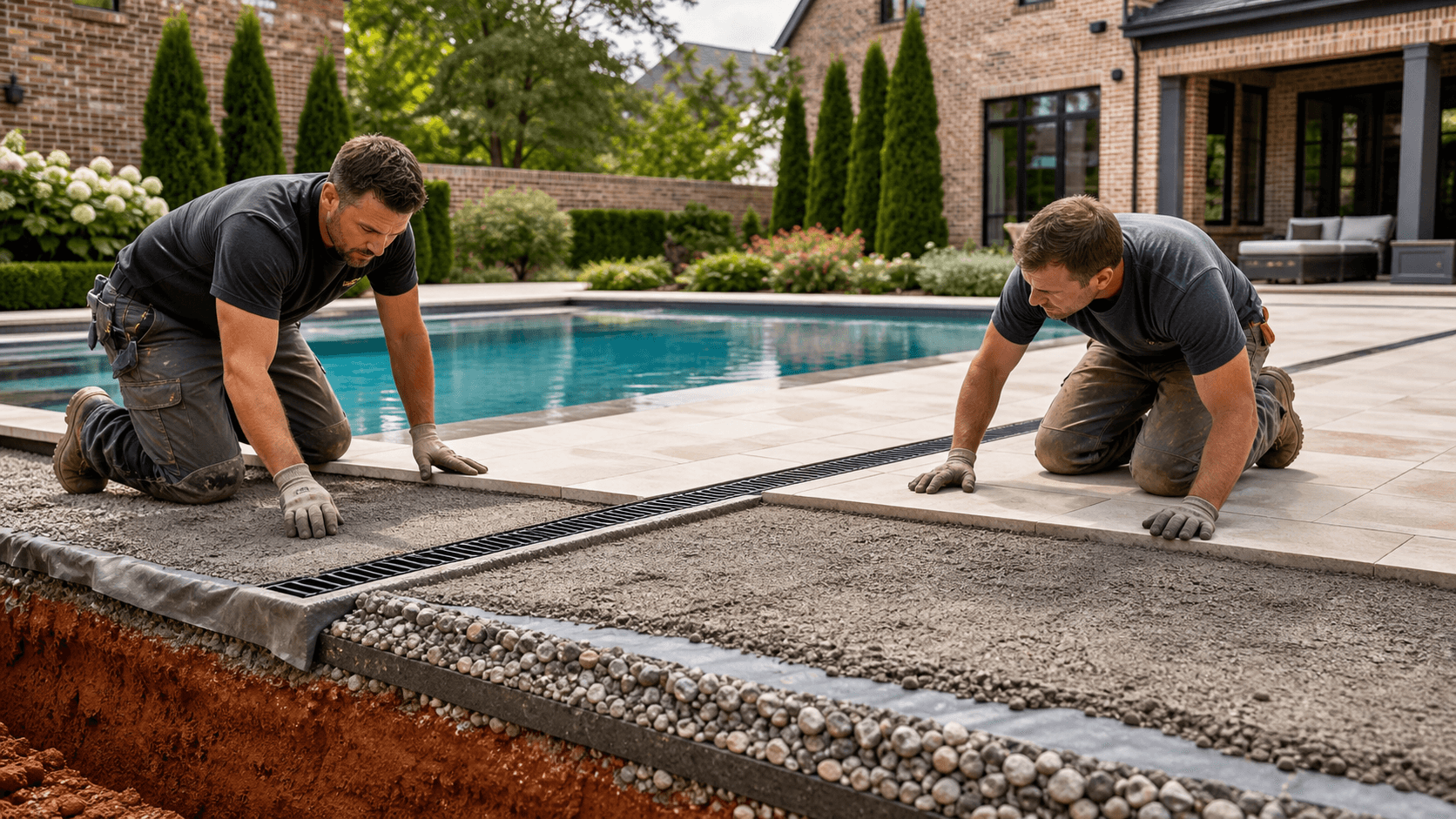
Drainage is not just about adding a drain at the bottom of the driveway. It starts in the section design. We look at:
- Cross slope, so water sheds off the drive instead of running straight down the middle
- Longitudinal slope, so water doesn't sit and pond in low spots
- Collection points, like drains or swales, that move water away from the house
In Vestavia Hills, driveways often tie into streets at noticeable angles and cross existing water flows. If those transition points are not detailed correctly, pavers can ravel or rut where they meet the road or garage slab.
Edge restraints are another piece that many people never notice until they fail. Concrete borders or other engineered edges keep the field of pavers from creeping under:
- Braking loads at the garage
- Turning movements near parking areas
- Repeated wheel paths on narrow sections
On top of the base, bedding sand creates a smooth, level setting bed. Joint sand, sometimes with joint stabilization products, locks the pavers together so they act as one surface instead of a bunch of loose units. When the build sequence is driven by engineering, and owners are paying attention on-site, these under-the-surface steps don't get skipped to "save time."
How Pavers, Hardscape, and Landscape Lighting Work Together
On many estate properties in Vestavia Hills and the Greater Birmingham area, the driveway is part of a larger arrival experience. It connects to hardscape walkways, walls, and courts, and often ties into planting beds and landscape lighting.
Planning these pieces together lets us:
- Shape grading so water flows around drives, walks, and beds without cutting through them
- Place retaining elements where the terrain changes quickly from street to home
- Align steps, landings, and parking courts for comfortable, safe movement
When driveways are designed in isolation, water might end up pushed into a planting bed, against a wall, or toward the front entry. By thinking like one team, with one plan and one standard, we can match the structure under the driveway to the rest of the outdoor environment so the visible hardscape and landscape lighting stay stable and easier to live with over time.
When to Build, What to Ask, and How to Move Forward
In our area, fall often gives a good window for driveway construction. Temperatures are usually moderate, soils are not at their soggiest or driest extremes, and compaction tends to be more reliable. That said, the right timing still depends on your specific site conditions and how water moves through your property.
Before you agree to any paver driveway in Vestavia Hills, it helps to ask clear, practical questions, such as:
- How deep will you excavate for the driveway section, and what will you remove?
- What type of base stone will you use, and in what thickness?
- How will you handle compaction, and in what size lifts?
- What is the drainage plan, both on the surface and under the driveway?
- Who will be on-site overseeing the work each day?
A structurally sound paver driveway should be engineered on paper before anyone pulls strings or cuts grade. When you understand what needs to happen under the surface, you can review plans and ask better questions. That's the best way to end up with a driveway that looks good at the top and is built to handle Alabama clay, hills, and water from the ground up.
Get Started With Your Project Today
If you are ready to enhance your curb appeal with a custom-designed paver driveway in Vestavia Hills, our team at Wood-Palmer Outdoor Creations is here to help. We will walk you through design options, materials, and timeline so your new driveway fits your home and lifestyle perfectly. Let's talk about your property—contact us or email us at info@woodpalmer.com to get started.