What to Expect From Landscape Design in Birmingham's Clay Hillsides
Landscape design in Birmingham's clay hillsides is less about decoration and more about construction. If your yard drops off behind the house or you live on one of our tight, sloped lots, you're not just picking pavers and shrubs. You're dealing with soil that moves, holds water, and puts real pressure on anything you build.
In Central Alabama, that means your outdoor space needs to be engineered like a permanent structure. The clay, the slopes, and the drainage patterns all decide if your new patio, wall, or set of steps will still look solid years from now. With 75 years of combined leadership experience, we've learned that long-lasting outdoor projects here always start with how the hill and the water behave, not with what color stone you like.
Why Birmingham's Clay Hillsides Need Real Engineering
Birmingham's rolling hills, tight neighborhood lots, and downhill backyards make outdoor work feel a lot like a small building job. When your yard slopes away from the house, gravity is always trying to move water and soil downhill. Anything you build in that path has to be ready for that pressure.
Clay soil makes this even more important. Clay tends to:
- Hold water instead of draining quickly
- Swell when it is wet and shrink when it dries out
- Lose strength when it stays saturated
- Move against anything built on top of it or in front of it
Over time, that movement shows up as cracked patios, settled steps, leaning walls, and stressed plant beds. This is why landscape design in Birmingham should start with:
- Drainage and where water needs to go
- Grading and how slopes are shaped
- Structural integrity for walls, patios, and structures
Finishes, plants, and lighting matter, but they come after the structural plan is right. When a design-build team treats your outdoor space like a permanent structure built for Alabama conditions, you can expect it to stay usable, safer, and cleaner for the long haul.
What Makes Birmingham's Clay So Tough on Yards
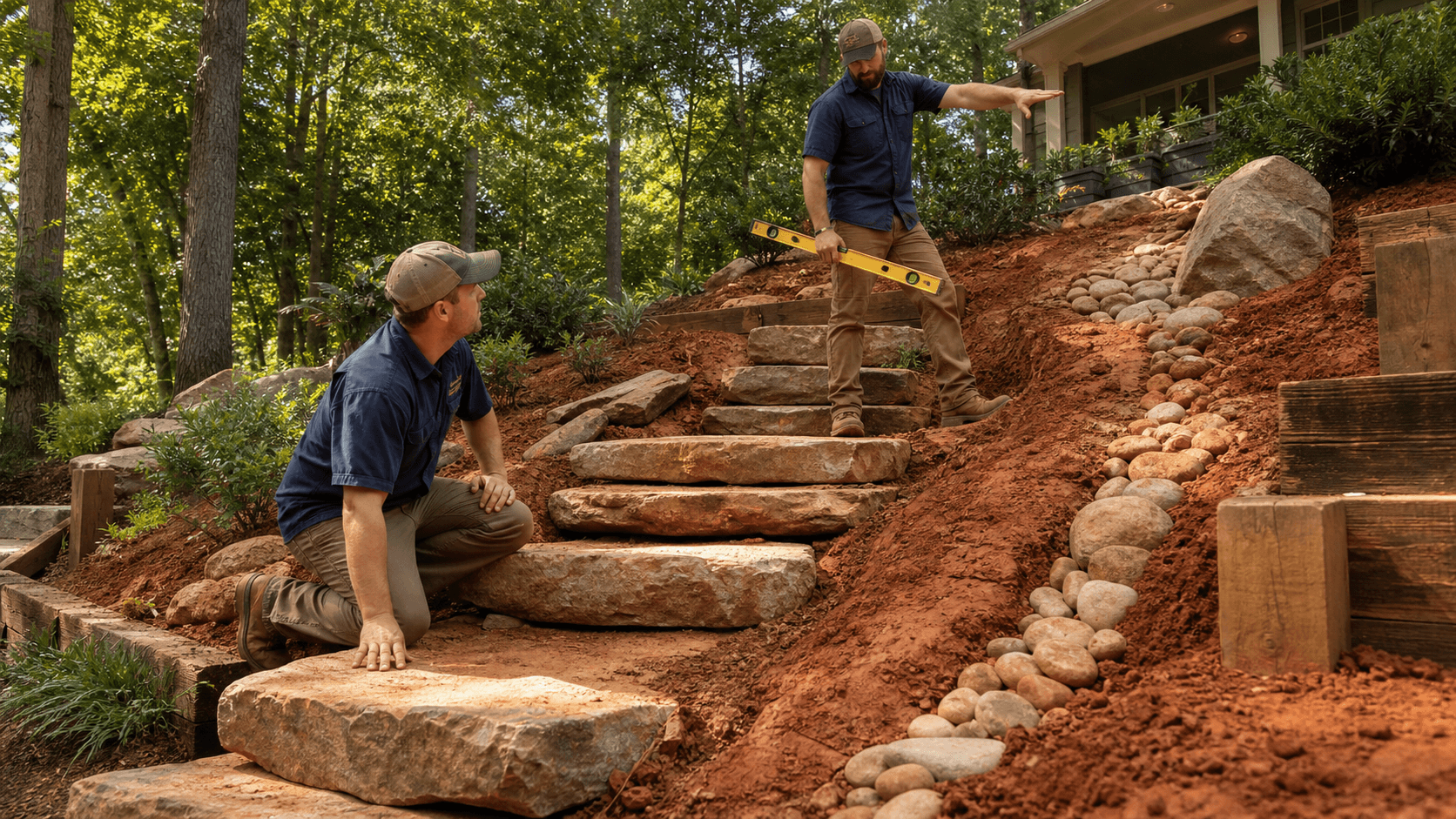
Across Central Alabama, you see a lot of red clay, thin topsoil, and steep slopes. When it rains, water runs fast across the surface, cuts channels in bare areas, and builds up behind anything that blocks it, like walls, steps, or house foundations.
When clay is not handled correctly, homeowners often see:
- Standing water along the house or patio edge
- Erosion gullies down the hillside
- Sinking or rocking pavers
- Steps that heave or separate
- Walls that bow, lean, or bulge
To avoid that, an engineering-minded team looks at:
- Subgrade evaluation: what kind of soil is there and how deep it is
- Compaction, how firmly the soil and base are packed
- Base preparation, thickness and material under pavers and walls
- Drainage relief, ways to let water out from behind walls
- Safe water paths, where runoff exits without washing out the yard
In hillside neighborhoods like Vestavia, Mountain Brook, Hoover, Trussville, and around Greater Birmingham, all of these issues get amplified because there is less flat ground and more water speed. The good news is, these problems are very manageable when you treat the yard like a jobsite and build to handle the soil and water, not ignore them.
How an Engineering-First Design Process Protects Your Investment
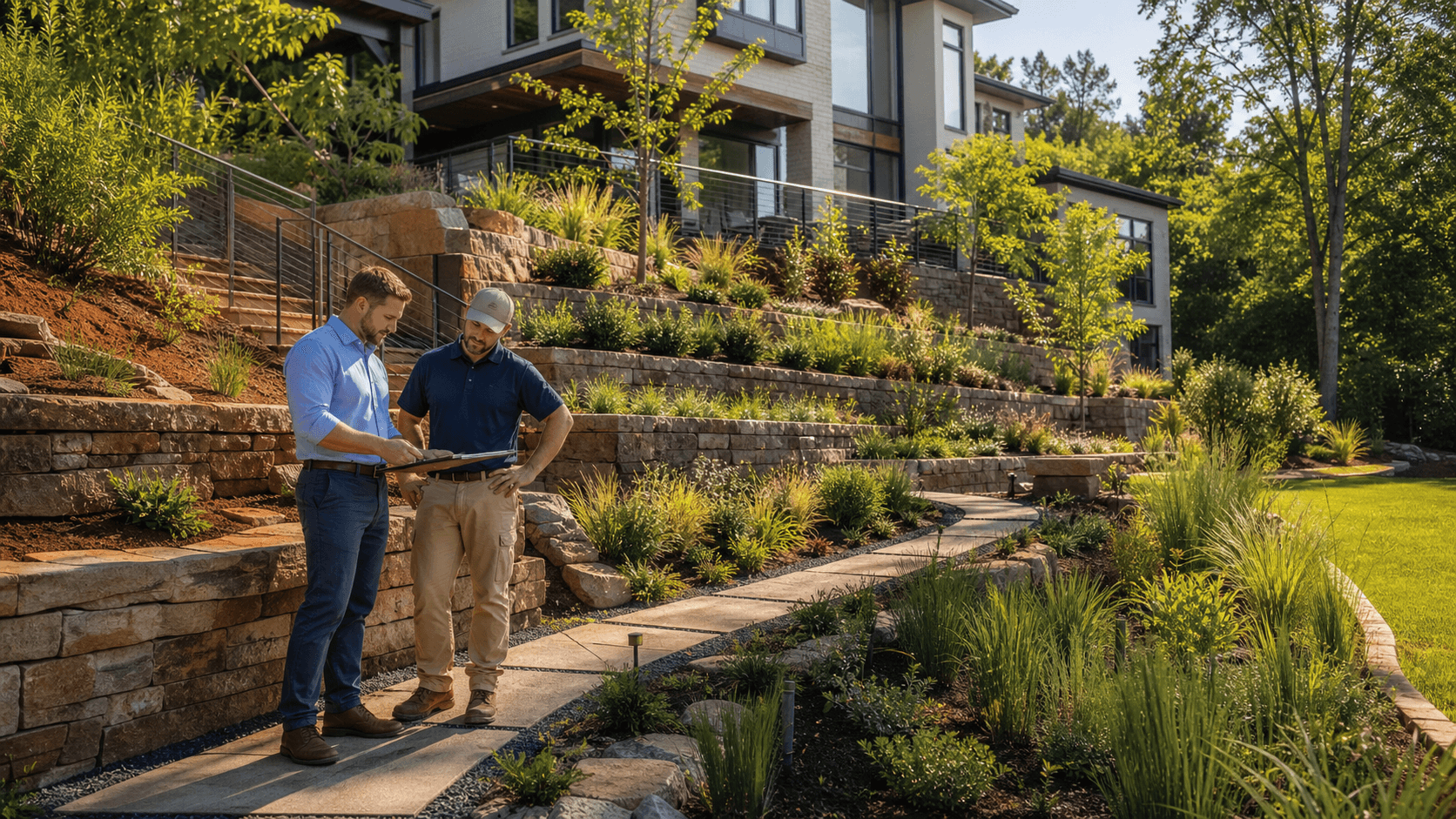
When you bring in a contractor that leads with engineering, the first visit should feel like a site walk-through, not a catalog meeting. Expect them to:
- Walk the slope from top to bottom
- Look for where water already runs or pools
- Check downspouts and how they discharge
- Study existing walls, cracks, and settlement
For taller retaining walls, elevated decks, and complex grade changes, partnering with licensed engineers is a smart step. They calculate loads, footing depths, drainage details, and reinforcement so your design is documented, not guessed at.
A solid hillside design in Birmingham ties together:
- Grading plans, how cut and fill will shape the hill
- Wall layouts, locations, heights, and step tie-ins
- Hardscape footprints, patios, walks, and landings
Only after that backbone is set do finishes and plant varieties make sense. Best practices on our clay hillsides often include:
- Proper wall setbacks into the slope
- Geogrid reinforcement at the right layers and lengths
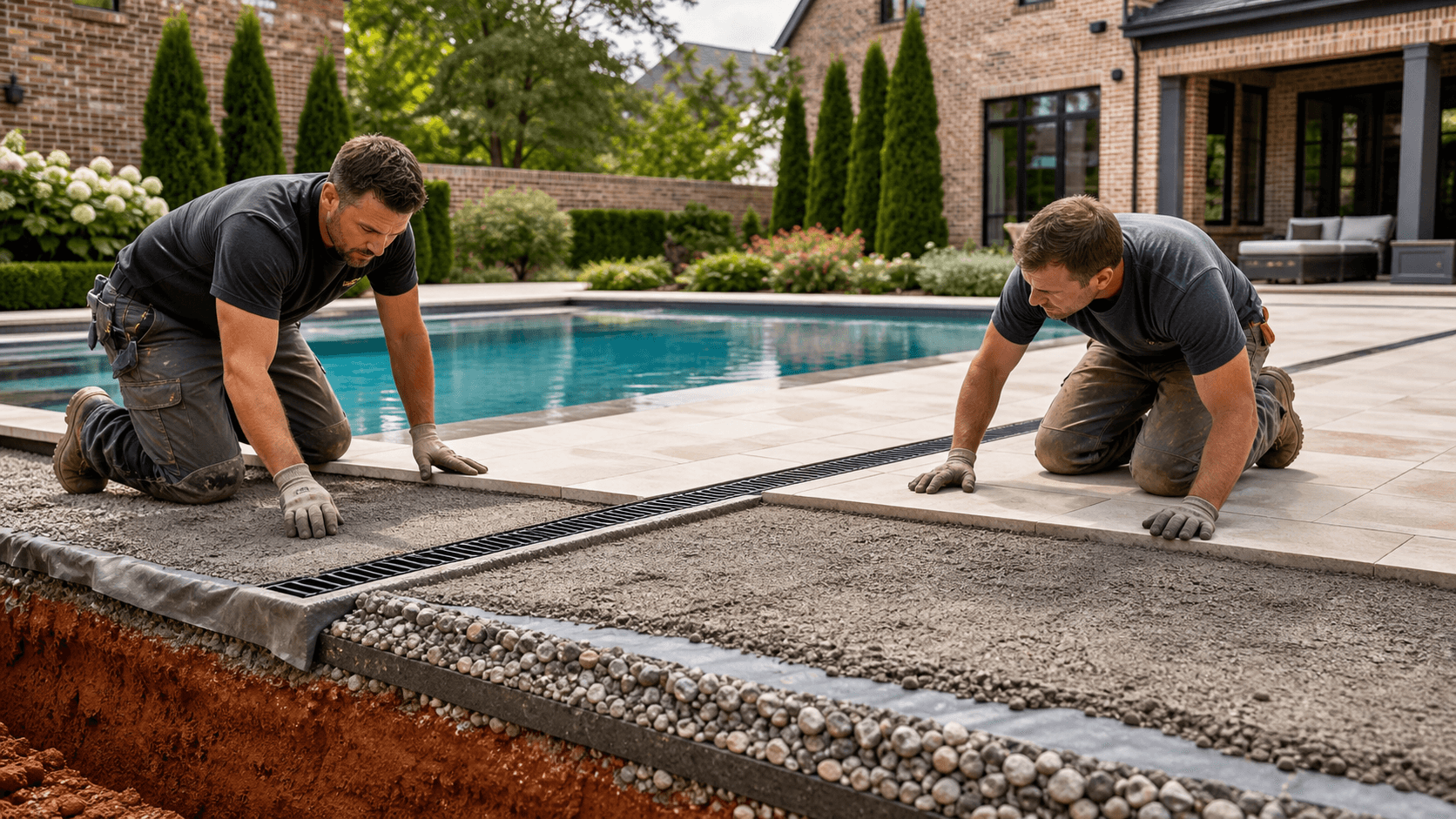
- Thicker, well-compacted base under pavers on clay
- Real drainage plans with French drains, swales, catch basins, and safe outlet points
At Wood-Palmer Outdoor Creations, the owners stay involved in the decisions that affect structural performance, not just what looks good. That keeps critical details from getting watered down as the project moves from paper to reality.
One Team, One Plan, One Standard From Design Through Build
On a Birmingham hillside, having one integrated design-build team matters. The same people who design your outdoor space should also manage the crews that handle:
- Excavation and grading
- Retaining walls and hardscape
- Structures and outdoor kitchens
- Irrigation and landscape lighting
The opposite model is where a homeowner tries to coordinate a designer, a separate wall contractor, an irrigation installer, and a lighting vendor. Each one may tweak things in the field, and changes do not always make it back to a single master plan.
That is how you end up with:
- Drain pipes buried too shallow or dead-ending behind walls
- Underbuilt walls that were never adjusted after grade changes
- Patios pitched the wrong direction toward the house or a doorway
With one team, grading, drainage lines, and base prep are protected decisions, not optional items a later subcontractor can cover up or skip to save time. Our process ties hardscape, plantings, irrigation, and lighting into one coordinated sequence so the finished space works from the ground up and looks clean when it is all buttoned up.
Planning Around Seasons, Rainstorms, and Real-Life Use
In Central Alabama, planning around weather is part of the job. Late summer and fall are often smart times to finalize design and engineering so heavier winter and spring rains hit a prepared yard instead of a bare slope.
Our climate drives choices about:
- Materials that can handle intense sun and sudden downpours
- Joint sands and bedding that respond well to clay and moisture
- Plant selections that can handle humidity, heat, and occasional freezes
- Drainage capacity sized for short, heavy storms
On a hillside project, it is also helpful to know what to expect day to day. Many projects involve machinery, soil stockpiles, and temporary disruption while we manage mud and runoff. Access to the yard, wall heights, drainage needs, and total hardscape area all affect how long the work will take and how complex it will be. If a pool is part of the plan with another builder, we focus on the decks, terraces, and surrounding features so everything ties safely into your slope and drainage pattern.
Landscape design in Birmingham's clay hillsides succeeds when it respects soil, water, and structure from the first conversation to the final stone. Walking your property after a rain, noticing where water goes, and thinking about where you want flat, usable space is a good way to start that process with a clear, practical view of what your hillside can become.
Transform Your Yard Into a Space You Love
If you are ready to turn your outdoor vision into a functional, beautiful extension of your home, our team is here to help. Explore how our customized landscape design in Birmingham can bring lasting value and everyday enjoyment to your property. At Wood-Palmer Outdoor Creations, we listen carefully, plan thoughtfully, and handle the details so you can enjoy the results. Have questions or want to schedule a consultation today, simply contact us.