Flagstone Patios That Actually Work in Vestavia Hills
A flagstone patio in Vestavia Hills should feel solid, drain cleanly after a storm, and stay that way year after year. Nice stone and a pretty pattern are not enough if water is trapped underneath and the ground is moving under your feet.
In our clay heavy Central Alabama soils, a flagstone patio is not just a layer of rock; it is a structural system. The way we handle drainage under and around that stone often matters more than the stone itself. If drainage is not engineered from the first sketch, problems tend to show up fast on these hillsides.
At Wood-Palmer Outdoor Creations, our team brings 75 years of combined leadership experience to hardscape, landscape, structures, irrigation, and landscape lighting. We lead with engineering, then build something beautiful on top of that structure. In this article, we'll walk through what integrated drainage really means for a flagstone patio in Vestavia Hills, in plain language but with the seriousness the work deserves.
What Central Alabama Weather Does to Flagstone Patios
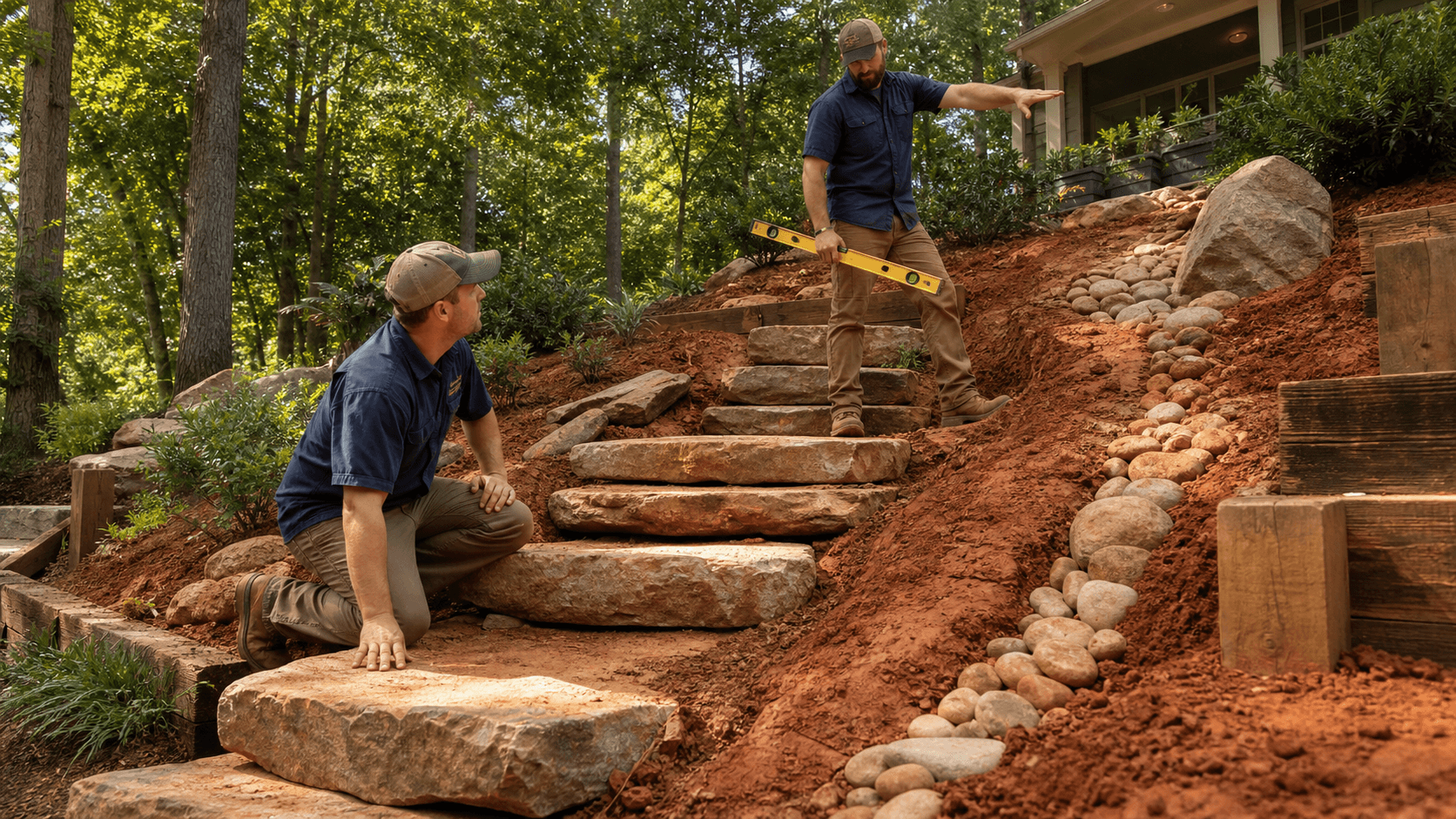
Vestavia Hills is not flat. Many homes sit on slopes, cut-in driveways, or above steep backyards. When rain falls, gravity pulls water down those hills and right toward patios, pool decks, and lower yard areas. If the patio is sitting in the path of that water without a way to move it, the stone will tell on you.
Our red clay behaves badly when it stays wet. It holds water, swells when it is soaked, and then shrinks and cracks when it dries. A flagstone patio that is sitting on a thin or poorly compacted base will ride that movement like a raft on a rough lake.
Add in our weather patterns and you get more stress on the structure:
- Heavy afternoon thunderstorms in late summer
- Long, soaking rains from tropical systems
- Periodic winter freeze and thaw that wedges water into joints
When drainage is wrong, you may notice:
- Standing water on the stone after storms
- Slippery algae or mildew in shaded, wet spots
- Stones that rock, tilt, or separate along the edges
- Cracked, loose, or washed-out joint material
These are not just cosmetic annoyances. They're symptoms that the base, grading, and drainage paths under that flagstone weren't engineered correctly from the beginning.
Why Every Flagstone Patio in Vestavia Hills Needs a Drainage Plan
A flagstone patio in Vestavia Hills should start with a drainage plan, not with a color chart. That plan begins at the design table with questions like: Where is the high point on the property? Where does water currently want to go? What happens when it gets there?
A real drainage plan looks at more than the patio footprint. It studies how water moves across the whole site, then ties the patio into that movement with:
- Proper elevations around the house and structures
- Positive slope away from foundations and door thresholds
- Consistent fall across the patio surface so water doesn't pond
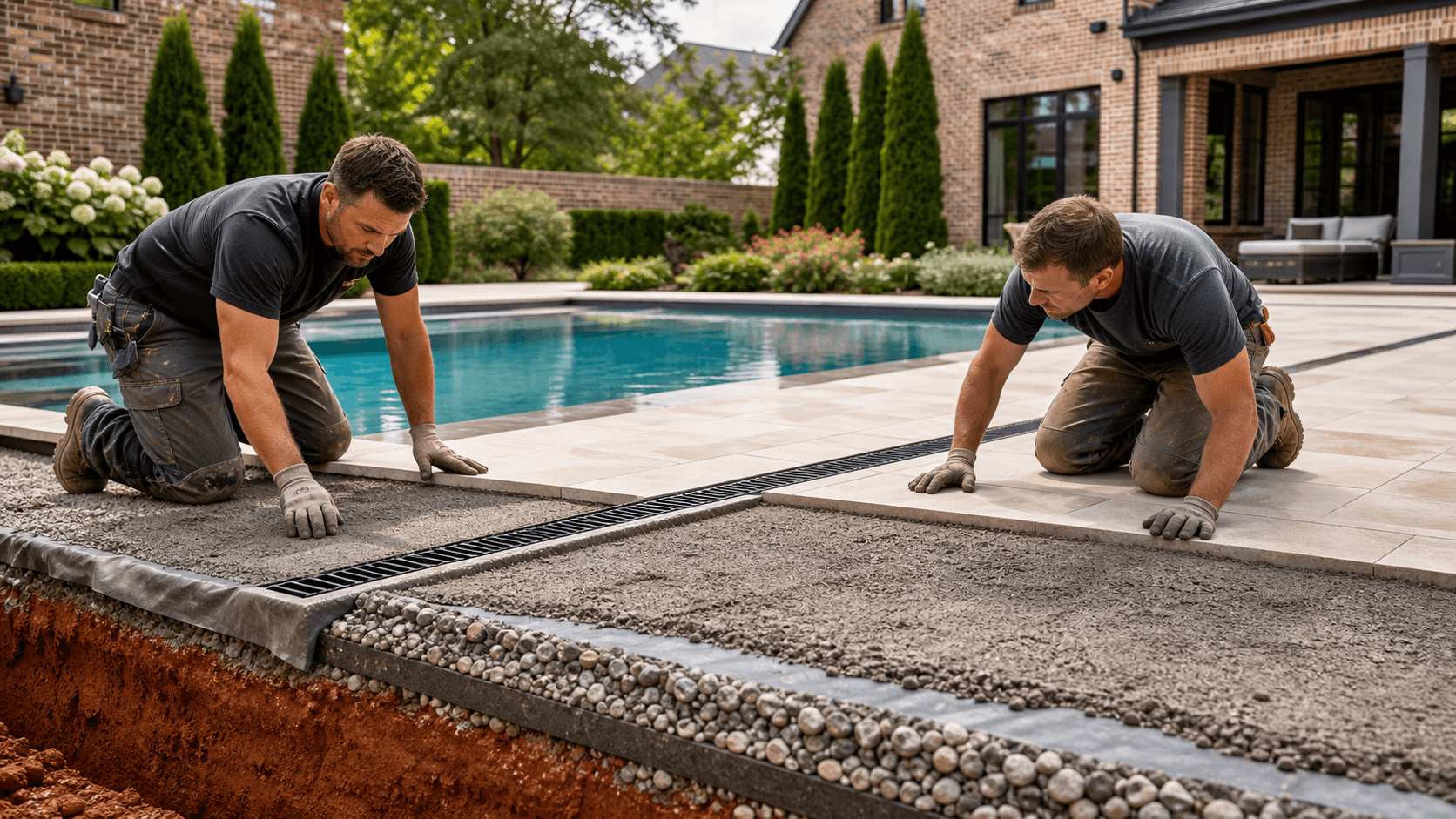
Under the stone, the base layers need to be compacted to the right density, but still allow controlled water movement to the drains or exit points. Surface water has to know where to go, and subsurface water has to have a path as well.
Integrated drainage also protects the pieces around the patio. Done right, it:
- Keeps water off house foundations and crawlspaces
- Works with pool deck elevations and expansion joints
- Reduces pressure behind retaining walls
- Sends water around planting beds instead of drowning them
When drainage, structure, and aesthetics are designed together as one system, the patio feels solid underfoot. You're not "breaking it in" each season as new low spots and trip edges appear.
How Integrated Drainage Gets Built Under Flagstone
Under a well-built flagstone patio, there's a lot you'll never see, but you'll feel the difference every time you walk across it. The build sequence usually looks something like this:
- Subgrade preparation, stripping organics and soft material
- Grading and shaping the subgrade to match drainage design
- Layered, compacted base material at the right thickness
- Bedding layer tuned to the stone type and pattern
- Flagstone placement, joint work, and final surface grading
Soil conditions in Vestavia Hills vary from tight red clay to fill dirt that's been moved around for past projects. We adjust base thickness, material, and compaction method to match that soil and the load the patio must carry.
Integrated drainage features are built into or under those layers, such as:
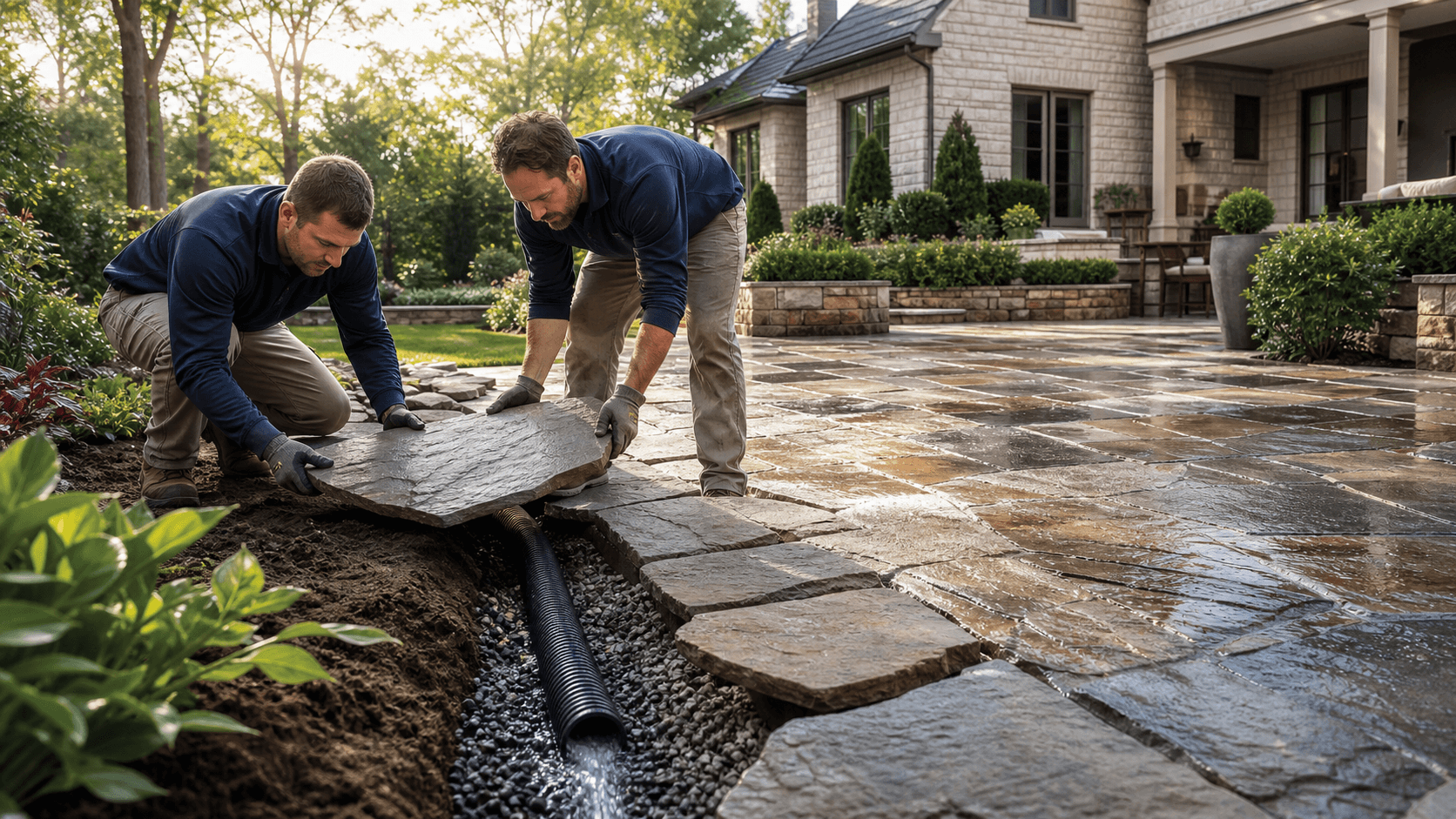
- French drains behind seat walls or at slope transitions
- Perforated pipe wrapped in stone to move subsurface water
- Gravel trenches that collect and move water quietly
- Catch basins at low points tied into outflow lines
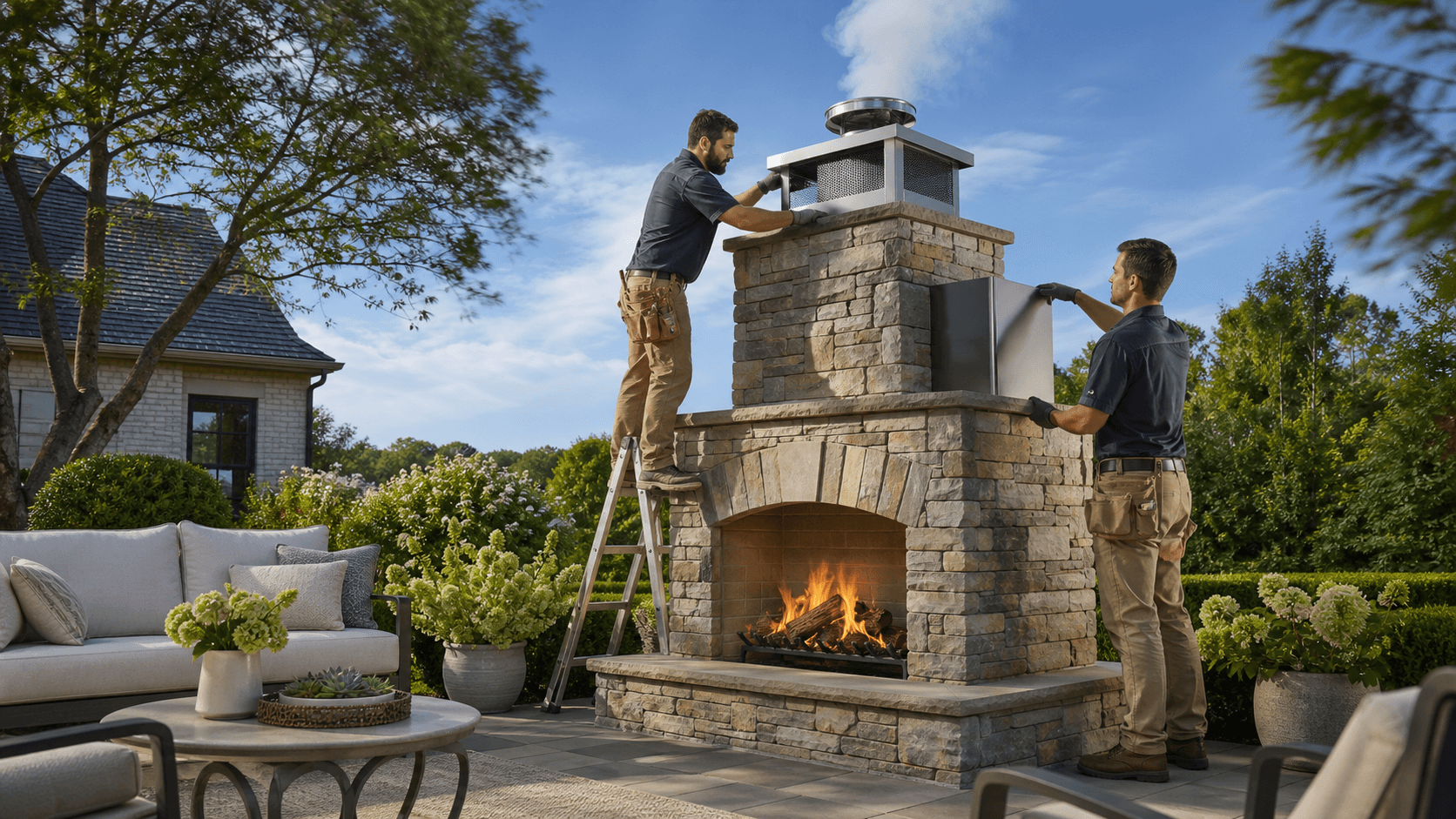
All of that has to be tied into the overall grading plan so water sheds away from the house, garage, pool, and property line. The same drainage backbone often supports seat walls, fire features, and planting pockets so those elements aren't sitting in constant moisture.
One Team, One Plan Across Hardscape, Landscape, and Lighting
Drainage gets much stronger when one design-build team is responsible for the whole outdoor environment. When different contractors handle patios, lawns, irrigation, and landscape lighting separately, conflicts tend to show up later.
Common problems with split responsibility include:
- Patio hard edge that dumps water straight onto a soggy lawn
- Lawn grading that actually sends water back toward the house
- Irrigation lines cut during hardscape work or placed too shallow
- Lighting conduit installed in the only path water should flow
At Wood-Palmer Outdoor Creations, our integrated model means hardscape, landscape, structures, irrigation, and landscape lighting work off one coordinated grading and drainage plan. That matters even more on Vestavia Hills lake homes and estate properties where elevation change can be dramatic and mistakes are expensive to correct.
We also match irrigation and plant choices to the drainage design around a flagstone patio. Some plants hate wet feet, some tolerate more moisture, and spray patterns shouldn't keep joints or steps constantly damp.
What Homeowners Should Expect During a Proper Patio Build
When drainage is treated as structure, the early stages of a patio project feel more like site work than decorating. On a well-run flagstone job, you should expect to see:
- Careful layout and marking of elevations and slopes
- Excavation of soft soils and organic material
- Trenching for drains, pipes, and conduit before stone arrives
- Proof-rolling or testing the base for movement
- Dry runs to confirm water is flowing where it should
This kind of work can extend the early timeline of the project, but it saves time and frustration later. Patios built this way are less likely to need band-aid fixes like add-on drains, grinding trip edges, or constant re-pointing of joints.
Several factors typically affect the overall scope:
- Access for equipment and material
- Slope and elevation changes across the yard
- Soil type and existing site disturbance
- Patio size, pattern, and edge conditions
- Number of systems that have to be coordinated
The payoff is a flagstone patio in Vestavia Hills that works with Central Alabama weather instead of fighting it. It drains cleanly, feels solid, and ties into the rest of the property as if it's always belonged there, season after season.
At Wood-Palmer Outdoor Creations, that integrated, engineering-first approach runs through all five of our core service pillars: hardscape, landscape, structures, irrigation, and landscape lighting. One team, one plan, one standard across your property.
Transform Your Backyard With a Custom Patio Retreat
If you are ready to turn your outdoor space into a comfortable, inviting place to relax and entertain, our team at Wood-Palmer Outdoor Creations is here to help. Let us design and build a flagstone patio in Vestavia Hills tailored to your home, lifestyle, and budget. Let's talk about your property—give us a call at (205) 305-7780, email us at info@woodpalmer.com, or reach out through our contact page.